
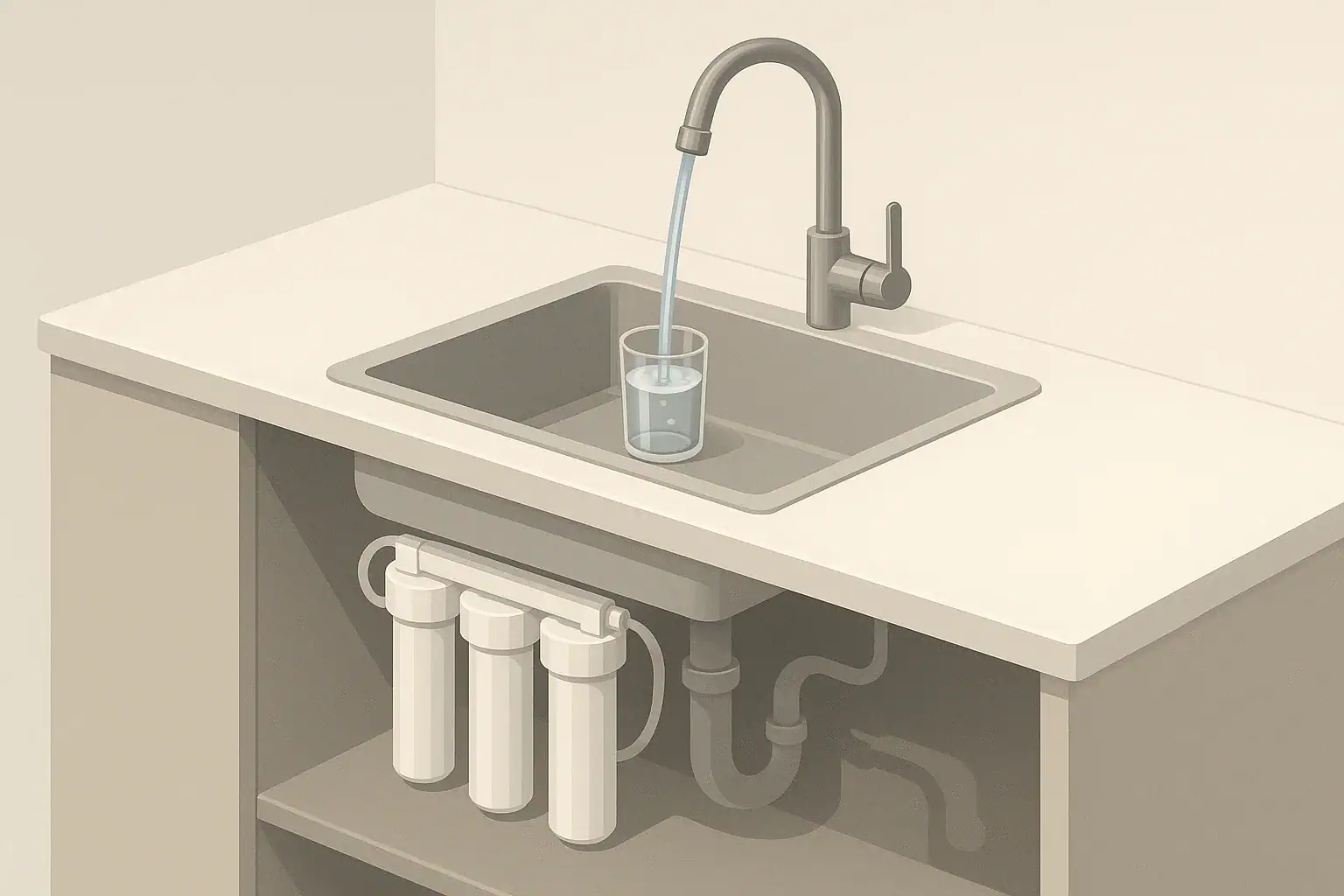
Why Chloramine Needs a Different Filtration Strategy
Many U.S. utilities now use chloramine instead of free chlorine for disinfection. Chloramine is typically formed by combining chlorine with ammonia, and it is valued by utilities because it stays in the distribution system longer and forms fewer certain byproducts than straight chlorine.
For homeowners, this creates a filtration challenge. The same basic carbon filters that easily reduce chlorine taste and odor may perform poorly on chloramine unless they are specifically designed and sized for it. If you are on city water and notice a lingering chemical taste, a swimming pool smell that does not dissipate, or irritation when using hot water, your utility may be using chloramine.
Before choosing any chloramine filter, it helps to understand three big ideas:
- Chloramine behaves differently than free chlorine and is tougher to reduce.
- Contact time and media selection matter more than for simple chlorine reduction.
- Independent performance standards, when present, provide useful benchmarks.
How Chloramine Behaves in Home Plumbing
Chloramine is more stable than free chlorine, which is why it is used to carry disinfection power deeper into a distribution system. That same stability means it does not break down as quickly in small, low-cost filters.
Chlorine vs. Chloramine in Practical Terms
In practical, homeowner-focused terms:
- Chlorine is usually easier to notice by smell and taste and is relatively easy to reduce with standard carbon blocks, pitchers, and faucet-mounted filters.
- Chloramine often has a more subtle taste and odor but can linger through basic carbon filtration unless the filter is designed for longer contact and higher capacity.
Chloramine can also interact with certain materials in plumbing. For example, rubber components and some metals may degrade more quickly over time, which is one reason some people look to reduce it at the point of use.
Where Chloramine Shows Up in the Home
If your city uses chloramine, it is present anywhere you use cold tap water. Hot water systems can sometimes make taste and odor more noticeable because heating can change the way compounds reach your nose.
Common places where people notice chloramine-related taste or odor include:
- Kitchen taps used for drinking and cooking
- Refrigerator dispensers and ice makers
- Showers and bath taps (mostly for odor, not ingestion)
Knowing where you care most about reducing chloramine helps narrow your filter choices and avoid oversizing or undersizing a system.
Example values for illustration.
| Filter option | Typical media | Chloramine suitability | Best used for |
|---|---|---|---|
| Pitcher filter | Granular activated carbon | Limited, short contact time | Basic taste improvement at low use |
| Faucet-mounted filter | Granular or small carbon block | Moderate if rated for chloramine | Rentals and small households |
| Under-sink carbon block | High-density carbon block | Good when sized and rated for chloramine | Primary drinking and cooking water |
| Whole-house carbon tank | Catalytic or specialty carbon | Good to strong, depends on contact time | Showers, laundry, multiple taps |
| Reverse osmosis system | Carbon prefilter + RO membrane | Carbon stage does most chloramine work | Low-TDS drinking water plus chloramine reduction |
| Shower filter | Small carbon or mixed media | Variable, often limited by flow | Odor reduction at the shower only |
Key Filter Media for Chloramine Reduction
Not all carbon is the same, and not all media are equally effective for chloramine. The main goal is to provide enough surface area and contact time for the chloramine to break down or adsorb.
Standard Activated Carbon
Standard activated carbon, whether granular or block, is widely used for chlorine reduction and taste and odor improvement. It also has some ability to reduce chloramine, but performance can be inconsistent unless the filter is specifically designed and rated for this purpose.
Granular activated carbon (GAC) tends to have:
- Higher flow rates but lower contact time per unit volume
- More channeling risk in large tanks if water finds easy pathways
Carbon blocks typically offer:
- More uniform contact because water must pass through the block structure
- Higher pressure drop at the same flow rate, which can be a trade-off
Catalytic Carbon and Specialty Carbons
Catalytic carbon is a form of activated carbon processed to enhance certain reactions, including chloramine reduction. Many whole-house chloramine systems and some under-sink cartridges use catalytic carbon or blended specialty carbons.
When you see terms describing carbon that is optimized for chloramine, practical implications often include:
- Better chloramine reduction at a given flow rate compared with standard carbon
- Potentially longer service life under chloraminated water
- Often higher cost per cartridge or tank compared with basic carbon
Mixed-Media Approaches
Some filters combine carbon with other materials to manage chloramine and related issues. Examples include:
- Carbon plus sediment prefiltration to protect the carbon from clogging
- Carbon plus media intended to deal with certain metals or byproducts
- Layered beds in larger tanks to improve flow distribution and contact time
For most homes, the critical feature is still the carbon itself, along with how long the water stays in contact with it. Mixed media can add value, but it rarely replaces the need for adequate carbon mass and contact time.
Understanding Standards for Chloramine Filters
Independent standards help you compare filters by showing whether a product has been tested under defined conditions. In North America, many residential filters refer to NSF/ANSI benchmarks (sometimes tested and listed by different certification bodies). See our guide on NSF/ANSI 42 vs 53: Which One Matters for You?
NSF/ANSI Standards Commonly Referenced
Two standards are especially relevant when you are comparing chloramine-focused filters:
- NSF/ANSI 42 – Covers aesthetic aspects such as chlorine taste and odor, and may include claims for chloramine reduction.
- NSF/ANSI 53 – Covers reduction of certain health-related contaminants; some filters under this standard also carry chloramine claims.
When a filter lists chloramine reduction under one of these standards, it usually means a representative model was tested for a defined amount of water, at a specific flow rate and inlet concentration. This does not guarantee identical results in every home, but it gives a structured point of comparison.
What to Look for on Product Literature
When reviewing documentation for a chloramine filter, look for:
- Explicit mention of chloramine reduction as a performance claim, not just chlorine
- Reference to an independent standard and test protocol, if available
- Stated maximum flow rate at which chloramine performance is claimed
- Estimated capacity (for example, a certain number of gallons as an example figure)
Also read How to Verify a Filter’s Certification Claim (Step-by-Step) to understand certification language and label phrasing.
Limitations of Standards
Standards-based testing is done under controlled conditions. Real-world performance can vary with:
- Higher or lower incoming chloramine concentration
- Water temperature and pH
- Higher-than-rated flow rates through the filter
- Filter clogging due to sediment or other particles
Because of these variables, it is often wise to view certified performance as a structured benchmark and then build in some safety margin, for example by choosing a filter with more carbon mass or lower operating flow than its maximum rated value.
Matching Chloramine Filters to Use Cases
The right chloramine filter arrangement depends on where you want the improvement, how much water you use, and whether you own or rent the property.
Point-of-Use vs. Whole-House Approaches
Chloramine reduction setups generally fall into two categories:
- Point-of-use (POU) – Filters serving a single tap or appliance, such as under-sink systems, countertop units, or refrigerator filters.
- Point-of-entry (POE) / Whole-house – Larger systems treating all water entering the home, often with large carbon tanks or multi-stage systems.
Point-of-use filters are common when the main goal is better drinking and cooking water. Whole-house systems are more often chosen when people want to address shower odor, protect plumbing components, or maintain consistent water quality across many fixtures.
Apartment and Rental Settings
In apartments and rentals, permanent plumbing changes may not be allowed. In that case, practical options include:
- Under-sink systems that use existing connections and can be removed later
- Countertop systems that connect to an existing faucet
- Faucet-mounted filters or pitchers as a minimal, low-installation approach
These smaller systems often rely on compact carbon blocks or cartridges rated for a moderate amount of chloramine reduction at drinking-water flow rates.
Whole-House Chloramine Reduction Considerations
Whole-house systems must balance tank size, media type, and flow rate. Key planning points include:
- Service flow rate – Expected peak flows (for example, multiple showers running) set the minimum tank and media size needed for meaningful contact time.
- Backwashing needs – Many larger carbon tanks are backwashing filters that periodically flush the bed to reduce channeling and fouling.
- Plumbing codes and pressure – Systems must be installed in accordance with plumbing codes and designed to handle the home’s pressure range.
For some households, a hybrid approach is used: a modest whole-house system for general reduction plus a more robust point-of-use system at the kitchen sink where water is regularly consumed.
Flow Rate, Contact Time, and Sizing for Chloramine
One of the most important but often overlooked aspects of chloramine filtration is contact time: how long the water stays in contact with the carbon. Short contact time usually means weaker chloramine reduction, even if the same media is used.
Contact Time in Simple Terms
In technical discussions, contact time is sometimes estimated from bed volume and flow rate. For homeowners, it is enough to remember that:
- Smaller cartridges running at high flow offer less contact time.
- Larger filters or parallel cartridges at the same flow provide more contact time.
- Operating a filter below its maximum rated flow usually improves performance.
Manufacturers often list a maximum flow rate for chloramine claims. Running significantly above that rate can reduce effective performance.
Under-Sink Systems and Flow Control
Under-sink carbon systems used for chloramine often incorporate built-in flow limiters or are intended to connect to dedicated faucets. This helps maintain a consistent flow where the contact time is long enough for the carbon block to work as designed.
When comparing cartridges, look at:
- The rated flow for chloramine performance (for example, a value in gallons per minute as an example only)
- The physical size of the carbon block or cartridge
- Any notes about minimum inlet pressure needed to maintain that flow
Reverse Osmosis Systems and Chloramine
Reverse osmosis (RO) systems use a carbon prefilter to protect the membrane from chlorine and chloramine. For chloramine in particular:
- The carbon prefilter is usually designed for a specific lifespan and must be replaced on schedule.
- The RO membrane is not a primary chloramine stage; its protection depends on that carbon prefilter.
- System design (tank vs. tankless, flow path, and flush cycles) influences contact time at the carbon stage.
For more details see RO for Chloramine: Do You Need Special Carbon Stages?
When chloramine is present, it is especially important not to extend carbon filter change intervals far beyond the manufacturer’s general guidance.
Maintenance Expectations for Chloramine Filters
Chloramine filters, like all water treatment systems, require periodic maintenance. The higher the incoming chloramine concentration and water usage, the more attention is needed to replacement intervals.
Cartridge Replacement
For cartridge-based systems, maintenance usually centers on:
- Replacing carbon cartridges on a schedule based on time, usage, or both
- Changing upstream sediment filters to prevent clogging of the carbon
- Monitoring flow rate; noticeable reduction can indicate clogging or fouling
It is common to see replacement guidance phrased as a number of months or approximate gallons. When chloramine is a concern, using the shorter end of the suggested range can help maintain consistent performance.
Tank-Based System Service
For large carbon tanks, maintenance can include:
- Periodic media replacement after a certain number of years of use
- Ensuring that backwash cycles occur on schedule, if applicable
- Occasional inspection of control valves, bypasses, and plumbing connections
Professional servicing may be helpful for larger systems to verify that flow rates and programming align with the home’s usage and that no safety or code-related issues are present.
Testing and Verification
Some homeowners choose to verify chloramine reduction using simple screening tools or by comparing utility reports with occasional independent testing. While basic test kits can provide general indications, they may have limitations in sensitivity and accuracy. For detailed verification, a certified laboratory analysis provides more structured data but also costs more.
Example values for illustration.
| System type | Typical filter stage | Example check interval | Notes |
|---|---|---|---|
| Pitcher filter | Small carbon cartridge | Every 1–2 months (example) | Short life due to small media volume |
| Faucet-mounted unit | Compact carbon block | Every 2–3 months (example) | Monitor taste and flow changes |
| Under-sink chloramine cartridge | High-capacity carbon block | Every 6–12 months (example) | Use shorter interval with heavy use |
| RO system | Carbon prefilter | Every 6–12 months (example) | Critical for protecting the RO membrane |
| Whole-house carbon tank | Catalytic carbon bed | Media every several years (example) | Follow installer or manufacturer guidance |
| Shower filter | Small mixed media | Every 3–6 months (example) | Life heavily affected by use and flow |
Related guides: NSF/ANSI 42 vs 53: Which One Matters for You? • How to Verify a Filter’s Certification Claim (Step-by-Step) • RO for Chloramine: Do You Need Special Carbon Stages? • Choosing a Filter for PFAS: What to Look For on the Label
Practical Checklist for Choosing a Chloramine Filter
When deciding on a chloramine filter for your home, it can help to walk through a short checklist:
- Confirm disinfectant type – Check your utility’s water quality report or website to see if chloramine is used.
- Define locations – Decide whether you want treatment at the kitchen sink, throughout the home, or both.
- Estimate flow and usage – Consider household size, simultaneous water use, and which fixtures matter most.
- Select media and system type – Look for carbon designed for chloramine, such as catalytic or high-capacity blocks, in a system configuration appropriate for your space.
- Review performance data – Check for clear chloramine reduction claims and references to relevant standards when available.
- Consider maintenance – Make sure replacement intervals and access are realistic for your routine and budget.
- Plan for safe installation – Follow plumbing codes and manufacturer instructions; when in doubt, consult a qualified professional.
By focusing on disinfectant type, media selection, and realistic sizing, you can choose a chloramine filter that fits your home, your plumbing, and your maintenance habits without overcomplicating the system.
Frequently asked questions
How can I tell if my water is treated with chloramine?
Check your local water utility’s annual water quality report or website; they typically state the disinfectant used. If that isn’t available, contact the utility directly for confirmation.
Will a standard carbon pitcher or faucet-mounted filter remove chloramine?
Standard pitchers and many faucet-mounted units can reduce chlorine taste and odor but often provide only limited and inconsistent chloramine removal because of short contact time and small media volume. Look for products explicitly rated for chloramine if that is your concern.
Do I need a whole-house system or is point-of-use treatment sufficient?
It depends on your goals. Point-of-use systems at the kitchen sink are usually sufficient for drinking and cooking. Whole-house systems are appropriate if you want reduced odor at showers, protect plumbing components, or treat multiple fixtures. A combined approach (modest whole-house plus a robust kitchen POU) is common.
How often should I replace carbon filters used for chloramine?
Replace cartridges and prefilters according to manufacturer guidance, but when chloramine is present consider using the shorter end of recommended intervals. Frequency depends on incoming concentration, water use, and sediment; monitor taste and flow for early indicators of spent media.
Recommended next:
- NSF/ANSI 42 vs 53: Which One Matters for You?
- NSF/ANSI 401 Explained: Emerging Contaminants in Plain English
- How to Verify a Filter’s Certification Claim (Step-by-Step)
- Certified Claims vs “Tested to…”: Marketing Language Decoded
- What NSF/ANSI 58 Covers for RO Systems (and What It Doesn’t)
- Does “NSF Certified” Apply to the Whole System or Just a Part?
- More in Certifications & Standards (NSF/ANSI) →
- NSF/ANSI standards explained (42/53/401/58)
- Clear trade-offs: pitcher vs faucet vs under-sink vs RO
- Maintenance planning: cost per gallon and replacement cadence