
Reverse Osmosis (RO)
When RO helps, what it reduces, and typical downsides.
Explore topics
RO Membrane Replacement Compatibility: What Must Match
For RO membrane replacement compatibility, start with the system’s exact model and specified membrane part number. Before buying…

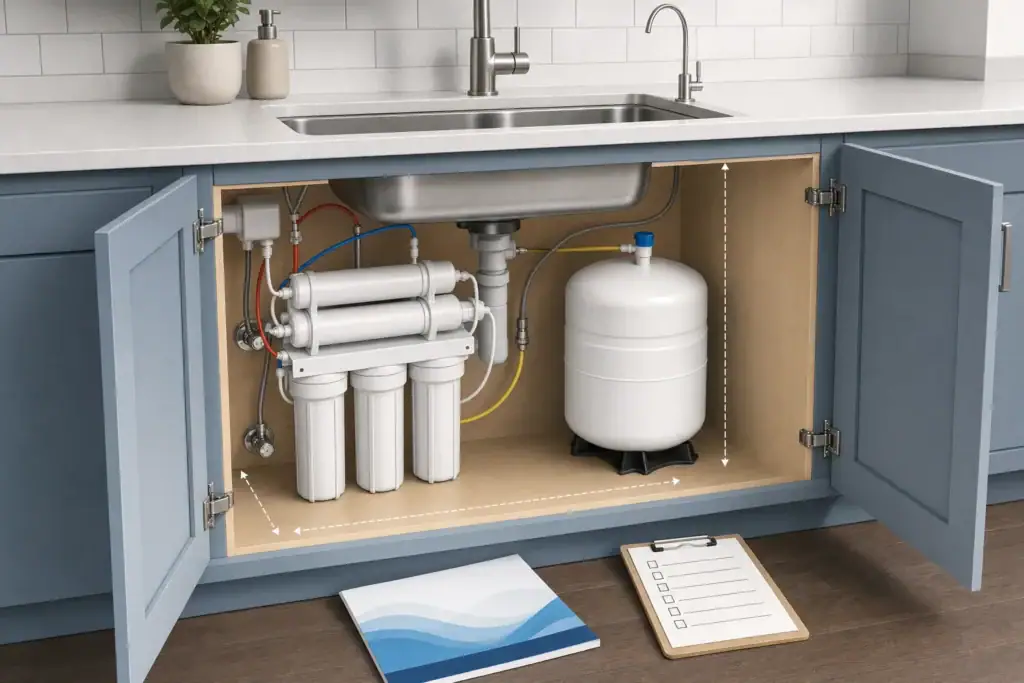
RO Faucet Placement: Where to Put the Tap Before Drilling
Place an RO faucet where its spout reaches the sink and lets you fill common bottles or pitchers…

Is Reverse Osmosis Water Safe to Drink? Real Concerns Explained
Reverse osmosis water is generally safe to drink when the source water is suitable for the exact system,…
How Does Reverse Osmosis Work? Pressure and Flow Explained
Reverse osmosis uses pressure to move prefiltered water across a semipermeable membrane. The membrane creates two streams at…
Whole House Reverse Osmosis: When It Makes Sense
A whole house reverse osmosis system can make sense when testing confirms a dissolved-water problem that affects uses…
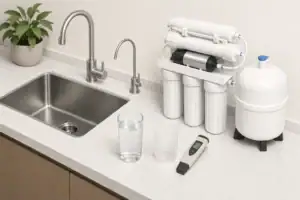
RO Membrane Rejection Rate: Calculation and Interpretation
Calculate RO membrane rejection rate from feed and product-water TDS, interpret the percentage, and identify when low readings…
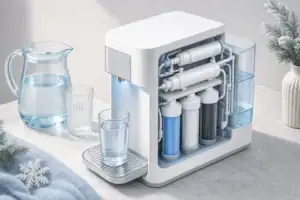
RO Water Production in Winter: Why It Slows
Wondering why RO water production in winter slows down? Cold feed water reduces membrane output; know what is…
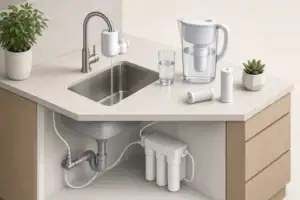
RO Booster Pump vs Permeate Pump: 3 Signs You Need
Fix low feed pressure, slow tank filling, or excess drain water by choosing the RO pump that targets…
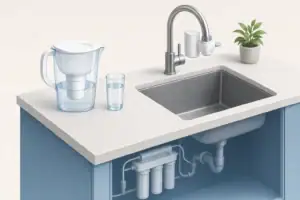
RO Auto-Shutoff Valve Symptoms: 5 Signs to Check
Stop wasted water: 5 RO auto-shutoff valve symptoms can explain constant draining, low tank pressure, or a system…
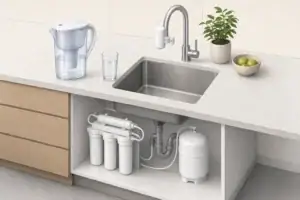
RO Drain Saddle Placement: 7 Mistakes to Avoid
Prevent leaks, gurgling, and RO wastewater backups by placing your drain saddle on the right pipe section. Avoid…
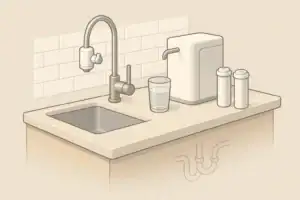
Tankless RO Power Requirements: 5 Checks Before You Buy
5 key checks for tankless RO power requirements: outlet type, voltage, pressure, and backup planning so your kitchen…

TDS Creep in RO Water: 5 Reasons Your First Glass Tests Higher
First-glass TDS can spike after idle time. See 5 causes of TDS creep in RO water, how to…

RO Tank Pressure: 5 Safe Ways to Check Yours
RO tank pressure affects flow and water quality. Check it safely, spot common issues, and know when your…

Air Gap vs Non Air Gap RO Faucet: 5 Key Differences
Compare drain safety, noise, leaks, and code needs to choose the right RO faucet for your sink setup…
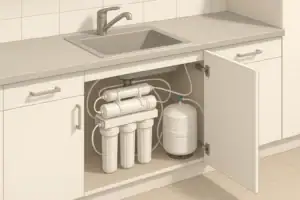
RO Membrane Lifespan: What Shortens It (and How to Extend It)
Learn what really affects reverse osmosis (RO) membrane lifespan, common causes of premature failure, and practical steps to…
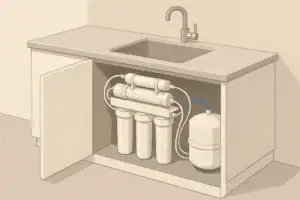
How to Sanitize an RO System After a Long Vacation
Learn step-by-step how to safely sanitize a home reverse osmosis (RO) water system after a long vacation, including…
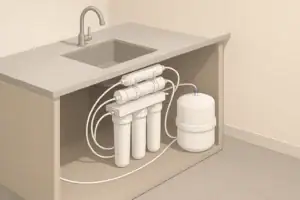
Troubleshooting Low RO Flow: Pressure, Tank, or Clogged Filters?
Learn how to troubleshoot low flow on a home reverse osmosis (RO) system, including checking water pressure, storage…
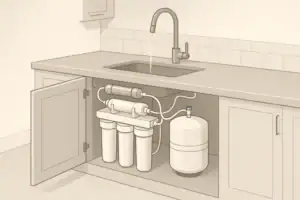
UV + RO Combo Systems: When UV Disinfection Makes Sense
Learn when it makes sense to add UV disinfection to a home reverse osmosis (RO) system, how UV…
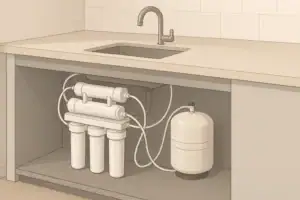
RO for PFAS: What to Look For in Certified Claims
Learn how reverse osmosis systems address PFAS in home drinking water, what NSF/ANSI certifications to look for, and…
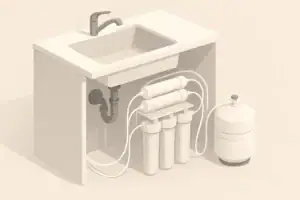
RO for Chloramine: Do You Need Special Carbon Stages?
Learn how chloramine behaves in reverse osmosis systems, when special carbon stages are helpful, and how contact time,…
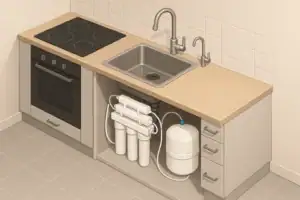
Tank vs Tankless RO: Which Is Better for Families?
Compare tank and tankless reverse osmosis (RO) systems for family homes. Learn how they differ in space, water…

RO Water Tastes Bad? Fixing “Plastic” or “Stale” Taste
Learn why reverse osmosis (RO) water can taste plastic, flat, or stale, and how to fix bad-tasting RO…

Remineralization Filters: Do You Need One with RO Water?
Learn how remineralization filters work with reverse osmosis (RO) systems, when they are useful, how they affect taste,…