
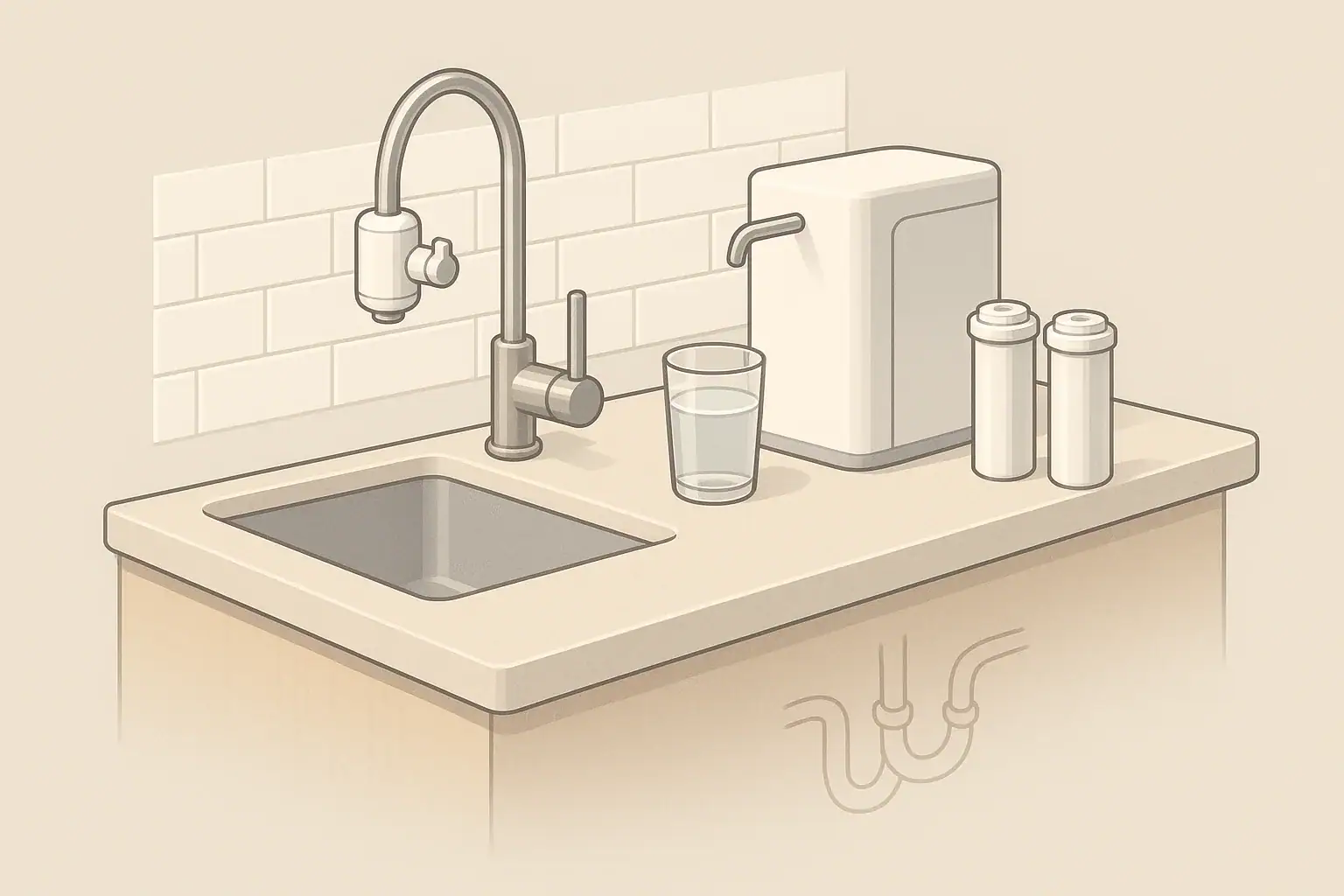
Tankless reverse osmosis systems are popular for kitchens where cabinet space is limited and users want steady filtered water without a storage tank. Unlike many traditional tank-style RO systems, however, most tankless RO units depend on electricity. That makes power planning part of the buying decision, not an afterthought. If you’re comparing system types, it can help to read about tank vs tankless RO first.
For most U.S. homes, the electrical needs are not complicated. Many tankless systems use a standard household outlet and a power adapter. The important questions are whether you have a suitable outlet near the installation area, whether the circuit is protected for a wet location, and what happens if the power goes out.
This article explains tankless RO power requirements in practical terms so you can evaluate products, cabinet layouts, rentals, and outage expectations before you buy. It also helps to understand the broader setup through RO system installation under the sink.
Why Tankless RO Systems Need Power
A typical reverse osmosis membrane needs water pressure to push water through a very fine, semi-permeable membrane. In a tank-style RO system, the unit may rely mostly on household water pressure and store filtered water in a pressurized tank. Some tank-style systems also use pumps, but many basic versions do not require an electrical outlet.
Tankless RO systems work differently. Because there is no storage tank to hold filtered water in advance, the system must produce water on demand. To support this, many tankless models use powered components that manage pressure, flow, flushing, monitoring, and shutoff functions.
Common powered functions
Depending on the design, electricity may be used for:
- A booster pump that increases pressure across the RO membrane
- Solenoid valves that open or close water pathways
- Automatic membrane flushing cycles
- Filter life indicators or display screens
- Leak detection and automatic shutoff features
- UV treatment, if included as an additional stage
These powered parts are one reason tankless RO units can be compact. The tradeoff is that the system is more dependent on both water pressure and electrical power than a simple non-electric filter.
The Main Electrical Loads Inside a Tankless RO Unit
Tankless RO systems are not all wired the same way. Some use a low-voltage power adapter that plugs into a standard 120-volt household outlet. Others may have specific voltage, frequency, or adapter requirements listed in the product documentation. Always check the actual specifications for the unit you are considering. If your concern is water-quality performance rather than just plumbing layout, what reverse osmosis removes is a helpful reference.
The biggest electrical load is usually the booster pump. It runs while the system is producing water and may also run briefly during flushing or startup cycles. Displays, indicator lights, and sensors generally use much less power, but they may draw a small amount continuously while plugged in.
If a system includes UV treatment, review that section carefully. Some UV lamps are designed to remain on or cycle in a specific way to maintain intended operation. A UV stage may increase power use and may change how the system behaves after an outage.
Example values for illustration.
| Component or feature | Why it needs power | Buying implication |
|---|---|---|
| Booster pump | Helps push water through the RO membrane | Important for on-demand flow and low-pressure homes |
| Solenoid valves | Open and close water pathways automatically | System may not dispense water when unplugged |
| Auto flush cycle | Rinses the membrane at programmed times | May run briefly after startup or use |
| Filter indicator | Tracks time, flow, or operating status | Requires power for alerts and displays |
| Leak sensor | Detects water where it should not be | May trigger automatic shutoff on some systems |
| UV stage | Uses a lamp or LED module | Review power and lamp maintenance needs |
Outlet and Location Planning Under the Sink
Before buying a tankless RO system, look under the sink and confirm more than just available space. You also need to know where power will come from and whether the cord can reach safely without stretching, pinching, or crossing areas where stored items may damage it.
Most under-sink installations are in areas where water exposure is possible. In many kitchens, outlets serving areas near sinks are GFCI protected, but the exact requirements depend on local electrical code and how the outlet was installed. If an outlet is missing, damaged, loose, or not appropriate for the location, consult a qualified electrician rather than improvising.
What to check before purchase
- Whether there is a working outlet inside or near the sink cabinet
- Whether the outlet is positioned away from routine drips and leaks
- Whether the system cord can reach without an extension cord
- Whether the outlet is already shared with a disposal, dishwasher, or instant hot water unit
- Whether the cabinet has enough ventilation and space around the power adapter
- Whether the product documentation allows the planned outlet arrangement
Avoid using an extension cord or power strip as a permanent solution under a sink. A wet cabinet, crowded storage area, and loose electrical connections are a poor combination. If you need a new receptacle or a different outlet location, that is an electrical planning task, not a plumbing shortcut.
Power Use During Normal Operation
Tankless RO power use is usually intermittent. The pump draws more power while water is being produced, then drops to standby when the faucet is closed. The exact wattage varies by system design, pump size, controls, and any added treatment stages. For a related comparison of filtration styles, see RO vs carbon under-sink.
For household planning, the key point is not usually the electric bill. It is whether the circuit and outlet are suitable, whether other appliances share the same location, and whether the system can operate reliably without nuisance shutdowns.
Typical operating pattern
A tankless RO system may use power in several short events throughout the day:
- Producing water for drinking, cooking, coffee, or a refrigerator connection if supported
- Briefly flushing the membrane after use or at timed intervals
- Maintaining indicator lights, screens, or standby sensors
- Running a leak detection circuit or shutoff system
If you are comparing systems, look for clear specifications rather than assuming all tankless RO units are similar. Useful details may include input voltage, adapter output, rated power, standby power, pump type, and whether the outlet must remain powered at all times.
What Happens During a Power Outage
During a power outage, many tankless RO systems cannot produce filtered water. Because there is no storage tank, there may be little or no reserve supply available at the faucet. Some systems may allow a brief amount of water already in the internal lines to dispense, but this should not be treated as a dependable backup. If outages are common where you live, a broader look at whole house vs point-of-use filters can help frame your options.
This is one of the biggest differences between tankless and tank-style RO. A traditional tank system may still provide water from the pressurized tank during a short outage, assuming water remains in the tank and the faucet can operate without power. A tankless system is more compact, but it generally depends on electricity for on-demand production.
Backup planning options
If outages are common in your area, consider your expectations before buying. Practical options include:
- Keeping a small amount of stored drinking water for short disruptions
- Choosing a system only after confirming its outage behavior in the manual
- Using a properly sized backup power supply only if the manufacturer allows it
- Considering whether a tank-style RO system better fits your outage needs
A battery backup or uninterruptible power supply may seem simple, but it should be matched to the system’s power draw and startup load. It also needs to be placed safely away from water. Do not bypass built-in shutoff features, alter wiring, or modify the unit to force operation during an outage.
Compatibility With Plumbing and Water Pressure
Electrical power helps a tankless RO system operate, but it does not replace proper plumbing conditions. The system still needs an acceptable feed water pressure range, a drain connection, a compatible faucet or dispenser, and enough space for filter replacement. If the incoming water pressure is too low or unstable, a tankless system may have poor flow, frequent alerts, or reduced production.
Homes on municipal water often have steadier pressure than homes on private wells, but either can work if the conditions match the system requirements. Well systems may have pressure tanks and pump cycles that cause pressure swings. High pressure can also be a concern if it exceeds the system rating.
Power and pressure work together
For tankless RO, a booster pump is designed to support membrane performance, not to correct every plumbing problem. If the feed line is restricted, the shutoff valve is partially closed, the prefilters are clogged, or the drain line is improperly arranged, electrical power will not solve the underlying issue.
Review the manufacturer’s pressure range, feed water temperature range, and installation limitations before purchase. If your home has known pressure problems, address those conditions with appropriate professional help rather than relying on the RO unit as a fix.
Pre-Buy Questions for Tankless RO Power Planning
A few minutes of planning can prevent common installation surprises. The questions below are useful whether you own the home, rent an apartment, or are replacing an older under-sink system.
Questions to answer before ordering
- Is there a suitable electrical outlet close enough to the planned location?
- Is the outlet protected and appropriate for a sink cabinet environment?
- Will the unit share power with a disposal or other appliance?
- Does the system state a voltage, frequency, wattage, or adapter requirement?
- Does the system require constant power for flushing, monitoring, or UV operation?
- What happens to water dispensing when power is lost?
- Is there enough room to replace filters without unplugging or moving unsafe wiring?
- Does your lease or building policy allow under-sink equipment and outlet changes?
If any of these answers are unclear, pause and verify before purchase. Product listings may emphasize flow rate, stages, or compact size, but the manual often contains the important power and clearance details.
Example values for illustration.
| Home condition | What to check | Practical planning note |
|---|---|---|
| Standard kitchen outlet nearby | Outlet condition and protection | Confirm it is suitable for under-sink use |
| No outlet under the sink | Distance to safe power | Plan for a qualified electrical solution |
| Shared disposal outlet | How the outlet is switched | A switched outlet may turn the RO off |
| Low feed pressure | System minimum pressure rating | Pump support may not overcome plumbing issues |
| Well water with pressure cycling | Pressure range during pump cycles | Check compatibility before installation |
| Frequent outages | Behavior when power is lost | Tankless systems may not provide backup water |
| UV stage included | Lamp power and restart behavior | Review maintenance and operating requirements |
Related guides: RO System Installation Guide • RO vs Carbon Under-Sink • UV + RO Combo Systems • Troubleshooting Low RO Flow • Whole House vs Point-of-Use Filters
Final Notes on Choosing a Powered Tankless RO System
Tankless RO power requirements are usually manageable, but they should be part of the buying checklist. A suitable outlet, safe placement, adequate feed pressure, and realistic outage expectations matter as much as filter stages or advertised flow rate.
For many kitchens, a powered tankless RO system can be a practical fit when the cabinet has enough space, the outlet arrangement is appropriate, and the household understands that filtered water production depends on electricity. For homes with frequent outages, limited electrical access, or rental restrictions, a different filtration layout may be more practical.
The safest approach is to compare the system specifications with your actual kitchen conditions before installation. When electrical work or uncertain plumbing conditions are involved, use qualified help and follow the product documentation and local requirements.
Frequently asked questions
Do tankless RO systems need electricity to work?
Most tankless RO systems do. Electricity commonly powers the pump, valves, sensors, and flush cycles that let the system produce water on demand.
Can I plug a tankless RO unit into a regular outlet?
Many models use a standard household outlet through a power adapter, but you should verify the required voltage, plug type, and placement in the product manual.
Will a tankless RO system still give water during a power outage?
Usually not. Without a storage tank, most tankless systems cannot make water when power is out, and any water left in the lines is only a short temporary supply.
Is it okay to use an extension cord under the sink?
It is not a good permanent solution. Under-sink areas can be damp and crowded, so the safest approach is a proper outlet located for the installation.
How much power does a tankless RO system use?
Power use varies by model, but it is typically intermittent. The main draw happens while the system is producing water, with smaller amounts used for standby features and controls.
What should I check before buying one for my kitchen?
Confirm outlet location, outlet protection, feed water pressure, clearance for the unit, and whether the system’s outage behavior fits your household needs.
Recommended next:
- Reverse Osmosis 101: What RO Removes (and What It Doesn’t)
- NSF/ANSI 58 Explained: What It Means for RO Systems
- RO vs Carbon Under-Sink: Taste, TDS, and Maintenance Compared
- RO System Installation Guide: Space-Saving Layout Under the Sink
- RO Waste Water Ratio: What’s Normal and How to Reduce It
- RO Filter Replacement Schedule: Prefilters vs Membrane
- More in Reverse Osmosis (RO) →
- NSF/ANSI standards explained (42/53/401/58)
- Clear trade-offs: pitcher vs faucet vs under-sink vs RO
- Maintenance planning: cost per gallon and replacement cadence