Why Water Filter Certifications Cause So Much Confusion
Water filter certifications are meant to simplify choices, but the labels and logos can easily cause misunderstandings. Many people assume that any certified filter removes every contaminant, or that more badges automatically mean better performance. In reality, certifications are specific, limited, and based on defined test conditions that may not match your exact tap water.
Understanding what certifications do and do not guarantee helps you choose a filter that fits your water source, plumbing, and expectations. Instead of treating a certification mark as a blanket safety guarantee, it is more accurate to see it as evidence that a filter met certain performance criteria under controlled tests — and learn how to verify a filter’s certification claim.
Myth 1: “Certified” Means the Filter Removes Every Contaminant
One of the most common myths is that if a water filter is certified, it must remove everything harmful or unwanted. This is not how certification works. Certifications are always tied to specific claims and specific test standards, not to a general idea of “clean” or “pure” water.
Certifications Are Claim-Specific
Independent certification bodies evaluate products against detailed standards. Those standards typically define:
- Which contaminant or performance claim is being tested (for example, chlorine taste and odor reduction)
- Test water quality and conditions (such as pH, temperature, and pressure)
- Flow rate and total volume the filter is expected to treat
- How performance is measured (for example, percent reduction from a starting level)
If a filter is certified for chlorine reduction, that does not mean it is certified for lead, PFAS, or microorganisms (see Choosing a Filter for Lead).
Many Contaminants Are Not Covered
Not every possible tap water concern is covered by a standard test. For example:
- Some emerging contaminants may not yet have a commonly used test standard.
- Local issues like specific industrial chemicals or farm runoff may fall outside typical test lists.
- Cosmetic issues such as slight color changes may not be part of a performance claim.
This does not mean a filter is ineffective; it means the certification tells you only what was tested, not everything the filter could or could not do. For information on emerging contaminants and relevant standards, see NSF/ANSI 401 Explained. The label is a starting point, not a full water quality report.
Example values for illustration.
| Myth | More accurate view |
|---|---|
| Any logo means all contaminants are removed | Logos apply only to specific, tested claims |
| More badges always mean cleaner water | Badges may overlap; fit to your water matters more |
| Certification guarantees performance forever | Performance is tested to a rated capacity or time |
| Certified filters never affect flow rate | Some certified filters are designed for lower flow |
| No logo means no testing at all | Some products use internal or third-party tests only |
| Certification covers installation and plumbing | Tests assume correct installation and typical conditions |
| If one model is certified, every similar model is | Each configuration is evaluated separately |
Myth 2: More Certification Badges Automatically Mean a Better Filter
It is easy to assume that a filter with several different certification marks must be better than one with only one or two. More logos can look impressive, but they do not always translate into better performance for your specific needs.
Overlapping and Redundant Claims
Some standards overlap. For instance, different test protocols might each include chlorine reduction as part of a larger performance list. A filter could display multiple marks that, in practice, confirm some of the same capabilities.
In addition, a filter may carry both material safety and performance certifications. Material safety indicates that the components in contact with water are not expected to leach unexpected substances above the test’s criteria. Performance certifications speak to contaminant reduction. These are different concepts, but at a glance they can look like multiple “levels” of cleaning when they are actually different types of tests.
Match Certifications to Your Water Source
Instead of counting logos, focus on how well the certified claims match your situation:
- City water users often prioritize chlorine or chloramine reduction, basic taste and odor improvement, and possibly lead reduction in older buildings.
- Well water users may care more about sediment, hardness, and microorganisms, which can involve a different mix of filters and tests.
- Apartment or rental households may need point-of-use devices like pitchers or countertop units that are certified for specific contaminants but do not require plumbing changes.
A more modest set of relevant certifications can be more practical than a long list that covers issues you do not have.
Myth 3: Certification Guarantees Performance Under All Conditions
Certification tests use defined, controlled conditions. Your home plumbing does not always look like a laboratory setup, and real-world conditions can change over time. This gap is a major source of disappointment when people expect lab results in every situation.
Test Conditions vs. Real-World Plumbing
Certification tests typically assume:
- Water pressure in a certain range
- Flow rate near the device’s rated maximum
- Water temperature within a typical range
- Specific contaminant levels in the test water
Your home may differ. For example:
- Lower water pressure can reduce flow and change contact time in carbon filters.
- Higher sediment levels than expected can clog pre-filters quickly, reducing performance if not replaced.
- Very high contaminant concentrations compared to test water can reduce how long a filter maintains its rated reduction.
The certification shows that the product met certain goals under standard conditions. It does not guarantee identical results if your water quality or plumbing are very different.
Filter Life and Capacity Limits
Most certified performance claims are tied to a specific capacity or timeframe, such as a set number of gallons or months of typical use. Once that capacity is reached, performance is no longer guaranteed to match the test results.
If filters are not replaced on schedule, several things can happen:
- Contaminant reduction may gradually decline.
- Pressure drop can increase, leading to low flow.
- Accumulated material in the filter can change how water moves through it.
This is why replacement intervals are part of the performance picture. Certification is not a lifetime promise; it is a tested snapshot up to a certain point.
Myth 4: All Certifications Mean the Same Thing
Another common misconception is that every certification mark is interchangeable. In reality, different standards focus on different questions. Knowing which type of claim you are looking at helps you avoid mistaken assumptions.
Material Safety vs. Performance Claims
It is useful to distinguish two broad categories of tests:
- Material safety-type testing: Looks at whether the materials contacting water contribute unexpected substances beyond certain criteria. This is about the filter itself not adding unwanted material.
- Performance-type testing: Looks at how effectively the filter reduces specific contaminants, or improves characteristics like chlorine taste and odor, sediment, or certain metals.
A filter might pass material safety testing but not be tested for any specific contaminant reduction. In that case, it should not be assumed to reduce contaminants beyond what is actually claimed.
Structural Integrity and Pressure
Some standards look at structural integrity under pressure. That might include pressure cycling or static pressure tests to evaluate how likely the housing or cartridge is to fail under typical use. This does not speak directly to contaminant reduction, but it is important for leak prevention and overall durability.
Because these different test types share space on the same label or brochure, it is easy to misread them as multiple performance badges. Reading the description of each claim, not just the logo, is key.
Myth 5: A Certified Filter Works the Same in Every Home
Even when a filter is certified for the contaminants you care about, performance and user experience can vary from home to home. Household demand, plumbing details, and maintenance habits all play a role.
Flow Rate and Household Demand
Certification testing usually uses a defined flow rate. Your actual flow can be higher or lower based on household demand and plumbing layout. Some examples:
- High simultaneous use (dishwasher, shower, and sink at once) can reduce pressure at a point-of-use filter.
- Undersized filters in larger households may reach capacity sooner than expected.
- Devices with fine filtration, like certain under-sink units, may naturally have lower flow, which is normal for their design.
These differences do not mean the certification is invalid. They show that ratings are guides rather than guarantees across every usage pattern.
Installation and Maintenance Practices
Certification assumes that the filter is installed and maintained according to the instructions. Real-world issues can change outcomes, such as:
- Skipping pre-filters in systems that expect them, leading to faster clogging and pressure drop.
- Not flushing new cartridges as directed before use.
- Leaving systems unused for long periods without following recommended sanitation steps.
Following the manufacturer’s instructions for installation, flushing, and replacement is a practical way to stay closer to the tested performance.
Myth 6: If One Filter Type Is Certified, All Similar Filters Perform the Same
People sometimes assume that if a certain type of technology is certified in one product, then every product using that technology must perform similarly. This is not necessarily true. Design details and system configuration matter.
Different Designs Within the Same Technology
Consider a few examples of common technologies:
- Carbon filters can be in block, granular, or powdered forms. The amount of carbon, contact time, and pore structure all affect performance.
- Sediment filters come in varying micron ratings and materials. Finer ratings remove smaller particles but may clog faster and reduce flow.
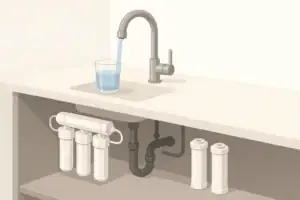
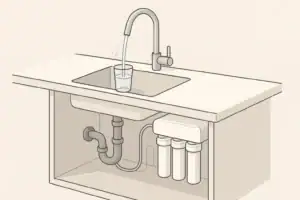
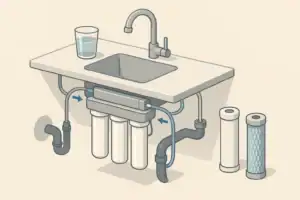
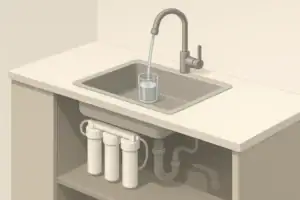
- Reverse osmosis systems combine membranes with pre-filters and post-filters. Differences in pre-treatment, tank design, and drain ratio influence both performance and practicality.
Two filters that both use carbon or both use reverse osmosis may not have the same certified claims, even if they share broad technology types.
System-Level vs. Component-Level Testing
Some tests look at complete systems; others focus on individual components. A certified cartridge installed in a non-tested housing, or combined with different pre-filters, may not behave exactly as in the test setup.
When comparing filters, it is better to look at the specific combination of claims, capacity, and system design rather than assuming that all products with a given media type are interchangeable.
Myth 7: Certification Removes the Need for Water Testing or Local Knowledge
Certification can provide confidence that a filter does what it claims under certain conditions, but it does not replace understanding your own water. Without some knowledge of your incoming water quality, it is hard to know which certifications actually matter for you.
Why Local Water Information Still Matters
Useful sources of information often include:
- Municipal water quality reports for city water users
- Well testing results for private well owners
- Local plumbing considerations such as pipe age and materials
Knowing whether your main issues are chlorine, hardness, sediment, or specific contaminants helps you interpret certification claims. For example, if hardness scaling is your primary concern, a filter certified only for chlorine taste and odor will not address mineral deposits on fixtures and appliances.
Deciding When Additional Testing Is Helpful
In some cases, basic water testing can help confirm whether a filter is well suited to your situation. People may consider testing when:
- They have a private well that is not covered by city testing.
- There are visible changes in water appearance or taste.
- They are planning a larger investment in a whole-house or multi-stage system.
Testing does not need to be complicated to be useful. Even simple, targeted tests can refine which certified claims are most important for your home.
Example values for illustration.
| Filter type | Typical example capacity | Common example replacement range |
|---|---|---|
| Pitcher carbon cartridge | Roughly 40–100 gallons | About 1–3 months |
| Faucet-mounted carbon filter | Roughly 100–300 gallons | About 2–4 months |
| Under-sink carbon block | Roughly 500–1,000+ gallons | About 6–12 months |
| Sediment pre-filter | Highly dependent on turbidity | From weeks to several months |
| Reverse osmosis pre-filters | Depends on membrane protection needs | About 6–12 months |
| Reverse osmosis membrane | Several thousand gallons | About 2–3+ years |
| Whole-house carbon unit | Many thousands of gallons | About 1–5 years, system dependent |
Related guides: NSF/ANSI 42 vs 53: Which One Matters for You? • How to Verify a Filter’s Certification Claim (Step-by-Step) • Choosing a Filter for PFAS: What to Look For on the Label • Choosing a Filter for Lead: Which Standard to Look For
How to Use Certifications as a Practical Decision Tool
Certifications are most helpful when viewed as one piece of a larger decision, alongside your water source, plumbing, and maintenance habits. A practical approach is to:
- Identify your primary concerns, such as chlorine taste, sediment, or specific contaminants.
- Check which certifications and claims directly address those concerns.
- Confirm that the rated capacity and flow are reasonable for your household size and water use.
- Plan for regular filter replacement according to the guidance provided, adjusting if your water is noticeably more or less challenging than average.
When read this way, certification marks become clear signposts instead of confusing badges. They help set realistic expectations and support informed, practical choices about home water filtration.
Frequently asked questions
Which certifications should I prioritize for city water versus well water?
For city water, prioritize certifications for chlorine/chloramine reduction, lead, and material safety where relevant. For well water, focus on tests for microorganisms, sediment, and common mineral or iron issues. Use your water report or a targeted test to choose the most relevant claims.
If a filter is certified for one contaminant, does that mean it removes others too?
No. Certifications are claim-specific. A certification for chlorine reduction does not prove removal of lead, PFAS, or microbes unless those specific claims are also listed and tested.
What practical steps help certified performance match real-world results?
Install and flush systems per the instructions, use recommended pre-filters, replace cartridges on schedule, and ensure your home’s pressure and flow are within the product’s rated range. Consider a simple water test if your water differs from typical test conditions.
Are more certification logos always better when comparing filters?
Not always. Look for certifications that address your actual water concerns and check rated capacity and system design. Multiple logos can overlap; relevancy and proper configuration matter more than the total number of badges.
Recommended next:
- NSF/ANSI 42 vs 53: Which One Matters for You?
- NSF/ANSI 401 Explained: Emerging Contaminants in Plain English
- How to Verify a Filter’s Certification Claim (Step-by-Step)
- Certified Claims vs “Tested to…”: Marketing Language Decoded
- What NSF/ANSI 58 Covers for RO Systems (and What It Doesn’t)
- Does “NSF Certified” Apply to the Whole System or Just a Part?
- More in Certifications & Standards (NSF/ANSI) →
- NSF/ANSI standards explained (42/53/401/58)
- Clear trade-offs: pitcher vs faucet vs under-sink vs RO
- Maintenance planning: cost per gallon and replacement cadence