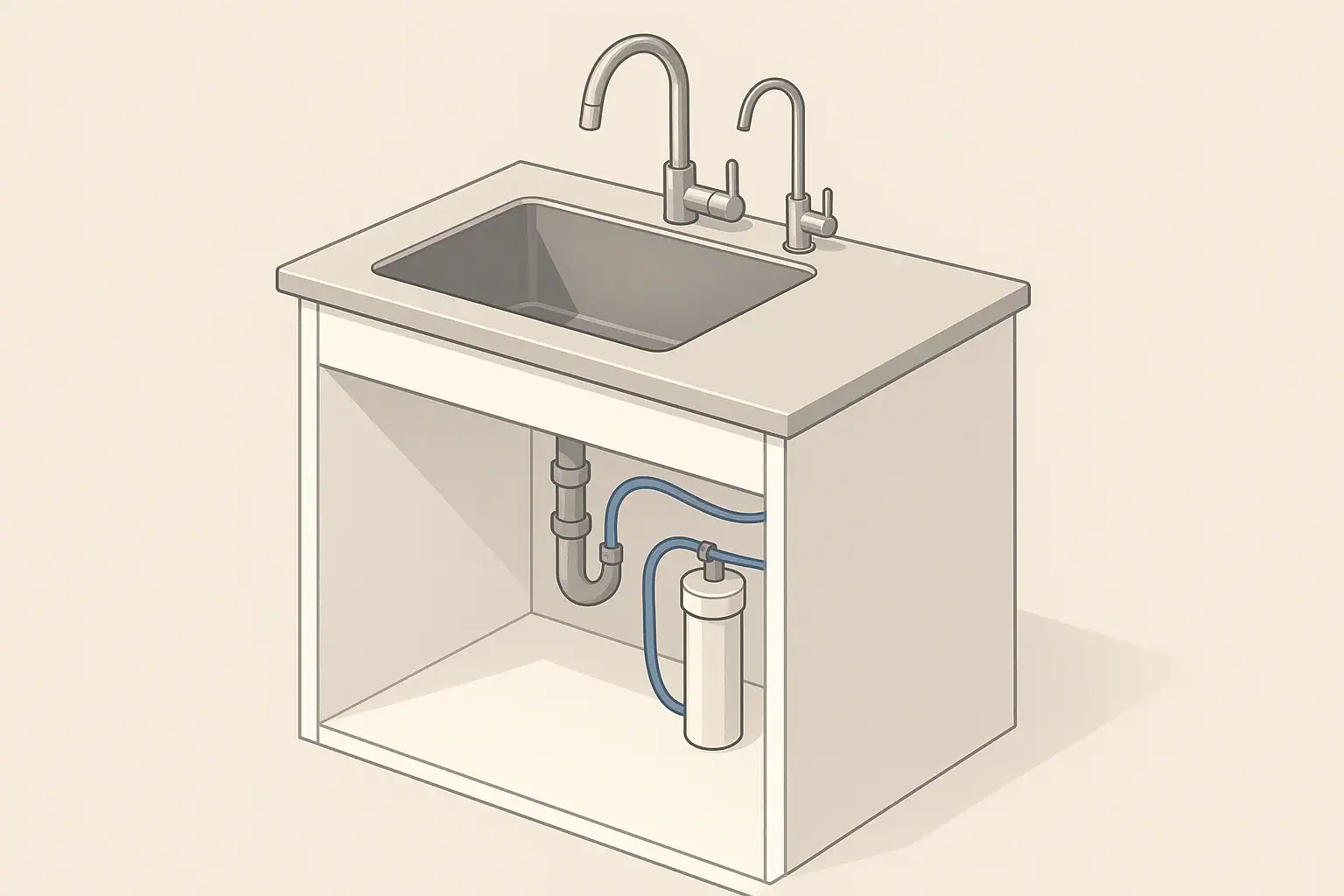
Why Chlorine Taste and Odor Show Up in Tap Water
Many U.S. water systems use chlorine or related disinfectants to control microbes in drinking water. This treatment is important for safety, but it often leaves a noticeable taste or smell at the tap. Some people describe it as “pool-like,” metallic, or simply unpleasant.
Key points about chlorine taste and odor:
- They usually become more noticeable with higher chlorine levels or warmer water.
- They are often strongest right after treatment changes or system flushing.
- Sensitive tasters may notice them even when levels are within normal utility ranges.
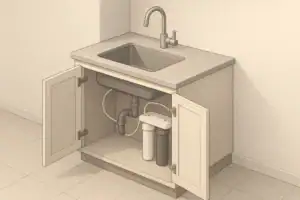
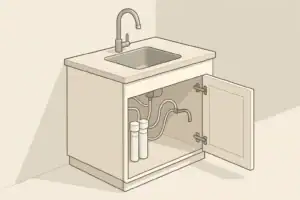
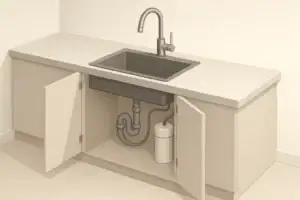
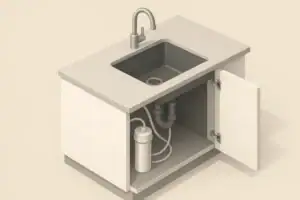
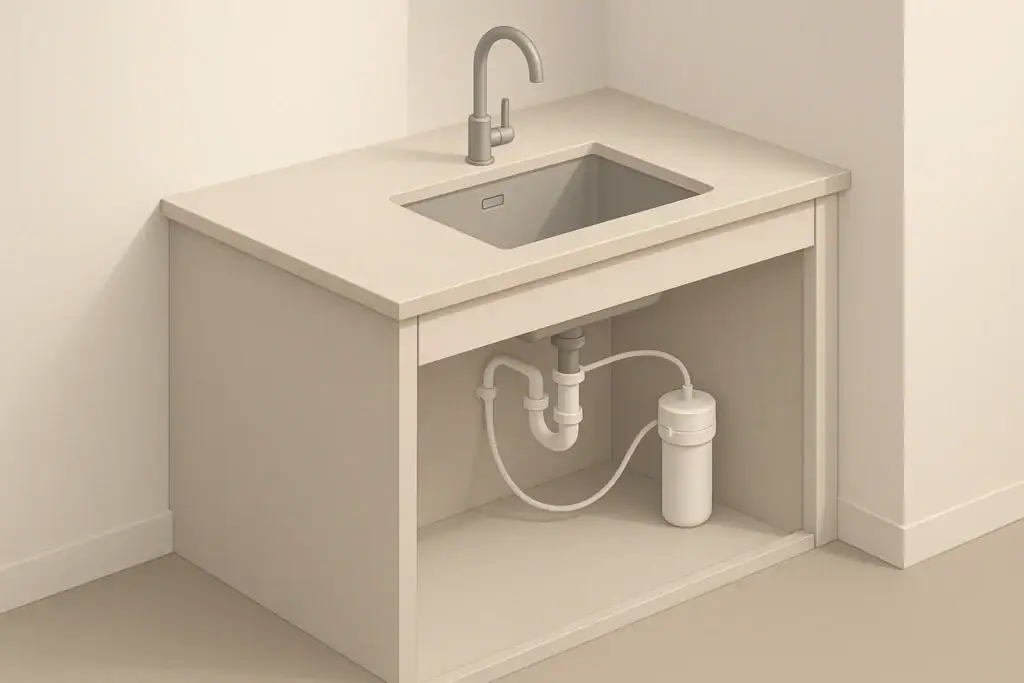
Under-sink filters are popular because they treat water at a single point of use, usually the kitchen sink, where most drinking and cooking water is drawn. They can be set up to focus on taste and odor without dramatically changing household plumbing.
How Under-Sink Filters Improve Chlorine Taste and Odor
Most under-sink systems that target chlorine taste and odor rely on carbon-based filtration. The exact media and configuration vary, but the basic idea is that chlorine and many odor-causing compounds interact with the carbon as water passes through it.
Common media used for taste and odor
- Granular activated carbon (GAC) — loose carbon granules in a cartridge; often used for general taste and odor polishing.
- Carbon block — powdered carbon fused into a solid block; often designed for more controlled flow and finer filtration.
- Blended media — carbon combined with other media (for example, for scale, sediment, or specific metals), depending on the claims.
What under-sink filters typically do for chlorine
- They are often designed to reduce noticeable chlorine taste and smell at the tap.
- The effect usually depends on the carbon type, contact time, and filter condition.
- Performance generally declines as the cartridge nears the end of its rated life.
For chlorine taste and odor, look for systems that reference NSF/ANSI 42 certification for aesthetic effects. This does not guarantee performance by itself; it indicates that the system has been evaluated against specific claims under test conditions. Always confirm what is on the product’s official certified claim sheet.
| Situation | Better fit | Why |
|---|---|---|
| Renters who cannot modify plumbing much | Pitcher | Requires no permanent installation and can be taken when moving |
| Families using the kitchen sink as main drinking source | Under-Sink | Provides dedicated treated water at a single, high-use location |
| Households with high daily drinking and cooking water use | RO | Often paired with a storage tank for frequent use at one tap |
| Homes with very limited countertop space | Under-Sink | Keeps filtration equipment out of sight inside the cabinet |
| Concerns about shower smell or irritated senses from steam | Shower | Treats water right where steam and odor are most noticeable |
| Primary goal is improving tap taste and odor only | Faucet-Mount | Attaches directly to the faucet for quick taste and odor improvement |
| Whole home preference for reduced chlorine smell | Whole House | Treats water before it reaches fixtures throughout the building |
| Filtered drinking water from refrigerator dispenser | Fridge/Inline | Focuses on improving taste and odor at the fridge tap and ice |
Example values for illustration.
Types of Under-Sink Filters for Chlorine Taste and Odor
Under-sink systems vary in complexity and capabilities. For chlorine taste and odor, you will usually see three broad categories.
Basic single-stage under-sink filters
These systems typically contain one carbon-based cartridge. They are often marketed mainly for taste and odor improvement and may include basic sediment reduction.
Useful when:
- Your main concern is chlorine taste and smell.
- Your water utility already provides treated, disinfected water.
- You prefer simple installation and low ongoing maintenance.
Multi-stage under-sink systems (non-RO)
These systems route water through more than one cartridge or stage. A common arrangement might include sediment prefiltration plus one or more carbon stages, or specialized media for a broader set of aesthetic and chemical concerns.
Useful when:
- You want taste and odor improvement plus additional aesthetic benefits, such as clarity.
- Your incoming water has noticeable particles or discoloration along with chlorine.
- You want more targeted treatment based on a water quality report.
Under-sink RO systems with carbon stages
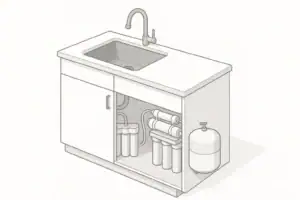
Reverse osmosis (RO) systems are more complex and are generally used for a wider range of dissolved substances. Most RO systems still rely on carbon stages before or after the RO membrane to address chlorine taste and odor.
Useful when:
- You want both taste and odor improvement and broader reduction of dissolved solids.
- You are comfortable with a slower dedicated drinking water faucet supplied from a storage tank.
- You understand that RO systems produce a separate drain stream and require careful installation.
If your main concern is only chlorine taste and odor, a simpler non-RO under-sink carbon system is often sufficient. If you also want to address a wider range of constituents, RO may be considered, but should be evaluated in the context of household water needs and plumbing constraints.
Key Features to Evaluate for Chlorine Taste and Odor
When focusing on chlorine taste and odor reduction, several system attributes are particularly important. These features influence everyday usability, as well as the consistency of taste over the cartridge’s life.
1. Certified performance for aesthetic effects
For chlorine taste and odor, look for reference to NSF/ANSI 42. This standard generally covers aesthetic aspects such as:
- Chlorine taste and odor.
- Particulate reduction in specified size ranges.
- Other basic aesthetic changes, depending on the claims.
Certification is claim-specific. Always confirm:
- Whether “chlorine taste and odor” is explicitly listed on the certified claim sheet.
- The conditions under which the system was tested, such as flow rate and capacity.
2. Dedicated faucet vs. full-flow configuration
Under-sink systems usually come in one of two layouts:
- Dedicated filtered faucet — The filter serves a separate small faucet at the sink. This limits flow to drinking and cooking use, which can extend cartridge life.
- Full-flow inline — The filter is installed on the cold water line feeding the main kitchen faucet. All cold water passing through the faucet is filtered, which can use up capacity faster but is convenient for larger volumes.
For chlorine taste and odor only, many households find a dedicated faucet sufficient, since it prioritizes water that is actually consumed.
3. Flow rate feel at the tap
Filter cartridges introduce resistance to flow. Systems designed for stronger chlorine taste and odor reduction may use tighter carbon blocks that can feel slower at the faucet, especially as the cartridge nears the end of its life.
Consider:
- How patient you are with a slower stream when filling larger pots or pitchers.
- Whether your home’s water pressure is already on the low side.
- Installing the filter on a dedicated faucet if you want to keep the main faucet unrestricted.
4. Cartridge change process
Because chlorine taste and odor performance generally declines as carbon becomes saturated or fouled, easy and timely replacement is important.
Check how cartridges are changed:
- Twist-off heads that combine housing and cartridge for a clean swap.
- Standard housings that require opening a canister and replacing an inner cartridge.
- Push-fit connections that let you disconnect and reconnect tubing without tools, if needed.
Choose a style that you can realistically maintain on schedule, especially if the filter is mounted in a tight space.
| Standard | What it generally covers | What to verify |
|---|---|---|
| NSF/ANSI 42 | Generally covers aesthetic effects such as chlorine taste and odor and basic particulate reduction, depending on the certified claim list | Verify the product’s certified contaminant list and conditions to confirm that chlorine taste and odor are specifically included |
| NSF/ANSI 53 | Often relates to reduction of certain health-related contaminants, which may include specified metals or other substances, depending on the certified claim list | Check the official claim sheet to see exactly which contaminants are covered and under what flow and capacity assumptions |
| NSF/ANSI 401 | Generally addresses emerging compounds such as selected pharmaceuticals or chemicals, which may be included on the certified claim list | Review the detailed certified contaminant list rather than relying on broad marketing terms, and note any usage conditions |
| NSF/ANSI 58 (RO) | Often applies to reverse osmosis systems, generally including performance and structural requirements for RO units, depending on the certified claim list | Confirm which specific reduction claims the RO system is certified for and the test conditions used to support those claims |
Certification is claim-specific and should be verified using the product’s official documentation.
Comparing Under-Sink Filters to Other Options for Chlorine Taste and Odor
Before committing to an under-sink system, it helps to compare it to other common formats. Each has trade-offs in installation, convenience, and ongoing cost.
Under-sink vs. pitchers
- Under-sink provides on-demand filtered water at the faucet with no waiting, which is helpful for cooking and frequent use.
- Pitchers require manual filling and take up refrigerator space but avoid any plumbing changes.
If you mainly want better-tasting cold drinking water and do not mind refilling, a pitcher may suffice. For cooking and higher volumes, under-sink filtration is often more convenient.
Under-sink vs. faucet-mount systems
- Under-sink systems keep the filter out of sight and can offer more robust multi-stage options.
- Faucet-mount units are easy to install and remove but may feel bulky and can be incompatible with some faucet styles.
Both can improve chlorine taste and odor, depending on their design and certifications. The main differences are appearance, space, and how much you want at the faucet itself.
Under-sink vs. whole-house filters
- Under-sink treatment focuses on drinking and cooking water at a single point of use.
- Whole-house (point-of-entry) treatment aims to address taste and odor throughout the home, including showers and laundry.
If chlorine odor bothers you most while showering, a whole-house or shower-specific filter may be more helpful. If it is mainly a problem in beverages and food, under-sink is often a practical first step.
Reading Performance Claims for Chlorine Taste and Odor
Marketing language around water filtration can be confusing. Focusing on verifiable information helps you choose a system that aligns with your goals.
Check the certified claim list, not just the box
Instead of relying on general phrases, look for documentation that shows:
- Which aesthetic claims the filter is certified for (for example, “chlorine taste and odor”).
- The type of test water used in certification.
- The flow rate and capacity at which those results were demonstrated.
Statements about what a filter “removes” depend on the certified claim list; verify certification documentation before assuming performance for any particular substance.
Consider capacity in relation to your use
Filter cartridges are rated for a certain volume of water. Capacity is often based on conditions in the test protocol, which may differ from your tap.
Estimate your usage by asking:
- How many times per day you fill glasses, bottles, and cooking pots from the filtered tap.
- Whether you use filtered water for tasks like rinsing produce or only for direct consumption.
A household using many gallons per day will reach the rated capacity sooner than one using only a few. This affects both cost and maintenance scheduling.
Watch for early signs of reduced performance
Over time, the cartridge may become less effective for taste and odor, even before reaching its maximum rated capacity. Common indicators include:
- Chlorine taste or smell becoming noticeable again.
- Flow rate decreasing more than usual.
- Water appearing less clear, if the filter also handles particulates.
If you notice these changes and the cartridge is near or past the suggested replacement point, it is generally a good time to replace it.
Installation and Space Planning Under the Sink
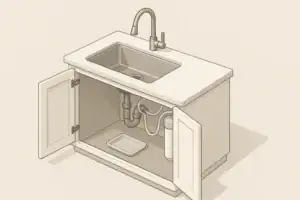
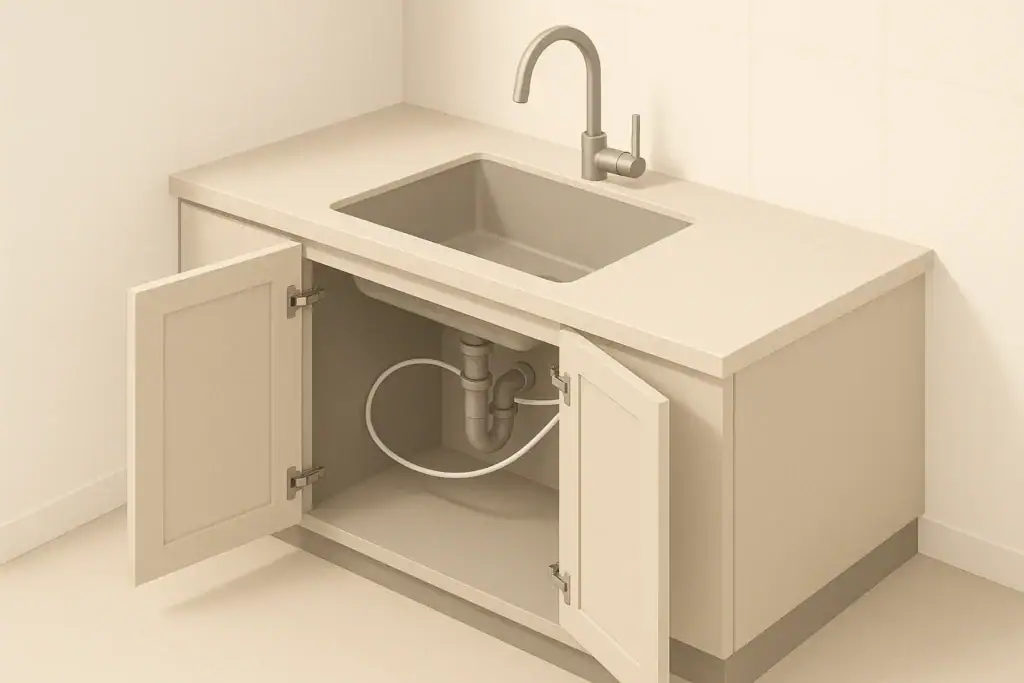
Under-sink cabinets can be crowded with plumbing, garbage disposals, and storage items. Planning the layout ahead of time makes installation and future cartridge changes smoother.
Assess available space and access
Before selecting a system, open the cabinet and note:
- Vertical clearance for the filter housing and cartridge removal.
- Obstacles such as garbage disposals, pull-out trash cans, or shelving.
- Where cold water and, if needed, drain connections are located.
Make sure you will be able to turn and remove the cartridge without moving other items or straining hoses.
Know your comfort level with plumbing tasks
Some under-sink systems use simple adapters and flexible tubing. Others may require more detailed work. Generally safe homeowner steps include:
- Shutting off the cold water supply valve at the sink.
- Relieving pressure by opening the faucet before cutting into any line.
- Using manufacturer-provided adapters and fittings as instructed.
If you are not comfortable with plumbing, consider having a professional handle installation. This reduces the risk of leaks and helps ensure correct routing.
Planning for a dedicated faucet
Many under-sink filters for drinking water use a small additional faucet. This usually requires drilling a hole in the sink deck or countertop, unless an existing auxiliary hole is available.
Check:
- Whether your sink already has an unused knockout or accessory hole.
- Countertop material and whether drilling is practical.
- The reach and height of the faucet for filling bottles and pots.
If drilling into the countertop is not an option, look for systems that can share a current faucet or consider other formats like faucet-mount or pitchers.
Maintenance, Replacement, and Consistent Taste
Maintaining your under-sink filter on a regular schedule is essential for consistent chlorine taste and odor performance. Neglected cartridges can gradually lose effectiveness, leading to inconsistent taste and possible flow issues.
Typical replacement cues
Manufacturers often provide both time-based and volume-based guidance, such as replacement every certain number of months or after a specified number of gallons. These are general guidelines, since actual life depends on your water quality and usage patterns.
Common cues include:
- A calendar reminder based on time in service.
- An estimated volume tracker or manual log, if you keep one.
- Noticeable return of chlorine taste or odor, indicating the cartridge is near exhaustion.
Maintaining the area around the filter
Occasional housekeeping under the sink helps prevent problems:
- Keep cleaning chemicals away from filter housings and tubing where possible.
- Check for any signs of moisture or drips during routine cartridge changes.
- Ensure hoses and fittings are not under strain from stored items.
If the manufacturer recommends periodic sanitizing of housings or lines, follow their procedure carefully during cartridge replacement.
Tracking multiple cartridges in multi-stage systems
In multi-stage under-sink systems, different cartridges may be rated for different capacities or recommended change intervals. To keep taste and odor performance consistent:
- Record installation dates for each stage.
- Follow the shortest recommended change interval if stages are linked.
- Consider replacing all stages at once if they have similar service lives, to simplify tracking.
| Step | What to record | How to estimate |
|---|---|---|
| Start date | Date when a new cartridge or set of cartridges is installed | Write the date on a sticker under the sink and in a calendar |
| Daily gallons used | Approximate amount of filtered water used per day | Count typical glasses, bottles, and cooking pots to estimate total use |
| Rated capacity | The capacity listed on the cartridge documentation | Use the value from the product literature for planning only |
| Next change date ≈ start date + (capacity ÷ daily use) | Estimated date when the cartridge will reach its planned capacity | Divide the rated capacity by estimated daily use to get days of service, then add to the start date |
| Early warning signs | Notes on changes in taste, odor, or flow | If chlorine taste or odor returns early, plan an earlier replacement |
| Backup cartridge reminder | Whether a spare cartridge is on hand | Set a reminder to purchase a new cartridge before the estimated change date |
| Cleaning/sanitizing reminder | Any recommended housing cleaning or sanitizing steps | Review the manual during each change and note any required periodic cleaning |
This worksheet is a planning aid; actual replacement schedules vary with water quality and usage.
Putting It All Together for Better-Tasting Tap Water
For many homes on treated municipal supplies, an under-sink carbon-based system is a practical way to reduce chlorine taste and odor at the kitchen sink. By matching the system type to your space, usage, and comfort with installation, and by paying attention to certifications and replacement schedules, you can maintain more consistent taste over time.
Using your local water quality report, checking claim-specific certification documentation, and tracking cartridge changes will help you choose and maintain an under-sink filter that fits into your broader home water filtration strategy.
Frequently asked questions
How effective are under-sink filters at removing chlorine taste and odor?
Carbon-based under-sink filters (granular or carbon block) are generally effective at reducing free chlorine taste and odor when sized and maintained properly. Effectiveness depends on carbon type, contact time, and remaining cartridge capacity, so certified performance and timely replacement are important for consistent results.
Which certification should I check to confirm chlorine taste and odor reduction?
Look for NSF/ANSI 42 certification, which covers aesthetic effects such as chlorine taste and odor. Verify that “chlorine taste and odor” appears on the product’s certified claim sheet and check the test conditions (flow rate and capacity) used to support the claim.
Is a dedicated filtered faucet better than a full-flow setup for chlorine taste?
A dedicated faucet concentrates filtered water for drinking and cooking and typically extends cartridge life because it treats less total volume. A full-flow configuration filters all cold water but will consume capacity faster and can reduce flow at the main faucet; choose based on how much filtered water you use and where you want it.
How often should I replace the carbon cartridge to keep chlorine taste and odor controlled?
Replacement intervals vary by cartridge capacity and household use, but many systems recommend replacing cartridges every 6–12 months or after a specified gallonage. Monitor for early signs such as return of chlorine smell/taste or reduced flow and keep a spare cartridge on hand to avoid lapses in performance.
Can a standard under-sink carbon filter remove chloramines as well as chlorine?
Standard activated carbon is less effective against chloramines than against free chlorine; some specialized catalytic carbon media and specific multi-stage systems can reduce chloramines but not all carbon cartridges will. If chloramines are used by your water provider, verify that the system is certified for chloramine reduction before assuming it will address that compound.
- NSF/ANSI standards explained (42/53/401/58)
- Clear trade-offs: pitcher vs faucet vs under-sink vs RO
- Maintenance planning: cost per gallon and replacement cadence