Why “NSF Certified” Can Be Confusing
When shoppers see a label that says “NSF Certified” on a water filter, it is easy to assume the entire system has been fully tested for every claim on the box. In reality, NSF and similar certifications can apply to different things:
- Individual filter cartridges or components
- A complete assembled system
- Specific performance claims (such as chlorine reduction)
- Only materials and structural integrity, not contaminant reduction
Understanding what exactly is certified helps you make realistic, practical decisions about home water filtration. It also helps you compare pitchers, faucet filters, under-sink units, reverse osmosis (RO) systems, and refrigerator filters on equal terms.
What NSF Certification Usually Covers
NSF (formerly the National Sanitation Foundation) develops standards and testing protocols commonly used in the water filtration industry. Other labs may also test to these same standards. While details vary by product and standard, NSF-style certifications usually fall into a few broad categories:
1. Material safety and structural integrity
Some certifications focus on whether the materials that contact water are safe and whether the housing can withstand pressure. These tests are about construction, not what the filter actually removes. Typical concepts include:
- Materials do not leach unacceptable levels of substances into water (under test conditions).
- The housing does not crack, burst, or leak when exposed to rated pressures.
- Parts like O-rings and fittings perform as intended.
A system can pass this type of testing even if no specific contaminant reduction claims are made.
2. Performance for specific contaminants or claims
Other certifications focus on how well the product reduces certain contaminants under defined conditions. Examples of claim types include:
- Chlorine taste and odor reduction
- Particulate or sediment reduction down to a specific size range
- Lead or other heavy metal reduction
- Cyst or microbial surrogate reduction (for some standards)
- Basic TDS reduction for RO-style products
These tests are performed at specific flow rates, pressures, and durations. The results apply to those conditions, not necessarily to every real-world scenario in a home.
3. System versus component certification
NSF-style testing may apply to:
- A component – such as a carbon cartridge, a membrane, or a housing
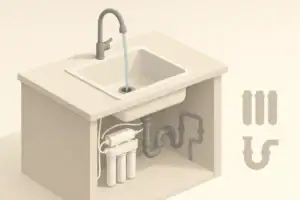
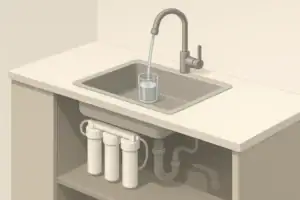
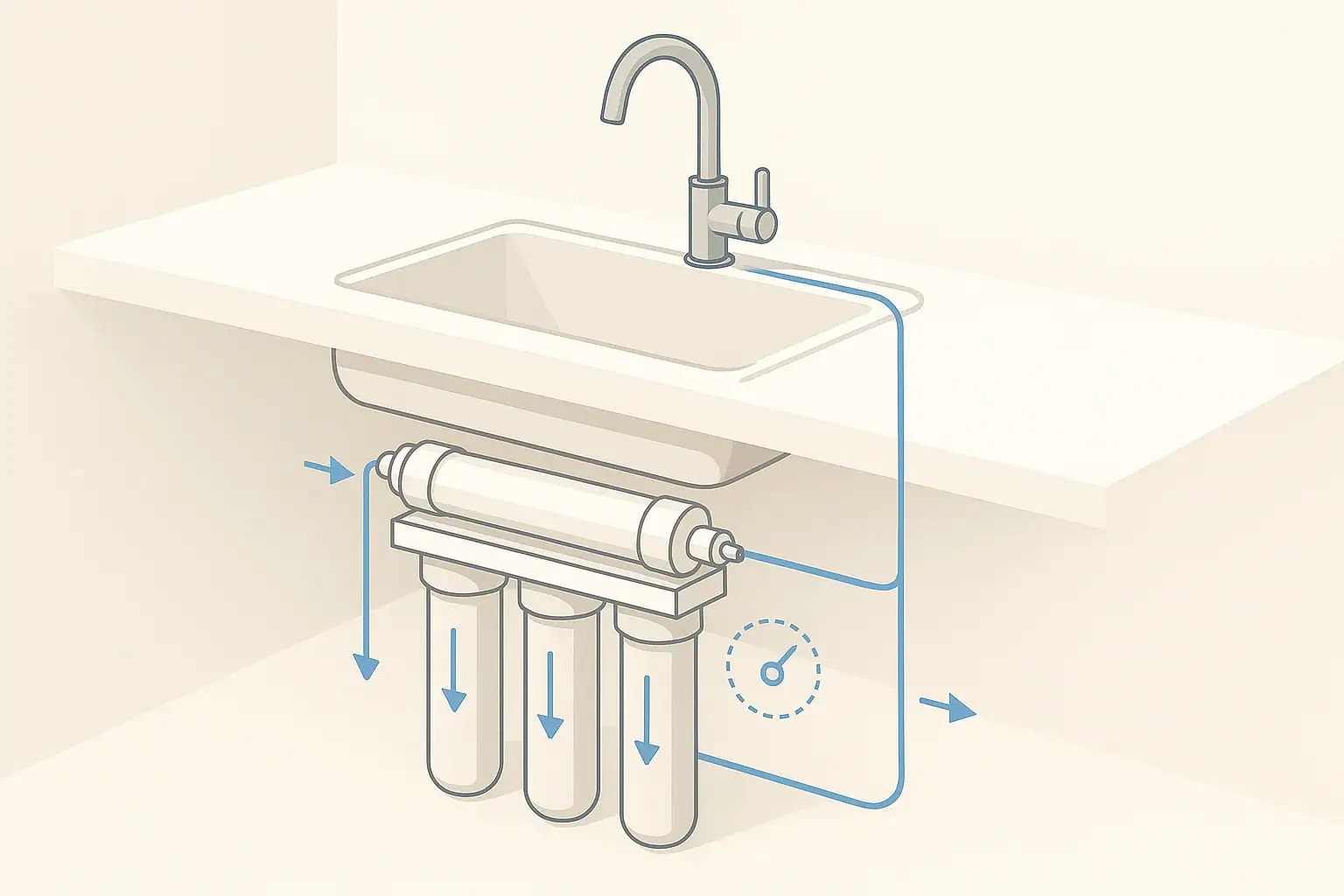
- A complete system – such as an assembled under-sink unit with specific filters and tubing
This distinction is critical. A housing might be certified to hold pressure safely, but that does not mean the entire assembled system has been tested for all performance claims printed on a retail box.
Example values for illustration.
| What is certified? | Typical focus | What it usually means in practice |
|---|---|---|
| Filter housing only | Material safety and pressure | Body resists leaks and does not leach above test limits under conditions used |
| Cartridge only | Material safety and selected performance | Media meets safety criteria and may reduce specified contaminants when used as tested |
| RO membrane element | TDS reduction performance | Membrane can reach a stated percent TDS reduction under set pressure and flow |
| Point-of-use system | Overall system performance | Assembled unit, with listed cartridges, meets claimed reductions and flow conditions |
| Point-of-entry system | Structural and basic performance | Whole-house housing withstands pressure and may meet certain reduction claims |
| Faucet or valve component | Material contact safety | Surface that touches water meets contact criteria, but no contaminant reduction implied |
Always read the product documentation to see which parts and claims are actually covered.
Whole-System Certification vs. Component Certification
The central question is whether “NSF Certified” applies to the entire product you install or only to one part inside it. The answer depends on how the product was submitted for testing and how it is labeled.
When the whole system is certified
In a fully certified point-of-use system, the lab typically tests the system as delivered to the consumer, including:
- All included cartridges
- Housings and manifold
- Internal tubing and fittings that carry water
- Any dedicated faucet or outlet connection included with the kit
Performance claims, such as reduction of a specific contaminant, apply to the complete setup, operated under the test conditions (for example, a set flow rate and inlet pressure). If you change cartridges, plumbing layout, or flow rate significantly, the real-world performance may differ from test results.
When only parts or media are certified
Some products use certified components but are not themselves certified as assembled systems. For example:
- A filter manufacturer buys an NSF-tested carbon block and installs it in a custom housing.
- A DIY RO system is assembled from certified housings, membrane, and fittings from different sources.
- A refrigerator includes a cartridge that has been tested for specific reductions, but the full appliance has not been tested as a water filter system.
In these cases, the component-level certification usually confirms certain material safety or performance characteristics for that piece alone. Once integrated into a new configuration, the combined behavior of all parts is not necessarily covered by the original testing.
Why the distinction matters for home users
Whether a full system or only a part is certified can influence practical decisions such as:
- Filter choice: Swapping to an unfamiliar cartridge may change performance from the tested configuration.
- Flow rate planning: Running water much faster than the tested rate can reduce contact time and contaminant reduction.
- Plumbing layout: Long or restrictive tubing runs can alter pressure and effective operation.
Understanding the scope of certification lets you interpret claims realistically instead of treating a single logo as a guarantee of all aspects of performance.
How to Read NSF-Style Labels and Claims
Labels and documentation often contain clues about what exactly has been tested. While specific wording varies, you can learn how to verify a filter’s certification and look for several patterns.
Check whether it names a system or a part
Pay attention to whether the language refers to:
- The entire model number of a complete system
- Only a cartridge, membrane element, faucet, or housing
If documentation specifies “cartridge XYZ tested to Standard …” but does not state that the full system is certified, assume the certification applies to that cartridge, not to whatever housing or plumbing you choose to pair with it.
Look for which standard is mentioned
Different NSF-style standards focus on different aspects of water treatment. Without going into technical detail, this helps you know whether the emphasis is on materials, basic aesthetic effects, or specific contaminants. Typical distinctions include:
- Standards that concentrate on material safety and structural integrity
- Standards that address aesthetic issues like chlorine taste and odor
- Standards that cover health-related contaminant reduction for point-of-use systems
- Standards used for RO-style systems, which may include TDS reduction and component safety
The presence of a standard number alone does not tell you which contaminants were tested. You still need to check the list of specific claims.
Identify which contaminants (or properties) are actually listed
Many products highlight a long list of substances in marketing material, but only a more limited list will actually be associated with certification testing. Look for a clear list of claims such as:
- Reduces chlorine taste and odor
- Reduces particulate down to a certain class
- Reduces nominal levels of certain metals under defined conditions
Anything not explicitly listed should not be assumed, especially for more complex contaminants. Also keep in mind that tested reductions are measured under controlled conditions that may differ from your home’s water chemistry, temperature, or pressure.
Examples by Filter Type: System vs. Part
To make this more concrete, it helps to consider common home filtration setups and how certification often applies.
Pitcher and countertop filters
Pitcher-style and gravity-fed countertop filters are often sold as complete systems. In many cases:
- The filter cartridge may be certified for specific reduction claims.
- The pitcher or reservoir may be evaluated for material contact and structural integrity.
- Documentation sometimes states that the system as a whole has been tested for certain performance claims.
However, some containers use generic cartridges purchased from other suppliers. In that case, it is possible only the cartridge itself has test data, not the assembled set you see in a store.
Faucet-mounted and refrigerator filters
Faucet-mounted filters and built-in refrigerator filters often rely heavily on internal cartridges:
- The cartridge is frequently where performance claims are focused.
- The plastic body and faucets may be tested primarily for material safety and pressure.
Because refrigerator water paths also include internal tubing, valves, and sometimes ice-making components, the path from the filter to the glass is not always part of the cartridge-focused testing. This can influence flavor and appearance, especially if internal plumbing is long or rarely flushed.
Under-sink and RO systems
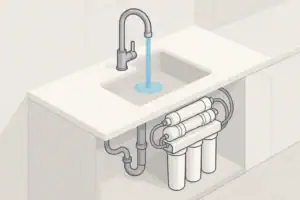
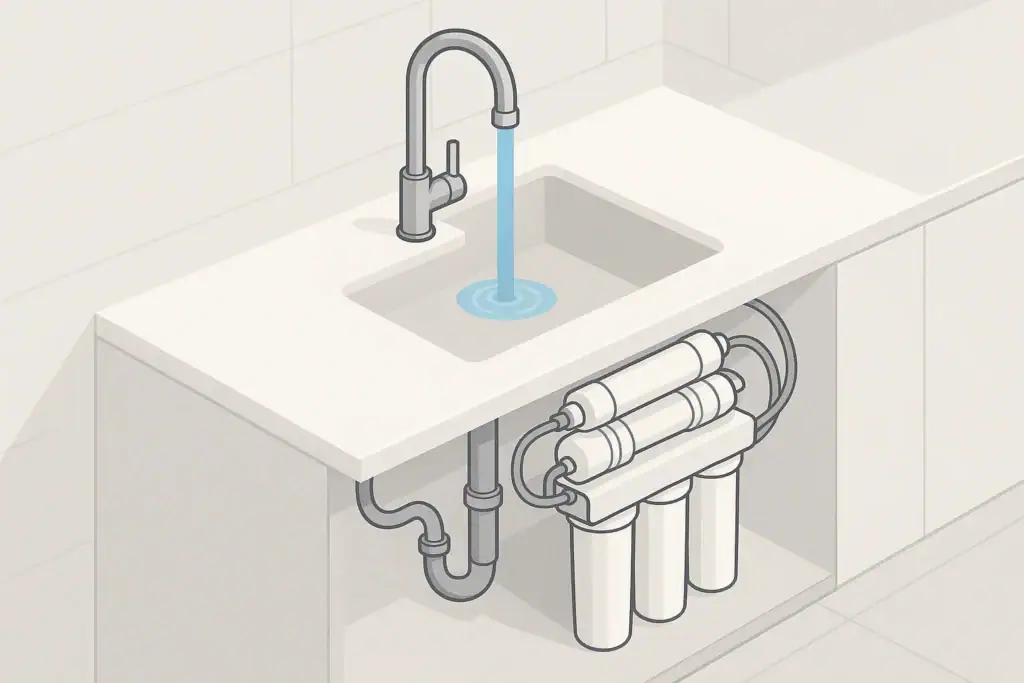
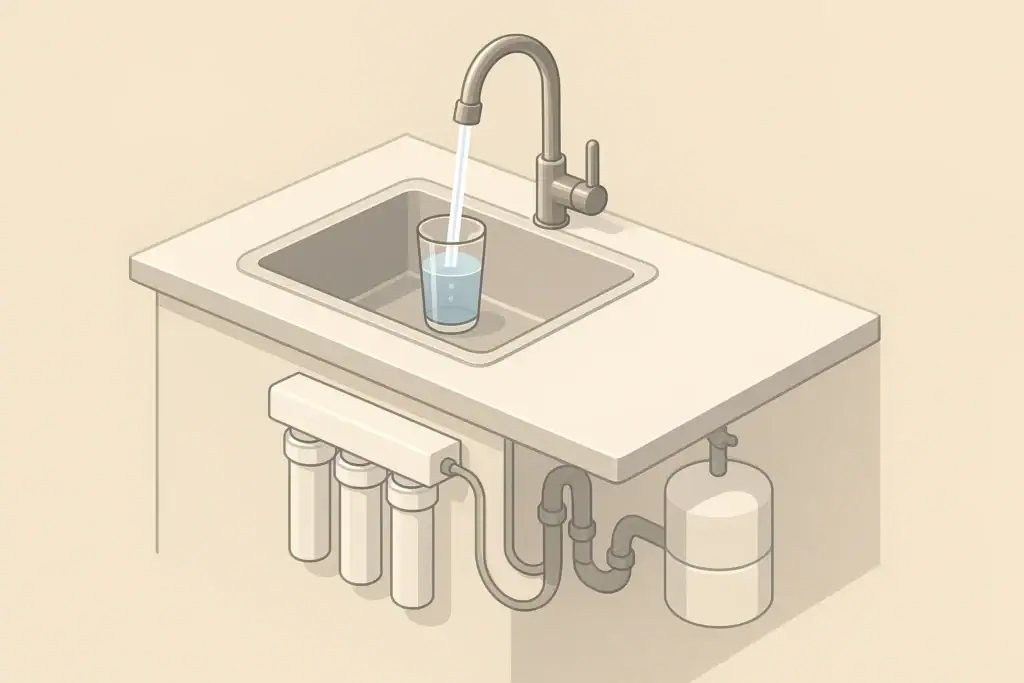
Under-sink carbon and RO systems are where the difference between system and component certification becomes especially important:
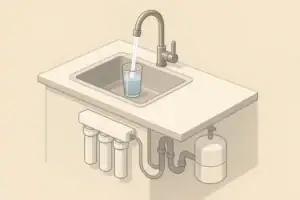
- Some kits are delivered as fully assembled systems with defined stages and cartridges, and the complete system may be certified.
- Others are modular: a manifold, housings, and cartridges that can be mixed and matched. Often, each piece carries its own mark, but the full combination you build at home has never been tested as one system.
RO systems may show certification for the membrane element’s TDS reduction while prefilters and postfilters have different tests. If you change stage order or insert extra components, real-world performance can differ from the original tested configuration even if every part has its own certification mark.
Certification, Flow Rate, and Pressure: Why Operating Conditions Matter
NSF-style testing is done at specific flow rates, pressures, temperatures, and sometimes influent water qualities. This matters for planning your system because performance can change if you operate outside those ranges.
Flow rate and contact time
Most contaminant reduction by carbon and other media depends on contact time. In practical terms:
- Higher flow rate = less contact time = potentially lower reduction of some contaminants.
- Lower flow rate = more contact time = may help certain reductions but can reduce convenience.
If a product is tested at, for example, a moderate flow rate, running it at several times that rate through larger plumbing can lead to different outcomes than the test data suggests.
Pressure and multi-stage systems
Pressure affects how RO membranes and other stages perform. In many homes:
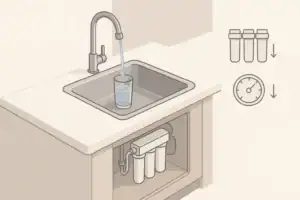
- Low pressure can reduce RO production rate and change TDS reduction behavior.
- High pressure can increase flow through carbon stages, potentially reducing performance for some contaminants.
Certification testing typically falls within a specific pressure range. If your home’s pressure is far above or below that range, you may need to plan around that with pressure regulation or by selecting technologies less sensitive to pressure changes.
Example values for illustration.
| Test condition example | Common home situation | What to consider |
|---|---|---|
| Moderate flow rate through carbon cartridge | High-flow kitchen faucet used at full open | Running much faster than tested may lower certain reductions; consider slower use for key uses |
| Standard municipal water pressure range | Low-pressure upper-floor apartment | RO output and performance may drop; storage tank fill time may increase |
| Moderate inlet TDS for RO test | Very high TDS municipal or well water | Percent TDS reduction may still occur, but final TDS value will scale with the higher starting level |
| Municipal-type influent for chlorine reduction | Water with chloramine or mixed disinfectants | Performance can differ from chlorine-only tests; check claims specific to your disinfectant type |
| Periodic cartridge replacement during test | Cartridge used far beyond suggested interval | Reduction performance can decline as media exhausts or clogs, even if initially certified |
| Clean new plumbing in test stand | Existing household plumbing with deposits | Old piping can influence color, taste, or particles after the filter, outside test conditions |
Matching your setup to the tested operating range improves how closely home performance can track the lab results.
Related guides: NSF/ANSI 42 vs 53: Which One Matters for You? • How to Verify a Filter’s Certification Claim (Step-by-Step) • What NSF/ANSI 58 Covers for RO Systems (and What It Doesn’t)
Practical Takeaways for Choosing and Using Certified Filters
Putting everything together, there are several practical habits that help you use NSF-style information effectively when planning or maintaining home water filtration.
Clarify what is certified before you buy
Before deciding on a filter, try to determine:
- Whether the entire system you will install is certified, or only individual parts.
- Which contaminants or properties the certification covers.
- Any operating conditions (flow, pressure, replacement interval) tied to those claims.
This helps you avoid assuming broad protection when the certification applies only to a narrow set of claims.
Preserve the tested configuration when possible
If a complete system is certified, using the specified cartridges and maintaining the designed stage order generally keeps you closer to the tested performance. Substituting different media or altering plumbing may change how water interacts with each stage.
Align maintenance with realistic expectations
Cartridge life in test protocols is often based on typical usage volumes. In practice:
- Heavy use may reach the tested capacity much sooner than expected.
- Light use may extend the calendar life but not necessarily the performance, especially for filters exposed to intermittent stagnation.
Following the more conservative of volume-based and time-based replacement guidance usually provides a practical balance between cost and predictable performance.
Use certification as one tool, not the only one
Certification is a useful decision aid, but it does not replace:
- Knowing your source water characteristics through local reports or testing
- Choosing the right technology (carbon, sediment, RO, UV, etc.) for your situation
- Installing systems in a way that respects pressure, flow, and plumbing safety
- Monitoring for changes in taste, odor, or flow as early indicators of maintenance needs
When you interpret “NSF Certified” in the context of your actual plumbing, flow demands, and maintenance habits, you get a more realistic picture of what your home filtration setup can reasonably do.
Frequently asked questions
Does “NSF Certified” always mean the whole filter system is tested?
No. The label can refer either to a complete assembled system or to individual components (cartridges, membranes, housings). You need to check the documentation to see which was tested.
How do I tell if the certification covers the assembled system or just a part?
Look for wording that names a full model number or explicitly states “system” testing versus phrases that reference a specific cartridge, membrane, or housing and list the applicable standard or contaminants.
If each component is certified, will the assembled system perform the same as in test reports?
Not always. Component certification confirms that part under test conditions, but combining parts in a new configuration can change flow, contact time, and overall performance unless the full assembly was tested.
Will certification guarantee the same results in my home?
Certifications describe performance under defined flow, pressure, temperature, and influent conditions. Differences in your plumbing, water chemistry, flow rates, or maintenance schedule can lead to different real-world results.
Recommended next:
- NSF/ANSI 42 vs 53: Which One Matters for You?
- NSF/ANSI 401 Explained: Emerging Contaminants in Plain English
- How to Verify a Filter’s Certification Claim (Step-by-Step)
- Certified Claims vs “Tested to…”: Marketing Language Decoded
- What NSF/ANSI 58 Covers for RO Systems (and What It Doesn’t)
- More in Certifications & Standards (NSF/ANSI) →
- NSF/ANSI standards explained (42/53/401/58)
- Clear trade-offs: pitcher vs faucet vs under-sink vs RO
- Maintenance planning: cost per gallon and replacement cadence