Why Filter Certification Claims Matter
Certification claims on water filters can be confusing. Labels often mention standards, numbers, and logos without clearly stating what the filter was actually tested to do. Learning how to verify those claims helps you understand whether a filter is appropriate for your water, your plumbing, and your expectations.
In the United States, many residential filters refer to well-known voluntary standards such as NSF/ANSI 42 vs 53. These standards focus on things like:
- Structural integrity (can the housing handle household water pressure)
- Material safety (materials in contact with water do not leach harmful levels of substances)
- Performance for specific contaminants (for example, chlorine taste and odor reduction)
- Performance for operational issues (for example, particulate reduction, flow rate under pressure)
Not every filter is certified. Some are only tested to meet certain criteria, while others are formally certified by an independent organization. The steps below help you tell the difference and verify what a claim really means.
Step 1: Find the Exact Certification Claim on the Label
The first step is to identify the exact wording used on the package or product page. Small changes in wording can mean very different things. Look closely at:
- The front of the box or product page headline
- The fine print on the side or back panel
- The instruction manual or data sheet
- The label printed directly on the filter cartridge or housing
Be cautious of vague or partial phrases. For example, there is a difference between:
- “Tested to [standard]” – suggests some level of testing, but not necessarily formal certification.
- “Certified to [standard] by [certifier]” – indicates an independent third party has confirmed performance.
- “Designed to meet [standard]” – a design goal, not verified performance.
Write down or take a picture of:
- The exact standard number(s) mentioned (for example, a number like “42” or “53” if present)
- The certifying body name, if any
- Any reference to specific contaminants or reduction claims
- The full model number of the filter or system
Example values for illustration.
| Item | What to Look For | Example Entry |
|---|---|---|
| Standard reference | Number or code connected to performance or safety | “Standard 42” noted near chlorine claim |
| Wording type | “Certified to,” “Tested to,” or “Designed to meet” | “Certified to Standard 42” |
| Certifier name | Independent organization identified by name or mark | Certification mark next to standard number |
| Contaminant list | Specific substances or performance statements | “Reduces chlorine taste and odor” |
| Model or part number | Exact filter or system identifier | Model ABC123 on housing label |
| System type | Pitcher, faucet, under-sink, refrigerator, etc. | Under-sink two-stage system |
Step 2: Confirm the Certifying Organization
Once you have the label details, the next step is to confirm who, if anyone, actually certified the product. Independent certification bodies maintain public listings of certified products. While you should always use the official websites and databases to confirm details, the general process is similar:
- Locate the name or logo of the certifying body on the product or box.
- Visit the certifier’s official website (typed manually, not through unverified links).
- Look for a public listings or product search section.
- Search using the manufacturer name, brand family, or model number.
If you cannot find the model listed under the certifier named on the box, consider the possibility that:
- The model number changed and the packaging has not been updated.
- The certification expired or was withdrawn.
- The claim refers to a related component (for example, only the cartridge, not the whole system).
Verifying that a product shows up in an official database helps distinguish between a general marketing reference to a standard and an independently verified claim.
Step 3: Match the Exact Model and Configuration
Filter systems often consist of multiple cartridges and housings. A certification may apply to:
- The complete system as sold (including all stages and fittings)
- Only a specific cartridge or component
- Only certain versions of a product line (for example, specific flow rates or filter sizes)
When you find a listing in a certification database, make sure the information matches:
- Model number – must be the same as on your product or in your manual.
- Configuration – number of stages, presence of storage tank, type of faucet, etc.
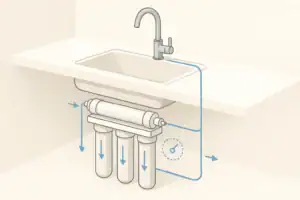
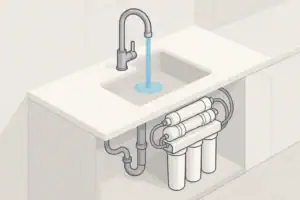
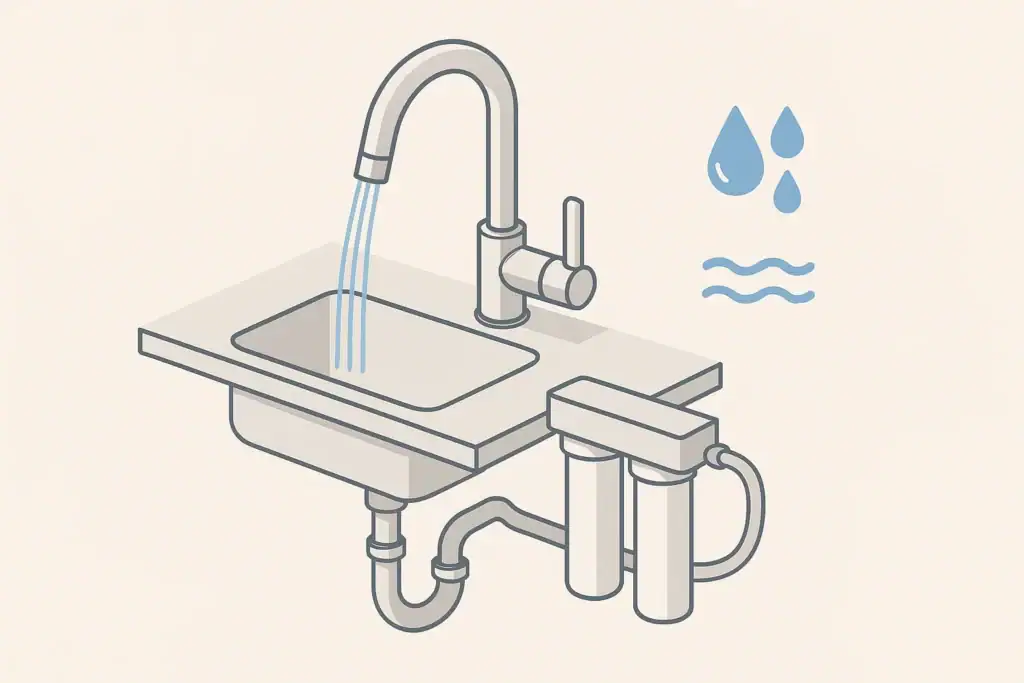
- Installation type – under-sink, countertop, faucet-mount, refrigerator, pitcher, or whole-house.
- Intended use – point-of-use (at one tap) versus point-of-entry (for the whole building).
If you have replaced a cartridge with a different part than originally supplied, that may change how closely your current setup matches the certified configuration. The certification listing typically describes the components that were tested together.
Step 4: Read the Performance Claims in the Listing
Once you confirm that the model appears in the certifier’s database, examine the details of the listing. A single standard can cover many types of performance. The listing usually specifies:
- Which specific claims were evaluated (for example, chlorine reduction, particulate reduction)
- Which contaminants or surrogate substances were tested
- Conditions of the test, such as example pressures or flow rates
- Any limitations, such as “for use with municipally treated water”
Important points to keep in mind:
- Focusing on tested claims: If a contaminant is not listed in the certification documentation, that filter was not necessarily tested or certified to reduce it, even if the media might help.
- Avoiding assumptions: A certification for taste and odor does not automatically imply reduction of other substances.
- Understanding capacity: Filters are typically tested for performance over a given “rated capacity,” such as a certain number of gallons. Performance beyond that capacity is not guaranteed.
Many listings provide a performance data sheet. If available, read it carefully. It may show example influent (incoming) and effluent (outgoing) concentrations used during testing and how performance changed over the test duration. These example values describe the test setup, not your exact water.
Step 5: Compare Certified Claims to Your Water and Use Case
Certification alone does not guarantee that a filter is the best match for your situation. After confirming the claim, compare the certified performance with your own water conditions and usage patterns.
Consider Your Water Source
Think about where your water comes from and what general issues may be present:
- City or community water: Often treated and disinfected before distribution. Common concerns include chlorine taste and odor, some disinfection byproducts, and corrosion-related metals from plumbing.
- Private well water: Not generally treated by a utility. Possible concerns include hardness, iron, manganese, sediment, and occasionally microorganisms or other substances depending on geology.
Filters intended for treated city water may not be suitable for untreated private well water, unless specifically designed and certified for that purpose. If you’re concerned about lead, see our guide on Lead in Tap Water: Practical Steps Before Buying a Filter.
Align Certified Claims with Your Priorities
List the issues that matter most for your household, then compare them with the certified claims:
- Improving taste and odor from chlorine or other disinfectants
- Reducing specific metals that may be found in plumbing
- Reducing sediment that can clog fixtures
- Managing hardness to help with scale and soap efficiency
If a filter is certified only for taste and odor, but your top concern is hardness or scale, a different type of system may be more appropriate. Certification helps you understand what the filter was actually tested to do, so you can match it to your priorities.
Step 6: Check Flow Rate, Pressure, and Capacity Claims
Certification listings and technical sheets often include operational details in addition to contaminant performance. These details matter for daily use and for compatibility with your plumbing:
- Rated service flow rate: An example maximum flow, often given in gallons per minute, that the system is designed to handle while maintaining performance.
- Minimum and maximum working pressure: The pressure range in which the system is intended to operate.
- Rated capacity: An example volume of water over which the filter is expected to meet its performance claims before replacement is recommended.
Compare these numbers to your household conditions. For example:
- If your incoming pressure is on the low side, a filter system with a significant pressure drop may noticeably reduce faucet flow.
- If your household uses water heavily, you may reach the example rated capacity sooner than someone with lighter use.
- If your home has very high static pressure, a system with a lower maximum working pressure rating may not be suitable.
These operational details help you avoid surprises like slow flow at the tap or more frequent filter changes than expected; see our guide on Water Pressure vs Flow Rate: Why Your Filter Feels Slow.
Example values for illustration.
| System Type (Example) | Rated Flow (Example) | Rated Capacity (Example) | Typical Use Implication |
|---|---|---|---|
| Pitcher filter | About 0.05–0.15 gpm | 40–100 gallons | Better for small households or occasional use |
| Faucet-mount filter | About 0.3–0.7 gpm | 100–200 gallons | Convenient for drinking and cooking at one sink |
| Under-sink carbon system | About 0.5–1.5 gpm | 500–3,000 gallons | Suitable for primary kitchen use at one faucet |
| Under-sink RO system | About 0.3–0.8 gpm from tank | 300–1,000 gallons (treated) | Typically for drinking and cooking water only |
| Whole-house cartridge system | About 5–15 gpm | 10,000–100,000 gallons | Intended for all household fixtures |
| Refrigerator filter | About 0.3–0.8 gpm | 150–300 gallons | Used for ice maker and dispenser water |
Related guides: NSF/ANSI 42 vs 53: Which One Matters for You? • NSF/ANSI 401 Explained: Emerging Contaminants in Plain English • Filter Capacity in Gallons: How Manufacturers Calculate It • Replacement Planner Basics: Estimate Your Next Filter Change Date
Step 7: Watch for Red Flags and Common Misunderstandings
Even when a product references recognizable standards, some claims can still be misleading or incomplete. Pay attention to these warning signs and typical misconceptions.
Red Flags in Certification Language
- No clear certifier named: A label claims to meet a standard but does not state who verified it.
- Overly broad statements: Phrases such as “removes many contaminants” without specifying which ones were tested.
- Fine print contradictions: Large front-label claims that are narrowed or contradicted by footnotes.
- Lack of model detail: A general statement about a product line without identifying which specific models are covered.
Common Misunderstandings
- “Certified” does not mean universal removal: Certification applies to specific claims, not to every possible contaminant.
- Not all parts of a multi-stage system may be individually certified: Sometimes the complete system is certified, sometimes only a cartridge, and sometimes neither, even if similar media types have been certified elsewhere.
- Test conditions differ from real-world conditions: Flow rates, temperatures, and contaminant levels used in testing are controlled examples, not an exact copy of your tap water.
- Certification can expire: If a listing is not current in the certifier’s database, the status may have changed.
Understanding these points helps keep expectations realistic. Certification is one important piece of information, but not the only one.
Step 8: Keep Documentation and Recheck with Each Replacement
Once you have confirmed a certification claim for a filter system, keep a record. It is easy to forget the details by the time the next replacement is due.
Useful records to keep include:
- A copy or screenshot of the certifier’s listing for your exact model
- The product manual and performance data sheet
- The date you installed the filter and an estimated replacement date
- Any notes about taste, odor, or flow rate changes over time
When you buy replacement cartridges or components, verify that they:
- Match the original model numbers listed in the certification
- Are intended for use in your specific system configuration
- Do not change the rated flow, capacity, or pressure limits in a way that conflicts with your plumbing conditions
If you switch to a different cartridge type or system, repeat the verification process from the beginning. A different component may not carry the same certification, even if it appears similar.
Putting It All Together for Practical Decisions
Verifying a filter’s certification claim is mostly a matter of careful reading and cross-checking. The general steps are:
- Locate and write down the exact certification language and model number.
- Confirm that an independent certifying body is named and that the model appears in its public listings.
- Read the detailed listing to understand exactly which claims were tested and under what conditions.
- Compare those claims with your water source, household priorities, and plumbing constraints.
- Watch for red flags and misunderstandings that can inflate expectations.
- Keep records and recheck claims when you change cartridges or systems.
This process helps you move beyond broad marketing language toward specific, verifiable information. With a clear understanding of what a filter has been tested to do, you can make more confident and realistic decisions about home water treatment.
Frequently asked questions
How can I tell whether a label means the product is “certified” or just “tested”?
Certifications normally say something like “certified to [standard] by [certifier]” and name an independent certifying body; wording such as “tested to” or “designed to” usually indicates internal or non‑certified testing. If a certifier is named, check their public listing for the exact model.
What should I do if my model isn’t listed in the certifier’s database?
Confirm you have the exact model and configuration, check for variant or outdated model numbers, and ask the manufacturer or certifier for clarification; if it truly isn’t listed, treat the claim with caution until explained.
Do certifications automatically apply to replacement cartridges or aftermarket parts?
No—certifications typically apply to the specific components tested together. Verify that replacements match the model numbers and configuration shown in the certification documents before assuming equivalent performance.
How often should I recheck certification details for my filter?
Recheck whenever you replace cartridges or components and periodically (for example, annually) to ensure listings are still current. Keep a copy or screenshot of the certifier’s listing as a record for future reference.
Recommended next:
- NSF/ANSI standards explained (42/53/401/58)
- Clear trade-offs: pitcher vs faucet vs under-sink vs RO
- Maintenance planning: cost per gallon and replacement cadence