Why Iron Shows Up in Household Water
Iron is one of the most common naturally occurring elements in groundwater. Many homes with private wells, and some on small community systems, see iron appear in their tap water. In municipal (city) systems, iron can also enter water as it travels through older iron or steel distribution pipes.
Iron in water is usually more of a nuisance than a safety issue for typical household levels, but it can cause staining, off tastes, and buildup in plumbing and appliances. Understanding what kind of iron you have and how it behaves in water is the first step toward deciding whether you need filtration and which options are practical.
Iron in water typically comes in a few common forms:
- Dissolved (ferrous) iron – clear in the water, can turn orange-brown when exposed to air
- Oxidized (ferric) iron – already a visible orange, red, or brown particulate
- Iron bacteria – microorganisms that use iron; create slimy, rusty deposits and odors
- Colloidal iron – very fine particles that stay suspended and can be harder to filter
The type and amount of iron present, along with water hardness, pH, and whether you are on city or well water, will strongly influence which filtration approaches are effective.
Common Signs of Iron in Water: Staining, Taste, and Buildup
Most homeowners notice iron because of visible staining or a metallic taste. These signs are often more noticeable than any lab number on a test report.
Staining in Sinks, Tubs, and Laundry
Iron is well known for causing orange-brown or rusty stains on fixtures and fabrics. You might see:
- Orange or brown stains in sinks, toilets, tubs, and showers, especially around drain areas and where water drips or pools
- Discoloration on white or light-colored laundry, including rust-colored spots or yellowing
- Rings and streaks in toilet bowls that reappear shortly after cleaning
These stains form when iron in the water oxidizes (reacts with oxygen) and settles onto surfaces. Once set, the stains can be difficult to remove and may require cleaners specifically labeled for rust or iron stains.
Metallic Taste and Water Appearance
Iron can change how water looks and tastes:
- Metallic or inky taste, especially in drinking water and beverages like coffee or tea
- Yellow, orange, or brown discoloration in water drawn after periods of non-use, such as in the morning
- Cloudy or rusty bursts when water first comes out of the tap, then clears
In some cases, iron makes beverages such as tea or coffee look darker and can affect flavor enough that people avoid using tap water for drinking or cooking; a simple option to improve taste is a best pitcher water filters.
Appliance and Plumbing Effects
Over time, iron can contribute to buildup and maintenance issues:
- Deposits in water heaters and on heating elements
- Reduced flow from aerators and showerheads as particles accumulate
- Biofilm-like slime in toilet tanks or plumbing when iron bacteria are present
While many homes operate for years with some iron in the water, ongoing staining and cleaning costs, along with annoyance from taste and discoloration, often lead people to look for filtration options.
Example values for illustration.
| Observation | Possible iron type | Notes |
|---|---|---|
| Water clear from tap, turns orange after sitting | Dissolved (ferrous) iron | Oxidizes in air; staining appears over time |
| Water already orange or cloudy at tap | Oxidized (ferric) iron | Particles often removable by sediment filtration |
| Rust-colored slime in toilet tanks | Iron bacteria | Often with odors; may need disinfection step |
| Fine discoloration that does not settle quickly | Colloidal iron | Very small particles; can be harder to filter |
| Rust spots on laundry but clear tap water | Dissolved iron oxidizing during wash | May show more with hot water use |
| Occasional rusty bursts then clear flow | Pipe or heater deposits | May reflect internal plumbing corrosion |
| Metallic taste without strong staining | Lower iron levels | Point-of-use filters sometimes sufficient |
Testing for Iron and Related Water Quality Factors
Before investing in filtration, it is useful to know not just that iron is present, but how much, what form, and which other water quality factors are involved. Iron rarely exists in isolation; hardness, pH, manganese, and other conditions influence which treatment methods work reliably.
Basic Checks You Can Do at Home
Simple observations can help you describe your issue and choose testing:
- Fill a clear glass with cold water and let it sit for several hours. Note whether the water stays clear, develops color, or forms sediment.
- Check toilet tanks and back panels of appliances for slimy, rust-colored films, which may indicate iron bacteria.
- Compare hot and cold water. Sometimes hot water draws out iron from a water heater, making issues more obvious at hot taps.
These observations do not replace proper testing but can guide what to ask for when you seek a lab test.
Laboratory and Professional Testing
For planning filtration, a lab test that includes iron and a few related parameters is often helpful. Homeowners commonly look for panels that report:
- Total iron (and in some cases, separate dissolved and particulate iron)
- pH
- Hardness (as calcium and magnesium)
- Manganese
- Alkalinity and sometimes dissolved oxygen
On city water, utilities may already monitor iron at the source and in the distribution system (see how to read your city’s Consumer Confidence Report (CCR)). However, what arrives at your tap can still be influenced by premise plumbing, especially in older buildings with iron or galvanized pipes. If you see persistent discoloration or staining on city water, testing at the tap can still be useful.
How Iron Interacts with Other Water Quality Factors
Iron behavior in water is strongly affected by pH, oxygen, and hardness. These relationships matter because they determine whether simple filters are adequate or whether specialized systems are warranted.
pH and Oxidation
The pH of the water influences how easily dissolved iron converts to particulate iron:
- In water with higher pH and sufficient oxygen, ferrous iron tends to oxidize more quickly to ferric iron, which is easier to capture with sediment filters or media filters.
- In lower pH water, iron may stay dissolved longer, making it harder to remove with simple mechanical filtration alone.
Some iron treatment systems intentionally add an oxidant (such as air, certain oxidizing media, or other safe oxidizing agents) to accelerate this process so that filters can trap the resulting particles.
Hardness, Manganese, and Other Minerals
Hardness and iron often appear together in groundwater. This has a few practical consequences:
- Traditional water softeners can sometimes remove modest amounts of dissolved iron along with hardness, but they are not designed specifically as iron filters.
- Higher iron levels can foul softener resin, increasing maintenance needs and reducing softening performance unless iron is managed separately.
- Manganese, which can cause dark stains, often co-occurs with iron. Filtration media that handle iron may also help with manganese, depending on conditions.
Because these interactions are complex, many whole-house systems for well water combine steps: oxidation, filtration, and sometimes softening, arranged in a sequence based on test results and flow requirements.
Filtration Options for Iron in Drinking and Household Water
Once you know what kind of iron problem you have and whether it affects the whole house or mainly drinking water, you can look at filtration options. These range from simple cartridges used at one faucet to multi-stage systems treating all incoming water.
Sediment and Particulate Filtration
If much of the iron is already oxidized (visible particles), a sediment filter is often the first line of treatment. These filters include:
- Spun or pleated cartridges rated by micron size (for example, 5–50 microns)
- Whole-house housings installed near where the water line enters the home
- Point-of-use cartridges in under-sink or countertop systems
These filters physically strain out particles. They work best for ferric (oxidized) iron and help protect downstream equipment, such as softeners or carbon filters, from clogging. They are less effective for completely dissolved iron unless oxidation is added ahead of them.
Oxidizing Media and Iron Filters
Special iron filter systems use media that encourage iron to oxidize and then trap it. These systems are often installed as whole-house units for private wells with noticeable staining. Common features include:
- A media tank containing specialized filter media
- A control valve programmed to periodically backwash and flush accumulated iron
- Sometimes a separate air or oxidant injection step ahead of the media tank
The specific media and configuration depend on water chemistry, iron concentration, and whether other issues (like manganese or sulfur odors) are also present. These systems usually require sizing to the home’s flow rate and proper setup so that backwash cycles are strong enough to clean the media.
Water Softeners and Iron
Conventional ion-exchange softeners are built to remove hardness, but they sometimes handle small amounts of dissolved iron as a side effect. Practical considerations include:
- Softeners are not primary iron filters, especially for higher iron levels.
- Excessive iron can foul resin beads, increasing salt use and reducing performance.
- Some households place a dedicated iron filter ahead of the softener to protect it.
If you already have a softener and see iron staining, adding or improving iron-specific filtration upstream is often more effective than relying on the softener alone.
Carbon Filters and Point-of-Use Systems
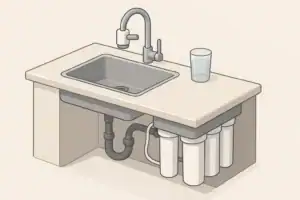
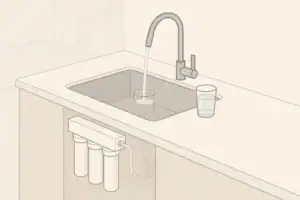
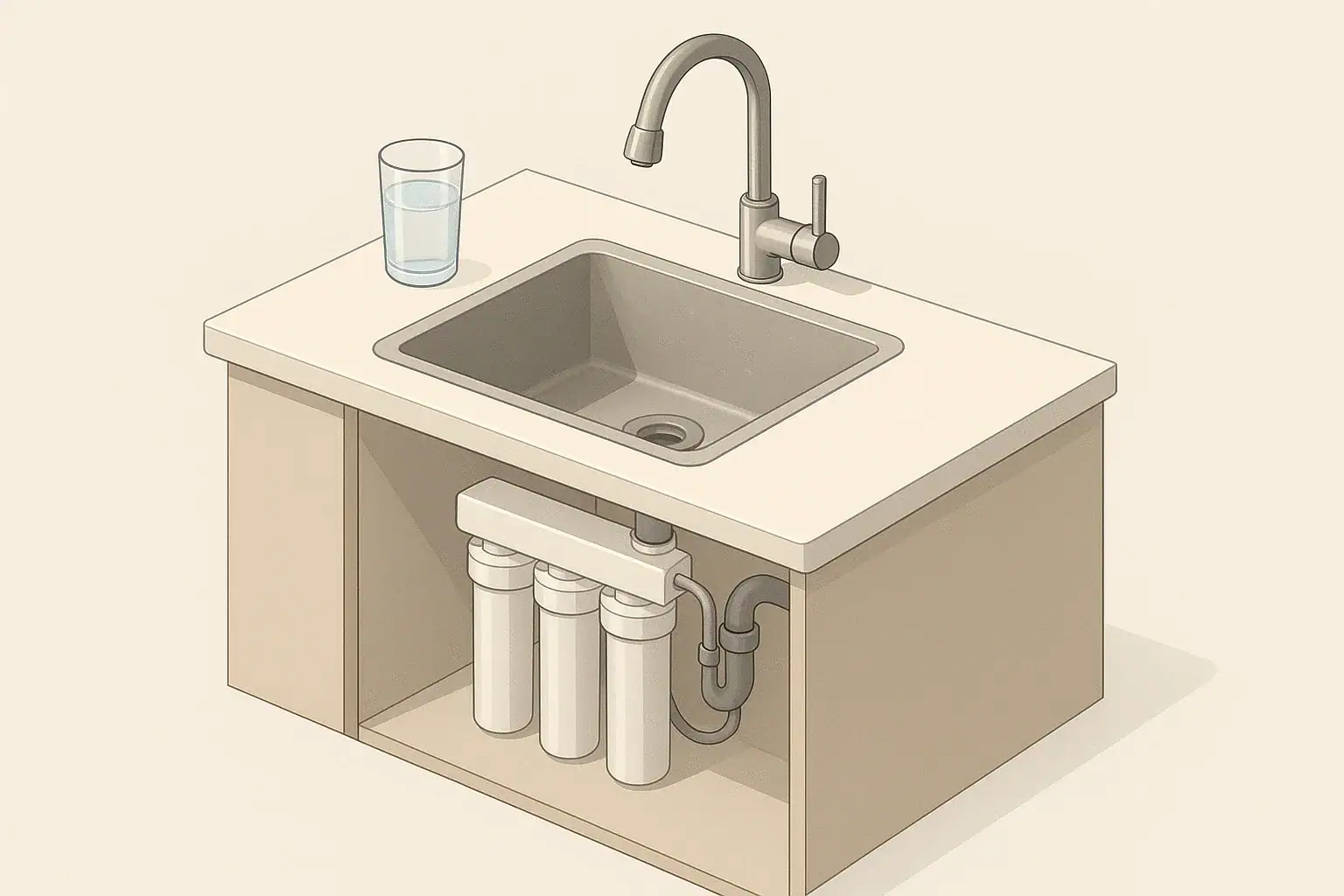
For drinking water and kitchen use, many people install point-of-use filters at a single faucet or as part of an under-sink system. Options include:
- Carbon block filters – primarily for taste, odor, and chlorine; may help with very fine particulate iron if combined with a small micron rating, but not designed for heavy iron loads.
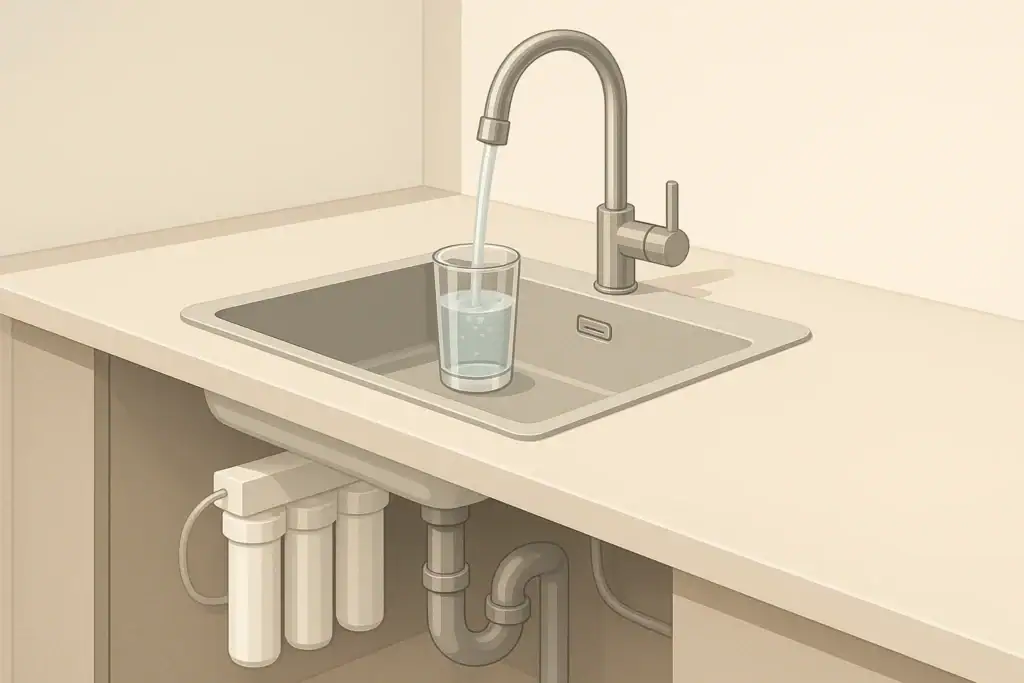
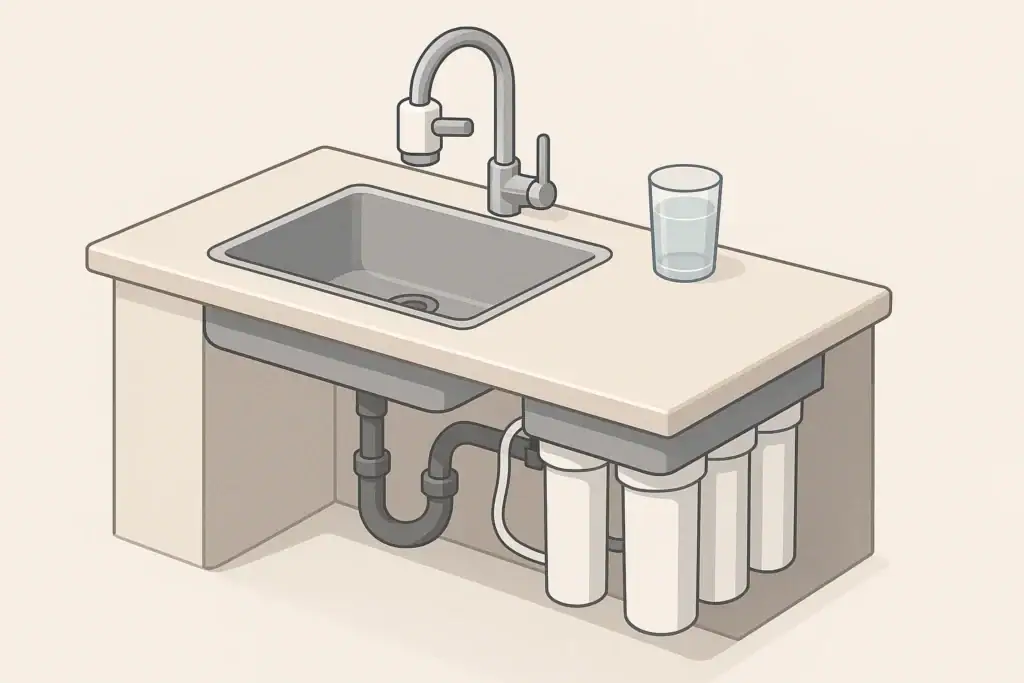
- Under-sink multi-stage systems – often combine sediment prefiltration, carbon, and sometimes additional media to handle minor iron along with other contaminants.
- Reverse osmosis (RO) systems – push water through a semi-permeable membrane; can reduce dissolved iron, but require adequate prefiltration to protect the membrane from fouling.
These options are often chosen when iron mainly affects drinking water taste and appearance, and when whole-house treatment is not necessary or practical, such as in rentals or apartments. See Pitcher vs Under-Sink vs RO: Which Fits Your Budget and Water for help choosing the best point-of-use approach.
Iron Bacteria and Disinfection Steps
If slimy, rust-colored deposits and unusual odors are present, iron bacteria may be involved. These microorganisms are not typically managed by filtration alone. Common strategies can include:
- Well inspection and maintenance for private wells
- Disinfection procedures for the well and plumbing, performed following local guidance
- Adding a disinfection step such as ultraviolet (UV) treatment after appropriate prefiltration
Because each private well and system layout is different, many homeowners consult local water professionals or extension services when dealing with iron bacteria, focusing on practices that protect both water quality and plumbing components.
Whole-House vs Point-of-Use Iron Treatment Decisions
Deciding between whole-house iron treatment and point-of-use filtration depends on how widespread the problem is, whether you are on a private well or city water, and your priorities for cost and maintenance.
When Whole-House Iron Treatment Makes Sense
Whole-house iron treatment is often considered when:
- You have a private well with moderate to heavy iron and clear staining throughout bathrooms and laundry.
- Iron is causing noticeable buildup in water heaters, dishwashers, and washing machines.
- You want consistent clear water at all fixtures, not just at the kitchen sink.
These systems are typically installed at the main water entry point and sized to handle the home’s peak flow rate. They often include a combination of sediment filtration, iron-specific media, and, if needed, a softener placed after iron removal.
When Point-of-Use Filtration Is Enough
Point-of-use filtration can be more practical when:
- You are on city water with occasional discoloration or mild metallic taste but no persistent heavy staining.
- You rent or live in an apartment and cannot modify main plumbing.
- You are mainly concerned with the taste and appearance of drinking and cooking water at one or two faucets.
Under-sink or countertop systems that combine sediment and carbon, and optionally RO, can improve taste and clarity of water used for beverages and food while leaving showers and laundry on unfiltered supply.
Maintenance Expectations for Iron-Related Filtration Systems
Any system dealing with iron will require regular maintenance. Iron tends to clog and foul media faster than clear water applications, so planning for maintenance helps avoid disappointment and unexpected costs.
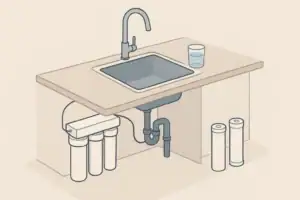
Cartridge Filters (Sediment and Carbon)
Cartridge life depends heavily on iron levels, sediment load, and household water use. In iron-laden water, cartridges may need replacement more frequently than general-purpose estimates. Typical considerations include:
- Monitoring pressure drop – noticeable reduction in flow can signal a clogged cartridge.
- Visually inspecting cartridges (when practical) for heavy rust-colored loading.
- Keeping spare cartridges on hand, especially for well systems subject to seasonal changes.
Backwashing Iron Filters and Softeners
Whole-house systems that remove iron by oxidation and filtration rely on periodic backwashing or regeneration cycles to clean the media. Practical points include:
- Ensuring the backwash flow rate is adequate based on manufacturer guidance and your home’s water pressure.
- Allowing for wastewater discharge from backwash cycles, routed according to local codes.
- Checking control valve settings periodically so cycles occur on schedule.
If a softener is handling small amounts of iron, regular regeneration and occasional resin cleaning products, when used according to directions, can help maintain performance. However, persistent staining usually signals the need for more targeted iron removal ahead of the softener.
Example values for illustration.
| Component | Typical check interval | Maintenance trigger |
|---|---|---|
| Whole-house sediment cartridge | Monthly visual / flow check | Noticeable pressure drop or strong rust loading |
| Under-sink sediment prefilter | Every 2–3 months (example) | Slower faucet flow or discoloration on cartridge |
| Carbon block for taste/odor | Every 6–12 months (example) | Return of metallic taste or off odors |
| Backwashing iron filter media | System self-cycles; review settings quarterly | Staining returns before next cycle or media age reached |
| Water softener handling minor iron | Monthly salt level check | Hardness or iron staining after normal regeneration |
| RO membrane (with iron prefiltration) | Performance review annually | Reduced production rate or taste changes |
| UV disinfection after iron prefiltration | Annual lamp replacement (typical) | Reaching lamp hour rating or alert from controller |
Related guides: Whole House Filters for Iron and Rust: What Works and What Doesn’t • Best Whole House Sediment Filters: Clear Up Cloudy Water • Whole House vs Point-of-Use Filters: Which Upgrade Should You Buy First? • Reverse Osmosis 101: What RO Removes (and What It Doesn’t)
Planning Next Steps for Managing Iron in Your Water
Iron in water is a common household issue, especially on private wells, and it often presents as staining, discoloration, and metallic taste rather than an immediate safety concern. Practical management usually follows a consistent path: observe, test, match filtration to the type and level of iron, and plan for regular maintenance.
For many homes, addressing iron also means looking at the broader water picture—hardness, pH, and related minerals—so that any filtration or softening system installed can work efficiently and predictably over time. Whether you choose a simple under-sink filter for taste, a whole-house iron filter, or a combined system with softening, grounding decisions in measured water data and clear maintenance expectations tends to lead to more reliable results and fewer surprises.
Frequently asked questions
How can I tell whether the iron is dissolved, particulate, or caused by iron bacteria?
Start with simple observations: fill a clear glass and let it sit—if it turns orange or forms sediment, that suggests dissolved iron that oxidizes or particulate iron. Look for slimy, rust-colored deposits in toilet tanks or pipes, which point to iron bacteria. For confirmation and concentrations, get a lab test that reports total, dissolved, and particulate iron.
Will a water softener remove iron from my water?
Salt-based softeners can remove small amounts of dissolved iron as a side effect, but they are not designed as primary iron filters. Higher iron levels can foul resin and increase maintenance. If iron is significant, install dedicated iron removal ahead of the softener or choose a system designed for iron treatment.
What filtration is best for visible staining versus metallic taste?
Visible ferric (particulate) iron and staining are often addressed with sediment filters or whole-house oxidizing-media filters that trap particles. For metallic taste or drinking-water concerns, point-of-use carbon filters or reverse osmosis (with proper prefiltration) are commonly used to improve taste and reduce dissolved iron.
How often do iron filters and cartridges need maintenance or replacement?
Maintenance frequency depends on iron level and household use. Sediment cartridges may need replacing monthly to quarterly in high-iron situations; backwashing media filters clean themselves on a cycle but should be reviewed quarterly for settings and performance. Watch for pressure drop, recurring staining, or reduced flow as triggers for service.
Recommended next:
- TDS vs Hardness: What’s the Difference?
- What’s a Good TDS Level for Tap Water? (Without Overthinking It)
- Chlorine vs Chloramine in Tap Water: Taste, Smell, and Filtration
- How to Read Your City’s Consumer Confidence Report (CCR)
- Turbidity Explained: Why Cloudy Water Happens
- Water Pressure vs Flow Rate: Why Your Filter Feels Slow
- More in Water Quality Basics →
- NSF/ANSI standards explained (42/53/401/58)
- Clear trade-offs: pitcher vs faucet vs under-sink vs RO
- Maintenance planning: cost per gallon and replacement cadence