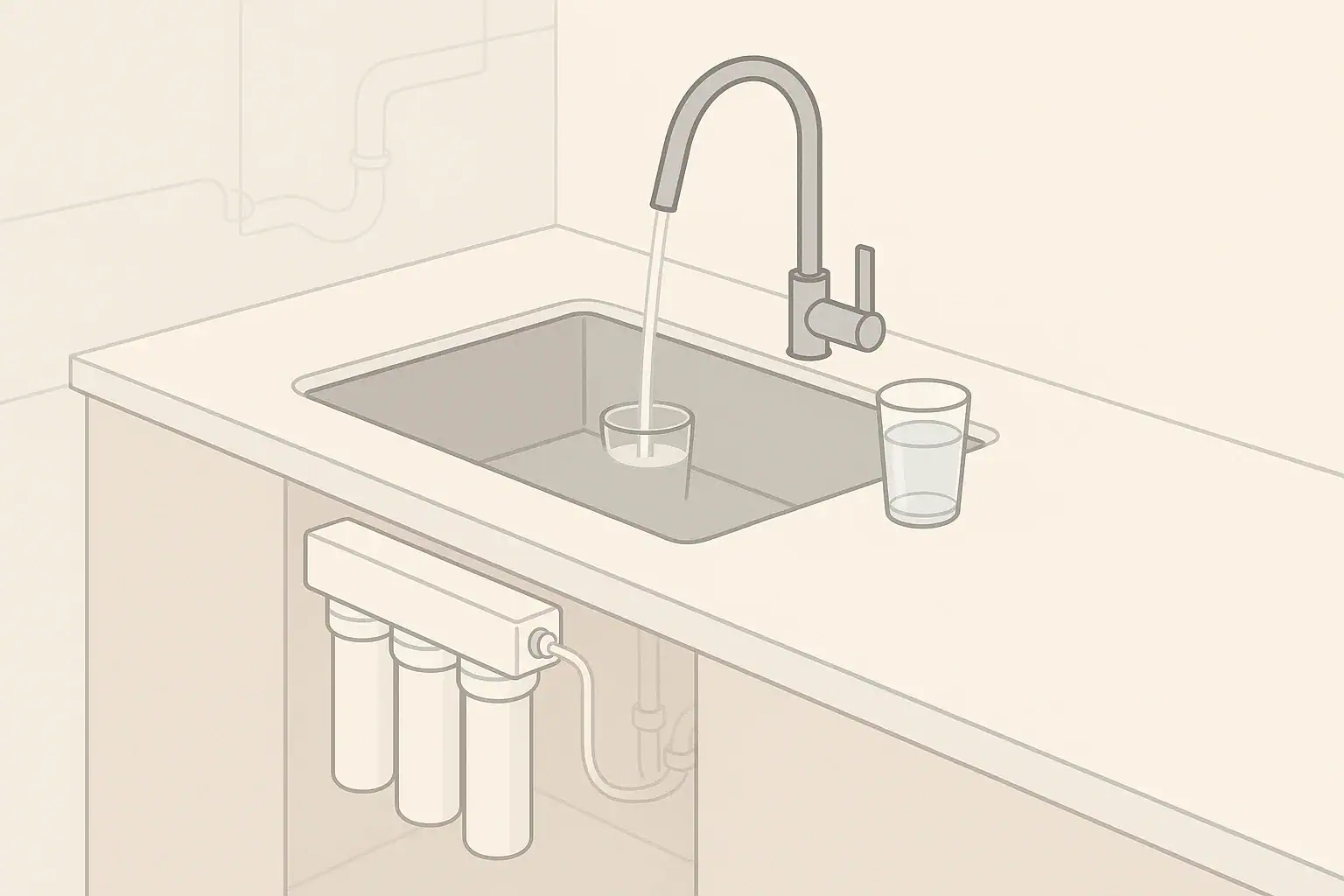
Why Your Water Filter Suddenly Feels Slow
Many people install a new water filter expecting clear water at the same speed as an unfiltered tap, then notice the stream becomes slower over time. In most cases, the filter is not “broken”—it is reacting to water pressure and flow rate.
Water pressure and flow rate are related but not the same. Filters, cartridges, and small internal passages create resistance. When pressure, plumbing layout, or filter sizing are not matched well, the faucet can feel weak even though your overall household supply is normal.
This article explains how pressure and flow rate work, why filters slow water down, and what you can realistically do to improve performance without unsafe plumbing changes.
Water Pressure vs Flow Rate: The Core Concepts
Understanding the difference between water pressure and flow rate makes it much easier to troubleshoot a slow filter.
What Is Water Pressure?
Water pressure is the force pushing water through your plumbing. In most US homes on city water, it comes from municipal pumping and gravity. On wells, it comes from a pump and pressure tank.
Key points about pressure:
- Usually measured in pounds per square inch (psi)
- Higher pressure can push water through smaller passages more easily
- Most residential plumbing and many filters are designed to work best within a moderate pressure range, not extremely high or low
What Is Flow Rate?
Flow rate is how much water comes out over time. For home filters, it is usually described as gallons per minute (gpm) at a specific pressure.
Key points about flow rate:
- Describes how fast a faucet fills a pot or a pitcher
- Changes with pressure, pipe size, and how restrictive a filter is
- Is often lower for drinking water filters than for unfiltered taps
How Filters Change Pressure and Flow
Any filter adds resistance. Water has to pass through pores in carbon blocks, wind through sediment media, or be pushed across a reverse osmosis (RO) membrane. That energy cost shows up as:
- Pressure drop: the pressure after the filter is lower than before
- Reduced flow: water comes out slower at the point of use
Manufacturers typically rate filters at a certain flow rate at a certain pressure, for example “0.75 gpm at 60 psi.” If your incoming pressure is lower, you will usually see a slower flow.
Example values for illustration.
| Observation | What It Suggests | Typical Next Step |
|---|---|---|
| All faucets (hot and cold, filtered and unfiltered) are weak | Overall low household pressure | Check main shutoff, pressure regulator, or well pump settings |
| Only the filtered faucet is slow; nearby unfiltered tap is strong | Filter restriction or dedicated faucet limitation | Review filter type, cartridge age, and faucet orifice size |
| Flow was good when new, then gradually slowed over months | Cartridge clogging with sediment or debris | Inspect or replace sediment prefilter and main cartridge |
| Filter slows rapidly within weeks on well water | High sediment, iron, or other particulates | Consider stronger prefiltration and more frequent changes |
| Flow drops sharply when multiple fixtures run together | Limited supply line size or pressure drop under load | Avoid using many fixtures at once on the same branch |
| RO drinking faucet is much slower than kitchen faucet | Normal for RO without high pressure and storage tank | Confirm system type and realistic RO production rate |
| Noticeable spurts of air with flow changes | Possible trapped air or intermittent supply issues | Bleed air per manufacturer guidance or consult a professional |
Why Some Filter Types Feel Slower Than Others
Different filters trade speed for filtration fineness. The more tightly a filter screens contaminants, the more it tends to slow the water.
Sediment Filters
Sediment filters catch sand, rust, and other particles. They are often rated in microns (for example, 5 micron vs 20 micron).
- Coarser sediment filters (higher micron rating) generally allow higher flow and lower pressure drop.
- Finer sediment filters catch smaller particles but clog faster and reduce flow more as they load up.
In many setups, a sediment filter is the first stage. If it clogs, every downstream filter and faucet will feel slower.
Carbon Filters (Block vs Granular)
Carbon is common for improving taste and odor and for reducing chlorine and some other chemicals.
- Carbon block filters are dense and effective but more restrictive. They often cause a noticeable pressure drop at higher flow rates.
- Granular activated carbon is less dense and typically flows faster, but the water path may be less controlled.
If your drinking water faucet is slowed mainly by carbon filtration, the effect will increase as the cartridge loads with fine particles over time.
Reverse Osmosis Systems
Reverse osmosis uses a semi-permeable membrane and pressure to separate water from dissolved solids. RO membranes are inherently slow because individual water molecules must pass through small pores. For troubleshooting slow RO performance see Troubleshooting Low RO Flow.
As a result:
- Point-of-use RO often relies on a storage tank to make water available quickly.
- Tankless RO units use higher pressure and larger membranes to increase production, but flow from the faucet may still be limited compared with an unfiltered tap.
- If the RO tank is small or nearly empty, the faucet will feel very slow until it refills.
Whole-House vs Point-of-Use Systems
Whole-house (point-of-entry) filters treat water for all fixtures, so they must support much higher flow rates. To avoid pressure complaints, they often use:
- Larger housings and cartridges
- Higher flow media designs
- Multiple filters in parallel for very large homes
Point-of-use filters (under-sink, countertop, pitchers, and faucet-mounted units) only serve one or two fixtures, so lower flow is usually acceptable as long as it is not inconvenient.
Common Reasons a Filter Feels Slow Over Time
Even a properly sized filter can slow down after installation. Most causes relate to clogging, changing pressure, or user expectations.
Clogging from Sediment and Debris
Any filter that traps particles will eventually load up. Learn more about turbidity.
As the pores fill, pressure drop increases and flow decreases.
Typical patterns:
- Homes with clear, low-sediment city water may see a gradual slowdown late in the cartridge life.
- Homes with well water or older plumbing may see filters clog much faster.
- A sediment prefilter can protect finer downstream filters and keep flow more stable.
Low or Fluctuating Household Pressure
Even a high-flow filter will feel weak if pressure is low. Common reasons include:
- A partially closed main shutoff valve
- A pressure-reducing valve set too low or malfunctioning
- Shared supply issues in multi-unit buildings
- Well pump or pressure tank not maintaining typical setpoints
If pressure at unfiltered faucets is poor, resolving that issue will usually help your filtered faucet as well.
Overusing a Small Filter
Small cartridges and compact faucet-mounted filters are designed for modest flow. If you try to run them continuously at high rates, they may feel very sluggish. This can happen when:
- You use a small drinking water filter to fill large pots or pitchers frequently.
- The filter is undersized for a busy household.
- A single under-sink filter is feeding multiple outlets at once.
RO Tanks Losing Pressure or Capacity
For RO systems with a storage tank, internal tank pressure and available storage both affect perceived flow:
- As tank pressure drops very low, the RO unit has less push to send water to the faucet.
- If the bladder inside the tank is not holding air pressure properly, usable water volume can shrink.
- Heavy use can empty the tank, leaving only the slow membrane production rate until it refills.
Manufacturer instructions usually provide specific guidance for checking tank-related issues.
How to Size a Filter for Reasonable Flow
Choosing a filter that matches your pressure, plumbing, and usage patterns is the best way to avoid slow water complaints.
Know Your Typical Household Pressure
Because filter ratings depend on pressure, knowing your approximate range is helpful. For many city water homes, a mid-range pressure is common, but multi-story or hillside properties can vary more.
If you suspect low or high pressure, a basic gauge on an outdoor spigot or laundry faucet can provide a rough reading. When in doubt, a licensed plumber can evaluate more complex situations.
Match the Filter’s Rated Flow to the Job
Filters often list a maximum service flow rate. Using them far above that rate can reduce contact time and effectiveness, while using them far below may simply feel slow.
Typical needs:
- Drinking-only faucet: relatively low flow is usually acceptable.
- Kitchen sink main faucet: needs higher flow for washing dishes and filling pots.
- Whole-house system: must support simultaneous showers, toilets, washing machines, and faucets.
Consider Cartridge Size and Filter Housings
Larger-diameter cartridges and housings generally allow more flow at the same pressure drop because water has more area to pass through.
For example, upgrading from a compact cartridge to a larger standard-size housing (while using an appropriate cartridge) may help if your current filter is undersized for your flow demand.
Use Staged Filtration Instead of One Overworked Cartridge
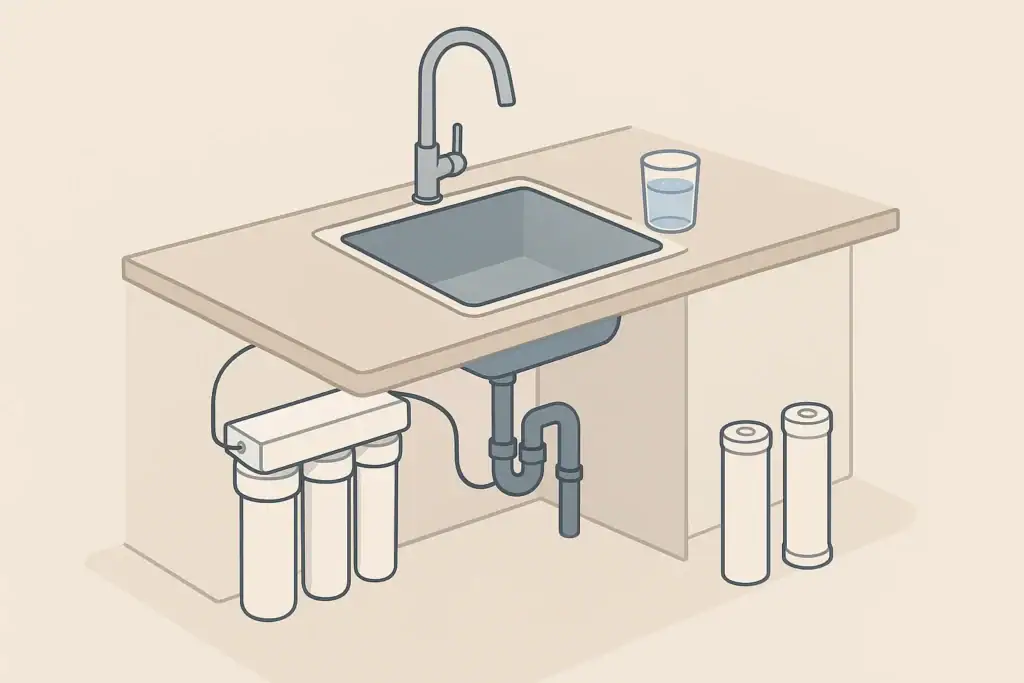
Spreading the workload across multiple stages helps maintain both water quality targets and flow:
- First stage catches coarse sediment.
- Second stage handles finer particles or carbon filtration.
- Additional stages may handle specific concerns such as taste and odor or certain contaminants.
This approach can reduce how quickly any one cartridge clogs and keeps pressure drop more manageable.
Practical Ways to Improve a Slow Filter (Without Unsafe Modifications)
When a filter feels slow, there are usually several safe options to consider before thinking about major plumbing changes.
1. Check for Easy Mechanical Issues
Some slowdowns are caused by minor restrictions rather than the filter media itself:
- Debris caught in faucet aerators
- Partially closed shutoff valves under the sink
- Kinked or sharply bent flexible tubing
- Incorrectly installed cartridges not fully seated in housings
Addressing these can sometimes restore normal flow without changing filter type.
2. Replace Cartridges on a Practical Schedule
Even if water still tastes acceptable, cartridges that are past their recommended capacity or time period may create more restriction.
Helpful habits include:
- Recording installation dates on the cartridge or housing.
- Following manufacturer-recommended replacement intervals as a baseline.
- Adjusting more frequently if you notice early flow reduction in higher-sediment areas.
3. Add or Adjust Sediment Prefiltration
If carbon or RO stages clog rapidly, a better sediment prefilter can protect them:
- Use a coarser prefilter to catch larger particles while maintaining flow.
- Place sediment filtration ahead of more sensitive filters.
- Accept shorter sediment filter life in areas with heavy sediment to protect downstream stages.
4. Limit High-Demand Uses on Small Filters
Small drinking-water filters may not be ideal for high-volume tasks. Practical adjustments include:
- Using the main (unfiltered or differently filtered) faucet for rinsing dishes or filling mop buckets.
- Using filtered water mainly for drinking and cooking where quality is most important.
- Scheduling large fills (such as multiple pitchers) with some time between uses to let systems recover.
5. When to Involve a Professional
If basic checks do not resolve slow flow and you suspect broader pressure or plumbing issues, a licensed plumber can:
- Measure static and dynamic pressure at multiple points.
- Evaluate the pressure-reducing valve or well system settings.
- Confirm appropriate pipe sizing for your home’s demand.
This helps distinguish filter-related slowdown from broader supply limitations.
Example values for illustration.
| Fixture or System Type | Flow Character | Example Use Pattern |
|---|---|---|
| Pitcher filter | Very slow, batch-based dripping through media | Filling over several minutes, then storing in refrigerator |
| Faucet-mounted carbon filter | Moderate but noticeably reduced compared with raw tap | Convenient for glasses of water, slower for large pots |
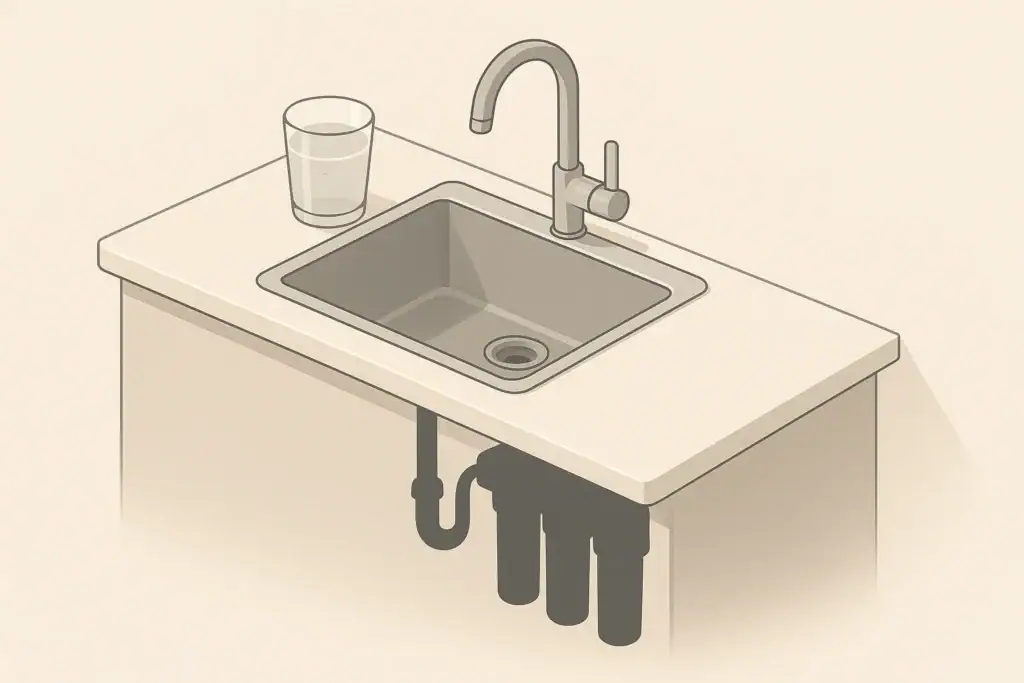
| Under-sink carbon block with dedicated faucet | Consistent, modest stream sized for drinking | Steady supply for glasses, coffee makers, and cooking |
| RO system with storage tank | Faster initially, slowing as tank empties | Best for routine daily drinking and cooking volumes |
| Tankless RO at single faucet | Continuous but limited by membrane production | Good for steady use, slower to fill large containers |
| Whole-house sediment and carbon filters | High flow sized for showers and appliances | Designed to keep most fixtures feeling similar to unfiltered |
| Shower filter cartridge | Slight drop in flow, more noticeable on low-pressure lines | Usually acceptable for single-shower use |
Related guides: Turbidity Explained: Why Cloudy Water Happens • TDS vs Hardness: What’s the Difference? • Chlorine vs Chloramine in Tap Water: Taste, Smell, and Filtration • Reverse Osmosis 101: What RO Removes (and What It Doesn’t)
Key Takeaways for Everyday Use
Water pressure and flow rate work together, and any filter introduces some resistance. Slow flow is often a sign that a filter is doing its job, but excessive slowdown can indicate clogging, undersizing, or pressure problems.
Matching filter type and size to your plumbing, using sediment prefiltration, replacing cartridges on a practical schedule, and understanding typical flow expectations for each system type go a long way toward keeping filtered water both pleasant to use and reasonably efficient.
Frequently asked questions
Why did my new water filter work well at first but feel slow later?
Most commonly the cartridge is loading with sediment or fine particles, which increases resistance. Check the sediment prefilter, cartridge age, and faucet aerator before changing filter type.
How can I tell whether low pressure or the filter is causing slow flow?
Compare flow at an unfiltered nearby faucet. If the unfiltered tap is strong, the filter is likely the restriction. A pressure gauge on an outdoor spigot or a plumber’s measurement can confirm system pressure issues.
How often should I replace cartridges to avoid reduced flow?
Follow the manufacturer’s recommended interval as a baseline, note installation dates, and replace sooner in high-sediment or well-water situations where cartridges clog faster.
Can I safely increase household pressure to get more flow from a filter?
Do not exceed the filter and plumbing pressure ratings. Adjusting pressure may help but should be done carefully; consult a licensed plumber rather than making unsafe modifications or bypassing safety devices.
Recommended next:
- TDS vs Hardness: What’s the Difference?
- What’s a Good TDS Level for Tap Water? (Without Overthinking It)
- Chlorine vs Chloramine in Tap Water: Taste, Smell, and Filtration
- How to Read Your City’s Consumer Confidence Report (CCR)
- Turbidity Explained: Why Cloudy Water Happens
- More in Water Quality Basics →
- NSF/ANSI standards explained (42/53/401/58)
- Clear trade-offs: pitcher vs faucet vs under-sink vs RO
- Maintenance planning: cost per gallon and replacement cadence