
What Copper in Tap Water Usually Means
Copper in tap water is often a plumbing-related issue, not a sign that the source water is naturally high in copper. In many homes, copper enters water after it leaves the treatment plant or well and sits inside household pipes, solder, brass fittings, valves, or fixtures.
Copper is a common plumbing material because it is durable and has been used for decades. Under stable water conditions, a thin mineral film can form inside pipes and help limit metal release. When water is more corrosive, newly installed plumbing is present, or water sits in pipes for several hours, more copper may dissolve into the water.
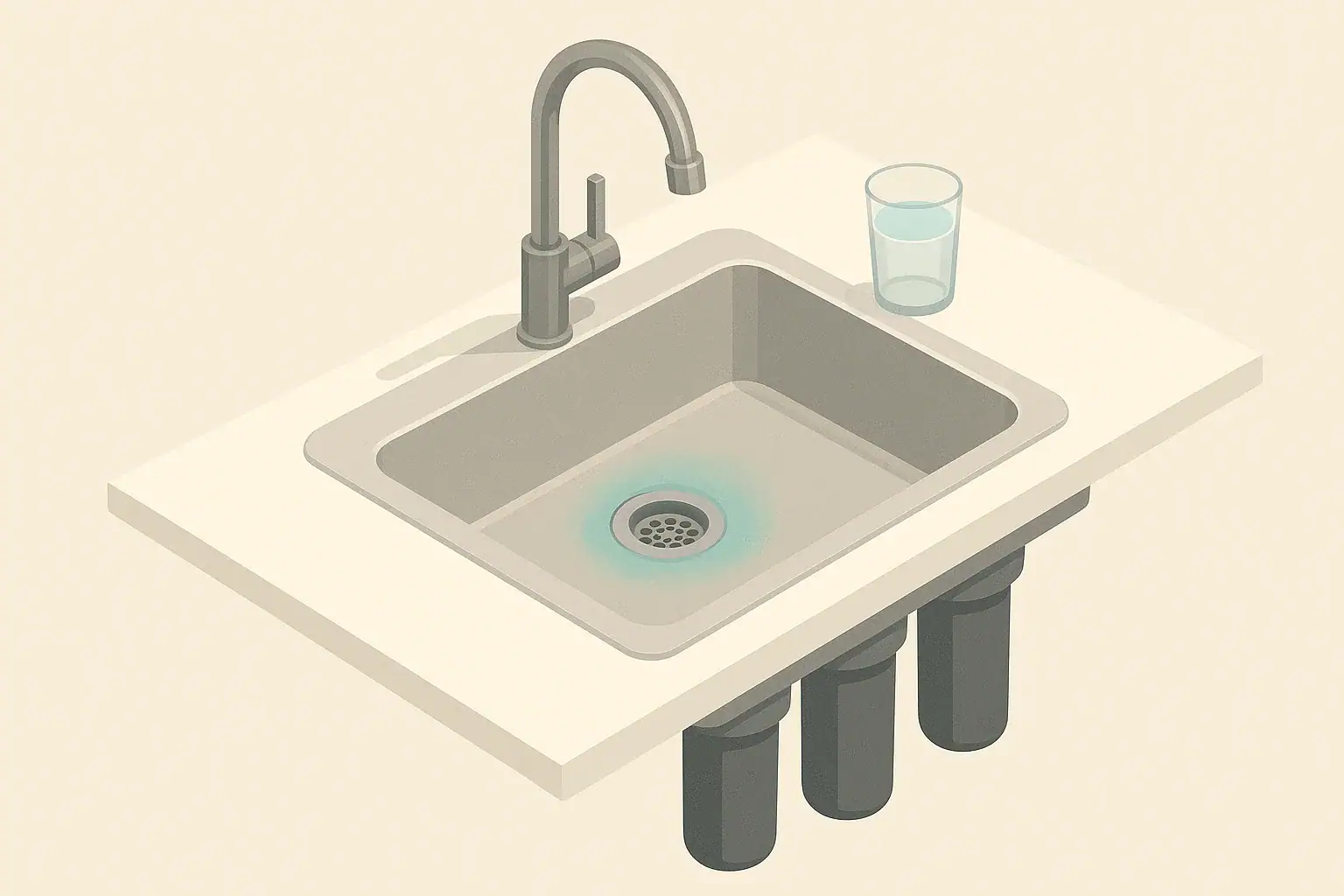
One of the clearest household clues is blue-green staining around sinks, tubs, drains, faucet aerators, or toilet bowl waterlines. These stains are usually cosmetic, but they can be a useful signal that testing is worth considering, especially if the staining is persistent or appears after plumbing changes.
This topic is different from general hardness or scale. Hard water often leaves white, chalky mineral deposits. Copper-related staining tends to look blue, turquoise, or green and may show up where water evaporates or drips repeatedly.
Blue-Green Stains: Common Clues and Limits
Blue-green stains can point toward copper, but stains alone do not measure copper concentration. The same sink can show staining from a combination of plumbing corrosion, cleaning products, fixture materials, water chemistry, and evaporation patterns. Testing is the only practical way to confirm what is in the water.
Where stains often appear
Look for repeated staining in areas where water sits, splashes, or evaporates:
- Around faucet bases and handles
- On sink or tub surfaces near the drain
- Inside toilet tanks or bowls
- On shower walls below a dripping fixture
- At refrigerator water dispensers or ice trays
- On light-colored laundry or plumbing fixtures
What stains can and cannot tell you
Stains can help you decide whether testing is reasonable, but they cannot tell you whether a filter is needed, whether the issue is throughout the home, or whether the copper is coming from one fixture. A lab result, paired with basic plumbing observations, gives a much clearer path.
It is also helpful to note when stains appear. Staining that starts after a new water heater, faucet, pipe repair, softener change, or treatment system installation may suggest a change in water chemistry or contact with new under-sink filter installation or plumbing materials.
Example values for illustration.
| Observation | Possible meaning | Practical next step |
|---|---|---|
| Blue-green ring near sink drain | Water evaporates and leaves copper-colored residue | Test cold tap water if staining is recurring |
| Stains strongest at one faucet | Local fixture or branch line may contribute | Compare samples from more than one tap |
| Staining after new plumbing | New copper, brass, or solder is contacting water | Ask the lab or utility about first-draw sampling |
| Metallic taste with overnight water | Water sitting in plumbing may pick up metals | Test a first-draw and a flushed sample |
| White scale plus green staining | Hardness and copper may both be present | Test for metals and general water chemistry |
| Only hot water shows discoloration | Water heater, hot lines, or temperature may be involved | Start with cold-water testing for drinking use |
| Green stains inside toilet tank | Whole-home water chemistry may be involved | Consider broader testing, especially on a well |
When to Test for Copper in Tap Water
Testing makes sense when there is a clear reason to suspect copper release or when you are making a treatment decision. A laboratory test is more useful than relying on appearance, taste, or a general TDS meter. TDS meters do not identify copper and cannot distinguish one dissolved substance from another.
Good reasons to test
- Blue-green stains keep returning after cleaning
- Water has a metallic, bitter, or unusual taste after sitting overnight
- The home has copper plumbing, especially newer pipe or recent repairs
- A new faucet, valve, water heater, softener, or filtration system was installed
- The home uses private well water and has not had recent metals testing
- There are pinhole leaks, green crust on fittings, or signs of pipe corrosion
- You are choosing between point-of-use filtration and plumbing or water chemistry corrections
First-draw and flushed samples
Copper results can vary depending on how long water has been sitting in the pipes. A first-draw sample is typically collected after water has been unused for several hours. This can show what water picks up during contact with plumbing.
A flushed sample is collected after running the tap for a period specified by the lab or testing program. This can help show whether copper drops after stagnant water is cleared from the line. Comparing these two sample types can be useful, but follow the lab’s instructions exactly because sample timing, bottle type, and preservation can affect results.
City water and private well differences
For city water, the utility treats and monitors the water supply, but the water still travels through each building’s plumbing. If copper is elevated at one home, the cause may be local plumbing materials or conditions in that building.
For private wells, the homeowner is responsible for testing and treatment decisions. A copper test may be paired with pH, alkalinity, hardness, iron, manganese, lead, and other water chemistry indicators. These results help determine whether the water is corrosive and whether broader treatment is needed.
How Copper Gets Into Household Water
Copper release is strongly influenced by contact time and water chemistry. Water that sits overnight in copper pipes has more time to dissolve metals than water that has just entered the home. This is why morning samples can show different results than water collected later in the day.
Plumbing materials
Copper pipes are the obvious source, but they are not the only one. Brass fixtures, valves, faucets, connectors, and some fittings can contain copper alloys. New plumbing components may release more metals at first than older, stable components.
Visible green or blue mineral crust on exterior pipe joints can suggest leaks or corrosion at fittings, but it does not measure what is in the drinking water. It is still worth noting because it may point to areas needing inspection by a qualified plumber.
Water chemistry factors
Water that is low in pH, low in alkalinity, high in certain dissolved salts, or otherwise corrosive can increase metal release from plumbing. Temperature also matters. Hot water can be more aggressive toward plumbing materials, which is one reason cold water is generally preferred for drinking and cooking.
Disinfectants, treatment changes, and softening can also influence corrosion behavior in some homes. A water softener does not remove copper that is already dissolved in water, and changing hardness without considering pH and alkalinity may not solve a staining problem.
Time since plumbing work
Homes with new copper pipe, a replaced water heater, or recent fixture changes may show temporary changes as new materials contact water. If stains begin soon after work is completed, a before-and-after timeline can help a plumber, lab, utility, or water treatment professional interpret the issue.
How to Interpret Copper Test Results
A lab report usually gives copper results in a concentration such as milligrams per liter. The report may also include a reporting limit, sample date, and notes about the testing method. Some labs flag results against applicable federal or state guidance, but rules and interpretation can depend on water type, building type, and sampling program.
Do not use one number in isolation. The most useful interpretation considers:
- Whether the sample was first-draw or flushed
- Which tap was sampled
- Whether hot or cold water was used
- Whether the home has copper pipes or brass fixtures
- Recent plumbing or treatment changes
- pH, alkalinity, hardness, and other chemistry results
- Whether staining is local or throughout the home
Patterns that help narrow the cause
If a first-draw sample is higher and a flushed sample is much lower, the issue may be related to water sitting in household plumbing. If both samples are similar, the source may be farther upstream or related to ongoing water chemistry conditions.
If only one faucet shows a higher result, the faucet, aerator, supply line, or nearby branch plumbing may deserve attention. If multiple taps show similar results, the issue may involve the whole home’s plumbing or the water entering the building.
When to ask for help
Consider contacting your water utility, local health department, certified lab, or qualified water treatment professional if results are flagged, stains are widespread, or plumbing corrosion is visible. For private wells, a broader water quality panel can be useful before selecting treatment equipment.
Practical Fixes: Plumbing, Water Chemistry, and Filtration
The right response depends on the test results and the likely source. In some cases, the solution is plumbing inspection or corrosion control rather than a drinking water filter. In other cases, a point-of-use system at the kitchen sink may be a practical way to reduce copper in water used for drinking and cooking.
Simple operating practices
Without changing plumbing, homeowners often start with low-risk practices. Use cold water for drinking and cooking, especially after water has been sitting. If a lab or utility recommends flushing before use, follow their guidance. Keep faucet aerators clean because sediment and mineral buildup can collect there.
These practices do not replace testing or treatment if results remain a concern, but they can reduce contact with stagnant water while you investigate.
Plumbing and corrosion control
If copper comes from the plumbing system, a qualified plumber can inspect for corrosion, improper connections, deteriorated fittings, pinhole leaks, or water heater issues. For wells, treatment may focus on adjusting pH or alkalinity to make water less corrosive. Any chemical feed or neutralizing system should be selected and maintained carefully because it changes the water entering the entire home.
Avoid do-it-yourself plumbing changes that bypass safety devices, pressure controls, backflow protection, or code-required components. Water treatment equipment should be installed in a way that preserves safe pressure, drainage, and service access.
Filtration options for drinking water
For dissolved copper at a drinking water tap, reverse osmosis and distillation are commonly used point-of-use approaches. Some specialty adsorption or ion exchange media may also be designed for metals reduction. Standard carbon filters are excellent for many taste, odor, chlorine, and some organic chemical applications, but basic carbon alone should not be assumed to reduce dissolved copper unless the product is specifically tested and certified for that purpose.
When comparing filters, look for independent performance claims tied to copper reduction, clear cartridge replacement instructions, and a design that fits your flow rate and maintenance routine. Certification language can be technical, so focus on the specific contaminant reduction claim rather than broad phrases like “cleaner” or “pure.”
Whole-house versus point-of-use
A point-of-use system treats water at one location, usually the kitchen sink. This can be efficient if the priority is water used for drinking, cooking, coffee, or tea. A whole-house approach may be considered when corrosive water is damaging plumbing, causing stains throughout the home, or affecting multiple fixtures.
Whole-house treatment is more complex because it changes all water in the building. It may require space, drainage, media replacement, neutralizer replenishment, pressure planning, and periodic testing to verify that it is still working as intended.
Planning Maintenance After Copper Testing
Testing is not a one-time decision if the home has ongoing corrosion conditions, a private well, or recently changed treatment equipment. Maintenance keeps the chosen solution from becoming a neglected part of the plumbing system.
For filters, follow the manufacturer’s replacement schedule and shorten it if flow drops, water quality changes, or testing suggests breakthrough. For corrosion control systems, periodic water chemistry checks are important because pH, alkalinity, and media condition can change over time.
Keep a simple record of sample dates, lab results, filter changes, plumbing repairs, and staining observations. This record makes it easier to see patterns and avoid guessing.
Example values for illustration.
| Item to track | Why it matters | General planning note |
|---|---|---|
| First-draw copper result | Shows effect of water sitting in plumbing | Retest after major plumbing or treatment changes |
| Flushed copper result | Helps compare plumbing contact versus incoming water | Use the same sampling method for comparisons |
| pH and alkalinity | Helps evaluate corrosion tendency | Check periodically on private wells |
| RO or specialty cartridge age | Spent filters may not perform as expected | Replace on schedule or when testing indicates |
| Neutralizer media level | Low media can reduce corrosion control | Inspect as directed by the system instructions |
| Stain locations | Shows whether the issue is local or whole-home | Photograph or note recurring areas |
| Plumbing repair dates | New parts can change results temporarily | Retest after conditions stabilize if needed |
Related guides: Reverse Osmosis 101: What RO Removes (and What It Doesn’t) • NSF/ANSI 58 Explained: What It Means for RO Systems • Under-Sink Filters for Lead Reduction: What Certifications to Look For • Whole House Filters vs Water Softeners: Different Jobs Explained
Key Takeaways for Homeowners
Blue-green stains are a useful clue, but they are not a measurement. If staining is persistent, appears with metallic taste, or follows plumbing changes, testing for copper can help you make a practical decision.
Use a qualified lab or an approved testing program, follow sampling instructions carefully, and consider both first-draw and flushed samples when appropriate. The pattern of results often matters as much as the number itself.
If copper is confirmed, the best fix may be plumbing inspection, corrosion control, point-of-use filtration, or a combination of steps. Choose treatment based on test results, water chemistry, maintenance needs, and the specific water you want to treat.
Frequently asked questions
Do blue-green stains always mean copper in tap water?
Not always. They are a common clue, but stains can also be influenced by cleaning products, fixture materials, and water evaporation. Testing is the best way to confirm whether copper is present.
Should I test hot water or cold water for copper?
Cold water is usually the main focus for drinking and cooking because hot water can pick up metals more easily from plumbing and the water heater. If needed, a plumber or lab may suggest testing both.
What is the difference between a first-draw and flushed sample?
A first-draw sample is taken after water has sat in the pipes for several hours. A flushed sample is collected after running the tap for a set time. Comparing them helps show whether copper is coming from stagnant water in the home.
Can a water softener remove copper?
No. A softener reduces hardness minerals, but it does not remove dissolved copper already in the water. In some homes, softening can also affect corrosion conditions, so the full water chemistry should be considered.
What type of filter is used for dissolved copper?
Reverse osmosis and distillation are common point-of-use options for dissolved copper. Some special media may also reduce metals, but basic carbon filters should only be counted on if they are specifically rated for copper reduction.
When should I ask for help with copper staining?
If staining is widespread, results are elevated, or you see signs of pipe corrosion or pinhole leaks, it is a good idea to contact a qualified plumber, lab, utility, or water treatment professional.
Recommended next:
- TDS vs Hardness: What’s the Difference?
- What’s a Good TDS Level for Tap Water? (Without Overthinking It)
- Chlorine vs Chloramine in Tap Water: Taste, Smell, and Filtration
- How to Read Your City’s Consumer Confidence Report (CCR)
- Turbidity Explained: Why Cloudy Water Happens
- Water Pressure vs Flow Rate: Why Your Filter Feels Slow
- More in Water Quality Basics →
- NSF/ANSI standards explained (42/53/401/58)
- Clear trade-offs: pitcher vs faucet vs under-sink vs RO
- Maintenance planning: cost per gallon and replacement cadence