
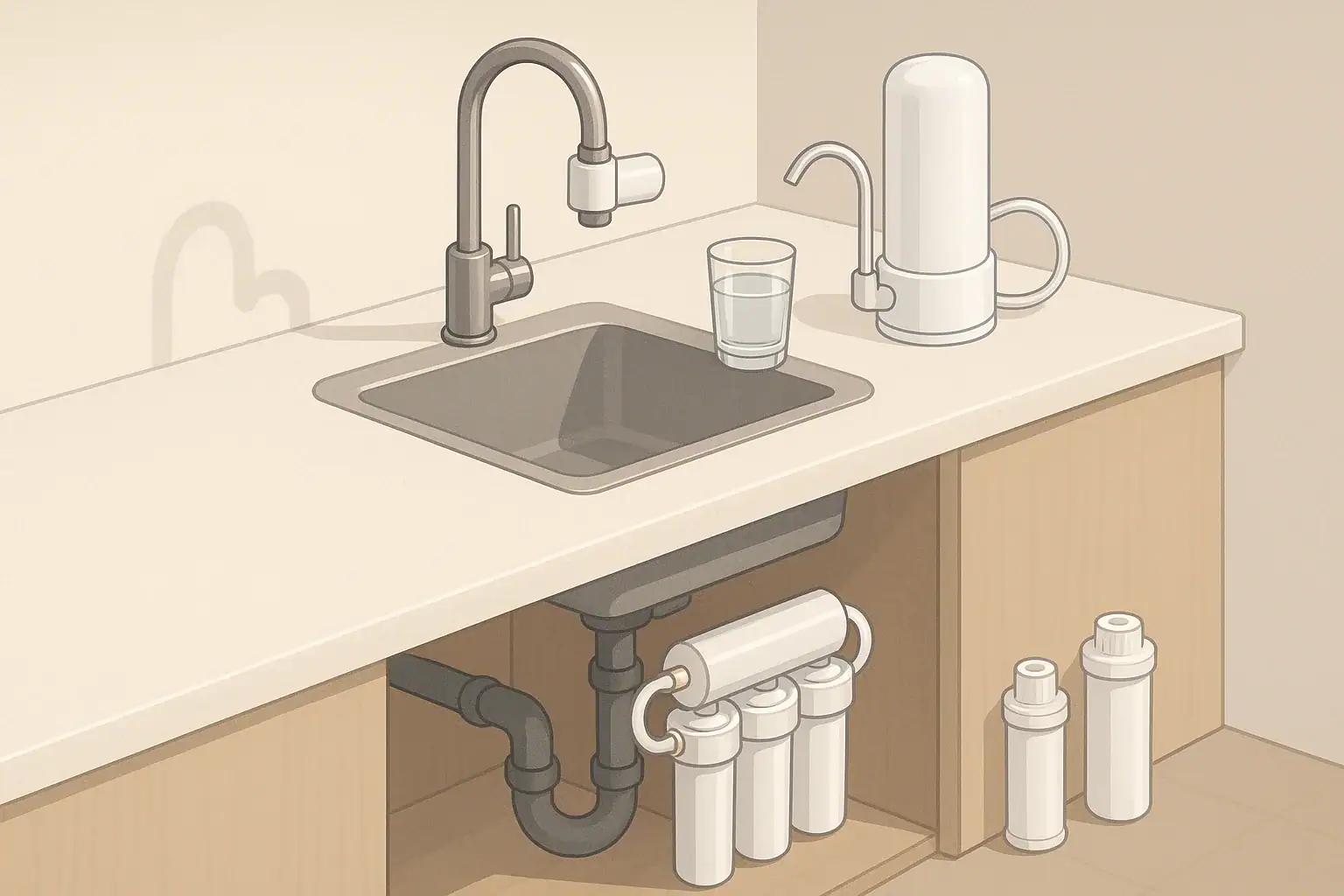
A boil water notice can be confusing if your home already has a water filter. Many people reasonably ask whether a refrigerator filter, pitcher, faucet attachment, under-sink system, reverse osmosis unit, or UV purifier makes boiling unnecessary.
The short answer is: usually, no. Most common home water filters are designed to improve taste, reduce certain chemicals, trap sediment, or lower dissolved solids. A boil water notice is mainly about possible microbial contamination or loss of confidence in the water system. Those are different treatment goals.
This article explains what filters can and can’t do during a boil water notice, how to think about different filter types, and what practical steps to take before using filtered water again.
What a Boil Water Notice Means
A boil water notice is a public advisory telling customers to boil tap water before using it for drinking or other consumption-related uses. It may be issued by a city, water utility, local health department, or other authority.
Common reasons include:
- A water main break or major pressure drop
- Loss of disinfection or treatment control
- Flooding or storm damage affecting the system
- Detection of indicator organisms during testing
- Repairs that could allow outside water to enter pipes
The key concern is not always that harmful organisms have been confirmed in every home. Often, the notice means the system can no longer guarantee normal protection until testing and corrective actions are complete.
Why pressure matters
Public water systems usually operate under positive pressure. That pressure helps keep outside water, soil, and debris from entering pipes. When pressure is lost, contaminants may be drawn into the system through cracks, joints, or damaged service lines.
Because that risk is system-wide and uncertain, officials typically recommend boiling water used for drinking, food preparation, ice, brushing teeth, and similar uses until the notice is lifted.
Why Most Filters Are Not a Substitute for Boiling
Boiling and filtering are not the same treatment method. Boiling uses heat to inactivate microorganisms when done according to the local notice. A filter physically or chemically reduces certain substances depending on its design, pore size, media, contact time, condition, and testing basis.
Many household filters are not designed, tested, or maintained as emergency microbial treatment devices. A carbon filter that makes chlorine taste less noticeable, for example, should not be assumed to make microbiologically unsafe water safe to drink.
There is also a practical issue: filters can become contamination points. If potentially contaminated water passes through a cartridge, storage tank, faucet line, refrigerator reservoir, or pitcher, those surfaces may need attention after the notice ends.
Certification wording matters
Some specialized devices are tested for reduction of bacteria, viruses, or cysts under defined standards. Others are tested for aesthetic chlorine, lead, particulates, VOCs, or other contaminants. Those are not interchangeable claims.
During an active boil water notice, follow the instructions from the issuing authority. Do not rely on general filter marketing language, taste improvement, or a low TDS reading as evidence that water is microbiologically safe.
Example values for illustration.
| Device or method | What it commonly helps with | During a boil water notice |
|---|---|---|
| Activated carbon filter | Taste, odor, chlorine, some organic chemicals depending on design | Not a substitute for boiling unless specifically rated for the microbial risk involved |
| Sediment filter | Sand, rust, silt, visible particles | May improve clarity but does not disinfect water |
| Reverse osmosis system | Many dissolved substances and fine particles depending on membrane condition | Should not automatically replace boiling during a public notice |
| UV purifier | Microbial inactivation when sized, powered, maintained, and used with clear water | May be useful only when properly specified and operated; follow the notice |
| Refrigerator filter | Taste, odor, some particulates or specific contaminants depending on cartridge | Not intended as emergency disinfection |
| Pitcher or faucet filter | Taste and selected contaminant reduction depending on cartridge | Not a reliable replacement for boiling during the notice |
| Boiling as directed | Microbial risk reduction through heat | Primary recommendation when stated by the local authority |
What Different Filters Can Do During a Notice
Although most filters should not replace boiling, they may still have limited roles. The safest way to think about them is by purpose: improving water quality after the required safety step, protecting appliances from sediment, or serving as part of a system that is specifically designed for microbial treatment.
Carbon filters
Activated carbon is common in pitchers, faucet filters, refrigerator filters, countertop units, and under-sink cartridges. It can reduce chlorine taste and odor, and certain carbon blocks can reduce specific chemicals when properly designed and replaced on schedule.
Carbon does not reliably disinfect water. In fact, because carbon can reduce disinfectant residual, it is not something to depend on when the water supply may contain microorganisms. If you use carbon-filtered water during a notice, boil the water as directed by the notice unless your local authority gives different instructions.
Sediment filters
Sediment filters trap particles such as sand, rust, and silt. Whole-house sediment filters are common on wells and sometimes used on municipal water to protect fixtures and downstream cartridges.
A sediment filter may help reduce cloudiness from particles, but it does not inactivate bacteria or viruses. Fine particles can also shield microorganisms from other treatment methods. If water is very cloudy, follow local directions and avoid assuming that filtration alone solves the issue.
Reverse osmosis systems
Reverse osmosis, often called RO, uses a semi-permeable membrane to reduce many dissolved substances. It can be effective for TDS reduction and for certain regulated or emerging contaminants when the system is designed and maintained for those reductions.
However, a typical under-sink RO system is not the same as an emergency disinfection system. It may include a storage tank, post-filter, tubing, and faucet that can be exposed to the incoming water. During a boil notice, use boiled or otherwise approved water for drinking and cooking unless instructed otherwise.
UV systems
Ultraviolet treatment can inactivate microorganisms when the UV dose is adequate, the lamp is working, the sleeve is clean, the water is clear enough, and the flow rate does not exceed the unit’s design. UV is common in well water applications, especially when paired with sediment pretreatment.
UV performance depends heavily on installation, maintenance, water clarity, and power. A UV light that is old, fouled, unplugged, undersized, or used with turbid water may not provide the intended treatment. During a public boil water notice, still follow the instructions in the notice unless the issuing authority states otherwise.
Refrigerator, ice maker, and dispenser filters
Refrigerator filters are typically convenience filters for taste and odor, not emergency microbial barriers. Ice makers and chilled reservoirs can also hold water from before or during the notice.
When a notice is active, use boiled and cooled water or other approved water for drinking. Avoid using freshly made ice from unboiled tap water. After the notice is lifted, the refrigerator system may need flushing and the filter may need replacement according to the appliance instructions and local guidance.
When Boiled Water and Filtered Water Overlap
In some homes, people prefer the taste of filtered water but still need to boil during a notice. In that case, the order and storage matter.
A practical approach is to follow the boil notice first, then use the water in a way that avoids recontamination. If you filter water before boiling, the filter may improve taste or remove particles, but the boiled step is still the safety step. If you filter after boiling, make sure the filter, pitcher, reservoir, faucet, or container has not been exposed to potentially contaminated water or has been cleaned and handled according to instructions.
Be careful with storage containers
Clean containers matter. Boiled water can be recontaminated if it is poured into a dirty pitcher, placed into a questionable dispenser, or handled with unclean utensils. Use clean, food-grade containers with lids. Let boiled water cool safely before placing it in a refrigerator or using it in appliances that are designed for cool water.
Do TDS meters help?
A TDS meter measures electrical conductivity and estimates dissolved mineral content. It does not detect bacteria, viruses, or many chemicals at meaningful levels. A low TDS reading from RO water does not prove the water is safe during a boil water notice.
TDS can be useful for tracking RO membrane performance over time, but it is not a boil notice decision tool.
Common Household Uses During a Boil Notice
The issuing authority should be the primary source for what needs boiled water. Notices often focus on water that may be swallowed or contact food surfaces. Requirements can vary based on the reason for the notice and local policy.
Drinking, cooking, and brushing teeth
Use boiled water, bottled water, or another approved source for drinking, preparing beverages, cooking foods that will not be boiled long enough, brushing teeth, and making infant formula if applicable. Follow the specific notice for boil time and related details.
Coffee makers and electric kettles are not automatically substitutes for boiling unless they bring water to the required temperature for the required time. Many coffee brewers heat water for extraction but may not follow boil notice requirements.
Ice and cold beverages
Discard ice made with unboiled tap water during the notice. Do not rely on a refrigerator filter to make ice safe during an active notice. Use ice made from boiled and cooled water or from an approved source.
Dishwashing and food surfaces
Guidance for dishwashing can vary. Some notices allow use of a dishwasher if it reaches a sanitizing temperature and uses a heated dry cycle; others recommend additional steps. Hand-washing dishes may require boiled water or a sanitizing step. Follow the notice rather than guessing based on the presence of a filter.
Bathing and laundry
Many boil notices allow bathing, showering, and laundry with precautions, but recommendations can differ for infants, open wounds, or immune-related concerns. This article does not provide medical advice. If the notice includes special instructions, follow them or contact the local authority.
After the Notice Is Lifted: Filter and Fixture Checklist
When the notice is lifted, it means the responsible authority has determined that the system meets the criteria for normal use again. At home, you may still need to clear plumbing, replace cartridges, and address equipment that held water during the notice.
Start with the official notice. It may include flushing instructions for taps, refrigerator lines, ice makers, water softeners, or point-of-use filters. Manufacturer instructions also matter, especially for systems with storage tanks, UV lamps, or cartridge housings.
Flush carefully and avoid unsafe modifications
Flushing generally means running water through fixtures for a recommended period so fresh water replaces water that sat in household plumbing. Do not remove backflow devices, bypass safety features, defeat pressure controls, or modify plumbing to speed up the process. If a system has valves or housings you are not familiar with, use the product manual or contact a qualified professional.
Replace exposed cartridges when appropriate
If a cartridge handled water during the notice, replacement is often a practical choice, especially for refrigerator filters, carbon filters, and small pitcher or faucet cartridges. Some systems have specific sanitizing steps. RO systems with tanks may require flushing and, in some cases, sanitizing according to the manufacturer’s instructions.
Example values for illustration.
| Item | Why it matters | Practical action after notice is lifted |
|---|---|---|
| Kitchen faucet | Household pipes may hold older water | Flush according to local guidance before normal use |
| Pitcher filter | Reservoir and cartridge may have contacted affected water | Clean pitcher and replace cartridge if used during the notice |
| Faucet filter | Small cartridges are difficult to sanitize thoroughly | Replace cartridge and flush per instructions |
| Refrigerator dispenser | Lines, reservoir, and ice maker may store water | Replace filter, flush dispenser, and discard affected ice |
| Under-sink carbon system | Carbon can hold water and reduce disinfectant residual | Replace cartridge and flush the dedicated faucet |
| RO system with tank | Tank and post-filter can retain water | Follow system instructions for flushing, cartridge changes, and sanitation |
| UV system | Performance depends on lamp, sleeve, and pretreatment | Verify power, lamp status, sleeve condition, and prefilter condition |
Related guides: Best Pitcher Water Filters for Better-Tasting Tap Water • Reverse Osmosis 101: What RO Removes (and What It Doesn’t) • NSF/ANSI 58 Explained: What It Means for RO Systems • Bacteria & Viruses: When UV Disinfection Makes Sense
Key Takeaways for Filter Owners
A boil water notice is not mainly a taste, odor, hardness, or TDS issue. It is a temporary safety advisory related to possible microbial risk or loss of system control. That is why normal home filtration is usually not enough by itself.
Use these practical rules:
- Follow the local boil water notice first, even if you have a filter.
- Do not assume carbon, sediment, refrigerator, pitcher, faucet, or RO filters disinfect water.
- Use UV only within its design limits and maintenance requirements, and still follow public notice instructions.
- Discard ice made during the notice from unboiled tap water.
- After the notice is lifted, flush fixtures and replace or service filters that contacted affected water.
- Use TDS readings only for general dissolved solids tracking, not boil notice safety decisions.
Home filters can be useful tools, but their role depends on the situation. During a boil water notice, the safest practical approach is to treat the notice as the controlling instruction, then bring filters and appliances back into service carefully once the water system has returned to normal operation.
Frequently asked questions
Can I drink filtered water during a boil water notice?
Usually no. Unless the local authority says otherwise, use boiled water, bottled water, or another approved source for drinking and food preparation during the notice.
Does a refrigerator or pitcher filter make tap water safe?
No. Those filters are typically meant for taste, odor, or certain contaminant reduction, not emergency disinfection.
Is reverse osmosis enough during a boil notice?
Not by default. A typical RO system is not an emergency treatment system, and its tank, tubing, and faucet may all be exposed to affected water.
What about UV water systems?
UV systems can inactivate microorganisms when properly designed and maintained, but you should still follow the boil notice unless the issuing authority gives different instructions.
Should I replace my filter after the notice ends?
Often yes, especially for pitcher, faucet, refrigerator, and under-sink cartridges that were in use during the notice. Follow the manufacturer’s instructions and local guidance.
Does a low TDS reading mean the water is safe?
No. TDS does not measure bacteria or viruses, so it should not be used to judge safety during a boil water notice.
Recommended next:
- TDS vs Hardness: What’s the Difference?
- What’s a Good TDS Level for Tap Water? (Without Overthinking It)
- Chlorine vs Chloramine in Tap Water: Taste, Smell, and Filtration
- How to Read Your City’s Consumer Confidence Report (CCR)
- Turbidity Explained: Why Cloudy Water Happens
- Water Pressure vs Flow Rate: Why Your Filter Feels Slow
- More in Water Quality Basics →
- NSF/ANSI standards explained (42/53/401/58)
- Clear trade-offs: pitcher vs faucet vs under-sink vs RO
- Maintenance planning: cost per gallon and replacement cadence