
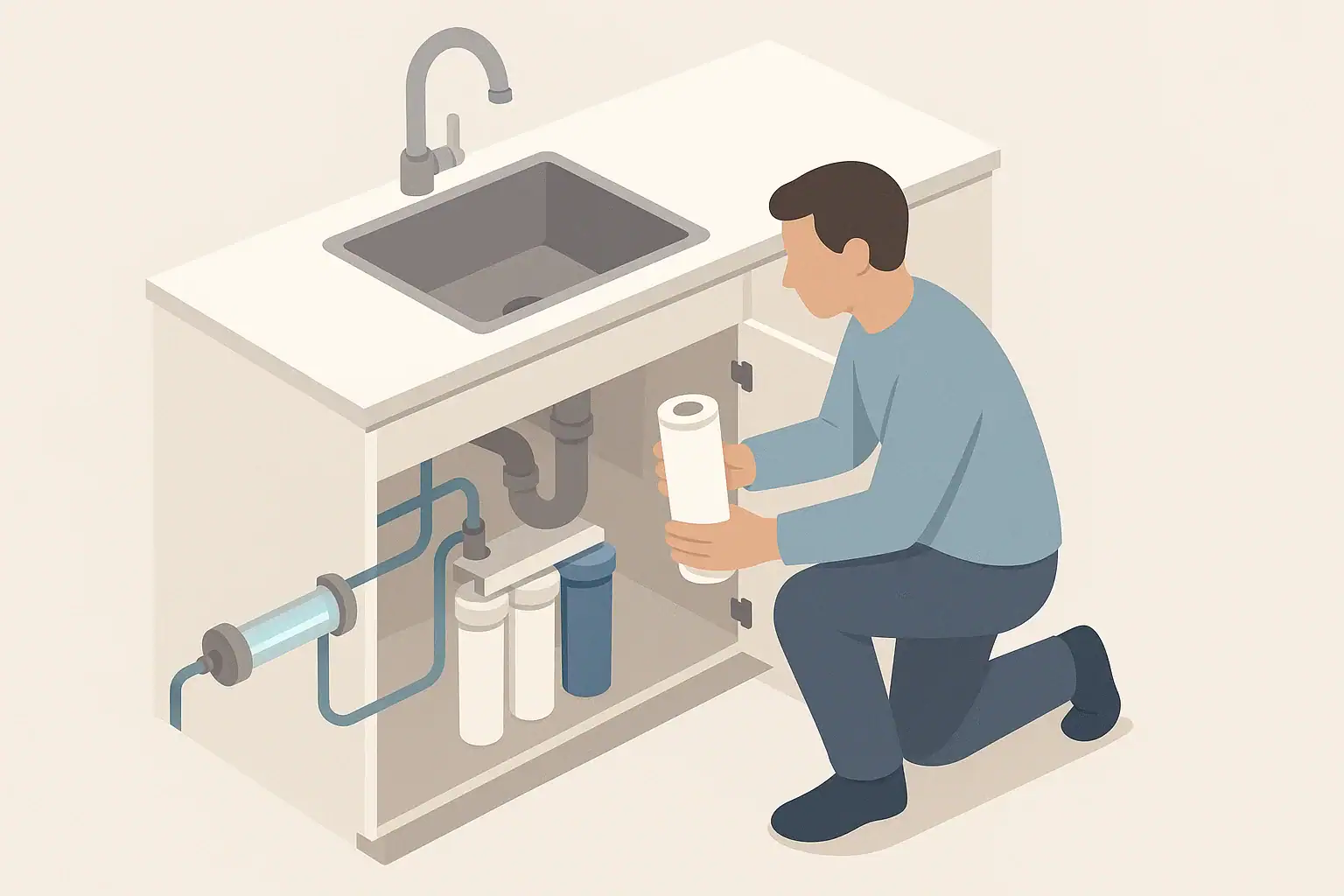
How UV Disinfection Fits into Home Water Treatment
Ultraviolet (UV) disinfection is often mentioned alongside carbon filters, reverse osmosis (RO), and softeners, but it does a very different job. UV does not remove chemicals, hardness, or sediment. Instead, it uses light at specific wavelengths to inactivate microorganisms like bacteria, viruses, and some protozoa so they cannot reproduce.
At a high level, UV is worth considering when:
- You are concerned about biological contamination (bacteria, viruses, cysts).
- You want continuous, point-of-entry or point-of-use protection without adding chemicals.
- You already have, or plan to add, proper prefiltration for sediment and taste/odor.
In many homes, UV is not the first component installed. People usually start with sediment and carbon filtration for taste, odor, chlorine, and visible particles. UV becomes relevant when microbiological risk is part of the picture, especially for private wells or small systems that do not benefit from consistent municipal disinfection.
Bacteria, Viruses, and Cysts: What UV Actually Targets
Understanding what UV can and cannot address helps you decide whether it makes sense for your setup. UV targets living microorganisms, not dissolved minerals or chemicals.
Types of microorganisms in drinking water
Common categories of microbes that may be present in untreated or intermittently treated water supplies include:
- Bacteria – For example, total coliform bacteria as an indicator organism. Some bacteria occur naturally in the environment; certain strains can indicate potential fecal contamination.
- Viruses – Very small biological particles that can be present where human or animal waste has impacted source water.
- Protozoan cysts – Organisms such as Giardia and Cryptosporidium form protective cysts that can survive in water and are resistant to some disinfectants.
Water testing and local public health information are the best ways to understand what is likely in your area. Generalizing beyond that is difficult, because microbial risks depend heavily on source water, local geology, nearby land use, and the integrity of your plumbing system.
How UV disinfection deals with microbes
UV systems expose water to ultraviolet light, typically in the UV-C range. This energy damages the genetic material of microorganisms, interfering with their ability to reproduce. After effective UV exposure:
- Microbes may still be physically present, but they are generally considered inactivated.
- There is no added chemical residual in the water.
- The process is physical, not chemical; taste and odor usually do not change.
Because UV treatment is based on light contact, the water must be relatively clear. Sediment, color, and turbidity can shadow microorganisms and reduce how much UV energy they receive. That is why UV is normally installed after sediment and often after carbon filtration.
Example values for illustration.
| Water situation | Typical microbial concern level | Is UV commonly considered? | Notes (illustrative only) |
|---|---|---|---|
| Municipal water, consistent chlorine residual | Lower (varies by system) | Sometimes | Often added as an extra barrier, especially in older plumbing |
| Private well, no disinfection | Moderate to higher (site-specific) | Frequently | Commonly paired with sediment and carbon filters |
| Spring or surface water source | Potentially higher | Often | Additional treatment steps may also be needed |
| Seasonal cabin with intermittent use | Variable | Often | Plumbing stagnation can increase interest in UV |
| RO drinking water system on city supply | Lower at source | Sometimes | Point-of-use UV occasionally added as final step |
| Home with compromised plumbing or prior contamination event | Uncertain | Often evaluated | Usually combined with inspection and corrective work |
This decision matrix is generalized and does not replace site-specific water testing or professional advice.
When UV Disinfection Makes Practical Sense
UV is not necessary in every home. It becomes attractive when specific conditions are present or when you want certain types of risk reduction. Below are common situations where homeowners in the United States consider UV.
Private wells without continuous disinfection
Private wells are not usually disinfected continuously by a utility. Many well owners use periodic shock chlorination or rely on natural protection from well construction and geology. UV is often evaluated when:
- Routine testing shows the presence of total coliform bacteria or other indicators.
- The wellhead is older, near potential sources of contamination, or difficult to protect.
- There is concern about seasonal runoff or flooding influencing the aquifer.
In these situations, UV can serve as a final barrier after sediment and carbon filters. It treats all water passing through the device, so it is often installed at the point where water enters the home (point-of-entry) to cover all fixtures.
Surface water, springs, and small systems
Homes supplied by a spring, creek-fed system, or small private distribution line may see more variability in microbial quality than typical deep wells. UV is often considered when:
- Source water is open to the environment (exposed to wildlife, runoff, or surface activity).
- Turbidity can spike after storms, even if average clarity is good.
- Maintaining a stable chemical disinfectant level is difficult.
UV can be part of a multi-step approach that may also include filtration to manage turbidity and, in some cases, other disinfection methods. Because UV performance depends heavily on water clarity, pretreatment is especially important with surface sources.
City water with extra barrier preferences
Municipal systems typically use chlorine or chloramine to maintain a disinfectant residual in distribution pipes. Many people rely on that alone, often with a simple carbon filter for taste and odor. UV on city water is more of an optional layer than a basic requirement, and it is commonly considered when:
- There is concern about occasional line breaks, repairs, or boil advisories in the area.
- The house has long, complex, or aging plumbing runs where disinfectant levels may drop.
- A household simply prefers an additional physical disinfection step at the point of entry or point of use.
In these cases, UV is usually installed after a sediment filter and, if desired, after a carbon filter that removes chlorine taste. If chlorine is removed before UV, it is important that the UV system and other components are designed, installed, and maintained appropriately, because there is less chemical protection in the downstream plumbing.
Homes with sensitive plumbing situations
Certain plumbing layouts and usage patterns can motivate a UV installation:
- Long periods of stagnation – Seasonal homes, guest houses, or parts of a building that are rarely used can experience low turnover, which sometimes encourages microbial growth in pipes.
- Mixed old and new piping – Older materials, dead-end lines, or abandoned branches can create niches that are hard to flush thoroughly.
- History of contamination – If a plumbing system has experienced confirmed microbial contamination, some owners consider UV as part of a broader remediation plan.
UV alone does not fix plumbing design problems, but it can complement other corrective steps like removing dead legs, replacing corroded sections, and ensuring good circulation and temperature control for hot water.
When UV Disinfection May Not Be Necessary
There are many situations where UV adds cost and complexity without addressing a key concern. The goal is not to install every possible treatment device, but to match equipment to actual water quality priorities.
When your main issues are taste, odor, or chemicals
If your primary concerns are:
- Chlorine taste or swimming-pool odor from city water
- Musty or earthy smells and discoloration from dissolved organics
- Concerns about specific substances such as lead, PFAS, or some pesticides
then carbon filtration, specialized media, and in some cases RO are more directly relevant. UV does not remove dissolved chemicals or metals. In these cases, a good filtration setup without UV may already address your main goals.
When the water is already consistently disinfected and monitored
Many public water systems maintain steady disinfectant levels and follow regulatory testing requirements. In those contexts:
- Microbial risks are already managed at multiple points in the supply chain.
- Adding UV is more about redundancy than solving a known problem.
Some households still choose UV for peace of mind, but there is not always a clear practical driver beyond preference. If budgets are limited, investing first in appropriate filtration for identified contaminants and plumbing maintenance may be more impactful.
When pretreatment needs are not met
UV systems are not well suited to water with persistent issues such as:
- High sediment levels that quickly clog filters
- Strong color or turbidity that does not respond to basic filtration
- Very low or very high flow rates outside a UV system’s design range
In these circumstances, it is usually better to first address source protection, well construction, or more robust filtration. Installing UV on water that regularly exceeds the UV system’s design limits can lead to unreliable performance.
How UV Works with Other Filters in a Home System
UV is almost never a standalone solution. It is usually one stage in a treatment train that may include sediment filtration, carbon filtration, softening, and sometimes RO. The order and sizing of these components affect performance and maintenance needs.
Typical order of treatment stages
A common whole-house sequence when UV is used might look like this:
- Sediment filtration – Removes sand, rust, and larger particles to protect downstream equipment.
- Carbon filtration (if used) – Reduces chlorine, chloramine (depending on media), and some taste-and-odor compounds.
- Water softener (if needed) – Reduces hardness to help prevent scaling on UV sleeves and in plumbing.
- UV disinfection – Inactivates microorganisms in relatively clear, pretreated water.
For drinking-only systems at the kitchen sink, a UV stage can appear after a small sediment/carbon prefilter or after an RO system as a final polishing step.
Flow rate and contact time considerations
UV systems are designed for specific flow ranges. If water flows too quickly:
- The time microorganisms spend in the UV chamber is reduced.
- Delivered UV dose may fall below the intended design level.
For point-of-entry systems, that means sizing UV capacity around likely peak household flow, not just average usage. For point-of-use systems, the flows are smaller and easier to control.
Maintenance and monitoring basics
To perform as intended, UV systems require routine attention:
- Lamp replacement – UV output decreases over time even if the lamp still lights. Many systems are designed around an annual replacement interval, though actual timing depends on the product.
- Quartz sleeve care – The clear sleeve around the lamp can collect scale and film. Periodic cleaning or replacement helps maintain UV transmission.
- Sensor and alarm features – Some units have sensors or alarms indicating lamp status or UV intensity. Understanding what these signals mean and responding promptly is important.
Alongside UV-specific tasks, upstream filters (sediment, carbon) also need scheduled changes to preserve good water clarity and protect the UV chamber from fouling.
Planning UV for Your Home: Practical Questions to Ask
Before deciding that UV is the right addition, working through a short checklist of questions can clarify whether it aligns with your needs and budget.
1. What does your water testing show?
Microbial water testing helps move the decision from guesswork to evidence. Consider asking:
- Has the water been tested for total coliform bacteria or similar indicators?
- Were any boil-water notices or contamination events documented in the past?
- Is the source protected and well constructed (for wells and springs)?
Periodic testing gives a better picture than a single sample, especially for sources affected by weather or seasonal changes.
2. Where should UV be installed: whole house or single tap?
You can use UV in two main ways:
- Point-of-entry (POE) – Treats all water entering the house, covering all fixtures. Common for wells and small systems where source quality is uncertain.
- Point-of-use (POU) – Treats water at a single location such as a kitchen faucet. Often used as a final step for drinking and cooking water, especially when combined with RO.
Whole-house UV offers broader coverage but has higher flow, sizing, and maintenance implications. Point-of-use UV is more contained but does not address showers, bathroom sinks, or outdoor spigots.
3. Can you support the necessary pretreatment?
Before UV, ask whether your system can provide:
- Sediment control to prevent clogging and shadowing.
- Scale control (softening or alternative methods) if hardness is high.
- Stable pressure and flow within the UV unit’s design range.
If these prerequisites are not in place, it may be better to address them first and reassess UV afterward.
4. Are you prepared for ongoing maintenance?
UV systems have predictable, recurring tasks. Planning ahead for these helps avoid lapses:
- Budgeting for annual lamp changes and occasional sleeve replacement.
- Scheduling sediment and carbon filter replacements.
- Responding promptly to system alarms or indicator lights.
Many homeowners coordinate UV maintenance with other filter changes to simplify routines.
Example values for illustration.
| Household situation | Example peak flow to consider | Example UV lamp replacement rhythm | Coordination with other filters |
|---|---|---|---|
| Small apartment, 1 bathroom | 2–4 gpm (example) | About once per year (example) | Align with under-sink carbon filter change |
| Typical single-family home, 2 bathrooms | 6–8 gpm (example) | About once per year (example) | Check sediment prefilter at the same time |
| Larger home, 3+ bathrooms | 10–12 gpm or more (example) | About once per year (example) | May need multiple prefilters or bigger housings |
| Seasonal cabin | 3–5 gpm (example) | Based on hours of use and manufacturer guidance (example) | Combine with startup/shutdown checklist |
| Point-of-use at kitchen sink | 0.5–1.5 gpm (example) | About once per year (example) | Match RO or cartridge schedule for simplicity |
| Well with high sediment | Flow sized to UV unit (example) | About once per year (example) | More frequent sediment filter checks recommended |
This planner provides generalized examples only; actual sizing and schedules depend on specific equipment and local water conditions.
UV disinfection can be a useful tool when biological contamination is a concern and when it is paired with appropriate filtration and regular maintenance. By focusing on your specific water source, plumbing conditions, and willingness to manage upkeep, you can decide whether UV belongs in your overall home water treatment plan.
Frequently asked questions
Do I need a UV system if my water tests negative for bacteria?
If regular testing shows no microbial issues and your water source is reliably treated and monitored, UV is usually optional. Consider it only if you want additional redundancy, have plumbing stagnation, or face intermittent contamination risks.
How often should UV lamps and sleeves be serviced?
Typical guidance is annual lamp replacement and periodic sleeve cleaning. Actual intervals depend on hours of use and water quality; follow the system’s maintenance recommendations and respond to any indicator alarms.
Can UV remove chemicals, metals, or improve taste and odor?
No. UV inactivates microorganisms but does not remove dissolved chemicals, metals, or taste- and odor-causing compounds. Use carbon filtration, RO, or other appropriate treatments for those concerns in addition to or instead of UV.
Should I install UV at the whole-house inlet or only at a drinking tap?
Install point-of-entry UV to protect all fixtures when source microbial risk is uncertain or widespread. Choose point-of-use UV at a single tap for drinking and cooking water when you want a localized final barrier or after RO treatment.
Related guides: PFAS Removal Options: RO vs Carbon vs Whole House • Lead in Tap Water: Practical Steps Before Buying a Filter • Turbidity Explained: Why Cloudy Water Happens • UV + RO Combo Systems: When UV Disinfection Makes Sense
Recommended next:
- Lead in Tap Water: Practical Steps Before Buying a Filter
- PFAS Removal Options: RO vs Carbon vs Whole House
- VOCs in Water: How Carbon Filters Work
- Pesticides & Herbicides: What Filters Can Reduce Them?
- Nitrates in Well Water: What Filtration Works Best?
- Arsenic Filtration Basics: What to Look For
- More in Contaminants & Removal →
- NSF/ANSI standards explained (42/53/401/58)
- Clear trade-offs: pitcher vs faucet vs under-sink vs RO
- Maintenance planning: cost per gallon and replacement cadence