
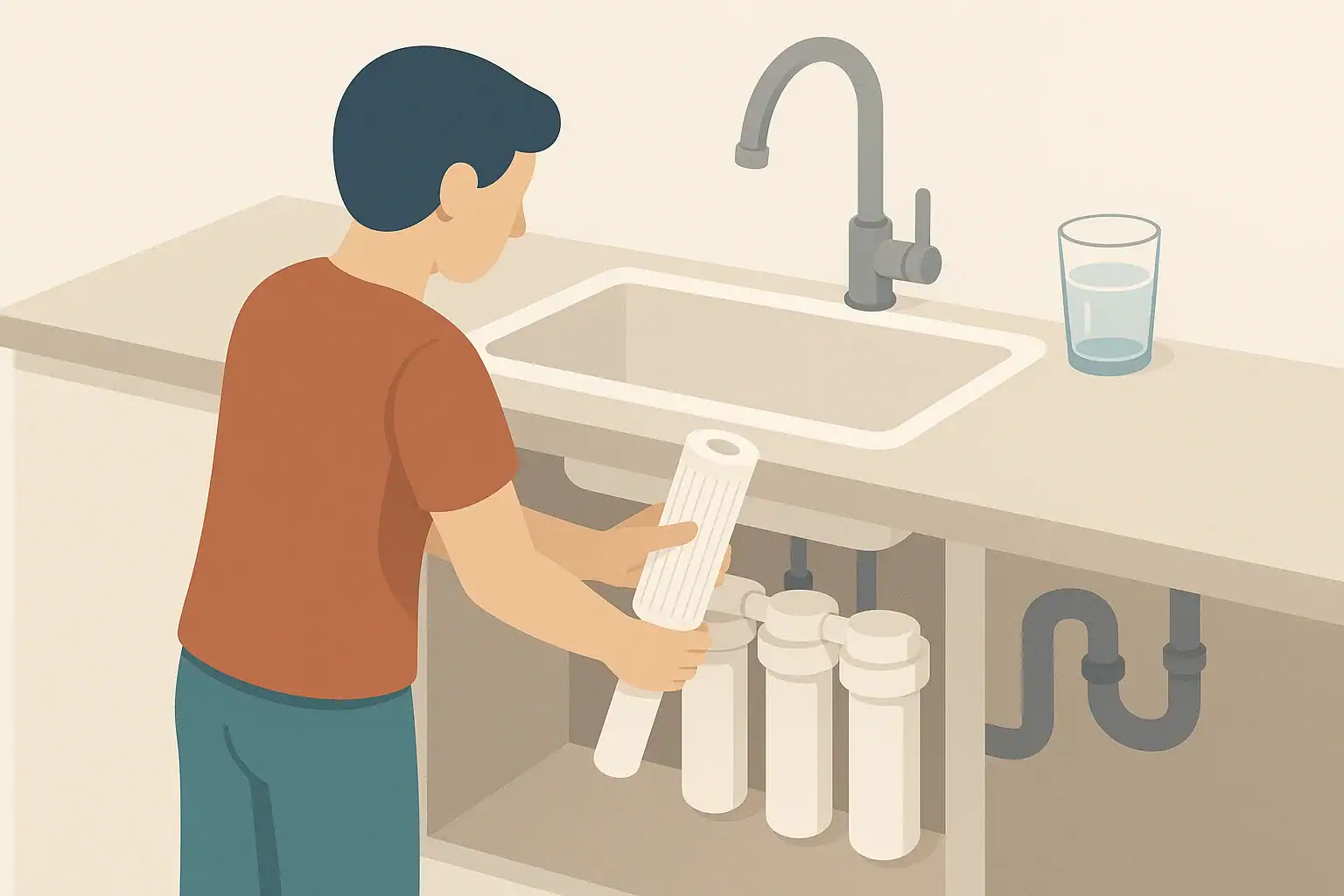
Why Tap Water Tastes Like Chlorine
Many U.S. water systems use chlorine as a disinfectant to help control microbes as water moves through pipes to your home. This is a common and generally accepted treatment practice. While this approach supports water safety, it can leave a noticeable chlorine taste and odor at the tap.
Several factors affect how strong the chlorine taste seems in your tap water:
- Chlorine dose at the treatment plant – Higher doses can lead to stronger taste at the tap.
- Distance from the plant – Homes farther away may experience different levels as chlorine reacts and dissipates over time.
- Water temperature – Warmer water tends to release chlorine smell more easily.
- Plumbing materials and age – Internal plumbing can influence overall taste and odor.
Some systems use chloramine (a chlorine-ammonia combination) instead of, or in addition to, free chlorine. Chloramine often has a different taste and odor profile and may be more persistent in plumbing and filters. If you are unsure which disinfectant your utility uses, you can usually find this information in your annual water quality report or by contacting the utility directly.
Quick Fixes to Reduce Chlorine Taste Right Now
If you notice a chlorine taste and want immediate relief, there are several simple steps you can try before investing in a long-term filtration system. These methods do not remove all substances from water, but they can noticeably improve taste for many households.
Let Water Sit to Allow Chlorine to Dissipate
Free chlorine (not chloramine) can slowly dissipate when water is exposed to air.
- Fill an uncovered pitcher or container and let it sit in the refrigerator.
- Allow several hours for taste to mellow; many people notice a difference by the next day.
- Use a clean food-safe container and replenish it regularly so water remains fresh.
This method is simple and low cost, but it is less effective if your utility uses chloramine, which is more stable and slower to dissipate.
Run the Tap for a Short Time
Water that sits in household pipes can concentrate flavors and odors. Running the tap briefly can flush that water.
- Run cold water for a short period (for example, until it feels colder and steady).
- Collect flushed water for non-drinking uses, such as watering plants, to reduce waste.
This can reduce some taste issues, especially first thing in the morning, but it may not fully address stronger chlorine flavors for sensitive tasters.
Chill or Add Ice
Cooler water often tastes better, even when chlorine is present.
- Store drinking water in the refrigerator.
- Use ice made from the same water source for a more consistent taste.
Lower temperatures can make flavors less noticeable, though they do not remove the underlying substances.
Use Simple Carbon-Based Devices
Basic pour-through pitchers and some faucet-mounted devices typically use activated carbon, which is well-known for improving taste and odor.
- These products are often designed to reduce chlorine taste and odor.
- They need regular cartridge replacement to stay effective.
- Flow rate is usually modest, so they work best for drinking and cooking water only.
Even a basic activated carbon stage can provide a noticeable improvement in chlorine taste for many homes.
Example values for illustration.
| Option | Type | Helps With | Example Cost Level | Ongoing Effort |
|---|---|---|---|---|
| Let water sit in fridge | Quick action | Mild chlorine taste from free chlorine | Very low | Low, refill container |
| Run tap briefly | Quick action | Stale or pipe-related taste | Low (water use only) | Low, repeated daily |
| Pitcher with carbon filter | Portable filter | Chlorine taste and odor | Low initial | Medium, cartridge changes |
| Faucet-mounted carbon filter | Point-of-use filter | Chlorine taste and some other impurities | Low to medium | Medium, cartridge changes |
| Under-sink carbon system | Point-of-use filter | Chlorine, taste and odor, some chemicals | Medium | Medium, annual or semiannual service |
| Whole-house carbon filter | Point-of-entry filter | Chlorine throughout home | Higher | Medium, media or cartridge service |
Example cost and effort levels vary by home, usage, and product design.
How Long-Term Filtration Options Handle Chlorine Taste
If chlorine taste is a frequent issue, a more permanent solution can be easier than relying on quick fixes every day. Most long-term approaches fall into two main groups: point-of-use systems (treating water at one faucet) and point-of-entry systems (treating water for the whole home).
Activated Carbon: The Primary Tool for Chlorine Taste
Activated carbon is a widely used media for improving taste and odor. It works through adsorption, where compounds adhere to the surface of the carbon.
Common activated carbon formats include:
- Granular activated carbon (GAC) – Loose particles that water flows through. Often found in whole-house units and some under-sink filters.
- Carbon block – Densely packed carbon, shaped into a solid block. Common in under-sink cartridges, faucet filters, and higher-capacity pitchers.
For chlorine taste specifically, even relatively simple carbon filters can be effective when sized and maintained properly. Some systems also use specialized carbons designed to address chloramine, which can be more challenging to reduce.
Under-Sink Filters for Drinking and Cooking
Under-sink systems are popular for treating water at a single location, usually the kitchen sink. They typically serve a dedicated drinking-water faucet or connect to the cold side of the main faucet.
Common under-sink configurations that help with chlorine taste include:
- Single-stage carbon filters – Focus on taste, odor, and basic chemical reduction.
- Multi-stage carbon systems – Combine sediment prefilters, one or more carbon stages, and sometimes additional media to broaden treatment capabilities.
- Reverse osmosis (RO) systems with carbon pre/post-filters – Use carbon stages along with a membrane to reduce a wider range of dissolved substances.
Under-sink systems are a good fit if you mainly care about better-tasting water for drinking, ice, coffee, tea, and cooking, and do not need chlorine removed from showers or laundry.
Whole-House Carbon for All Fixtures
Whole-house, or point-of-entry, carbon systems treat water as it enters the home. These are typically installed where the main water line first comes inside, before branching to plumbing fixtures.
People consider whole-house carbon when they want:
- Reduced chlorine taste and odor at every faucet and shower
- More pleasant water for bathing, washing, and cleaning
- Protection for downstream devices, such as some softeners or appliance filters
Whole-house systems are sized based on flow rate needs (for example, simultaneous shower and laundry use) and expected chlorine levels. Cartridge-style or tank-based systems both exist; each has its own service schedule and media replacement intervals.
Reverse Osmosis Systems and Chlorine
Reverse osmosis (RO) systems almost always include carbon prefilters to address chlorine before water reaches the RO membrane. This is important because unaddressed chlorine can shorten the life of certain membrane materials.
Key points about RO and chlorine taste:
- Carbon prefilters handle most of the chlorine taste reduction.
- The RO membrane further reduces many dissolved substances that can influence taste.
- A carbon post-filter is often added after the membrane for final polishing of taste and odor.
RO is usually chosen when people want broader reduction of dissolved minerals and various contaminants in addition to improving chlorine taste. It is more complex than a simple carbon filter, and it produces a separate drain stream, so it is generally best for focused drinking and cooking water, not whole-house use.
Choosing Between Pitcher, Faucet, Under-Sink, and Whole-House
Once you decide you want more than basic quick fixes, your next step is choosing where to treat the water and how much complexity you are comfortable maintaining.
Pitcher and Countertop Filters
Pitcher and countertop filters are typically the easiest entry point.
Pros:
- Simple setup with no plumbing work
- Portable and suitable for renters or dorms
- Focused on improving taste and odor
Considerations:
- Limited volume; frequent refilling for larger households
- Filter cartridges often need replacement every few weeks to months, depending on use and design
- Flow is slower compared with direct-tap solutions
Faucet-Mounted Filters
Faucet-mounted carbon filters attach directly to the end of compatible kitchen faucets.
Pros:
- Quick installation without major tools
- On-demand filtered water without refilling a pitcher
- Designed to help with chlorine taste and some additional substances
Considerations:
- Not compatible with all faucet styles
- Can reduce water flow rate on the filtered setting
- Cartridges have limited capacity and need regular replacement
Under-Sink Filters
Under-sink carbon or multi-stage systems move the filtration equipment out of sight and provide higher flow than pitchers. They are suitable for many family kitchens.
Pros:
- Convenient, on-demand filtered water at a dedicated faucet or the main cold tap
- Cartridges often have higher capacity than pitcher filters
- Can be configured to address taste, chlorine, and other water quality goals
Considerations:
- Usually require basic plumbing work for installation
- Need periodic cartridge replacement on a schedule, such as every 6–12 months, depending on design and usage
- Take up cabinet space under the sink
Whole-House Carbon Systems
Whole-house systems are best if your goal is to reduce chlorine taste and odor at all fixtures, not only at the kitchen sink.
Pros:
- More pleasant water for bathing and showering
- Single centralized system instead of multiple separate filters
- Designed for higher flow rates to serve multiple fixtures at once
Considerations:
- Higher initial cost and more involved installation
- Media or cartridge replacement is less frequent but typically more substantial when due
- Often requires access to the main water line and adequate space near the entry point
Matching Filtration to Your Water and Household
Before selecting a system, it is useful to understand your local water characteristics and your own expectations. Chlorine taste is one aspect of water quality, but not the only one.
Confirming What Your Utility Uses
One helpful step is to determine whether your water utility primarily uses free chlorine or chloramine as a disinfectant. This can influence filter choice, because some carbons and system designs are tuned for one or the other.
You can usually:
- Check the annual water quality report provided by your utility
- Call the utility and ask which disinfectant is used and whether it changes seasonally
Knowing this detail can help you choose a filter advertised as suitable for your disinfection method, especially if you have chloramine and find its taste persistent.
Clarifying Your Main Goals
Think through what you most want from a filtration system:
- Taste only – If your primary concern is chlorine taste and basic odors, a carbon-focused system may be sufficient.
- Taste plus broader reduction – If you also care about hardness, total dissolved solids, or specific contaminants, you may consider multi-stage or RO systems.
- Whole-home comfort – If shower and bathroom water are part of your concern, explore whole-house carbon in addition to or instead of point-of-use devices.
Understanding your goals helps you avoid over- or under-sizing your solution.
Considering Flow Rate and Space
Different systems have different flow and space requirements.
- Pitchers and countertop units require counter or fridge space but no plumbing.
- Faucet filters may slightly reduce flow when on the filtered setting.
- Under-sink and RO systems require clear space under the sink and may have specified pressure and flow requirements.
- Whole-house systems must be sized for peak household flow and installed in line with the main water supply.
Checking these details ahead of time helps ensure you select a system that fits your kitchen layout and daily water use patterns.
Maintenance Habits to Keep Chlorine Taste Under Control
Even the best filter will lose effectiveness over time if it is not maintained. Consistent care is essential for sustained taste improvement.
Follow Filter Replacement Schedules
Cartridge and media life depends on both time and volume of water treated. Many devices specify a maximum number of gallons or a recommended time interval, whichever comes first.
General examples (actual values vary by design):
- Pitcher filters: several weeks to a few months
- Faucet-mounted filters: a few hundred gallons or a few months
- Under-sink cartridges: several months to a year or more
- Whole-house media: often measured in years, depending on type and water conditions
As filters load up with material, they may pass more chlorine through or show changes in flow. Replacing on schedule helps maintain the expected reduction in taste and odor.
Watch for Taste Changes and Flow Issues
Your senses are often the first sign that a filter is due for service.
- If chlorine taste or odor returns, it may indicate the carbon media is exhausted.
- If flow rate drops noticeably, sediment buildup or clogged media may be the cause.
- Unusual tastes or odors after a long period of non-use may call for flushing or, in some cases, replacement.
Many systems include suggested replacement intervals, but local water conditions can make a filter last longer or shorter than the label estimate.
Basic Sanitation and Leak Awareness
When installing or changing filters, follow manufacturer instructions to help maintain sanitary conditions.
- Wash hands and work with clean tools and surfaces during cartridge changes.
- Flush new filters as directed before drinking the water.
- Inspect connections and housings for leaks after service.
- Periodically check under-sink and whole-house systems for moisture, corrosion, or drips.
These simple practices support reliable operation and reduce surprises later.
Example values for illustration.
| System Type | Example Replacement Interval | Good Habit | Reminder Idea |
|---|---|---|---|
| Pitcher filter | About 1–2 months | Mark calendar at installation | Sticker on pitcher lid |
| Faucet-mounted cartridge | Every few months | Note start date and approximate gallon rating | Phone reminder based on average use |
| Under-sink carbon cartridge | 6–12 months | Combine with seasonal home maintenance | Reminder tied to start of a new season |
| RO pre/post carbon filters | 6–12 months | Replace together for simplicity | Log service in a notebook near system |
| Whole-house carbon media | Several years, depending on design | Record installation year clearly | Label on nearby wall or panel |
| Point-of-use sediment prefilter | As needed when flow drops | Check when other filters are changed | Visual inspection during routine checks |
Actual intervals depend on water quality, volume used, and product design. Follow manufacturer guidance.
Chlorine taste in tap water is a common experience, and there are many practical ways to address it. From simple actions like chilling water or using a basic pitcher to more comprehensive under-sink or whole-house systems, you can match the approach to your household’s needs, budget, and comfort with maintenance while keeping the focus on steady, manageable improvements over time.
Frequently asked questions
Will letting water sit in a pitcher always remove the chlorine taste?
Letting water sit works well for free chlorine: a few hours to overnight in an open container often reduces taste. It is much less effective for chloramine, which is more stable and requires specialized treatment such as certain carbon types.
How long should I run the tap to flush out chlorine-stale water?
Run cold water until it feels cold and steady; depending on house size and plumbing that might be 30 seconds to a few minutes. Capture the flushed water for non-drinking uses if you want to avoid waste.
Do carbon filters remove chloramine as well as chlorine?
Some carbon filters reduce chloramine, but not all. Effective removal generally requires sufficient contact time and the right carbon type (for example, catalytic or specialized carbon). Choose systems specified for chloramine reduction if your utility uses it.
Should I treat water at a single faucet or use a whole-house system?
If your primary goal is better tasting drinking and cooking water, point-of-use options (pitcher, faucet, under-sink) are usually simpler and less expensive. If you want improved taste and odor at every fixture (showers, laundry, all taps), a properly sized whole-house carbon system is appropriate. Consider your budget, space, and maintenance willingness when deciding.
Related guides: VOCs in Water: How Carbon Filters Work • PFAS Removal Options: RO vs Carbon vs Whole House • Lead in Tap Water: Practical Steps Before Buying a Filter • Whole House Carbon Filters for Chlorine & Taste: What to Expect
Recommended next:
- Lead in Tap Water: Practical Steps Before Buying a Filter
- PFAS Removal Options: RO vs Carbon vs Whole House
- VOCs in Water: How Carbon Filters Work
- Pesticides & Herbicides: What Filters Can Reduce Them?
- Nitrates in Well Water: What Filtration Works Best?
- Arsenic Filtration Basics: What to Look For
- More in Contaminants & Removal →
- NSF/ANSI standards explained (42/53/401/58)
- Clear trade-offs: pitcher vs faucet vs under-sink vs RO
- Maintenance planning: cost per gallon and replacement cadence