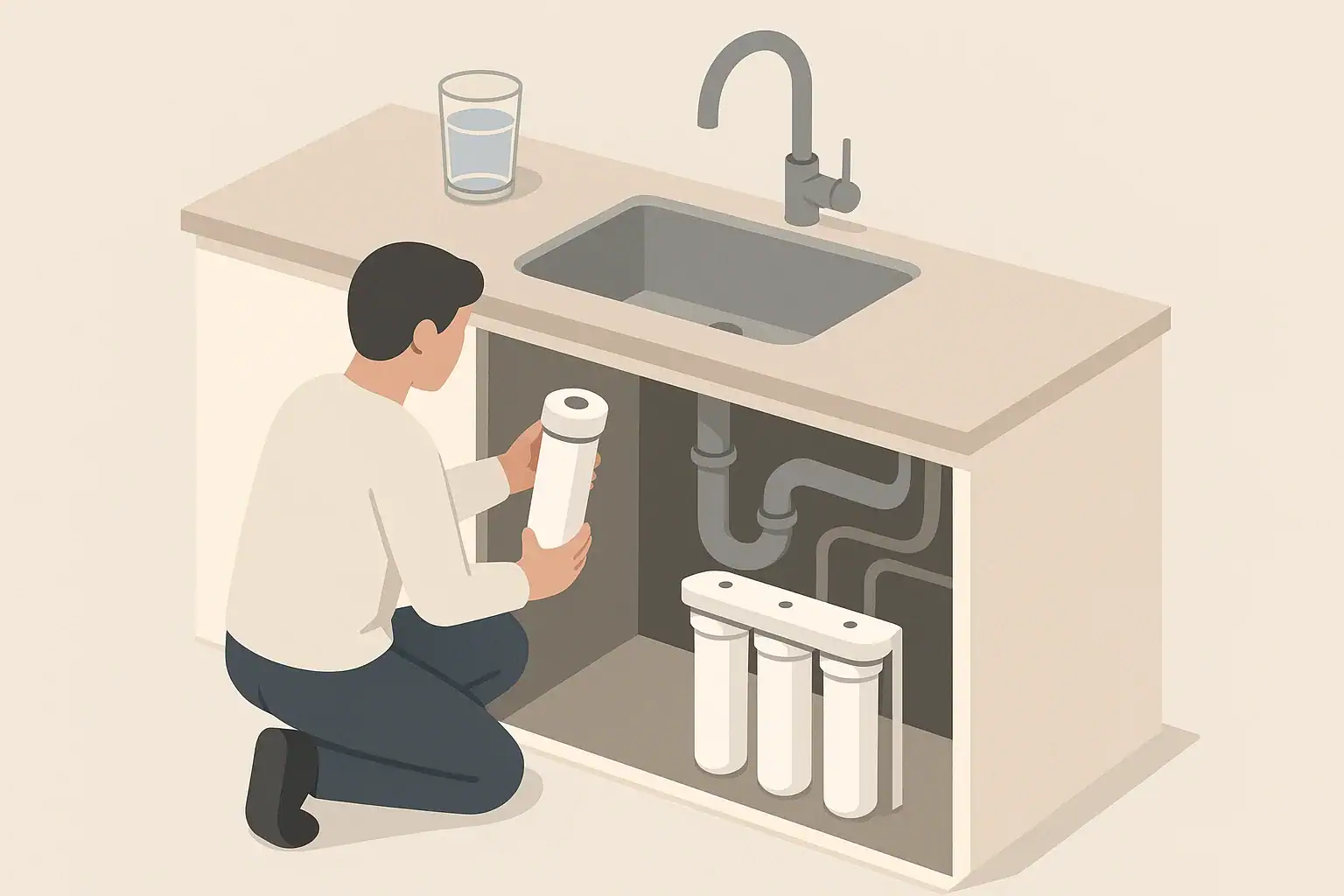
Fluoride in Home Water: Basic Context
Fluoride is present in many U.S. public water systems, either naturally or through community fluoridation programs. Some private wells also contain naturally occurring fluoride in varying amounts. People choose to reduce fluoride for different reasons, including taste preferences, compatibility with other treatment goals, or a desire for more control over what is in their drinking water.
Home filtration can reduce fluoride, but not every filter is designed for this purpose. Common pitcher and faucet-mounted carbon filters that excel at chlorine and taste improvement usually do little or nothing for fluoride. Methods that work on smaller ions, like fluoride, tend to involve membranes or specialized media.
This article explains which home filtration technologies typically affect fluoride, how they fit into practical household setups, and what trade-offs to expect. It focuses on system function and everyday decision points, not on medical or policy debates about fluoridation.
How Fluoride Behaves in Water Treatment
Understanding how fluoride behaves helps explain why many common filters do not significantly change it. Fluoride is a small, negatively charged ion that stays dissolved in water. It does not attach easily to standard activated carbon the way chlorine, many odors, and some organic compounds do.
Technologies that are more likely to reduce fluoride typically rely on one of these mechanisms:
- Size-based separation: Very tight membranes physically separate water from many dissolved ions, including fluoride.
- Ion exchange: A resin trades one ion in the water for another held on the resin surface.
- Specialized adsorption media: Certain mineral media can bind fluoride more strongly than ordinary carbon.
Because of this, fluoride reduction is usually part of more advanced treatment stages, not basic taste-and-odor filters. It is also strongly affected by water chemistry: pH, temperature, the presence of other ions, and contact time all matter.
Example values for illustration.
| Filter type | Fluoride reduction potential | Typical use point | Main trade-offs |
|---|---|---|---|
| Basic activated carbon pitcher | Low to none | Countertop | Improves taste and chlorine, usually not designed for fluoride |
| Standard faucet-mounted carbon | Low to none | Sink faucet | Convenient, mainly for chlorine and some metals or VOCs |
| Reverse osmosis (RO) | Moderate to high | Under-sink or whole kitchen | Wastewater, slower flow, usually storage tank or tankless unit |
| Distillation unit | High | Countertop or portable | Electricity use, time per batch, hot surfaces |
| Specialized fluoride media (e.g., certain mineral cartridges) | Moderate | Under-sink or whole-house stage | Media exhaustion over time, sensitive to water chemistry |
| Whole-house carbon-only system | Low to none | Point of entry | Covers all fixtures, mainly for chlorine and odor |
| Ion exchange softener (for hardness) | Usually very low | Point of entry | Designed for hardness and some metals, not fluoride |
Reverse Osmosis and Fluoride Reduction
Reverse osmosis (RO) is one of the most common home technologies used when fluoride reduction is a goal. RO uses a semi-permeable membrane under pressure to separate water from many dissolved substances. Fluoride ions are small but still larger than water molecules, and many RO membranes are capable of significantly reducing them.
Typical household RO systems include several stages, for example:
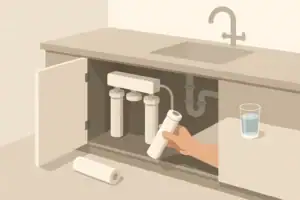
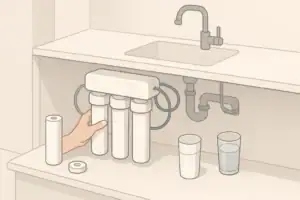
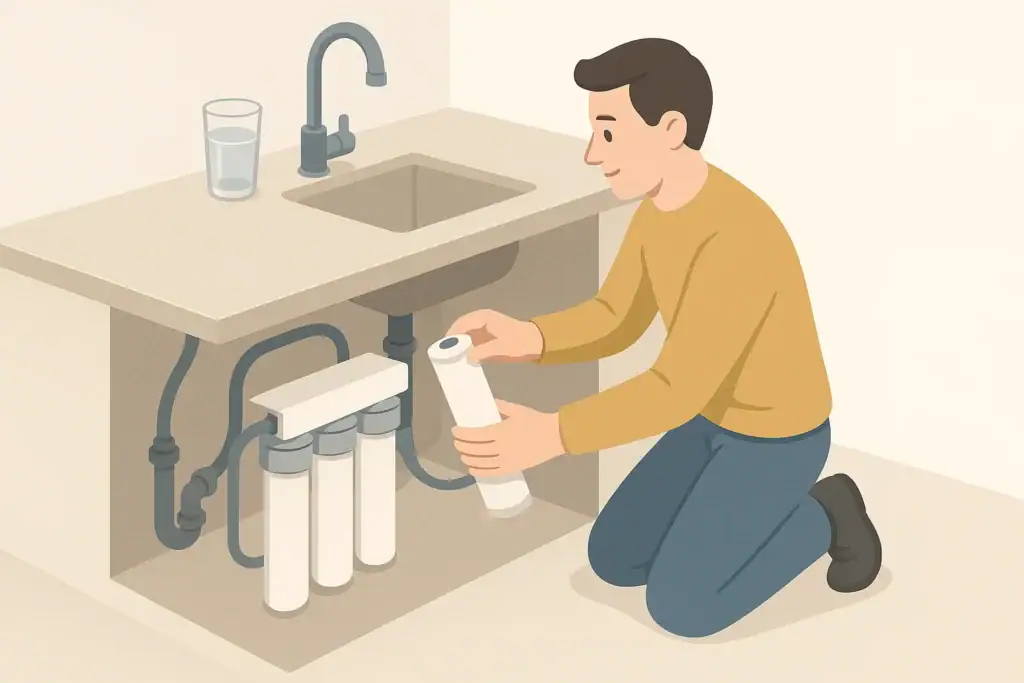
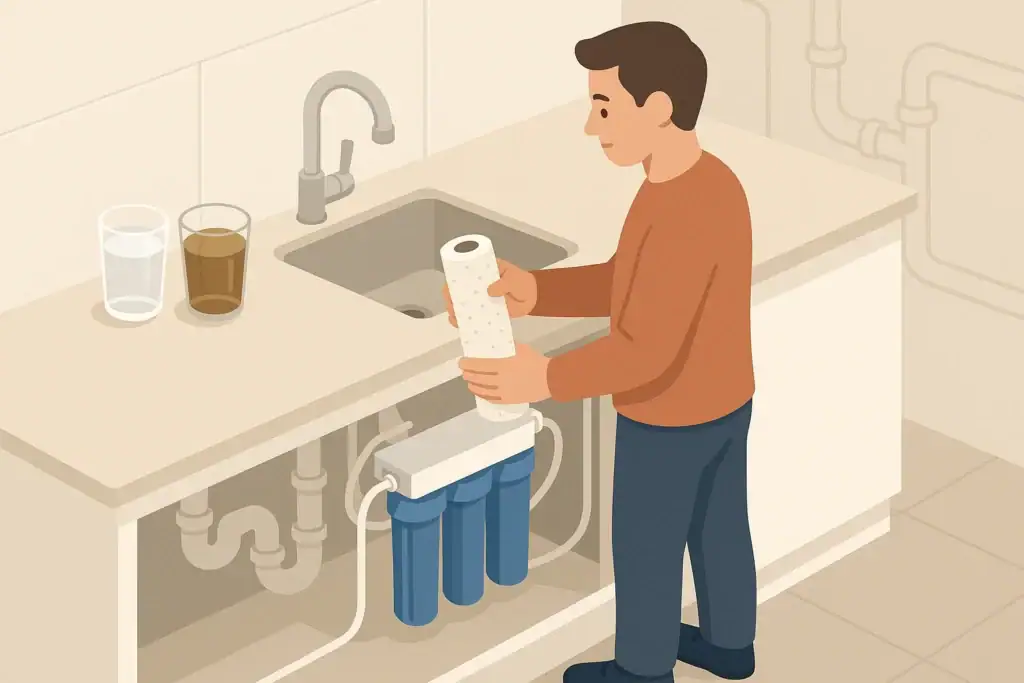
- Sediment prefilter to remove particles and protect downstream stages
- Carbon prefilter for chlorine and some organics, which helps protect the RO membrane
- RO membrane for major dissolved solids reduction, including many salts and some metals
- Optional postfilter (often carbon) to polish taste
In practice, the actual fluoride reduction depends on membrane condition, water pressure, temperature, and overall water chemistry. Well-maintained systems with adequate feed pressure generally lower total dissolved solids (TDS) substantially, which often includes fluoride.
Where RO Systems Are Typically Installed
Most residential RO systems are point-of-use installations:
- Under-sink drinking water: A dedicated faucet provides RO water for drinking and cooking.
- Inline to a refrigerator: RO water feeds an ice maker or fridge dispenser.
Whole-house RO exists but is less common due to cost, wastewater volume, and the need to manage low-mineral water throughout plumbing and appliances. For most households focused on fluoride reduction in drinking water only, a single under-sink RO system is more typical.
Trade-Offs of RO for Fluoride Reduction
When considering RO primarily for fluoride reduction, it helps to weigh these factors:
- Wastewater: RO systems discharge a concentrate stream to a drain. The ratio of purified water to drain water varies by design; some systems are more efficient than others.
- Flow rate: RO water usually comes from a storage tank or a controlled flow system. It does not match full tap pressure or volume.
- Mineral content: RO reduces many dissolved minerals, not just fluoride. Some people prefer the taste of low-mineral water; others prefer systems that leave more minerals in place or include remineralization stages.
- Maintenance: Prefilters and postfilters typically need periodic replacement, and membranes last longer but still require eventual replacement.
Distillation Units and Fluoride
Distillation systems heat water to create steam, then condense the steam back to liquid in a separate chamber. Many dissolved substances, including fluoride and most minerals, do not evaporate at the same temperature as water and are left behind in the boiling chamber.
Because distillation physically separates water as vapor, it can significantly reduce a wide range of dissolved solids. However, some volatile compounds can carry over with steam, so many distillers include a small carbon postfilter to help with any remaining odors or tastes.
Practical Considerations for Distillers
Distillation is usually a batch process. Common practical aspects include:
- Cycle time: Producing a few liters of distilled water may take several hours.
- Electricity use: Distillers rely on heating elements, so power consumption can be noticeable.
- Heat and placement: Units can get hot during operation and need a stable, ventilated location away from items sensitive to heat.
- Cleaning: Minerals and other residues gradually build up in the boiling chamber and need periodic cleaning according to manufacturer guidance.
Distillers are often used where plumbing changes are not desired, such as in apartments, dorms, or temporary housing, and where the user wants a portable method that can address many dissolved solids, including fluoride.
Specialized Fluoride Media and Cartridges
Some home filtration systems use specialized media designed to target fluoride ions more directly than standard carbon. These media are often mineral-based and housed in cartridges that can be part of an under-sink system or, less commonly, a point-of-entry system.
Fluoride media work by adsorbing fluoride from the water or exchanging it with other ions. Their performance depends strongly on:
- Water pH: Many fluoride media have an optimal pH range for adsorption.
- Competing ions: Ions such as sulfate, bicarbonate, and others may compete with fluoride for adsorption sites.
- Contact time: Slower flow through the media allows more interaction and potentially better reduction.
Placement in Multi-Stage Systems
Because fluoride media are sensitive to particulates and other contaminants, they are commonly placed after basic prefiltration:
- Sediment stage first, to remove particles
- Carbon stage second, to reduce chlorine and protect downstream media
- Fluoride media stage third, in relatively clean water
Some systems combine fluoride media with other specialized media to address additional contaminants, but this can complicate service schedules and performance expectations.
Media Capacity and Replacement
Unlike carbon filters that are often changed on a time-based schedule for taste and chlorine control, fluoride media capacity is tied to the actual amount of fluoride treated. Once the adsorption sites are saturated, the media will no longer reduce fluoride effectively.
In practice, homeowners often rely on a combination of:
- Manufacturer or installer guidance based on typical water conditions
- Water testing before and after the filter at intervals to see when breakthrough occurs
This approach helps align cartridge replacement with performance rather than only calendar time.
What About Carbon Filters and Pitcher Systems?
Many people start with carbon pitchers or faucet filters to improve taste and reduce chlorine. These systems are convenient and widely available, but most are not designed to significantly reduce fluoride. Some may include specialized media in addition to carbon, but this is not universal.
Typical carbon-based systems do best with:
- Chlorine and some chloramine reduction
- Improved taste and odor
- Reduction of some organic compounds and certain metals (depending on the design)
If fluoride reduction is a specific goal, it is important to verify whether a given product uses additional media or technologies beyond standard activated carbon. Otherwise, even high-performing taste-and-odor filters may leave fluoride essentially unchanged.
When Pitcher or Faucet Filters Still Make Sense
Even if they do not significantly affect fluoride, these filters can still fit into a broader strategy:
- Pre-filtration for taste: Some people prefer to use a carbon filter even on distilled or RO water for polishing taste.
- Secondary locations: Pitchers can be kept in offices, dorm rooms, or in refrigerators where installing RO or specialized under-sink units is not practical.
- Backup or travel: Portable filters can be a backup when away from the main treated water source.
Fluoride and Whole-House Treatment
Whole-house, or point-of-entry, filtration treats water as it enters the building so that all fixtures receive filtered water. Many whole-house systems are based on media such as carbon, sediment filters, or softening resins. These are focused on issues like chlorine, sediment, or hardness rather than fluoride.
Targeting fluoride at the whole-house level is more complex:
- Flows are much higher than at a single faucet, so media capacity must be large.
- Backwashing and regeneration steps may be needed, increasing system complexity.
- Water chemistry across the whole home, including appliances and yard use, must be considered.
For many households, focusing fluoride reduction on drinking and cooking water only (for example, with an under-sink RO or a dedicated fluoride media cartridge) is a more practical balance between complexity and benefit.
Planning a Fluoride-Focused Filtration Setup
If fluoride reduction is part of your water treatment goals, it often helps to think in terms of point-of-entry versus point-of-use, and then choose technologies that match your overall water profile.
Step 1: Understand Your Starting Water
Before choosing equipment, gather basic information about your water:
- Source type: City water report or private well testing results.
- Fluoride level: Lab or utility data, ideally including recent measurements.
- Other priorities: Chlorine or chloramine taste, hardness scaling, lead, nitrates, or other concerns.
This helps you decide whether you need a system that targets mainly fluoride or a more comprehensive package that also handles other contaminants or water quality issues.
Step 2: Decide Where You Need Treated Water
Common options include:
- Kitchen sink only: Under-sink RO or a fluoride media cartridge plus basic filtration.
- Kitchen plus refrigerator: An under-sink system plumbed to both the drinking faucet and fridge.
- Portable solution: Countertop distiller or specialized countertop unit, useful in rentals or temporary housing.
Treating only the fixtures where water is consumed directly can limit costs and complexity, while still addressing fluoride in the water you drink most often.
Step 3: Balance Flow Rate, Storage, and Convenience
Different technologies deliver water at different speeds:
- RO with tank: Moderate instantaneous flow, but limited by tank size. Once the tank is empty, refill takes time.
- Tankless RO: Flow limited by membrane capacity and system design; often higher feed pressure and more robust plumbing are preferred.
- Distillers: Batch production with storage in a carafe or container.
- Under-sink fluoride cartridge: Flow similar to other cartridge filters, though very high flow rates may reduce contact time and performance.
Thinking through how much water you realistically need for drinking and cooking each day can prevent oversizing or undersizing a treatment system.
Example values for illustration.
| Component | Typical basis for replacement | Illustrative time range | Practical reminder |
|---|---|---|---|
| RO sediment prefilter | Water use and sediment load | About 6–12 months | Change when pressure drop or discoloration appears |
| RO carbon prefilter | Chlorine/chloramine exposure | About 6–12 months | Protects membrane; follow system guidance |
| RO membrane | Performance decline (rising TDS) | About 2–5 years | Monitor TDS before and after membrane |
| Fluoride media cartridge | Fluoride breakthrough | Highly variable, often 6–24 months | Confirm with periodic water testing |
| Distiller carbon postfilter | Volume of water processed | Often a few months | Replace as taste changes or per unit guidance |
| Distiller boiling chamber cleaning | Scale buildup | From weekly to monthly | Inspect visually and clean as needed |
| Under-sink carbon postfilter | Taste and odor performance | About 6–12 months | Replace if taste changes even before schedule |
Related guides: Lead in Tap Water: Practical Steps • PFAS removal options: RO vs Carbon vs Whole House • VOCs in Water: How Carbon Filters Work • Arsenic filtration basics
Verifying Performance Over Time
Because fluoride is colorless and tasteless at typical drinking water levels, you cannot rely on sensory changes to know whether a system is still reducing it. Over time, membranes, media, or distiller performance can change.
Practical approaches include:
- Reviewing system documentation: Check what the system is designed to address and how performance is described.
- TDS checks for RO: Simple total dissolved solids meters can indicate general membrane performance; a rising TDS ratio between feed and product water may suggest membrane wear.
- Periodic lab testing: Sending samples for fluoride analysis before and after treatment at intervals can show whether media or systems are maintaining reduction.
- Maintenance records: Logging filter changes and test results helps match observed performance with replacement intervals.
Combining appropriate technology with realistic maintenance planning allows you to manage fluoride as part of an overall home water strategy, alongside other common concerns such as taste, chlorine, hardness, and metals.
Frequently asked questions
Do common pitcher or faucet carbon filters remove fluoride?
Most basic activated carbon pitchers and faucet-mounted carbon filters do little or nothing for fluoride. They are effective for chlorine, taste, and some organic compounds, but fluoride is a small dissolved ion that generally requires membranes or specialized media to reduce.
Which home systems typically reduce fluoride effectively?
Reverse osmosis systems, distillation units, and dedicated fluoride media cartridges commonly provide meaningful fluoride reduction. Each approach involves trade-offs in flow rate, maintenance, waste or energy use, and overall water chemistry sensitivity.
How can I verify my filter is still reducing fluoride?
Because fluoride isn’t detectable by taste or sight, verify performance with periodic lab testing of source and treated water, follow manufacturer maintenance guidance, and for RO systems use simple TDS checks to spot membrane decline.
Should I treat the whole house for fluoride or just drinking water points?
For most households it’s more practical to treat drinking and cooking water at point-of-use (for example, under-sink RO or a dedicated fluoride cartridge). Whole-house fluoride treatment is possible but increases system complexity, media capacity needs, and cost.
Recommended next:
- Lead in Tap Water: Practical Steps Before Buying a Filter
- PFAS Removal Options: RO vs Carbon vs Whole House
- VOCs in Water: How Carbon Filters Work
- Pesticides & Herbicides: What Filters Can Reduce Them?
- Nitrates in Well Water: What Filtration Works Best?
- Arsenic Filtration Basics: What to Look For
- More in Contaminants & Removal →
- NSF/ANSI standards explained (42/53/401/58)
- Clear trade-offs: pitcher vs faucet vs under-sink vs RO
- Maintenance planning: cost per gallon and replacement cadence