
Why Chloramine Taste and Smell Matter
Many U.S. water utilities use either chlorine or chloramine to disinfect city water. Both are effective disinfectants, but they affect taste and odor in different ways. Understanding those differences helps you decide whether you want additional filtration and which type makes the most sense in your home.
People often describe chlorinated water as having a noticeable "pool" or "bleach-like" smell. Chloraminated water is usually less intense but can have a more persistent, slightly chemical or medicinal taste. Some people barely notice it; others find it unpleasant in drinking water, coffee, and tea.
This article explains what chloramine is, how its taste and smell differ from chlorine, and what that means for practical home filtration choices.
What Chloramine Is and How It Differs from Chlorine
Chloramine is a disinfectant formed when chlorine reacts with ammonia in water. Utilities add it on purpose (usually as monochloramine) because it is more stable than free chlorine and can stay active farther out in the distribution system.
Chlorine in municipal water
"Chlorine" in tap water usually means free chlorine, which includes hypochlorous acid and hypochlorite ions. Utilities dose it at low levels to reduce harmful microorganisms as water travels from treatment plants to homes.
Key characteristics of free chlorine in tap water:
- Common in many U.S. water systems
- Highly reactive and relatively short-lived in the distribution system
- Distinct, often strong odor, especially at higher residual levels
- Readily removed by standard activated carbon filtration
Chloramine in municipal water
Chloramine is typically used as a "secondary disinfectant" to maintain protection as water travels long distances. Utilities may switch from chlorine to chloramine to improve stability or manage byproducts.
Key characteristics of chloramine in tap water:
- More chemically stable than free chlorine
- Weaker odor but often more persistent taste
- Can be harder to remove with basic carbon filters compared to free chlorine
- Can interact differently with plumbing materials and fixtures over time
Why utilities choose chloramine
There are practical reasons some utilities prefer chloramine:
- Longer-lasting disinfectant: It maintains a residual disinfectant farther from the treatment plant.
- Different byproduct profile: It can help manage certain disinfection byproducts associated with free chlorine.
- System-specific needs: Large or complex distribution networks may benefit from a more stable disinfectant.
These choices are made at the utility level and are typically described in annual water quality reports. At the home level, your main concern is usually taste, smell, and what type of filtration you might want.
Example values for illustration.
| Aspect | Chlorine (free chlorine) | Chloramine (monochloramine) |
|---|---|---|
| Typical taste description | Sharp, bleach-like, "pool" taste | Milder but lingering, slightly chemical or medicinal |
| Typical odor description | Strong, easily noticed near faucet | Often subtle; some notice it most in hot water |
| Stability in distribution system | Less stable; dissipates more quickly | More stable; remains active longer |
| Ease of removal with basic carbon | Generally easy to reduce | More challenging; often needs more contact time or specialized carbon |
| Common user reaction | Immediate smell/taste recognition | Some notice it mainly in drinks like coffee or tea |
| Typical filtration response | Standard carbon filter at sink or pitcher | Upgraded carbon stage, sometimes whole-house or RO system |
How Chloramine Taste and Smell Differ from Chlorine
Even at similar disinfectant levels, chloramine and chlorine can feel very different at the tap.
Taste differences
People often describe the taste differences this way:
- Chlorine: A sharp, instantly recognizable "pool" or "bleach" flavor. It can overwhelm delicate flavors in drinks and cooking water.
- Chloramine: Less intense at first sip, but more persistent. Some describe it as slightly medicinal, chemical, or "flat but off."
Because chloramine is more stable, its taste can remain noticeable even after water has been stored in a refrigerator pitcher or used in ice. Some people notice it especially in coffee, tea, or other hot drinks.
Smell differences
The smell at the tap also differs:
- Chlorine smell: Often strong right at the faucet, especially when running hot water or a shower. It can sometimes dissipate quickly if water is left in an open container.
- Chloramine smell: Usually milder, sometimes described as a faint chemical or "swimming pool locker room" type odor. It may be more noticeable when water is heated, such as in showers or dishwashing.
Turning on a hot tap is often when people first realize their utility has changed disinfectants; a familiar chlorine smell may be replaced by a different, subtler odor.
Why chloramine is harder to “air out” than chlorine
Free chlorine can evaporate or break down relatively quickly, so letting water sit in an open container or boiling it can noticeably reduce its smell and taste. Chloramine is more stable and does not dissipate as easily.
As a result:
- Letting water sit on the counter may help with chlorine taste, but may have limited effect on chloramine taste.
- Boiling can change the character of the taste or odor, but may not remove chloramine to the same extent as it affects free chlorine.
- People relying on storage alone to improve taste often see better results with chlorine than with chloramine.
How to Tell If Your Water Has Chloramine or Chlorine
The difference between chlorine and chloramine cannot be diagnosed by taste and smell alone, although those clues can point you in a direction.
Check your water quality report
Most city water utilities publish an annual Consumer Confidence Report. It typically states which disinfectant is used, and whether the system uses free chlorine, chloramine, or a combination at different treatment stages.
Common patterns you might see described:
- "Free chlorine" listed as the primary residual disinfectant
- "Monochloramine" or "total chloramine" listed as the secondary disinfectant
- Notices about seasonal "free chlorine burns" where the utility temporarily switches from chloramine back to free chlorine for system maintenance
Simple test kits
General-purpose test strips and drop-based test kits are available that distinguish between free chlorine and combined chlorine (which includes chloramine) in a water sample. These tests can give a rough idea of what is present.
Such tests:
- Are usually designed for pool or general water testing, not for regulatory compliance
- Provide approximate readings that are useful for home decisions
- Can help you understand whether a filter is reducing disinfectant levels at the tap
Clues from taste and odor changes
If your utility changes disinfectants, you may notice:
- A sudden shift from a strong "pool" smell to a faint chemical odor
- Coffee or tea tasting different even though you have not changed brands or brewing methods
- Water that used to "air out" nicely in a pitcher staying somewhat off-tasting
These are indirect signs only. To be confident, rely on utility information and, if desired, simple testing.
Why Chloramine Taste Lingers Longer Than Chlorine
Chloramine’s persistence is largely due to its chemistry. Compared with free chlorine, chloramine reacts more slowly with many substances in water and is less likely to break down quickly in open containers.
Stability in distribution and in your plumbing
Because chloramine is more stable:
- It can remain in the water all the way from the plant to distant homes.
- It may stay noticeable in plumbing dead-ends and low-use lines.
- It may not fade as quickly when water stands in pipes overnight.
This stability is helpful for utilities maintaining disinfection, but it means household steps like "just let the water sit" are less effective for taste and odor than with chlorine.
Interaction with household materials
Chloramine can interact with pipe materials, rubber components, and fixtures differently than free chlorine. In the context of taste and smell, this can mean:
- Certain fixtures may develop a faint, lingering off-odor that is most noticeable at that tap.
- Older plumbing materials may contribute their own tastes and odors that mix with chloramine’s profile.
Routine maintenance, such as replacing old faucet aerators or flushing little-used lines, can sometimes reduce localized odors unrelated to the overall disinfectant choice.
Filtration Options for Chloramine Taste and Smell
Because chloramine is more persistent, some people on chloraminated water choose more robust filtration than they might use for chlorine alone. The goal is usually to improve taste and odor at specific taps used for drinking and cooking.
Basic activated carbon filters
Standard activated carbon filters, found in many pitchers, faucet-mounted units, and refrigerator filters, are generally effective for reducing free chlorine taste and odor. Their performance with chloramine varies.
With chloramine, important factors include:
- Contact time: Water may need more time in contact with the carbon to significantly reduce chloramine.
- Carbon type and amount: Larger cartridges and certain carbon formulations are often used to improve chloramine reduction.
- Flow rate: Slower flow through the filter can increase effectiveness for chloramine.
Upgraded carbon stages and under-sink systems
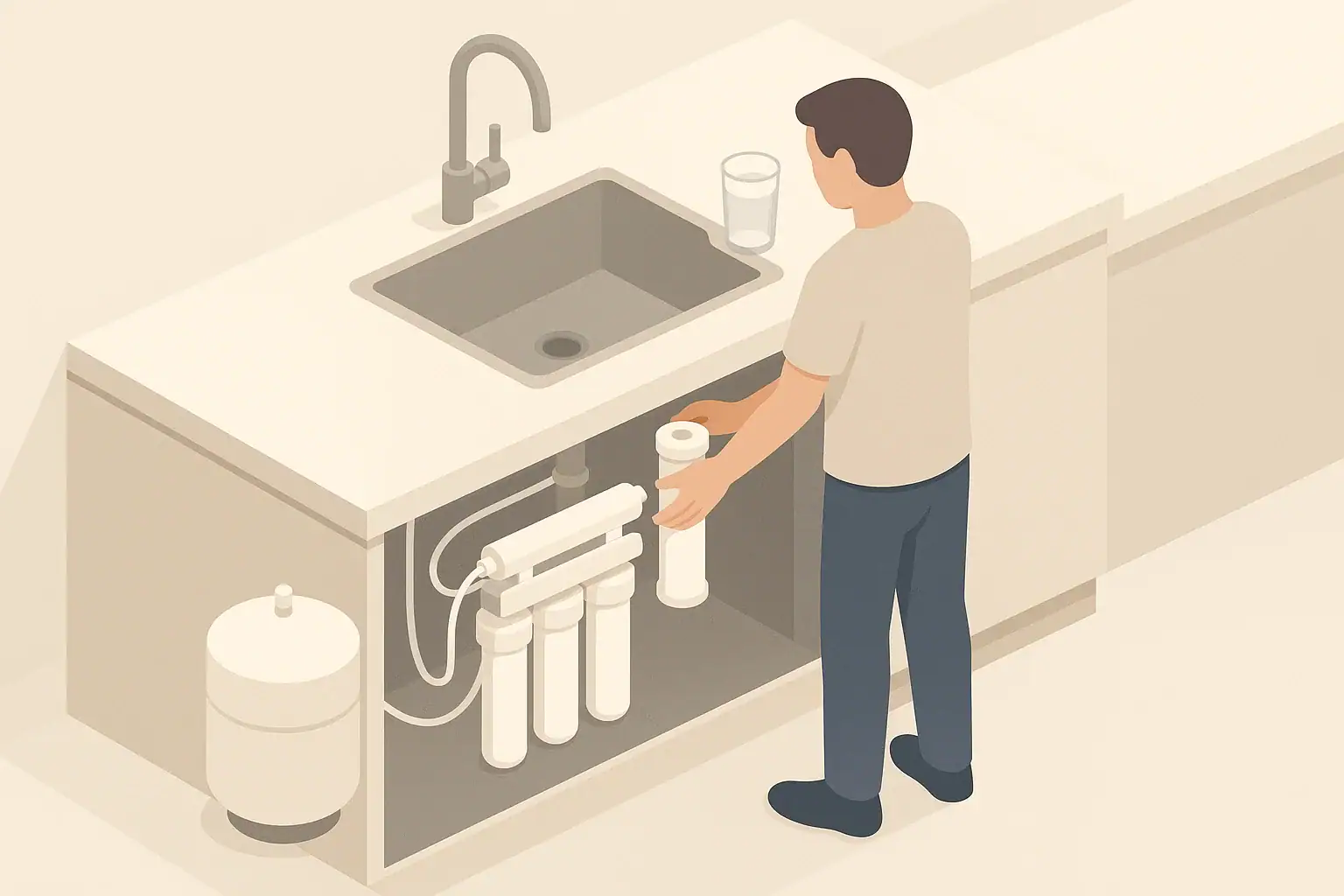
For people who are particularly sensitive to chloramine taste, an under-sink system with a dedicated drinking water faucet is a common option. These systems often use:
- Larger carbon cartridges to provide more contact time
- Carbon blocks or specialty carbons designed with chloramine in mind
- Multiple stages (sediment prefilter, one or more carbon stages, possibly additional media)
Because under-sink systems are plumbed in and not pressurized like whole-house systems, they can be designed to optimize contact time for taste and odor reduction at the kitchen sink.
Reverse osmosis systems with carbon prefilters
Point-of-use reverse osmosis (RO) systems commonly include one or more carbon stages before the membrane. These prefilters help reduce chlorine or chloramine that might otherwise affect the RO membrane.
From a taste perspective, RO systems typically provide:
- Substantial reduction in overall dissolved solids (which some people perceive as "clean" or "neutral" taste)
- Dedicated carbon stages that can be selected or configured with chloramine in mind
RO is usually chosen for broader water quality reasons, with improved taste and odor as an additional benefit.
Whole-house treatment for taste and odor
Some households choose whole-house carbon systems primarily to address taste and odor throughout the home, including showers and laundry. For chloramine, whole-house treatment usually involves:
- Significant amounts of carbon media
- Controlled flow rates to maintain adequate contact time
- Periodic media replacement or service
This approach focuses on comfort and user experience across all taps, not only drinking water.
Example values for illustration.
| Observed issue | Possible cause | Practical steps to consider |
|---|---|---|
| Strong pool-like smell at cold tap | Higher free chlorine at faucet | Try basic carbon filter at sink; check if smell decreases after a few minutes of running water |
| Mild chemical taste that doesn't fade in fridge | Chloramine stability in stored water | Consider larger or upgraded carbon filter with more contact time |
| Coffee and tea taste "off" despite same beans and method | Disinfectant affecting hot beverage flavor | Use filtered water from a dedicated drinking tap or RO system for brewing |
| Odor strongest from one little-used bathroom tap | Water stagnation and fixture-specific buildup | Flush that line regularly; clean or replace aerator |
| Taste improved after utility's seasonal change | Temporary switch between chloramine and chlorine | Review utility notices; adjust filtration expectations seasonally if needed |
| Filtered water still has slight disinfectant taste | Filter exhausted or undersized for chloramine | Replace cartridge on schedule; consider a model optimized for chloramine reduction |
Related guides: Pitcher Filters and Chloramine: Why Many Struggle (and What Helps) • VOCs in Water: How Carbon Filters Work • RO for Chloramine: Do You Need Special Carbon Stages? • Pitcher vs Under-Sink vs RO: Which Fits Your Budget and Water?
Practical Tips for Living with Chloraminated Water
If your utility uses chloramine and you notice the taste or smell, a few practical steps can make day-to-day use more comfortable.
Focus on the taps that matter most
Most households drink from and cook with water from only one or two locations, such as the kitchen sink or a refrigerator dispenser. Treating those taps is often more efficient than whole-house treatment if your main concern is drinking water taste.
Right-size filtration for your goals
When choosing filtration, consider:
- Goal: Is your main concern taste and odor, or are you also targeting other water quality issues?
- Usage: How many gallons of filtered water do you use per day?
- Space: Do you have room for an under-sink system or prefer a pitcher or faucet filter?
- Maintenance: Are you comfortable with periodic cartridge changes and basic system checks?
Stay aware of filter replacement timing
As filters load with material, their ability to reduce taste and odor declines. With chloramine, this can feel like a gradual return of that faint chemical taste. Following the manufacturer’s replacement guidance and monitoring for changes in taste or flow can help you maintain consistent performance.
Use utility information as a guide
Utility water quality reports and notices provide useful context for home filtration decisions. Knowing whether your water is treated with chlorine, chloramine, or a mix over the year helps you choose filters suited to your actual conditions and adjust expectations for taste and odor improvements over time.
Frequently asked questions
How can I confirm if my tap water has chloramine or chlorine?
Check your utility's annual Consumer Confidence or water quality report for terms like "monochloramine" or "free chlorine." For a quick home check, use simple test strips or drop kits that distinguish free chlorine from combined chlorine.
Will boiling or letting water sit remove chloramine?
Generally no. Chloramine is more stable than free chlorine, so boiling or airing water usually has limited effect. Filtration or treatment designed for chloramine is a more reliable way to reduce its taste or odor.
What filtration approaches work best for reducing chloramine taste and smell?
Effective approaches include larger carbon block cartridges, specialty carbon media with adequate contact time, point-of-use under-sink systems, or RO systems with carbon prefilters. Whole-house carbon systems sized for low flow can reduce odor across all taps.
Do I need whole-house treatment or is point-of-use usually enough?
If your main concern is drinking and cooking, treating the kitchen tap or using a point-of-use system is often sufficient. Choose whole-house treatment only if you want improved taste and odor at showers, laundry, and every faucet.
Recommended next:
- Lead in Tap Water: Practical Steps Before Buying a Filter
- PFAS Removal Options: RO vs Carbon vs Whole House
- VOCs in Water: How Carbon Filters Work
- Pesticides & Herbicides: What Filters Can Reduce Them?
- Nitrates in Well Water: What Filtration Works Best?
- Arsenic Filtration Basics: What to Look For
- More in Contaminants & Removal →
- NSF/ANSI standards explained (42/53/401/58)
- Clear trade-offs: pitcher vs faucet vs under-sink vs RO
- Maintenance planning: cost per gallon and replacement cadence