Most public water systems in the United States use disinfectants to keep tap water microbiologically safe as it travels through miles of pipes to homes. Chlorine and chloramine are the two most common choices.
Chlorine has been used for more than a century as a primary disinfectant. It is effective at inactivating many microorganisms and is relatively easy for utilities to apply and monitor.
Chloramine, usually monochloramine, is made by combining chlorine and a small amount of ammonia. Many utilities use chloramine as a “secondary” disinfectant in the distribution system because it is more stable than free chlorine and tends to persist farther from the treatment plant.
From a home user’s perspective, the key differences between chlorine and chloramine are not about safety standards, but about how they affect:
- Taste and smell of tap water
- Interaction with household plumbing and fixtures
- How easy they are to reduce with point-of-use filters
Why Chlorine and Chloramine Are Used in Tap Water
Most public water systems in the United States use disinfectants to keep tap water microbiologically safe as it travels through miles of pipes to homes. Chlorine and chloramine are the two most common choices.
Chlorine has been used for more than a century as a primary disinfectant. It is effective at inactivating many microorganisms and is relatively easy for utilities to apply and monitor.
Chloramine, usually monochloramine, is made by combining chlorine and a small amount of ammonia. Many utilities use chloramine as a “secondary” disinfectant in the distribution system because it is more stable than free chlorine and tends to persist farther from the treatment plant.
From a home user’s perspective, the key differences between chlorine and chloramine are not about safety standards, but about how they affect:
- Taste and smell of tap water
- Interaction with household plumbing and fixtures
- How easy they are to reduce with point-of-use filters
How Chlorine vs Chloramine Affect Taste and Odor
Even when disinfectant levels are within regulated limits, many people notice a distinct taste or smell in their tap water. The experience can be quite different depending on whether your utility uses chlorine or chloramine.
Chlorine Taste and Smell
Chlorine is often associated with a “pool-like” or “bleach-like” odor, especially when levels are near the upper end of typical ranges. Some people describe it as sharp or medicinal.
Factors that can make chlorine more noticeable at the tap include:
- Warmer water – chlorinous odor is often stronger in hot water.
- Low usage – water that sits in pipes or fixtures can smell stronger until flushed.
- Showering – the odor can be more noticeable due to heat and aerosols.
Letting cold tap water sit uncovered in the refrigerator for several hours can reduce chlorine smell because free chlorine slowly dissipates into the air. Boiling also drives off some chlorine, though it is not a practical everyday solution and does not address other potential contaminants.
Chloramine Taste and Smell
Chloraminated water usually does not smell like a swimming pool. Instead, some people perceive:
- A more subtle chemical or medicinal taste
- A slightly earthy or flat flavor compared to chlorinated water
- A lingering aftertaste, especially in coffee or tea
Unlike chlorine, chloramine does not readily dissipate by standing or boiling. A pitcher of chloraminated water left in the refrigerator will taste much the same the next day. Reducing chloramine usually requires contact with an appropriate filter media.
Why Some Utilities Switch from Chlorine to Chloramine
Many utilities choose chloramine to maintain disinfection while helping manage the formation of certain disinfection byproducts that can form when chlorine reacts with natural organic matter in water. Chloramine’s longer-lasting nature can also help maintain a disinfectant residual throughout large, complex distribution systems.
For households, this switch is often first noticed as a change in taste or odor rather than through official notices. People may describe their water as tasting “different” or “flatter” after a changeover, even when disinfectant levels remain within regulatory guidelines.
Example values for illustration.
| Aspect | Chlorine | Chloramine |
|---|---|---|
| Typical household perception | Stronger pool-like smell, sharper taste | Milder odor, possible chemical or flat taste |
| Stability in pipes | Dissipates relatively quickly | More stable, persists longer |
| Effect of letting water stand | Odor often decreases noticeably | Little change without filtration |
| Ease of reduction with simple carbon filter | Generally easier | Requires more contact time or specialized media |
| Common notice when utility changes disinfectant | May notice stronger chlorine smell temporarily | Many report taste change or flatter flavor |
| Relevance to filter choice | Most basic carbon systems target chlorine | Check if system is specifically rated for chloramine |
How to Find Out If Your Water Has Chlorine or Chloramine
Before choosing a filter, it is useful to know which disinfectant your utility uses. There are several practical ways to confirm this.
Check Your Consumer Confidence Report (CCR)
Public water systems in the US provide an annual Consumer Confidence Report to customers. This report typically lists the primary disinfectant used and may mention both chlorine and chloramine if they are used at different times or locations.
You can usually find your CCR:
- On your utility’s website under water quality or reports
- As a mailed summary with instructions for accessing the full report
- By requesting a copy from customer service
Ask Your Water Utility Directly
If the report is unclear, contact the utility’s water quality or customer service department and ask specifically:
- “Is my tap water currently disinfected with chlorine, chloramine, or both?”
- “Do you switch disinfectants seasonally or for maintenance?”
This information can guide your filtration choices, especially if you are selecting systems mainly to improve taste and smell.
Home Test Options
Some home test strips distinguish between free chlorine and total chlorine. Because chloramine contributes to total chlorine but not free chlorine in the same way, comparing the two readings can offer a clue about whether chloramine is present.
However, interpretation can be tricky, and conditions in the plumbing system can affect readings. For most households, the utility’s information is a more straightforward way to confirm the disinfectant type.
Filtration Options for Chlorine and Chloramine
Most homeowners who filter disinfectants are motivated by taste and odor, not by health concerns. Several types of home filters can reduce chlorine and, with the right design, chloramine as well. The best choice depends on where you want filtered water (kitchen only vs whole house), your budget, and how much maintenance you are willing to do.
Pitcher and Dispenser Filters
Pitcher and countertop dispenser filters are widely used for improving taste and smell at the point of consumption.
For chlorine reduction:
- Most rely on activated carbon, which is effective at reducing chlorine taste and odor when cartridges are replaced on time.
- They are convenient for drinking water but do not protect other taps in the home.
For chloramine reduction:
- Some advanced pitcher-style filters are designed with longer contact time or specialized carbon media.
- Because pitcher filters are small, their capacity to handle chloramine is often lower; checking for claims related to chloramine and relevant certifications can be helpful.
Faucet-Mount and Countertop Filters
These attach directly to the faucet or sit on the counter and connect via a small hose. They typically use compact carbon cartridges.
Strengths:
- On-demand filtered water for cooking and drinking
- More flow than many pitchers, useful for filling pots
Considerations:
- Basic models commonly target chlorine taste and odor.
- For chloramine, look for systems that explicitly state this capability and, where possible, relevant third-party certification.
Under-Sink Carbon Filters
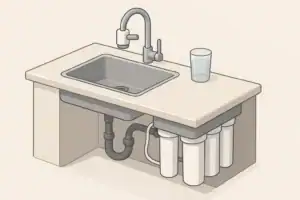
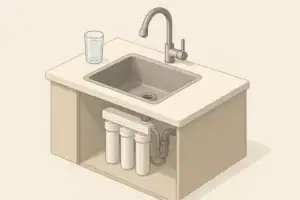
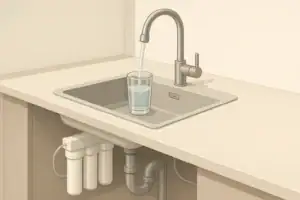
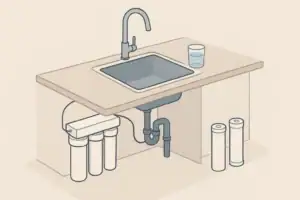
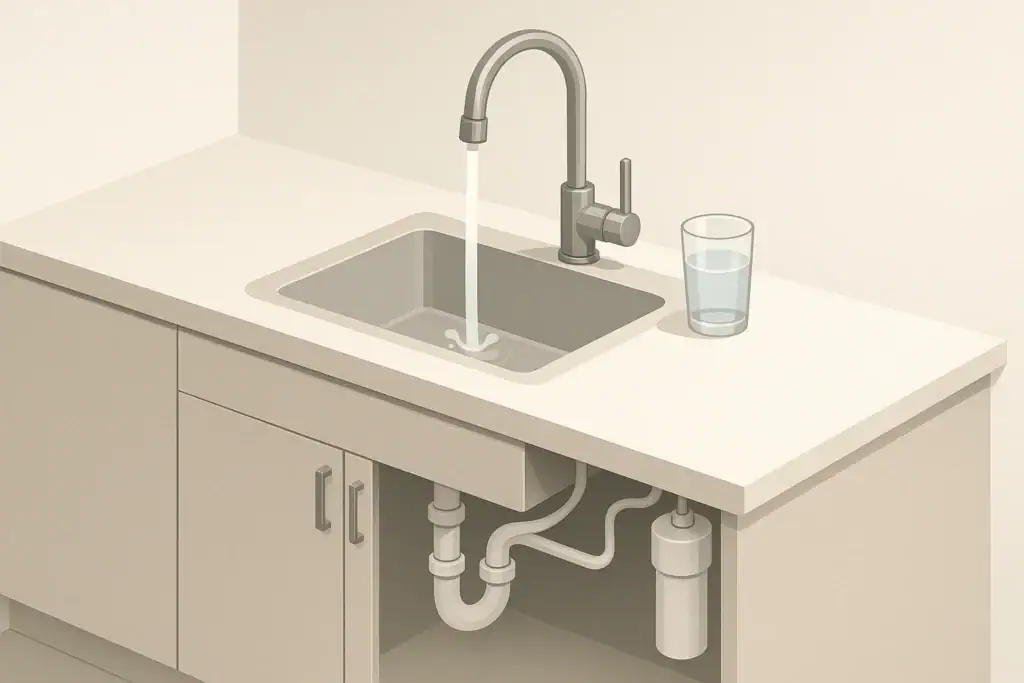
Under-sink systems typically provide filtered water through either a dedicated faucet or the main kitchen tap. They may use one or multiple cartridges with granular activated carbon (GAC), carbon block, or mixed media.
Chlorine: Under-sink carbon block filters are well-suited for reducing chlorine taste and odor, often at higher flow rates than small faucet-mount units.
Chloramine: Because chloramine is more persistent, under-sink systems can be designed with:
- Larger or multiple carbon cartridges for longer contact time
- Specialized carbon formulations often marketed for chloramine
When comparing options, check product literature for any mention of chloramine along with applicable NSF/ANSI certifications.
Reverse Osmosis (RO) Systems
Point-of-use RO systems combine multiple stages of filtration, usually including sediment prefilters, carbon prefilters, a semipermeable membrane, and a postfilter, with a small storage tank.
For chlorine: Carbon prefilters are normally included to reduce chlorine before water reaches the RO membrane, helping protect the membrane and improve taste.
For chloramine:
- RO membranes alone are not designed specifically for chloramine.
- Effective chloramine reduction relies on prefilters using suitable carbon media and sufficient contact time.
- RO systems marketed for chloramine usually emphasize enhanced carbon stages.
Because RO systems discharge some water as part of their process and have storage tanks, planning for installation space and maintenance is important.
Whole-House (Point-of-Entry) Systems
Whole-house filters treat water as it enters the home so that all fixtures receive filtered water, including showers, laundry, and outdoor taps (depending on plumbing layout).
For chlorine: Large carbon tanks are often used to reduce chlorine throughout the home. Many people notice less odor in showers and less of a pool-like smell overall.
For chloramine:
- Chloramine reduction typically requires carefully sized carbon beds and appropriate media.
- Flow rate and contact time are critical; undersized units may not provide the desired reduction.
Whole-house systems can improve the experience of tap water everywhere in the home but involve higher upfront cost and more complex installation than point-of-use filters.
Choosing Filters: Taste, Smell, and Practical Trade-Offs
When deciding between filtration options for chlorine or chloramine, it helps to focus on how you actually use water in your home.
Start With Your Main Goal
Common goals include:
- Improve drinking water taste only – usually satisfied by point-of-use options such as pitchers, faucet-mount, or under-sink filters.
- Improve taste plus cooking water – often better served by faucet-mount or under-sink filters with higher flow.
- Reduce shower odor – may require a whole-house system or a dedicated shower filter.
- Address multiple concerns together – may suggest multi-stage under-sink or RO systems with broader contaminant reduction capabilities.
Consider Your Disinfectant Type
If your water is disinfected with chlorine:
- Basic activated carbon filters, when maintained properly, are typically adequate for improving taste and smell.
- Many systems with NSF/ANSI 42 certification for aesthetic chlorine reduction are designed with this use in mind.
If your water is disinfected with chloramine:
- Look for systems that explicitly mention chloramine reduction or are designed with appropriate carbon media.
- Be attentive to filter capacity and replacement intervals, as chloramine reduction can put more demand on the media.
Balance Flow Rate, Capacity, and Maintenance
Filters that significantly polish taste and odor often have trade-offs:
- Stronger filtration can mean slower flow or more frequent cartridge changes.
- High flow and long life usually require larger cartridges or whole-house systems.
Thinking through how much water you realistically want to filter each day can help narrow choices. For example, a household that drinks and cooks with several gallons of filtered water every day may outgrow small pitchers or compact faucet-mount units.
Example values for illustration.
| What to Track | Typical Cues | Planning Method |
|---|---|---|
| Cartridge replacement interval | Reached months-of-use or rated gallons (for example, 2–6 months) | Mark change dates on a calendar or label near the sink |
| Taste and odor changes | Chlorine or chloramine smell returning, water tastes “flat” or chemical | Do occasional side-by-side comparisons with unfiltered tap water |
| Flow rate | Noticeable slowdown through faucet, pitcher, or shower filter | Note typical fill time for a container and recheck monthly |
| Filter housing condition | Leaks, drips, or difficulty closing housings | Inspect for moisture and check fittings during each cartridge change |
| Whole-house system pressure | Lower water pressure throughout home after long use | Compare pressure or flow before and after cartridge changes when possible |
| Manufacturer instructions | Updates to recommended media or schedules | Keep manuals accessible and review when buying replacement parts |
NSF/ANSI Standards Relevant to Chlorine and Chloramine Reduction
Third-party certifications can help you compare filters designed to improve taste and odor from disinfectants.
NSF/ANSI 42: Aesthetic Effects
NSF/ANSI 42 covers filters designed to reduce specific aesthetic parameters such as chlorine taste and odor, as well as particulates and some other non-health-related aspects.
When you see a filter claiming to reduce chlorine taste and odor under NSF/ANSI 42, it means the product has been tested to demonstrate that performance under defined conditions.
For chloramine, some filters are also evaluated under this standard for chloramine taste and odor reduction. If chloramine is your main concern, look in the product literature for explicit mention of chloramine under the scope of certification.
NSF/ANSI 53, 401, and 58: Broader Contaminant Reduction
Other standards sometimes appear alongside NSF/ANSI 42 on multi-stage systems:
- NSF/ANSI 53 – filters for certain health-related contaminants such as some heavy metals or volatile organic compounds.
- NSF/ANSI 401 – filters for some emerging or incidental contaminants such as certain pharmaceuticals or chemicals.
- NSF/ANSI 58 – reverse osmosis systems, including performance and structural integrity aspects.
While these standards are not focused on chlorine or chloramine specifically, they often appear on complex systems that also include aesthetic reduction claims under NSF/ANSI 42.
Verifying Certifications
When comparing systems, it can be useful to:
- Check that the specific model you are considering is listed as certified, not just the brand family.
- Confirm exactly which contaminants or aesthetic parameters are covered by the certification (for example, chlorine taste and odor vs chloramine).
- Review the capacity and operating conditions under which certification applies, such as pressure, flow, and replacement intervals.
Certifications are one tool among many for choosing a filter, alongside your local water quality, installation constraints, and how you plan to use filtered water day to day.
Frequently asked questions
How can I tell whether my tap water is treated with chlorine or chloramine?
Check your water utility’s Consumer Confidence Report or contact the utility’s water quality or customer service department for the current disinfectant information. As a secondary check, some home test strips compare free chlorine and total chlorine; a large gap between total and free chlorine can suggest chloramine, but utility confirmation is more reliable.
Will boiling or letting water sit remove chloramine from my water?
No — unlike free chlorine, chloramine is relatively stable and does not dissipate quickly by standing or boiling. Removing chloramine typically requires filtration with appropriate carbon media or other specialized treatment.
Which home filtration options are effective for reducing chloramine compared with chlorine?
Activated carbon can reduce chloramine, but it generally requires specialized carbon formulations, sufficient carbon bed size, and longer contact time than for chlorine. Look for systems that explicitly state chloramine reduction and list applicable third-party certification or test data; multi-stage RO systems can also be effective when they include enhanced carbon prefilters.
Does chloramine cause different problems for plumbing or appliances compared with chlorine?
Chloramine is less reactive than free chlorine with some organic materials, but because it persists longer in distribution systems it can have different effects on plumbing and components over time. Utilities and plumbers sometimes note different impacts on rubber parts, meters, or corrosion behavior, so check manufacturer guidance for appliances and consider whole-house treatment if you have concerns.
Is chloraminated water safe for aquariums, pets, and bathing?
For people, chloraminated tap water is considered safe for bathing and drinking at regulated levels, though some may notice taste differences. For fish, amphibians, and some invertebrates, chloramine is toxic and does not dissipate quickly; aquariums require a dechloramination step or treated water specifically formulated to neutralize chloramine before use.
Recommended next:
- NSF/ANSI standards explained (42/53/401/58)
- Clear trade-offs: pitcher vs faucet vs under-sink vs RO
- Maintenance planning: cost per gallon and replacement cadence