
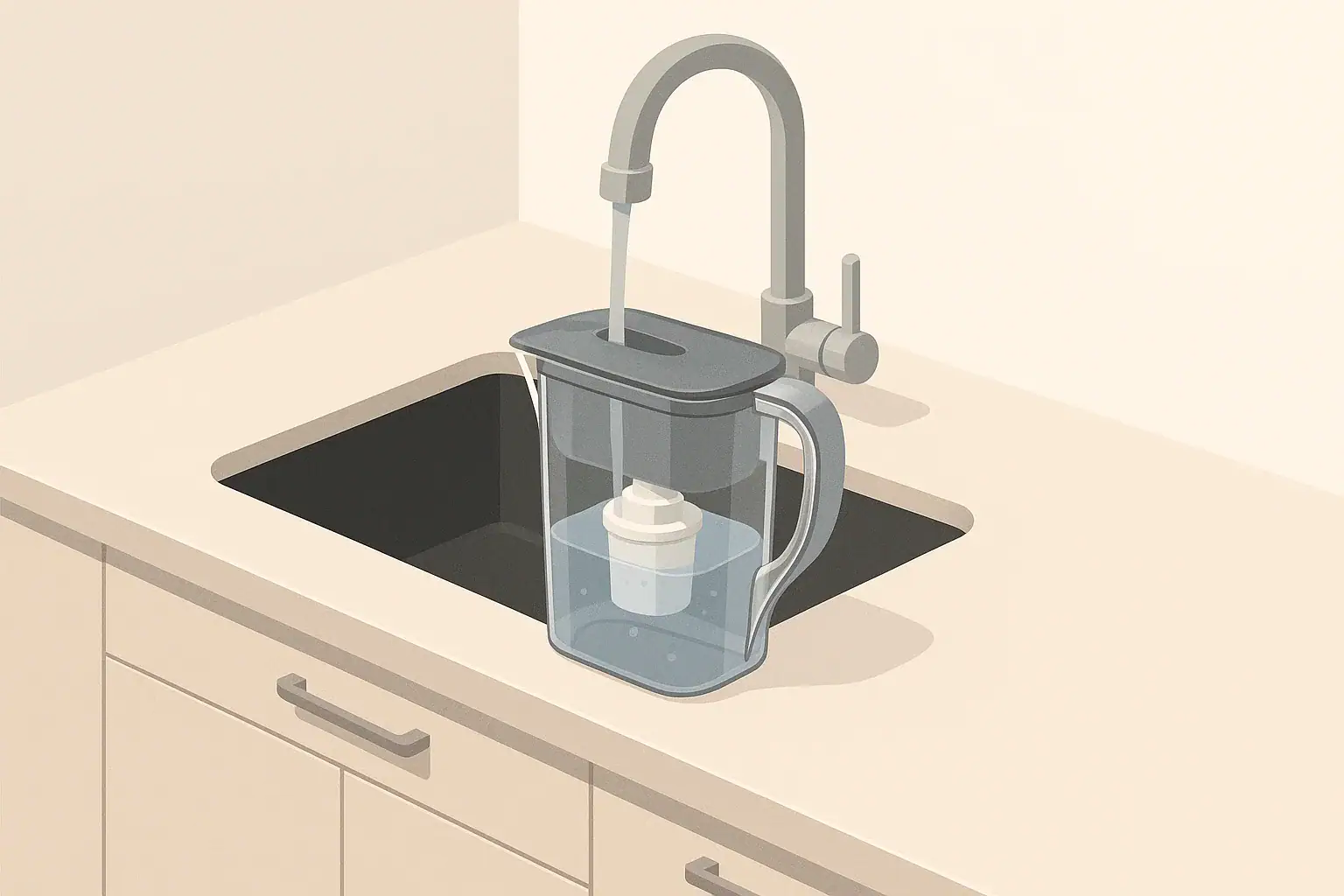
- Sit on the counter or in the fridge, with no installation
- Improve taste and odor for drinking and cooking water
- Have relatively low upfront cost
- Use replaceable cartridges with predictable maintenance
Why Pitcher Water Filters Are Popular for Chlorine Taste
How Chlorine Affects Tap Water Taste and Odor
In most U.S. water systems, chlorine or chloramine is added at the treatment plant and maintained at a residual level throughout the distribution system. While levels are regulated, sensitive users may detect:- A swimming pool–like smell
- Bitter or chemical taste
- Flat or off-tasting coffee, tea, or cold drinks
How Pitcher Water Filters Reduce Chlorine
Most pitcher filters rely on a combination of mechanical and adsorptive filtration. The key for chlorine reduction is the adsorptive media inside the cartridge.Common Filter Media in Pitcher Cartridges
Typical pitcher filter cartridges may include:- Granular activated carbon (GAC) – porous carbon particles that adsorb chlorine and some organic compounds
- Activated carbon block – compressed carbon for more consistent contact and potentially higher performance
- Ion-exchange resins – beads that can reduce certain metals and sometimes help with taste from hardness minerals
- Mechanical screens or non-woven media – to trap fine sediment and particles
Chlorine vs. Chloramine in Pitcher Filters
Some water utilities use chloramine (a combination of chlorine and ammonia) instead of free chlorine. Chloramine is generally more stable and can be harder to reduce than free chlorine. When selecting a pitcher filter, note that:- Many basic pitcher filters are optimized for free chlorine reduction only
- Some advanced media blends are also designed to reduce chloramine
- Verification from a recognized standard is the most reliable way to know performance
Understanding NSF/ANSI Certifications for Chlorine Reduction
NSF/ANSI standards provide independent verification that a filter can meet certain performance claims under defined test conditions. For chlorine taste and odor in pitcher filters, the most relevant standard is usually NSF/ANSI 42.NSF/ANSI 42: Aesthetic Effects
NSF/ANSI 42 covers filters that improve the aesthetic qualities of drinking water, such as taste, odor, and clarity. For pitcher filters, this may include claims for:- Chlorine taste and odor reduction
- Particulate reduction (sediment)
- Sometimes reduction of other aesthetic issues like certain organic compounds
Other Relevant Standards in the Background
Pitcher filters may also reference other NSF/ANSI standards:- NSF/ANSI 53 – health-related contaminant reduction (e.g., certain metals and chemicals)
- NSF/ANSI 401 – emerging contaminants (e.g., certain pharmaceuticals and chemicals)
Key Features to Look For in a Pitcher Filter for Chlorine
When your main goal is better-tasting water through chlorine reduction, consider these aspects.1. Verified Chlorine Reduction Performance
Focus on objective evidence rather than marketing language. Helpful indicators include:- NSF/ANSI 42 certification specifically for chlorine taste and odor
- Published test results showing significant chlorine reduction across the cartridge life
- Clear labeling of capacity (for example, a general range such as a few dozen to a couple hundred gallons per cartridge)
2. Type of Carbon Media
The design of the carbon media influences performance and flow:- Granular activated carbon often allows faster flow and lower cost but may have more variability in contact time.
- Carbon block can provide more uniform contact and potentially better fine particle reduction, but may fill more slowly.
3. Flow Rate and Fill Time
A common tradeoff in pitcher filters is between how quickly the upper reservoir empties and how thoroughly the water contacts the media. For everyday use:- A moderate fill time helps ensure more contact with carbon for chlorine reduction.
- Extremely fast flow may be convenient but can indicate less contact time.
- Very slow flow can be inconvenient for families that refill frequently.
4. Pitcher Capacity and Footprint
Choose a size that matches your household habits:- Smaller pitchers are easy to handle and fit in most refrigerator doors, but require more frequent refilling.
- Larger pitchers or dispensers suit families or heavy use but take more fridge space and can be heavier when full.
- Some designs include a separate reservoir so you can pour filtered water while unfiltered water is still processing.
5. Filter Life and Cost per Gallon
Pitcher filters are an ongoing expense. To evaluate long-term cost, consider:- Rated capacity – typically expressed as a range of gallons per cartridge, based on laboratory conditions
- Suggested time-based replacement – often every 1 to 3 months, depending on use
- Cost per gallon – approximate by dividing rough cartridge cost by its rated capacity
Comparing Pitcher Filters to Other Chlorine-Reduction Options
Pitcher filters are one part of the broader home water filtration landscape. For chlorine reduction specifically, it can be useful to compare them with other common systems.Pitcher vs. Faucet-Mount Filters
Faucet-mount filters:- Attach directly to the kitchen faucet
- Offer on-demand filtered water without waiting for a reservoir to drain
- Often use similar carbon-based media and may also be certified to NSF/ANSI 42
Pitcher vs. Under-Sink and RO Systems
Under-sink carbon filters and reverse osmosis (RO) systems offer more comprehensive treatment:- Under-sink carbon filters may provide higher capacity and flow, with dedicated faucets and broader contaminant reduction options.
- RO systems use multiple stages including membranes to reduce dissolved solids and a wide range of contaminants.
Pitcher vs. Whole-House Carbon Filtration
Whole-house carbon filters are installed on the main water line and can reduce chlorine for all taps and showers. They are better suited if you are concerned about chlorine taste or odor throughout the home, including in baths and laundry. Pitchers, by contrast, treat a small volume of water specifically for drinking and cooking. Many households use a combination: whole-house filtration for overall taste and odor, plus point-of-use systems like pitchers for added treatment where it matters most.Practical Setup Tips for Better Chlorine Reduction
Even a well-designed pitcher filter performs best when properly used and maintained.1. Flush New Cartridges as Directed
Before first use, most cartridges need rinsing or soaking to:- Remove loose carbon fines
- Saturate the media for effective adsorption
- Ensure air is purged from the cartridge
2. Keep the Pitcher Clean
Periodic cleaning prevents buildup and helps maintain taste:- Wash the pitcher and lid with mild dish soap and warm water
- Rinse thoroughly before reassembling
- Avoid harsh abrasives that could scratch plastic surfaces where residues might accumulate
3. Store Filtered Water Properly
For best taste:- Store the pitcher in the refrigerator if you prefer cold water
- Avoid leaving filtered water at room temperature for extended periods
- Use filtered water within a reasonable time rather than letting it sit for days
4. Replace Cartridges on Schedule
Over time, the carbon media becomes saturated and less effective at reducing chlorine. Signs it may be time to replace the filter include:- Return of chlorine taste or odor
- Noticeable slowdown in filtration speed
- Reaching the suggested time or volume limit, whichever comes first
Estimating Capacity and Cost for Chlorine-Focused Use
To understand how a pitcher filter will fit into your household routine, it can help to estimate usage, capacity, and cost.Daily Water Use Estimates
Consider how much filtered water you use per day:- Glasses of drinking water (for example, several per person)
- Coffee and tea preparation
- Cooking rice, pasta, or soups
- Filling water bottles
Calculating Approximate Cost per Gallon
To compare pitcher filters to other options, approximate cost per gallon:- Note the approximate price of a replacement cartridge pack and the number of cartridges.
- Divide total cost by total rated capacity (gallons) across the pack.
- Compare this to other systems you are considering, such as faucet-mount or under-sink filters.
How Pitcher Filters Fit into a Whole-Home Water Strategy
Pitcher filters are one tool among many for managing home water quality. For chlorine-focused improvements, they are often combined with other approaches depending on priorities.Common Combinations
- Pitcher + shower filter: Pitcher for drinking and cooking, shower filter to address chlorine at the showerhead for taste and odor in steam or spray.
- Pitcher + fridge filter: Built-in fridge filtration for ice and dispenser water, pitcher for extra chlorine reduction or specific taste preferences.
- Pitcher + whole-house carbon filter: Whole-house system for broad chlorine reduction, pitcher for additional polishing where taste is especially important.
When a Pitcher Filter May Not Be Enough
Pitcher filters are primarily designed for taste and basic contaminant reduction. They may be limited if:- Your main concern is a wide range of regulated contaminants beyond chlorine, such as certain metals or chemicals
- You want higher flow and capacity for multiple sinks
- Your household uses large volumes of filtered water daily
Maintenance Habits for Consistent Taste Improvement
To keep chlorine taste low and water pleasant to drink over time, consistent maintenance is important.Simple Routine Checklist
- Note the installation date of each new cartridge
- Clean the pitcher body weekly or as needed
- Monitor for changes in taste, odor, or flow rate
- Replace cartridges according to both time and usage, not just appearance
Frequently asked questions
How effective are pitcher water filters at removing chlorine from tap water?
Pitcher filters that use activated carbon (granular or block) are generally effective at removing free chlorine and improving taste and odor when they are properly designed and maintained. Effectiveness depends on contact time, media type, and cartridge condition; performance declines as the media becomes saturated.Can a pitcher filter remove chloramine from my water supply?
Basic pitcher filters are often optimized for free chlorine and can be much less effective against chloramine, which is more stable chemically. Some advanced media blends can reduce chloramine, but you should look for explicit performance claims or verified test data for chloramine reduction.How often should I replace cartridges to keep chlorine reduction consistent?
Most manufacturers recommend replacing cartridges every 1–3 months or after a specified number of gallons; following that schedule helps ensure the carbon media is not saturated. Local water quality and household usage can shorten filter life, so monitor taste and flow rate and replace sooner if you notice changes.Will using filtered pitcher water improve the taste of my coffee, tea, and ice?
Yes. Removing chlorine with an activated-carbon pitcher often reduces pool-like smells and chemical tastes, which improves the flavor of cold beverages, ice, coffee, and tea. Consistent cartridge maintenance and using filtered water for ice and brewing provide the best results.What certification should I look for to confirm chlorine reduction performance?
Look for NSF/ANSI 42 certification specifically for chlorine taste and odor reduction, as it indicates independent verification under defined test conditions. Avoid vague marketing language like “tested to” without a formal certification reference and published test or capacity data.Recommended next:
- Pitcher Filter vs Bottled Water: Cost per Gallon Breakdown
- How Often Should You Replace Pitcher Filters? (By Household Size)
- TDS in Pitcher-Filtered Water: What Changes and What Doesn’t
- Pitcher Filters for Renters: What to Look For (Capacity + Fridge Fit)
- Pitcher Filter Maintenance: Cleaning & Sanitizing Without Off-Flavors
- Do Pitcher Filters Reduce Lead? How to Check Certified Claims
- More in Pitcher Filters →
About
WaterFilterLab
WaterFilterLab publishes practical guides on home water filtration: choosing the right format, understanding water metrics, verifying NSF/ANSI claims, and planning maintenance—without hype.
- NSF/ANSI standards explained (42/53/401/58)
- Clear trade-offs: pitcher vs faucet vs under-sink vs RO
- Maintenance planning: cost per gallon and replacement cadence