A sulfur or “rotten egg” smell in tap water is usually caused by hydrogen sulfide gas or sulfur-reducing bacteria. Before you invest in a whole house filter, it helps to narrow down what is actually happening in your plumbing and water supply.
Common sources include:
- Groundwater with natural sulfur compounds – More common with private wells than city water.
- Reactions inside a water heater – Certain anode rods can react with minerals and bacteria to create hydrogen sulfide gas.
- Sulfur-reducing bacteria in plumbing – Bacteria can live in low-oxygen areas of pipes, softeners, or heaters.
- Stagnant or rarely used lines – Low flow and warm temperatures can make odor problems worse.
Whole house filters can help, but they are most effective when matched to the real cause of the odor. That is why the first steps are always basic checks and simple tests.
Why Your Water Smells Like Sulfur
A sulfur or “rotten egg” smell in tap water is usually caused by hydrogen sulfide gas or sulfur-reducing bacteria. Before you invest in a whole house filter, it helps to narrow down what is actually happening in your plumbing and water supply.
Common sources include:
- Groundwater with natural sulfur compounds – More common with private wells than city water.
- Reactions inside a water heater – Certain anode rods can react with minerals and bacteria to create hydrogen sulfide gas.
- Sulfur-reducing bacteria in plumbing – Bacteria can live in low-oxygen areas of pipes, softeners, or heaters.
- Stagnant or rarely used lines – Low flow and warm temperatures can make odor problems worse.
Whole house filters can help, but they are most effective when matched to the real cause of the odor. That is why the first steps are always basic checks and simple tests.
Simple Checks Before Buying a Whole House Filter
Start by answering a few questions. These quick checks can save you from installing a system that does not address the root cause.
1. Does the sulfur smell come from hot water, cold water, or both?
- Only hot water smells – The issue is often in the water heater, not the incoming water. Common culprits are anode rods, sediment buildup, or bacteria.
- Both hot and cold smell – The problem is likely in the well, the municipal supply, or sometimes whole-home plumbing.
- Only one or two fixtures smell – Look first at localized plumbing issues, aerators, or stagnant lines.
2. Are you on city water or a private well?
- City water – Strong sulfur odors are less common. Check for localized plumbing or heater issues first, and consider contacting your water utility for recent water quality reports.
- Private well – Sulfur issues are more common and can vary over time with seasons or well usage.
3. Does the smell vary during the day or after the water sits?
- Smell is strongest first thing in the morning – Stagnant water in pipes, softeners, or heaters may be part of the problem.
- Smell increases with heavier use – The well may be drawing in different water or disturbing accumulated minerals.
- Smell comes and goes with weather – Changing groundwater conditions can affect sulfur levels.
4. Basic DIY tests worth doing early
Before choosing a whole house filter for sulfur smell, consider:
- Well water testing for sulfur, iron, manganese, pH, and bacteria (especially for private wells).
- Reviewing any existing lab or utility reports for your water supply.
- Inspecting and flushing the water heater if hot water odors are strong.
Water test results and these simple checks make it much easier to match your situation to the right type of filtration or treatment.
Example values for illustration.
| Observation | Likely focus area | First step to try |
|---|---|---|
| Smell only in hot water | Water heater | Flush heater; consider anode rod inspection |
| Smell in both hot and cold at all taps | Source water | Get basic lab test for sulfur, iron, pH |
| Smell only at one bathroom or faucet | Local plumbing | Clean aerators; flush and disinfect fixture |
| Well system present with strong smell | Well and pressure tank | Inspect well cap and schedule well testing |
| Smell stronger after water sits overnight | Stagnant lines or softener | Bypass softener briefly and compare odor |
| City water and sudden new odor | Utility or building plumbing | Check utility notices; contact local provider |
| Odor plus discoloration or particles | Iron, manganese, sediment | Test for metals; consider sediment and iron removal |
When a Whole House Filter Makes Sense for Sulfur Odor
Once you have basic information about where the smell is coming from, you can decide whether a whole house filter is appropriate and what type to consider.
Good reasons to consider a whole house sulfur solution
- Odor is present in both hot and cold water at multiple fixtures.
- You use a private well and testing shows hydrogen sulfide or other sulfur indicators.
- The smell affects showers, laundry, and appliances, not just drinking water.
- There are also issues with iron, manganese, or sediment that can be treated together with sulfur odor.
Situations where a whole house filter may not be first choice
- Only the water heater is involved. Adjusting or servicing the heater often solves the problem without a large filtration system.
- Only one or two faucets smell. Local plumbing repairs or fixture replacement might be enough.
- Your main concern is drinking water only. A point-of-use system (under-sink or countertop) may be simpler and less expensive.
Main Types of Whole House Systems for Sulfur Smell
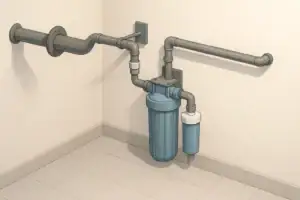
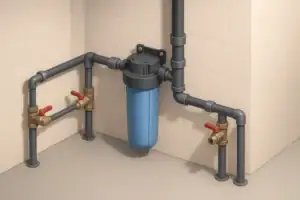
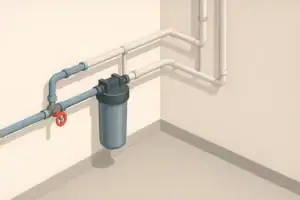
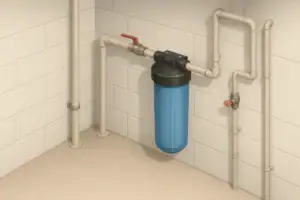
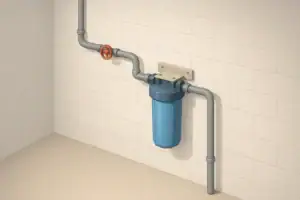
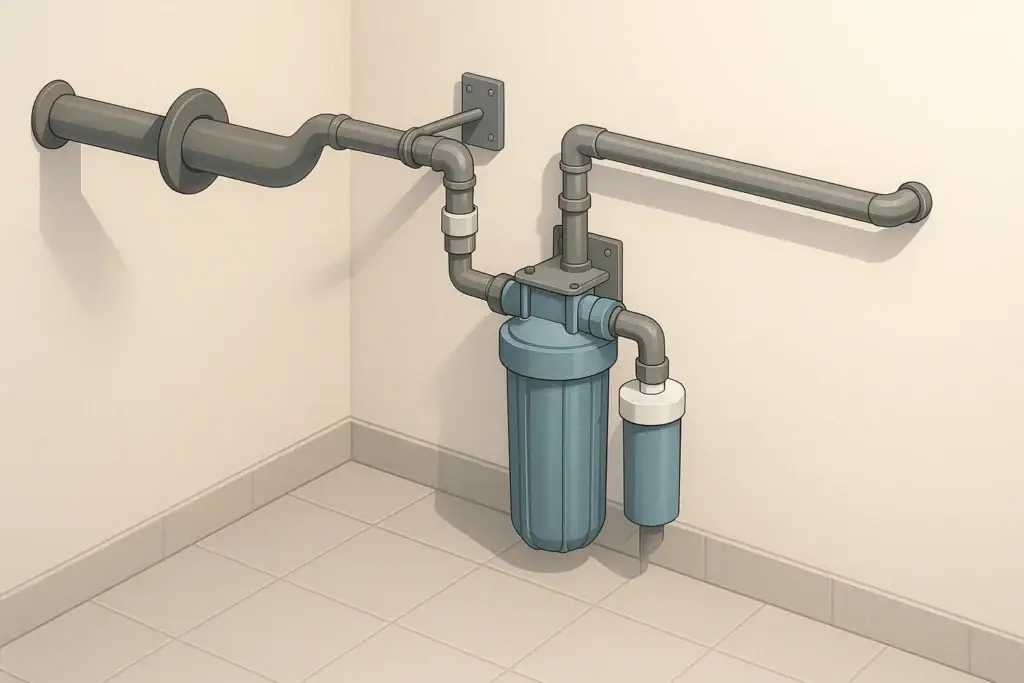
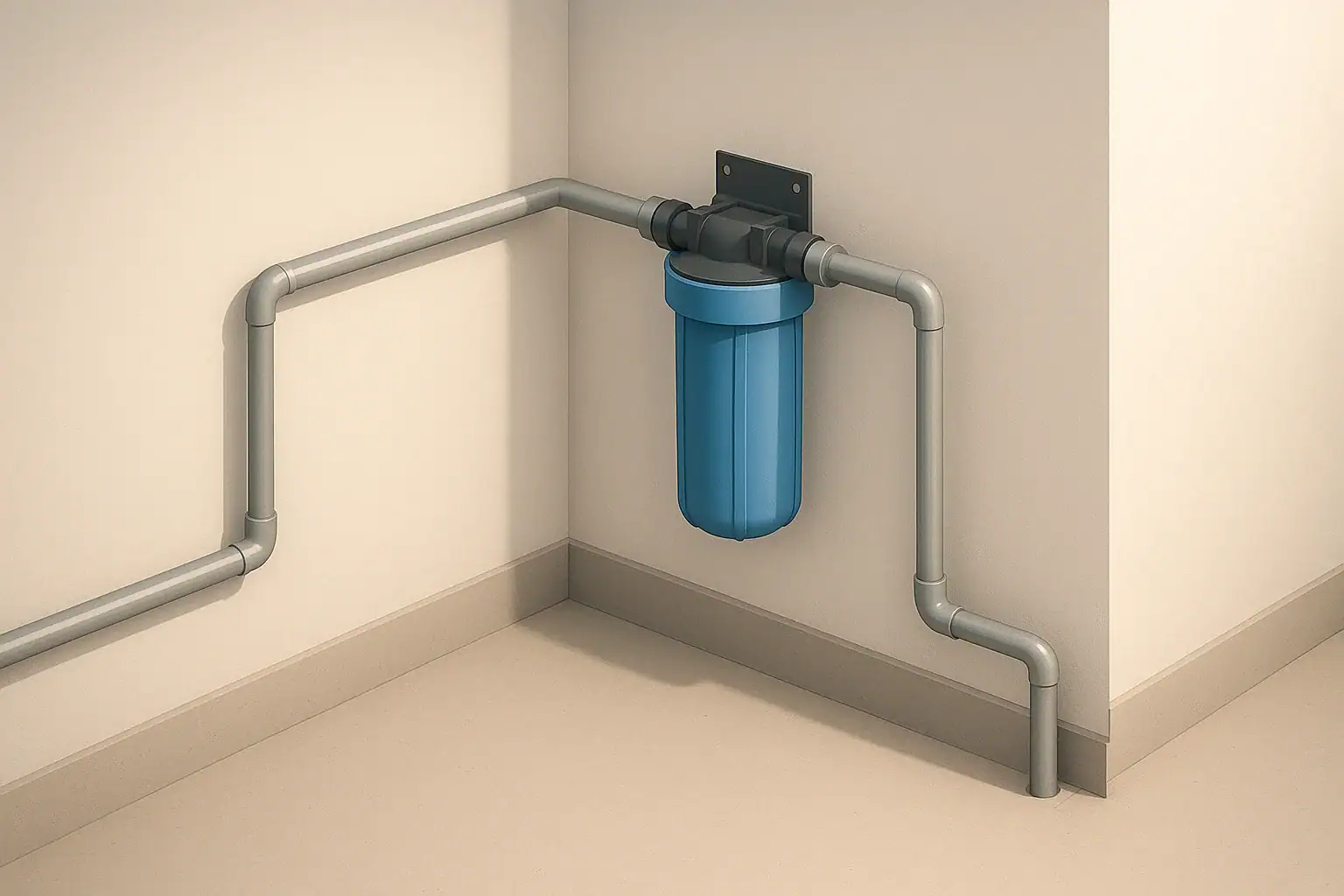
“Whole house filter” can refer to several different technologies. For sulfur smell, the most common categories are carbon-based filters, oxidizing media filters, aeration systems, and disinfection approaches. Each works best under certain water conditions.
1. Carbon-based whole house filters
These systems use activated carbon media to adsorb compounds that cause taste and odor. They are often used as a first attempt for mild sulfur problems.
Best for:
- Mild sulfur odor without high hydrogen sulfide levels.
- City water with chlorine or chloramine plus a light sulfur smell.
- Homes that also want improved taste for all taps.
Considerations:
- Excessive hydrogen sulfide can reduce carbon’s effectiveness and shorten media life.
- Pre-filtration (for sediment) is usually recommended.
- Media replacement intervals depend on water quality, volume, and system size.
2. Oxidizing media filters
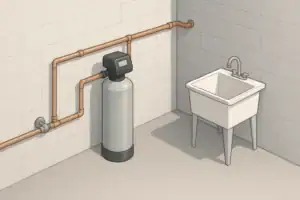
Oxidizing filters use media that converts dissolved hydrogen sulfide into solid particles, which are then captured and flushed away during backwash cycles.
Best for:
- Stronger sulfur odors from wells.
- Water that also contains iron or manganese.
- Homes needing automatic, whole house treatment, not just at one tap.
Considerations:
- Many systems require adequate water pressure and flow for backwashing.
- Some designs use an oxidant (such as air or other approved oxidizing agents) to regenerate media.
- Correct sizing is important so the media has enough contact time with the water.
3. Aeration and air-injection systems
These systems mix air with the water to oxidize hydrogen sulfide, then filter out the resulting particles. Some are combined with a separate filter tank.
Best for:
- Private wells with moderate sulfur odors.
- Situations where chemical-free oxidation is preferred.
Considerations:
- Requires proper venting and drainage for air and backwash water.
- May need follow-up filtration for iron or manganese.
- Regular maintenance of air injection components is important.
4. Disinfection and shock treatment (supporting tools)
While not filters in the usual sense, disinfection methods like well shocking or continuous disinfection can reduce sulfur-reducing bacteria that contribute to odor.
Best for:
- Bacterial contributions to sulfur smell, especially in wells and plumbing.
- Use together with filtration when both bacteria and hydrogen sulfide are present.
Considerations:
- Shock treatments are typically temporary and may need to be repeated.
- Continuous disinfection systems require careful setup and monitoring.
- Consult local guidance or a qualified professional for well disinfection procedures.
How Sulfur Smell Interacts With Other Water Quality Issues
Sulfur odor rarely appears alone. Many homes also deal with iron staining, hardness, or sediment. These factors influence which whole house filter configuration makes sense.
Iron and manganese
Iron and manganese can cause staining on fixtures and laundry, and they can interact with sulfur odor treatment. Oxidizing media or aeration systems are often chosen when iron and sulfur must be addressed together.
Key points:
- Some media are designed to remove both hydrogen sulfide and iron/manganese.
- High iron or manganese may require pretreatment or specific pH ranges.
- Backwash frequency and drain capacity should account for the extra solids produced.
Hardness
Hard water (high in calcium and magnesium) does not cause sulfur odor, but it can affect how some treatment systems work.
- Scale buildup can reduce effectiveness of heaters and filters.
- Some systems are installed in combination with water softeners.
- Plumbing layout must consider the order of softeners, sulfur filters, and any additional treatment.
pH and corrosion
Water pH can influence how sulfur compounds behave and how treatment media perform.
- Some oxidizing media have optimal pH ranges.
- Very low pH (acidic water) can increase corrosion in plumbing.
- In some cases, pH adjustment is installed upstream of sulfur treatment.
Key System Specs: Flow, Pressure, and Capacity
Even the best filter media will not work well if the system is undersized or installed without regard to household demand. When evaluating whole house filters for sulfur smell, pay attention to these general specifications and how they apply to your home.
Household flow rate and peak demand
Whole house systems are usually rated by maximum flow rate at a given pressure drop. For practical planning, think about:
- Peak usage – Showers, laundry, and dishwashing running at the same time.
- Number of bathrooms – More bathrooms usually mean higher potential flow needs.
- Flow at individual fixtures – Typical showerheads and faucets have approximate flow rates that can be added up for peak scenarios.
Oversizing slightly is often better than choosing a system that will be pushed to its limits, which can reduce contact time and effectiveness.
Incoming water pressure
Whole house filters introduce some pressure drop. If your incoming water pressure is already low, heavy filtration may make flow at fixtures feel weak.
- Measure or estimate your existing pressure at the main line if possible.
- Check that any backwashing or aeration system meets minimum pressure requirements.
- Consider whether a pressure tank, booster, or pressure-reducing valve is already installed.
Media volume and service life
Filter capacity depends on media volume, water quality, and usage patterns.
- Systems sized for light usage may require more frequent media replacement in larger households.
- Heavy sulfur, iron, or sediment loading can shorten media life.
- Track approximate gallons used and note when odor begins to return to help refine replacement timing.
Using Certifications and Independent Testing
While not all sulfur odor systems carry the same certifications, understanding common water filtration standards can help you evaluate whole house filters more broadly.
NSF/ANSI standards relevant to sulfur-related systems
Many whole house filters reference general performance and structural standards. For odor and taste concerns, you will often see standards that relate to chlorine, particulate reduction, or other aesthetic effects. These do not always directly refer to sulfur, but they can still provide useful information about overall system quality.
What to check in documentation
When reviewing a system’s literature or data sheet, look for:
- The exact NSF/ANSI standards referenced.
- Whether the system is certified by an independent body or only “tested to” a standard.
- Any performance claims about taste and odor, and whether they are tied to specific test conditions.
- Operating conditions such as pH range, maximum iron concentration, or minimum pressure.
Example values for illustration.
| Standard | Focus area | What to verify |
|---|---|---|
| NSF/ANSI 42 | Aesthetic effects (taste, odor, chlorine) | Confirm certification for whole house use and relevant claims |
| NSF/ANSI 53 | Reduction of specific contaminants | Check if any listed contaminants match your test results |
| NSF/ANSI 58 | Reverse osmosis systems | Useful if pairing whole house treatment with RO at a tap |
| NSF/ANSI 401 | Select emerging contaminants | Review which compounds were tested and under what conditions |
| NSF/ANSI 61 | Material safety for drinking water components | Look for confirmation that wetted parts meet material safety requirements |
| NSF/ANSI 372 | Lead content of components | Check documentation for low-lead compliance where applicable |
Maintenance and Troubleshooting: Keeping Odors Away
Even a well-chosen whole house filter for sulfur smell needs periodic attention. Odor problems can return if maintenance slips or if source water conditions change.
Basic maintenance tasks
- Pre-filter changes – Sediment filters protect more complex media from clogging.
- Backwash or regeneration cycles – Oxidizing and aeration systems often rely on regular automated cycles.
- Media replacement – Over time, carbon and other media become saturated and less effective.
- Periodic system inspections – Check valves, bypasses, and drain lines for proper operation.
When sulfur odor returns
If you notice the smell creeping back after installation:
- Note whether it is system-wide or at specific fixtures.
- Check filter change dates and total estimated water usage.
- Inspect bypass valves to confirm the system is fully in service.
- Consider a follow-up water test if source conditions may have changed.
Working with professionals
For complex well systems or persistent sulfur odors, many homeowners consult local water treatment professionals. They can help interpret test results, size systems correctly, and set up maintenance schedules that match your specific water conditions and usage patterns.
By starting with simple diagnostics, understanding the main treatment options, and paying attention to long-term maintenance, you can choose whole house solutions for sulfur smell that are both effective and manageable over time.
Frequently asked questions
Can a whole house filter completely eliminate a sulfur (rotten egg) smell?
It can in many cases, but success depends on the cause and correct system choice. Systems like oxidizing media or aeration work well for dissolved hydrogen sulfide, while activated carbon can handle mild odor; if bacteria are causing the smell, disinfection or heater servicing may also be needed.
How do I determine which type of whole house system I need for sulfur odor?
Start with water testing for hydrogen sulfide, iron, manganese, pH, and bacteria and note whether the smell is in hot water only. Use those results—plus observations about which fixtures are affected—to match treatment: carbon for mild aesthetic issues, oxidizing media or aeration for higher H2S and iron, and disinfection if bacteria are present.
How often do filter media and pre-filters need to be replaced for sulfur treatment?
Replacement frequency varies with water quality, household usage, and the media type; sediment pre-filters often change every 1–6 months, while carbon or other media may last months to a few years. Monitor for return of odor, reduced flow, or increased pressure drop and follow the system documentation for recommended schedules.
Will a whole house sulfur filter reduce my water pressure?
Any filter can introduce some pressure drop, especially if undersized or when media is clogged. Choose a system rated for your peak household flow and check minimum pressure requirements for backwashing or aeration; if needed, a larger unit or a pressure booster can compensate.
If only hot water smells, should I still install a whole house filter?
No, not usually. If the odor appears only in hot water, the problem is often in the water heater—flushing, inspecting or replacing the anode rod, and disinfecting the tank can solve it without whole house filtration.
- NSF/ANSI standards explained (42/53/401/58)
- Clear trade-offs: pitcher vs faucet vs under-sink vs RO
- Maintenance planning: cost per gallon and replacement cadence