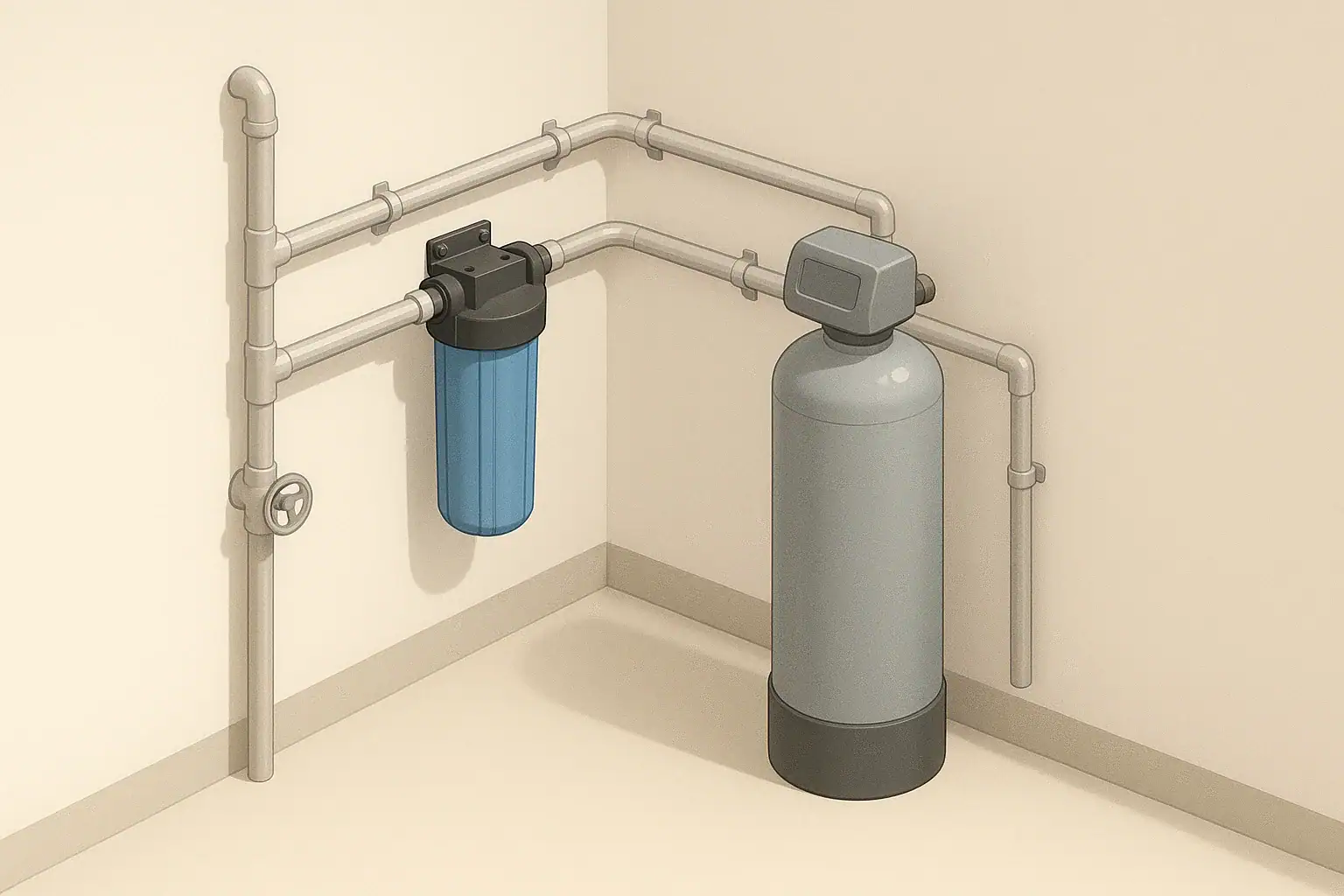
Whole House Filters vs Water Softeners: Different Jobs Explained
Whole house filters and water softeners often sit in the same part of a home, connect to the same main line, and sometimes even look similar. But they do very different jobs. One focuses on water cleanliness and taste, while the other deals with hardness and scale. Understanding this difference helps you avoid buying the wrong system or expecting a device to do something it was never designed for.
This guide explains how each system works, what problems they solve, how they affect everyday use around the home, and when it makes sense to have one, the other, or both.
What a Whole House Filter Actually Does
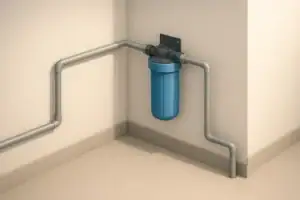
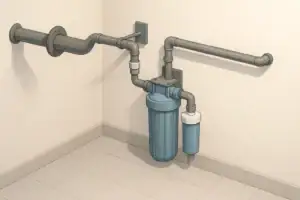
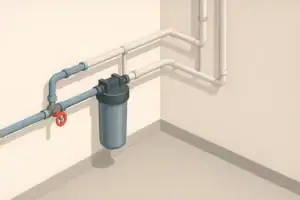
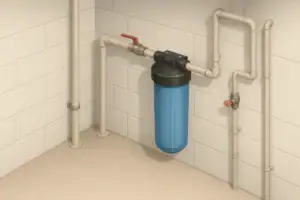
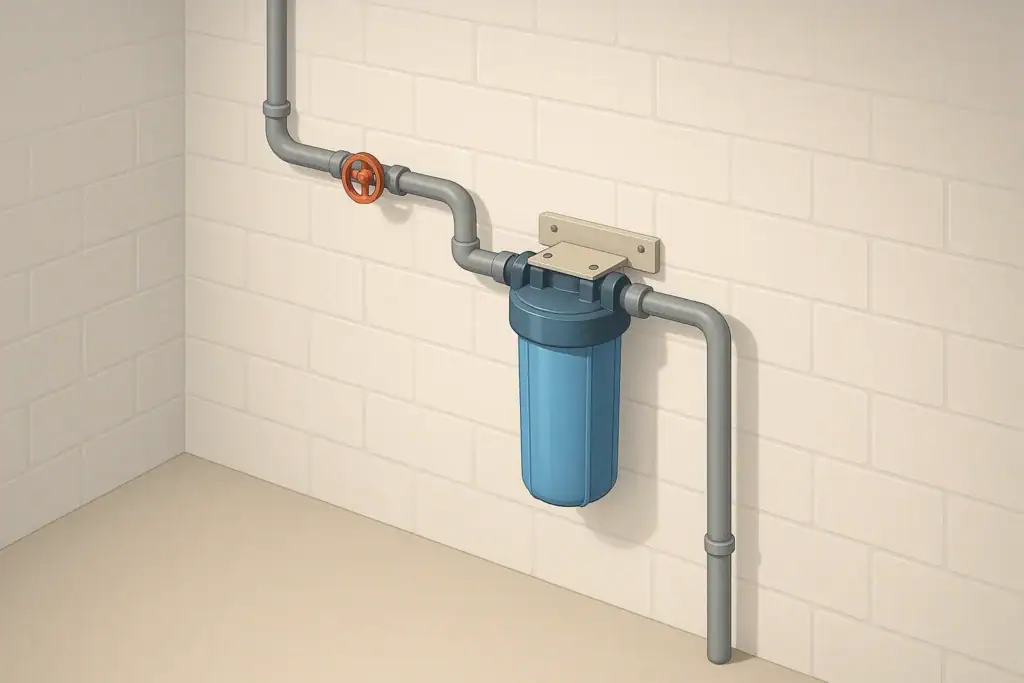
A whole house water filter (also called a point-of-entry or POE filter) is installed where water first enters your home. Its main job is to treat all the water that flows to faucets, showers, appliances, and outdoor spigots, depending on how it is plumbed.
Main goals of a whole house filter
Most whole house systems are designed around one or more of these goals:
- Improve taste and odor by reducing chlorine or chloramine commonly used in municipal water treatment.
- Protect plumbing and appliances from sediment, rust, sand, or silt that can clog or scratch components.
- Target specific contaminants such as certain volatile organic compounds (VOCs), some pesticides, or select heavy metals, depending on the filter media and certifications.
- Provide basic whole-home filtration so showers, laundry, and faucets all receive the same treated water.
Common filter stages and media
Whole house systems often use one or more large cartridges or tanks. Typical stages may include:
- Sediment filters (often rated in microns) to catch sand, silt, and rust particles.
- Activated carbon to reduce chlorine, some chloramine, and improve taste and odor while addressing some organic chemicals.
- Specialty media formulated to reduce particular contaminants such as certain heavy metals or to control scale formation.
Not every system has all of these stages, and performance depends on design, media type, flow rate, and contact time.
What whole house filters do NOT do
Because they treat large volumes of water at relatively high flow, whole house filters are not designed to do everything. In particular, they typically do not:
- Soften water by significantly reducing hardness minerals like calcium and magnesium.
- Remove all dissolved solids (they are not the same as reverse osmosis systems).
- Act as disinfection systems unless specifically designed and certified for microbial treatment.
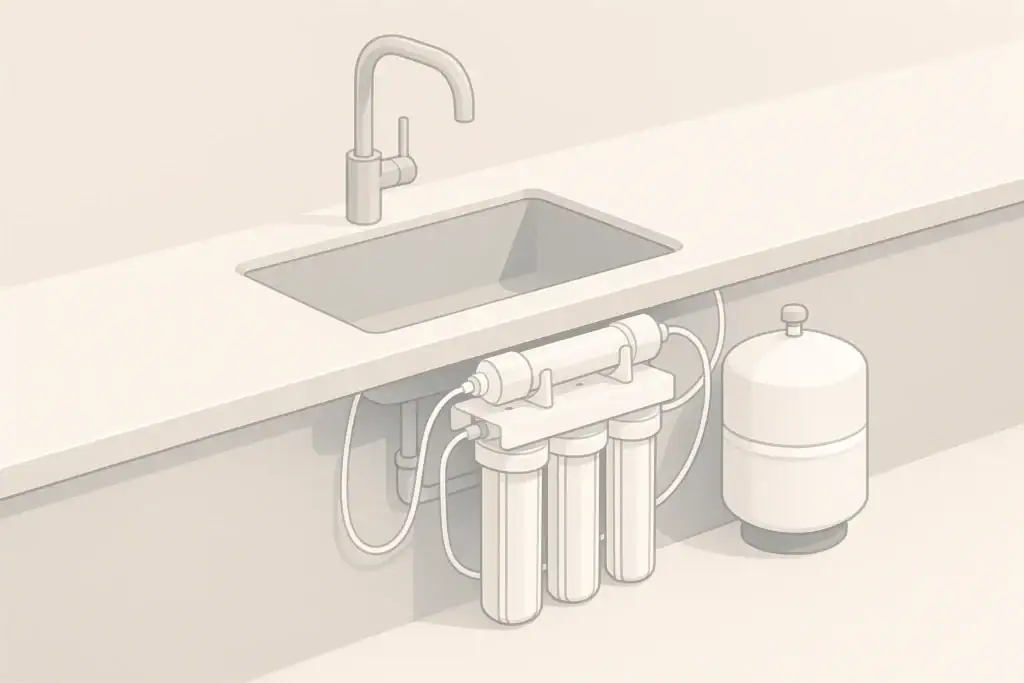
If you need very fine treatment for drinking water (for example, lower total dissolved solids), you would usually pair a whole house filter with a point-of-use system such as an under-sink filter or reverse osmosis unit.
Example values for illustration.
| Question | Whole House Filter | Water Softener |
|---|---|---|
| Main purpose | Improve water clarity, taste, and odor; reduce certain contaminants | Reduce hardness minerals to limit scale and soap scum |
| Targets hardness (calcium, magnesium) | Generally no meaningful change | Yes, primary function |
| Helps with chlorine taste and smell | Yes, when carbon media is used | No, not designed for chlorine |
| Main impact on home | Cleaner, better-tasting water throughout the house | Less scale on fixtures, appliances, and plumbing |
| Typical media | Carbon, sediment, specialty media | Ion exchange resin with salt regeneration |
| Affects total dissolved solids (TDS) | Usually small change | Changes TDS composition, not overall level |
| Best for | Chlorine taste, sediment, some chemical reduction | Hard water spots, scale buildup, soap performance |
What a Water Softener Actually Does
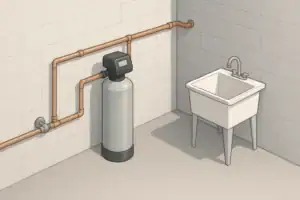
A traditional water softener is also a point-of-entry device, but its job is narrow and specific: reduce water hardness to limit scale and improve how soaps and detergents work. Hardness is mainly caused by dissolved calcium and magnesium picked up as water moves through soil and rock.
How a softener works
Most residential softeners in the United States use ion exchange. In simplified terms:
- Water flows through a tank filled with resin beads.
- The beads are charged with sodium or potassium ions from softener salt.
- As hard water passes over the resin, calcium and magnesium ions trade places with the sodium or potassium ions.
- The resin gradually becomes saturated with hardness ions and must be regenerated using a brine solution.
The result is water with much lower hardness, which helps reduce scale and visible spotting.
What water softeners change in day-to-day use
Homes on hard water often notice:
- Scale buildup on showerheads, faucets, and inside appliances such as water heaters and dishwashers.
- Soap and detergent performance issues such as difficulty rinsing soap, dull laundry, or stubborn soap scum.
- White spotting on dishes, glass, and fixtures.
After a softener is installed and properly adjusted, many people observe:
- Less scale accumulation and easier cleaning of fixtures.
- Changes in how soap lathers and rinses.
- Reduced spotting and film on dishes when combined with appropriate detergents.
What softeners do NOT do
A water softener is not a general-purpose filter. It typically does not:
- Improve chlorine taste or odor, because hardness and disinfectants are different water quality issues.
- Remove most other dissolved contaminants such as many organic chemicals.
- Filter sediment like sand and rust; a separate pre-filter is often used to protect the softener.
For that reason, many homes, especially on well water or heavily chlorinated city water, use a softener alongside a whole house filter.
Hardness vs Contaminants: Two Different Water Problems
Understanding the difference between hardness and other water quality factors is the key to choosing the right equipment.
Water hardness in practical terms
Hardness is usually expressed in grains per gallon (gpg) or milligrams per liter (mg/L) as calcium carbonate. In daily life, you experience hardness through:
- Scale on fixtures, tile, and glass.
- Reduced efficiency or lifespan of water-using appliances.
- Soap that does not rinse cleanly, leaving film or residue.
These issues point toward a softener or other scale-control technology.
Other common water metrics and what they suggest
- TDS (Total Dissolved Solids): A general measure of dissolved substances. A softener may change the mix of ions but does not reduce TDS in the way a reverse osmosis system can.
- Chlorine or chloramine: Used for disinfection in municipal supplies and often responsible for taste and odor concerns; carbon-based whole house or point-of-use filters are typically used to reduce these.
- Turbidity and sediment: Cloudiness or visible particles; sediment filters are appropriate here.
- pH: A measure of acidity/alkalinity; specialized treatment systems are used if pH is significantly outside typical municipal ranges.
Hardness is about scale and soap performance. Other contaminants and metrics relate more to clarity, taste, odor, and protection of plumbing and fixtures. That is why one device cannot realistically take care of every need at once.
When You Might Need Only a Whole House Filter
Some homes do not need a softener but can benefit from whole home filtration. This is often the case when water hardness is low to moderate, but there are other quality concerns.
Situations that point toward a whole house filter alone
- Municipal water with noticeable chlorine taste or odor but no major hardness issues.
- Visible sediment in water, especially from older mains or plumbing.
- Concerns about specific contaminants that can be addressed by certified filter media.
- Desire for consistent water quality in showers, laundry, and kitchen without changing hardness.
How this fits with other home filters
Even with a whole house filter, you might still want separate point-of-use filtration for drinking water if you are targeting very specific contaminants or want more intensive treatment like reverse osmosis. The whole house system lays a baseline for all water in the home, while under-sink or countertop filters provide finer control at individual taps.
When You Might Need Only a Water Softener
In some regions of the United States, hardness is the dominant water issue. If your water supply is otherwise well-treated and meets local quality expectations, a softener might be the only additional equipment you consider.
Signs that hardness is your main concern
- Heavy scale deposits on fixtures despite regular cleaning.
- Frequent maintenance or reduced lifespan of water heaters and dishwashers due to scale.
- Persistent film or spots on dishes that cleaning products alone do not resolve.
- Soap that does not lather or rinse as expected.
If taste, odor, and clarity are otherwise acceptable to you, focusing on hardness control can be a practical choice.
When You Might Need Both
Many homes, especially those combining hard water with chlorinated municipal supplies or certain well water profiles, benefit from both a whole house filter and a water softener.
Typical combined setup
In a common arrangement:
- The whole house filter is installed first to remove sediment and improve taste and odor.
- The water softener is installed downstream to handle hardness.
This order can help protect the softener from sediment and may improve overall performance and maintenance intervals.
Scenarios where both are useful
- Hard municipal water with strong chlorine taste or smell.
- Well water with both sediment and significant hardness.
- Homes where occupants want both easier cleaning (less scale) and improved taste and odor throughout the house.
Matching Systems to Your Water and Priorities
Choosing between a whole house filter, a softener, or both starts with knowing your water. A laboratory report or local water quality report can give you hardness levels and information on common contaminants and treatment methods.
Key questions to ask
- Is my water hard, and how hard is it?
- Do I notice chlorine taste or odor?
- Is there visible sediment or cloudiness?
- Which fixtures or appliances are giving me trouble: glass shower doors, water heater, dishwasher, laundry, or kitchen tap?
- Where do I most care about water quality: whole home, specific bathrooms, or drinking water at a single tap?
Answers to these questions often make the choice clearer. For example:
- Strong chlorine taste but minimal scale: whole house filter plus possibly a dedicated drinking water filter.
- Heavy scale but acceptable taste and odor: softener and basic sediment pre-filtration.
- Both strong chlorine and scale: combination of whole house carbon filtration and a softener, plus optional point-of-use filtration.
Understanding Certifications and Claims
Whole house filters and some scale-control systems may list certifications or testing to standards such as NSF/ANSI. These indicate that a system has been evaluated for certain performance claims, materials safety, or structural integrity.
Common NSF/ANSI standards for residential water treatment
While not every device is certified, these are some widely referenced standards in the home water filtration space:
- NSF/ANSI 42: Often associated with aesthetic effects such as chlorine taste and odor reduction and particulate reduction.
- NSF/ANSI 53: Typically related to the reduction of specific health-related contaminants such as certain heavy metals and some organic chemicals.
- NSF/ANSI 401: Addresses some emerging compounds like select pharmaceuticals and personal care products.
- NSF/ANSI 58: Applies to reverse osmosis systems, focusing on reduction of total dissolved solids and other contaminants.
Water softeners are often evaluated under different standards that focus on softening performance and structural safety rather than contaminant reduction.
How to interpret labels and documentation
When reviewing specifications and literature:
- Look for which specific standards are referenced, not just a general mention of testing.
- Check what contaminants or performance claims are covered by any certification.
- Note any operating conditions such as flow rate and pressure under which the claims apply.
This helps align your expectations with what the system was actually tested to do.
Example values for illustration.
| Standard | Typical focus | What to verify in documentation |
|---|---|---|
| NSF/ANSI 42 | Aesthetic effects (chlorine taste and odor, particulates) | Which aesthetic contaminants are listed and at what flow rate |
| NSF/ANSI 53 | Certain health-related contaminant reductions | Specific contaminants covered and replacement interval used during testing |
| NSF/ANSI 401 | Selected emerging compounds | Which compounds are addressed and any special operating conditions |
| NSF/ANSI 58 | Reverse osmosis systems | System configuration, storage tank use, and performance claims |
| Other softening standards | Hardness reduction and structural integrity | Rated capacity, regeneration method, and test conditions |
| General material safety | Contact materials and extraction limits | Confirmation that wetted parts are evaluated for potable water use |
Maintenance, Cost, and Practical Planning
Both whole house filters and softeners use consumables and require periodic checks. Planning ahead helps keep systems working as expected and avoids surprise costs.
Maintenance considerations for whole house filters
- Cartridge or media replacement: Intervals are often expressed in months or gallons as general guidance; actual life depends on water quality and usage.
- Pressure monitoring: A noticeable drop in pressure can indicate a clogged sediment or carbon stage.
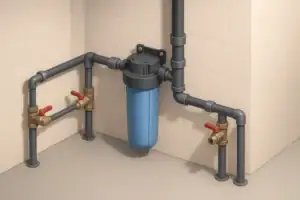
- Bypass operation: Valves should be operated occasionally so they do not seize, and to confirm you know how to isolate the system if needed.
Maintenance considerations for softeners
- Salt level checks: The brine tank needs adequate salt to regenerate the resin properly.
- Resin bed performance: Over time, you may notice hardness returning sooner between regenerations, which may signal resin aging or changes in water quality.
- Settings review: Hardness setting and regeneration frequency should match your actual hardness level and household water use.
Estimating cost per gallon
To compare options on a practical basis, you can approximate cost per gallon of treated water:
- Add up filter cartridges or media costs for a year.
- Include softener salt and any scheduled service costs.
- Divide by an estimate of your annual water use, often based on the number of occupants and typical daily consumption.
This type of estimate does not need to be exact to be useful. It helps show how configuration choices affect long-term operating costs, which can guide whether basic filtration, softening alone, or a combined system fits your budget and goals.
Frequently asked questions
Can a whole house filter remove hard water minerals?
Most whole house filters (sediment and activated carbon) are not designed to significantly reduce dissolved hardness minerals like calcium and magnesium. Some specialty media claim to provide scale control, but true softening requires a dedicated ion-exchange softener or other specific scale-control technology.
Will a water softener remove chlorine and improve water taste?
No — conventional ion-exchange softeners exchange hardness ions for sodium or potassium and do not remove disinfectants such as chlorine or chloramine. To address taste and odor from chlorine, use activated carbon in a whole house or point-of-use filter.
What is the recommended installation order when I want both systems?
The common approach is to install a whole house filter (point-of-entry) first to remove sediment and chlorine, then place the water softener downstream. This protects the softener from particulates and can extend maintenance intervals and overall system performance.
Do I still need a point-of-use drinking water filter if I have a whole house system?
Yes, if you want very fine treatment for drinking water (for example, lower TDS or removal of specific contaminants), a point-of-use under-sink filter or reverse osmosis unit is recommended. Whole house systems typically prioritize flow and general treatment and may not meet stricter drinking-water targets.
How do I determine whether I need a softener, a whole house filter, or both?
Start with a water test or local water quality report to identify hardness (gpg or mg/L), chlorine, sediment, and any specific contaminants. Use those results plus your priorities (taste, scale prevention, appliance protection) to decide: softener for scale, whole house filter for taste/sediment, or both for combined issues.
Recommended next:
- NSF/ANSI standards explained (42/53/401/58)
- Clear trade-offs: pitcher vs faucet vs under-sink vs RO
- Maintenance planning: cost per gallon and replacement cadence