
What a micron rating means
A micron rating describes the approximate size of particles a sediment filter is designed to capture. One micron is one millionth of a meter. In home water filtration, micron ratings are used to compare how fine or coarse a sediment cartridge is.
A lower micron number means the filter media has smaller openings and can catch smaller particles. A higher micron number means the filter is coarser, usually allowing more water flow while catching larger grit and debris.
Sediment filters are mainly used for physical particles, such as:
- Sand
- Silt
- Rust flakes
- Pipe scale
- Fine dirt or turbidity from some well water sources
They are different from carbon filters, reverse osmosis membranes, UV systems, and specialty media. A sediment cartridge does not meaningfully address dissolved substances such as hardness minerals, chlorine, chloramine, lead, PFAS, nitrate, or total dissolved solids by itself. Its job is to reduce particles and protect downstream equipment.
That protection role is important. A correctly sized sediment prefilter can help reduce clogging in carbon blocks, reverse osmosis systems, refrigerator filters, tankless water heaters, and other point-of-use or whole-house components. The key is choosing a micron rating that matches the water conditions and the purpose of the filter.
Nominal vs absolute ratings matter
Micron ratings are not always measured the same way. Two filters with the same listed micron size may perform differently depending on media type, cartridge construction, surface area, and whether the rating is nominal or absolute.
A nominal rating means the filter captures a stated percentage of particles at or near that size under test conditions. The exact percentage can vary by manufacturer and test method. An absolute rating is generally intended to indicate a higher capture efficiency at the stated particle size, but the details still depend on the test standard used.
For most household sediment decisions, the label should be treated as a practical sizing guide rather than a guarantee that every particle of that size will be removed. A 5 micron cartridge is usually finer than a 20 micron cartridge, but performance also depends on the design and the condition of the cartridge over time.
Filter loading also changes performance. As sediment collects, water may have a harder time passing through the cartridge. This can increase pressure drop and reduce flow at the faucet, shower, appliance, or downstream filtration system.
Example values for illustration.
| Micron rating | Relative filtration | Common use | Tradeoff |
|---|---|---|---|
| 1 micron | Fine | Polishing fine sediment before sensitive equipment | May clog faster and reduce flow sooner |
| 5 micron | Medium-fine | Common under-sink or prefilter choice | Balances particle capture and flow |
| 20 micron | Coarse | Capturing visible grit, sand, and larger rust particles | Allows smaller particles to pass |
| Higher than 20 micron | Very coarse | First-stage protection where heavy debris is present | Usually not enough for fine silt |
| Staged filtration | Coarse to fine | Well water or heavy sediment situations | Requires more cartridges and maintenance |
| Single fine cartridge | Fine only | Light sediment with limited space | Can plug quickly if water has heavy sediment |
What a 1 micron sediment filter is best for
A 1 micron sediment filter is a fine sediment cartridge. It is often used when the goal is to catch very small visible or near-visible particles before water reaches a more sensitive filter stage.
This rating may be useful when water has fine silt, very small rust particles, or persistent cloudiness caused by suspended particulate matter. It can also be used as a polishing stage after a coarser sediment filter has already removed larger debris.
Where 1 micron can make sense
- As a final sediment stage before a carbon block or reverse osmosis system
- Where a 5 micron cartridge still allows fine particulate matter through
- In a staged setup after a 20 or 5 micron prefilter
- For point-of-use applications where flow demand is moderate
The main downside is clogging. Because the openings are smaller, a 1 micron cartridge can load with sediment quickly if it is used as the first and only filter on water with heavy debris. That can lead to noticeable pressure drop, slower faucet flow, and more frequent replacement.
For this reason, a 1 micron cartridge is often more practical as a second stage than as the first line of defense in water with a lot of sand or rust.
What a 5 micron sediment filter is best for
A 5 micron sediment filter is one of the most common choices for residential filtration. It is fine enough to reduce many small particles but not as restrictive as a 1 micron cartridge in many situations.
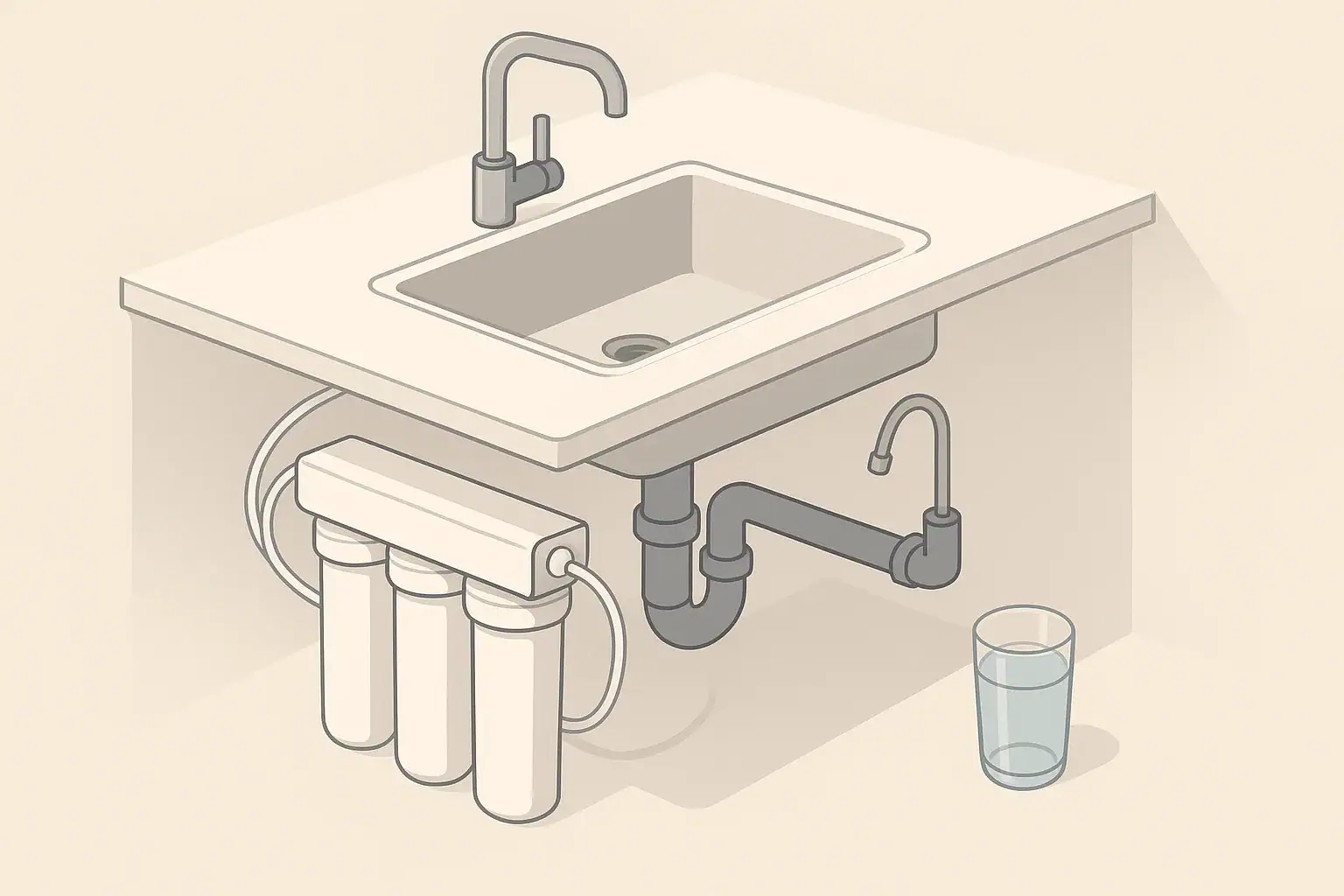
For under-sink systems, refrigerator lines, and many prefilter applications, 5 micron is often a practical middle ground. It can help protect carbon filters and other components without causing excessive flow loss when the water does not contain heavy sediment.
Where 5 micron can make sense
- Under-sink filtration systems with typical city water sediment
- Prefiltration before carbon cartridges
- Homes with occasional rust particles from aging plumbing
- Light to moderate sediment where 1 micron clogs too quickly
A 5 micron filter is not always the best starting point for well water with visible sand, heavy silt, or large flakes of rust. In those cases, a coarser first stage may extend the life of the 5 micron cartridge and reduce pressure drop.
If a 5 micron cartridge turns brown or gray quickly and flow drops soon after installation, that is a sign the water may need a larger prefilter, a larger cartridge housing, more surface area, or a staged design.
What a 20 micron sediment filter is best for
A 20 micron sediment filter is a coarser cartridge. It is designed to capture larger particles while preserving better flow compared with finer cartridges. This can be useful as a first stage where water contains visible grit, sand, or larger rust flakes.
Because it is less restrictive, a 20 micron filter can often handle higher sediment loads before the flow becomes noticeably reduced. It is commonly used ahead of finer filters rather than as the only sediment stage when fine particles are also a concern.
Where 20 micron can make sense
- First-stage filtration for well water with sand or grit
- Whole-house prefiltration where flow demand is higher
- Protecting finer cartridges from large debris
- Reducing premature clogging in 5 micron or 1 micron stages
The tradeoff is that smaller particles can pass through. If the water still looks hazy or leaves fine sediment after a 20 micron filter, a second finer stage may be needed. A common staged approach is to filter from coarse to fine, such as 20 micron followed by 5 micron, or 20 micron followed by 5 micron and then 1 micron for more demanding applications.
How to choose between 1, 5, and 20 micron
The best micron rating depends on the sediment type, water source, flow needs, and what the filter is protecting. There is no single best rating for every home.
Start with the water source
City water usually has less sediment than well water, but it can still carry rust or scale from older pipes. A sediment prefilter under the sink is often a reasonable starting point for an under-sink system on city water when visible sediment is not severe.
Well water can vary much more. Some wells have little visible sediment, while others produce sand, silt, iron-related particles, or seasonal turbidity. A coarser first stage, such as 20 micron, may be more practical when particles are visible or when finer filters clog too fast.
Match the rating to the job
- Choose 20 micron when the main problem is larger grit or when you need a durable first stage.
- Choose 5 micron when you want a balanced sediment prefilter for moderate use.
- Choose 1 micron when you need finer particle reduction and can manage lower flow or more frequent replacement.
It is also important to consider cartridge size. A larger cartridge or higher-capacity housing can often maintain flow better than a small cartridge at the same micron rating because it has more surface area. This is especially relevant for whole-house filter flow rate needs and homes with higher water demand.
Flow rate, pressure drop, and filter placement
Micron rating affects flow, but it is not the only factor. Cartridge diameter, length, pleated versus depth-style construction, water pressure, sediment load, and plumbing layout all influence performance.
As a general principle, finer filtration creates more resistance. A clean 1 micron cartridge may flow acceptably at first, but it can slow down quickly if the water contains a lot of suspended particles. A clean 20 micron cartridge usually allows easier flow but does less fine particle capture.
Coarse-to-fine staging
When sediment is more than minor, staged filtration is often more reliable than installing a single very fine cartridge. Coarse-to-fine staging uses a larger micron filter first, followed by a smaller micron filter. This helps prevent the fine cartridge from doing all the work.
For example, a setup might use a 20 micron first stage to capture larger debris, followed by a 5 micron stage for smaller particles. In more demanding point-of-use applications, a 1 micron polishing cartridge may follow after the larger sediment has already been removed.
Filter placement should also respect the equipment being protected. A sediment prefilter typically goes before reverse osmosis membranes and other media that can plug with particles. Homeowners should follow the system design, local plumbing codes, and manufacturer instructions rather than bypassing safety devices or modifying pressure controls.
Maintenance and replacement planning
Sediment cartridges are replaced based on condition, pressure drop, water quality, and manufacturer guidance. A calendar schedule can be useful, but real-world sediment load often matters more than time alone.
Signs that a sediment filter may need attention include reduced faucet flow, slower filling at an appliance, visible discoloration of the cartridge, or pressure loss after the filter housing. These signs do not always prove a filter is exhausted, but they are practical clues.
Do not wait for severe flow restriction if the filter protects a reverse osmosis system, carbon block, refrigerator filter, or appliance. Letting a cartridge clog heavily can strain downstream components and make the system less convenient to use.
For well water, sediment levels can change after heavy rain, drought, plumbing work, pump service, or changes in water use. Checking filters after unusual water events can help you decide whether the existing micron rating is still appropriate.
Example values for illustration.
| Use case | Typical concern | Practical planning note |
|---|---|---|
| Under-sink city water | Light rust or pipe scale | Check flow and cartridge appearance during routine service |
| Under-sink well water | Fine silt or variable sediment | Consider staged filtration if fine cartridges clog quickly |
| Whole-house first stage | Sand, grit, larger debris | Use a rating and cartridge size that maintain household flow |
| Before carbon block | Carbon plugging | Replace sediment stage before flow becomes severely restricted |
| Before reverse osmosis | Membrane preprotection | Follow system service intervals and watch for pressure drop |
| After plumbing work | Loosened scale or rust | Inspect sooner than usual after water line disturbance |
Related guides: Whole House Filters vs Water Softeners: Different Jobs Explained • Best Whole House Sediment Filters: Clear Up Cloudy Water • Why Your Filtered Water Flow Suddenly Dropped • Low Pressure After Installing a Filter: 8 Things to Check
Common mistakes to avoid
One common mistake is assuming smaller is always better. A 1 micron filter may sound more thorough than a 5 or 20 micron filter, but it can be the wrong choice if it clogs too quickly and reduces usable flow. In many homes, a slightly coarser filter that stays in service longer is more practical.
Another mistake is using a single fine cartridge to handle heavy sediment. If water contains visible sand or grit, a 20 micron or other coarse prefilter may be needed before a finer stage. This approach can improve cartridge life and make maintenance more predictable.
It is also easy to expect a sediment filter to solve taste, odor, hardness, or dissolved contaminant concerns. Sediment filtration can make water look clearer when particles are present, but it is not a substitute for carbon filtration, softening, reverse osmosis, UV treatment, or other technologies used for different water quality goals.
Finally, avoid choosing only by micron rating without considering flow rate, housing size, cartridge type, and replacement access. A filter that is difficult to service is less likely to be maintained on time. Good sediment filtration is practical, accessible, and matched to the actual water conditions.
Quick answers about sediment filter micron ratings
Is 1 micron better than 5 micron?
It is finer, but not always better. A 1 micron filter can capture smaller particles, while a 5 micron filter often provides a better balance of flow and sediment reduction for everyday use.
Is 20 micron too large for drinking water filtration?
Not necessarily. A 20 micron cartridge can be useful as a first sediment stage, especially for larger particles. If fine sediment remains, a 5 micron or 1 micron stage may be added after it.
Can a sediment filter make cloudy water clear?
Sometimes, if the cloudiness is caused by suspended particles. If cloudiness is from air bubbles, dissolved minerals, or another cause, a sediment filter may not change it much.
Should sediment filtration come before carbon or reverse osmosis?
In many systems, yes. Sediment filtration is commonly placed before carbon blocks and reverse osmosis membranes to help reduce particle loading. The exact order should follow the system design and service instructions.
What is the safest default choice?
For many under-sink applications with light sediment, 5 micron is a practical starting point. For visible grit or heavy sediment, consider a coarser first stage. For persistent fine particles, consider a finer stage after adequate prefiltration.
Frequently asked questions
Can I use a 1 micron filter as my first stage?
Yes, but only when sediment levels are light. If the water has sand, grit, or heavy rust, a coarser first stage often works better and lasts longer.
Is a 5 micron sediment filter good for well water?
Sometimes. It can work for light sediment, but many wells benefit from a coarser prefilter first if particles are visible or clogging happens quickly.
When should I choose 20 micron instead of 5 micron?
Choose 20 micron when the main concern is larger debris and you want better flow, especially as a first stage in a staged filtration setup.
How do I know if my filter is clogging too fast?
Common signs include lower flow, more frequent cartridge changes, and a noticeable pressure drop soon after installation.
Can I combine different micron ratings?
Yes. Coarse-to-fine staging is often the most practical approach when water has more than minor sediment.
Recommended next:
- Whole House Filters vs Water Softeners: Different Jobs Explained
- Best Whole House Sediment Filters: Clear Up Cloudy Water
- Whole House Carbon Filters for Chlorine & Taste: What to Expect
- Whole House Filter Flow Rate: Sizing by GPM and Household Count
- Backwashing Filters Explained: Pros, Cons, and Maintenance
- Installing a Whole House Filter: Placement, Bypass, and Leak Prevention
- More in Whole House Filters →
- NSF/ANSI standards explained (42/53/401/58)
- Clear trade-offs: pitcher vs faucet vs under-sink vs RO
- Maintenance planning: cost per gallon and replacement cadence