
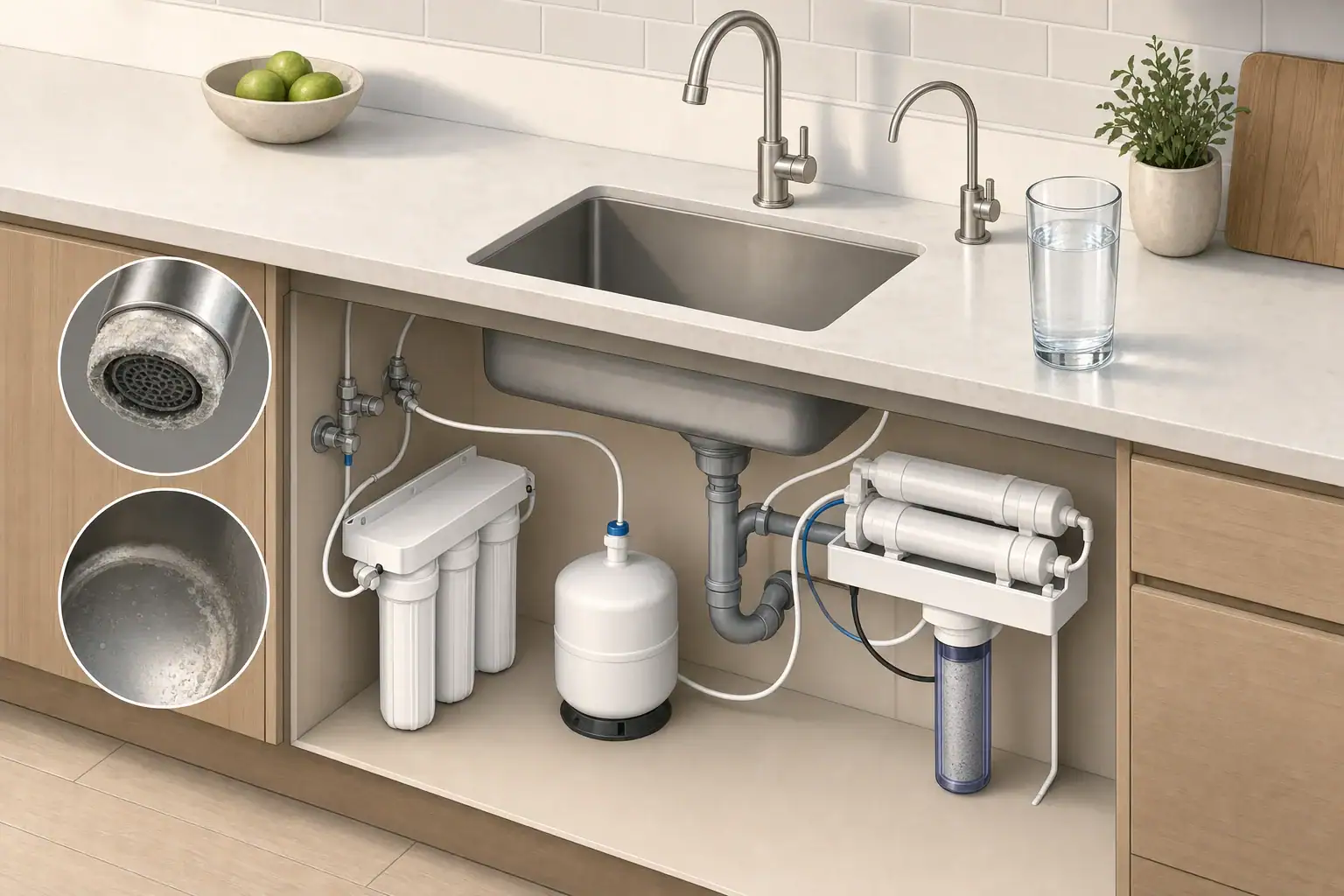
Filtered water can taste noticeably different from the water that came directly from the tap. People often describe the change as flat, empty, thin, bland, or slightly stale. That does not necessarily mean the filter is defective or that the water is unsafe.
Taste depends on several interacting factors, including dissolved minerals, disinfectants, organic compounds, temperature, aeration, storage time, and the materials inside the treatment system. Activated carbon and reverse osmosis affect these factors in different ways, so identifying the filtration method is an important first step.
What People Mean When They Say Water Tastes Flat
Water does not have one universal flavor. Even when two water supplies meet similar quality requirements, they can taste different because their mineral composition and treatment methods differ.
A flat taste generally means that the water has less flavor, aroma, or crispness than expected. Some people prefer that neutral profile. Others find it less refreshing than mineral-containing tap or bottled water.
Taste is more than dissolved minerals
Several characteristics shape the drinking experience:
- Mineral content: Calcium, magnesium, sodium, bicarbonate, and other dissolved ions can add subtle flavor and body.
- Disinfectant residual: Chlorine or chloramine may create a swimming-pool, medicinal, or chemical note.
- Organic compounds: Naturally occurring compounds can produce earthy, musty, or woody odors.
- Temperature: Cold water often seems crisper because low temperatures reduce the perception of some tastes and odors.
- Aeration: Dissolved gases and contact with air can change how lively the water tastes.
- Storage: Water held in a tank, pitcher, bottle, or refrigerator line may taste different from freshly treated water.
Because taste is subjective, a change is not automatically evidence of contamination. However, a sudden unusual taste accompanied by odor, discoloration, particles, or a known water-quality incident should be investigated rather than masked.
How Minerals Affect the Flavor of Water
Most tap water contains dissolved minerals acquired from soil, rock, treatment chemicals, and distribution infrastructure. Calcium and magnesium are the main minerals associated with hardness, while bicarbonate influences alkalinity. Sodium, chloride, sulfate, silica, and other constituents may also affect flavor.
Moderate mineral content often gives water a fuller or more structured taste. Water with very little dissolved material may seem soft, light, or flat by comparison. At higher concentrations, minerals can instead create salty, bitter, chalky, or metallic notes.
TDS is an indicator, not a flavor score
Total dissolved solids, or TDS, is a broad measurement of dissolved ions. It does not identify which substances are present, and two samples with the same TDS can taste different. Calcium-rich water, sodium-rich water, and water containing more sulfate may have distinct flavor profiles despite similar meter readings.
A basic TDS meter also cannot determine whether water is safe or whether a filter is reducing a specific contaminant. It is most useful for observing general changes in dissolved-ion concentration, especially before and after reverse osmosis treatment. Learn more about TDS vs hardness.
| Treatment method | Effect on minerals | Typical flavor effect |
|---|---|---|
| Sediment filtration | Usually little change | May reduce gritty or particulate-related sensations |
| Activated carbon | Usually retains dissolved minerals | Often reduces chlorine-related taste and odor |
| Catalytic carbon | Usually retains dissolved minerals | May reduce chloramine-related flavor when properly designed |
| Ion exchange softening | Exchanges hardness ions | Can make water taste smoother or slightly different |
| Reverse osmosis | Reduces many dissolved ions | May produce a neutral or flat taste |
| RO with remineralization | Adds selected minerals after RO | May restore some body or crispness |
Example values for illustration.
What Activated Carbon Does to Water Taste
Activated carbon is widely used in pitchers, faucet filters, refrigerator filters, countertop units, and under-sink systems. Its porous surface adsorbs certain compounds as water passes through it.
Carbon is commonly used to reduce chlorine-related tastes and odors. Some carbon products can also reduce selected organic compounds. Performance depends on the carbon type, cartridge design, flow rate, contact time, water chemistry, and how long the cartridge has been in service.
Carbon usually does not remove the minerals that add body
Standard activated carbon generally does not substantially reduce calcium, magnesium, or overall TDS. Water treated only by carbon therefore tends to keep the mineral profile of the source water.
Even so, carbon-filtered water can seem flatter because chlorine contributes a recognizable aroma. Once that aroma is removed, the water may initially seem less vivid. This can be especially noticeable for someone accustomed to strongly chlorinated municipal water.
New and aging cartridges can change flavor
A new carbon cartridge may release small amounts of harmless carbon fines or trapped air during initial use. Following the manufacturer’s flushing procedure helps clear loose material and condition the cartridge.
An overdue cartridge may allow unwanted tastes to return as its useful adsorption capacity declines. Low use can cause a different problem: water may remain in the housing for long periods and develop a stale taste. Replacement schedules should account for time, water volume, source-water conditions, and the system’s instructions.
Why Reverse Osmosis Water Often Tastes Flat
Reverse osmosis, commonly shortened to RO, uses pressure to move water through a semipermeable membrane. The process reduces many dissolved ions as well as various other substances, although actual reduction depends on the membrane, pressure, temperature, system condition, and the substance involved.
Because RO changes the dissolved-mineral profile much more than carbon filtration, its water often tastes lighter and more neutral. People accustomed to moderately hard water may describe the difference as flat. Others prefer RO water because it has less mineral flavor and fewer noticeable odors. See how RO vs carbon under-sink filters compare.
RO systems often include carbon stages
A typical household RO system may use sediment and carbon prefilters before the membrane. A final carbon stage may polish the water after storage. The finished taste therefore reflects several stages, not only the membrane.
A tank-style system can also hold treated water for hours. If the system is used infrequently, storage time may influence flavor. Tankless configurations reduce extended storage, but taste still depends on the membrane, postfilter, tubing, flow conditions, and source water.
Remineralization changes flavor but is not always necessary
A remineralization stage passes RO water through mineral media after membrane treatment. This can raise pH and add small amounts of selected minerals, often producing a less neutral taste.
Remineralization is mainly a preference and system-design decision. It should not be treated as a guarantee of a particular flavor because media composition, contact time, flow rate, and cartridge age all affect the result. Adding unmeasured powders or salts directly to a storage tank is not a controlled substitute for a properly designed stage. Consider whether a remineralization filter with RO water fits your preferences.
Other Reasons Filtered Water May Taste Bland or Stale
Mineral reduction is only one possible cause. If the taste changed suddenly, consider the timing and operating conditions before assuming that low TDS is responsible.
Water has been sitting in the system
Water left overnight in a faucet line, pressure tank, pitcher, or refrigerator reservoir may lose some of its fresh taste. Dispensing a normal amount until fresh water reaches the outlet can help distinguish storage effects from a persistent treatment issue. Avoid wasting excessive water solely for taste.
The water is warmer than usual
Room-temperature water often tastes less crisp than chilled water. Comparing samples at the same temperature provides a more useful assessment of whether filtration changed the flavor.
A cartridge is new, exhausted, or installed incorrectly
New cartridges may require flushing. Old cartridges may no longer control taste and odor effectively. A cartridge that is not fully seated can allow water to bypass the intended media in systems where the housing design permits it.
Use the manufacturer’s installation and sanitation procedures. Do not force housings, alter pressure-control components, or bypass leak-prevention features.
Plumbing materials are contributing flavor
New tubing, faucet components, storage vessels, or plumbing work can temporarily affect taste. Only materials intended for potable-water service should contact drinking water. A persistent plastic, solvent-like, fuel-like, or otherwise unusual odor warrants investigation rather than continued tasting.
How to Improve Filtered Water Taste Safely
Start by identifying whether the system is carbon-only, RO, softened, or a combination. Then compare freshly dispensed filtered water with the untreated source, using clean glasses and similar temperatures.
- Follow the specified initial flushing procedure after installing a cartridge.
- Replace filters based on the applicable time and capacity guidance.
- Clean and sanitize reusable pitchers, reservoirs, and approved system components as directed.
- Keep drinking water covered and refrigerated if it will be stored.
- Check for reduced flow, leaks, unusual noises, or extended periods of nonuse.
- For RO water, consider a compatible remineralization stage if the low-mineral profile is consistently unappealing.
- Use appropriate water testing when a taste change is unexplained or source-water conditions may have changed.
Do not attempt to improve taste by bypassing treatment stages or altering drain, pressure, shutoff, or backflow-control components. These parts support proper operation and plumbing safety.
| Observation | Possible explanation | Practical check |
|---|---|---|
| Neutral taste after RO installation | Lower dissolved-mineral content | Compare with source water at the same temperature |
| Flat taste after overnight storage | Water remained in a tank or tubing | Compare the first glass with freshly produced water |
| Carbon-like particles | New cartridge fines | Complete the specified initial flush |
| Chlorine taste returning | Carbon cartridge may be due for replacement | Review service time, use, and flow conditions |
| Musty taste from a pitcher | Reservoir or lid may need cleaning | Clean and sanitize approved parts as directed |
| Unusual taste with low flow | Clogged cartridge or pressure issue | Inspect the system and follow service guidance |
| Persistent chemical or fuel-like odor | Source water or plumbing issue | Stop using it for drinking and seek qualified evaluation |
Example values for illustration.
Choosing a Water Flavor Profile That Fits Your Home
Carbon filtration is often appropriate when the main concern is chlorine-related taste or odor and the household wants to retain the source water’s mineral character. RO makes a larger change to dissolved substances and may be preferred when treatment goals extend beyond taste alone.
Neither high nor low TDS guarantees pleasant flavor. The most suitable setup depends on the source water, verified treatment needs, maintenance expectations, available space, water pressure, and personal taste.
If filtered water has always tasted neutral, the treatment method may simply be producing its expected flavor profile. If the change is sudden or accompanied by odor, color, particles, leaks, or pressure problems, inspect the system and consider appropriate testing or professional service. For additional troubleshooting, see bad taste after installing a new filter.
Frequently asked questions
Why does reverse osmosis water taste flat?
RO reduces many dissolved minerals and other ions that can give water body and flavor. The resulting water often tastes lighter or more neutral, especially compared with moderately hard tap water.
Does activated carbon remove minerals from water?
Standard activated carbon usually does not substantially remove calcium, magnesium, or overall dissolved solids. It mainly changes taste by reducing chlorine-related odors and selected organic compounds.
Can a new water filter make water taste different?
Yes. A new cartridge may contain trapped air or release small carbon fines until it is flushed. Follow the system’s specified flushing instructions before judging the taste.
Will remineralizing RO water improve its taste?
It can. A compatible remineralization stage may add selected minerals and make RO water taste less neutral, but the result depends on the media, flow rate, and cartridge condition.
When should a sudden change in filtered-water taste be checked?
Investigate sudden taste changes that occur with unusual odor, discoloration, particles, leaks, low flow, or a known source-water issue. Replace overdue filters and seek appropriate testing or qualified service when the cause is unclear.
Related guides:
Reverse Osmosis 101: What RO Removes (and What It Doesn’t) •
TDS vs Hardness: What’s the Difference? •
Remineralization Filters: Do You Need One with RO Water? •
RO Water Tastes Bad? Fixing “Plastic” or “Stale” Taste
- NSF/ANSI standards explained (42/53/401/58)
- Clear trade-offs: pitcher vs faucet vs under-sink vs RO
- Maintenance planning: cost per gallon and replacement cadence