
What Are Microplastics in Tap Water?
Microplastics are tiny plastic particles, generally defined as smaller than about 5 millimeters across. Many are far smaller, down to the width of a human hair or even microscopic. They can come from broken-down larger plastics, synthetic fibers, tire wear, and a wide range of consumer products.
When people talk about microplastics in tap water, they usually mean:
- Primary microplastics – manufactured small particles, such as microbeads once used in some personal care products
- Secondary microplastics – fragments from the breakdown of larger plastic items over time
- Fibers – tiny strands from synthetic clothing, textiles, and other materials
These particles can enter rivers, lakes, and groundwater, eventually reaching drinking water sources. Water utilities use treatment steps like coagulation, filtration, and disinfection that may remove many particles, but not necessarily all of them, especially at very small sizes.
Research on microplastics in drinking water is still developing. Studies use different sampling methods, size ranges, and counting techniques, so published numbers can vary widely. For now, most experts focus on understanding where these particles come from, how they behave in water treatment, and what practical reduction steps make sense at home.
What Current Research Suggests (Without the Hype)
Because methods are not yet standardized, it is hard to compare microplastic levels between cities or across studies. Some key points are reasonably consistent:
- Microplastics have been found in surface water, groundwater, and treated tap water in many regions.
- Larger particles (for example, above tens of micrometers) tend to be easier to capture with conventional filtration steps.
- Very small particles, especially in the microscopic range, are harder to measure and may pass through some treatment stages.
- Wastewater and stormwater are considered important pathways for microplastics into the environment.
There is active scientific discussion about what levels of microplastics people typically encounter and what that means. At this time, there are no universally accepted regulatory limits for microplastics in drinking water in the United States, and agencies continue to evaluate evolving evidence.
From a practical home perspective, this means it is reasonable to aim for reducing unnecessary exposure while recognizing that complete removal of all microplastic particles is not realistic with household equipment. The same filters that help with sediment and some other contaminants can often help lower microplastic particle counts, especially for larger sizes.
Example values for illustration.
| Area | Example home action | Effort level (example) |
|---|---|---|
| Information | Review local water quality reports and note existing filtration steps | Low |
| Point-of-use filtration | Add a certified sediment or carbon filter for drinking water | Low to medium |
| Fine filtration | Consider a system that includes a tight sediment stage or membrane | Medium |
| Plastic contact | Use durable glass or metal for daily drinking instead of single-use plastic | Low |
| Household sources | Wash synthetic fabrics with full loads and moderate spin speeds | Low |
| Filter maintenance | Replace cartridges on schedule to maintain performance | Ongoing |
| Waste reduction | Shift from bottled water to well-maintained home filtration | Medium |
This checklist is for general planning and does not guarantee specific removal levels.
How Microplastics Get Into Tap Water
Microplastics can enter drinking water systems at several stages. Understanding these pathways can help clarify what is realistic to address at home.
Environmental Sources
Microplastics reach rivers, lakes, and coastal waters through:
- Weathering of litter – plastic bags, packaging, and other items that break down outdoors
- Runoff – small particles washed off roads, fields, and urban surfaces during rain
- Wastewater effluent – particles from laundry, personal care products, and household plastics that are only partly removed in treatment plants
- Industrial sources – spillage or loss of plastic pellets and other industrial materials
These sources can affect both surface water and, in some settings, groundwater that later feeds public water systems.
Within Water Treatment and Distribution
Public water systems use many steps that can reduce particles, such as:
- Screening and sedimentation
- Media filtration using sand or other materials
- Disinfection processes
These processes are not specifically designed for microplastics, but they can remove a substantial fraction of larger particles. Some microplastics may still remain in treated water, especially the smallest measured sizes.
Once in the distribution system, microplastics may also be influenced by:
- Pipe materials – plastic distribution lines and fittings may release small fragments over time
- Plumbing components – plastic fixtures, hoses, and connectors within the building
These contributions are not fully quantified and may vary widely between homes.
Which Home Filtration Technologies Can Help?
No common household system can guarantee removal of all microplastic sizes. However, several technologies are likely to reduce particle counts to varying degrees, especially for larger microplastics.
Basic Sediment Filtration
Sediment filters are designed to catch visible and near-visible particles like sand, rust, and silt. They are often rated by a micron size, such as 5 microns or 1 micron (numbers are examples only).
In general:
- Larger microplastics (for example, fragments above the filter’s micron rating) are more likely to be captured.
- Smaller particles, particularly in the sub-micron range, may not be removed by basic sediment filters.
These filters are commonly used at the point of entry (whole-house) or before other stages under the sink.
Carbon Block Filters
Carbon block filters are widely used at the point of use, such as under-sink, faucet-mount, and countertop systems. The compressed structure of a carbon block can function as a fine mechanical filter in addition to reducing chlorine and some organic chemicals.
Depending on design and micron rating, carbon block filters may:
- Capture particles above a certain approximate size
- Work together with pre-filters to improve overall particle reduction
Performance varies by product design and maintenance. Reviewing independent test data, when available, can help you understand a specific filter’s stated capabilities for particle reduction.
Membrane-Based Systems (Reverse Osmosis and Similar)
Membrane systems, including reverse osmosis (RO), use a semi-permeable membrane with very fine pores. They are generally installed at a single tap, often under the kitchen sink.
These systems can reduce many dissolved substances and also act as very fine particle barriers. In a typical multi-stage arrangement, a sediment filter and carbon filter protect the membrane from larger particles and chlorine, while the membrane provides additional fine filtration.
For microplastics, the membrane portion is likely to be effective against particles larger than the membrane’s pore structure. Extremely small particles that behave more like dissolved molecules are less straightforward. Exact removal levels depend on the specific membrane, system design, and proper maintenance.
What About Pitcher and Faucet Filters?
Pitcher and faucet-mounted filters usually rely on carbon-based media, sometimes combined with simple mechanical screening. They can provide a convenient first step for improving taste and reducing some contaminants.
For microplastics, these devices may capture some larger particles, but they typically are not as fine as membrane systems or tightly rated sediment filters. If you use one of these options, it is especially important to:
- Replace cartridges on time
- Follow the manufacturer’s installation and flushing instructions
- Avoid using damaged or cracked pitchers or housings
Practical Steps to Reduce Microplastics Exposure at Home
It is not necessary to overhaul your entire plumbing system to take sensible steps. A layered approach can be both practical and sustainable.
Step 1: Understand Your Starting Point
Before buying equipment, it helps to know the context of your water:
- Check your annual water quality report from your utility to understand existing treatment steps and overall water quality trends.
- Note whether you are on city water or a private well, since that affects which filters make sense.
- Consider any other water concerns (chlorine taste, hardness, metals), because a single system might address several goals at once.
Step 2: Add or Optimize Point-of-Use Filtration
Focusing on the water you drink and cook with is usually the most direct approach. Options include:
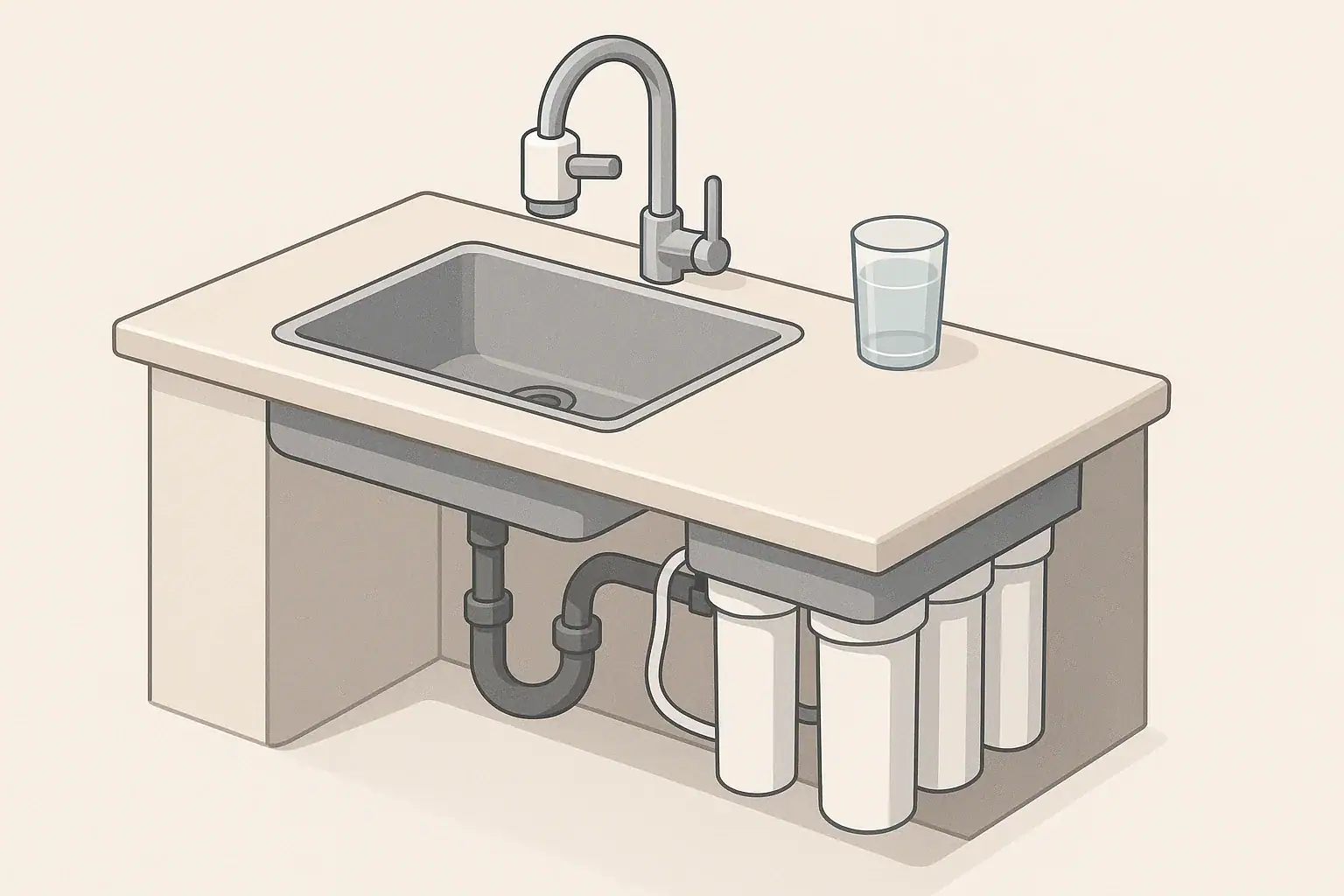
- Under-sink systems that combine sediment and carbon stages, sometimes with a membrane
- Countertop or faucet systems using carbon block filters
- Filtered refrigerator dispensers with appropriately maintained cartridges
When comparing options, you can look for:
- Stated micron ratings for sediment or carbon stages (example: 1–5 microns for mechanical filtration)
- Independent testing for particle reduction, when available
- Clear guidance on filter replacement intervals
This does not provide absolute guarantees about microplastics, but it can meaningfully reduce the overall particle load in your drinking water.
Step 3: Manage Plastic Contact With Drinking Water
While most focus is on environmental microplastics, everyday handling can also play a role. Simple habits can help minimize unnecessary contact:
- Use glass or stainless steel for daily drinking water where practical.
- Avoid exposing plastic bottles or containers to high heat, such as leaving them in a hot car.
- Limit repeated re-use of single-use bottles, which may not be designed for long-term wear.
These steps are not about eliminating plastic entirely, but about reducing avoidable wear and tear that can release small fragments.
Step 4: Consider Broader Household Plastic Use
Microplastics in water are part of a larger picture. Household choices that reduce plastic shedding can also support cleaner water long term:
- Wash synthetic fabrics with full loads and moderate spin speeds to reduce fiber breakage.
- Select durable products over disposable plastic items when reasonable.
- Manage household plastic waste carefully to prevent litter and wind-blown debris.
These actions primarily help the broader environment, but over time they may also influence the amount of plastic entering water sources.
Filter Maintenance and Realistic Expectations
Whatever filtration approach you choose, maintenance is essential. Filters that are clogged or long overdue for replacement can lose effectiveness, reduce flow, and in some cases release trapped material.
Why Regular Replacement Matters
As filters trap particles, including possible microplastics, they gradually fill up. Over time this can lead to:
- Reduced flow rate at taps and appliances
- Bypass within the filter media, where water finds paths of less resistance
- Difficulty predicting performance because the cartridge is being used outside its intended lifespan
Sticking to the manufacturer’s recommendations (or shorter intervals under heavy use) helps keep performance closer to the design intent.
Safe Handling and Sanitation
When replacing cartridges or servicing your system:
- Follow all manufacturer instructions for shutoff valves and depresurizing the system.
- Avoid modifying or bypassing any safety features such as pressure regulators, check valves, or leak detectors.
- Wash hands before handling new cartridges and keep seals and O-rings clean and properly seated.
- Sanitize filter housings on the schedule recommended for your system, especially after long shutdowns.
These practices do not specifically target microplastics but support overall water quality and system reliability.
Example values for illustration.
| Filter type | Typical location | Example replacement interval | Notes |
|---|---|---|---|
| Sediment cartridge | Whole-house or under-sink prefilter | Every 3–12 months | Shorter interval if water has visible particles or pressure drops |
| Carbon block | Under-sink, faucet or pitcher filter | Every 2–6 months | Follow usage-based guidance; heavy use may require more frequent changes |
| RO membrane | Under-sink RO system | Every 2–5 years | Dependent on feed water quality and proper prefiltration |
| Post-carbon polishing filter | After RO tank or final stage | Every 6–12 months | Helps maintain taste and odor quality |
| Refrigerator filter | Fridge dispenser/ice maker | Every 6 months | Or as indicated by the appliance, whichever is sooner |
| Shower or point-of-entry carbon filter | Whole-house or showerhead | Every 3–9 months | Observe for changes in flow and manufacturer limits |
This planner is a general example; always follow the schedule specified for your particular system.
Related guides: How to Read Your City’s Consumer Confidence Report (CCR) • Chlorine vs Chloramine in Tap Water: Taste, Smell, and Filtration • Turbidity Explained: Why Your Tap Water Looks Cloudy
Frequently asked questions
Can home water filters remove microplastics from tap water?
Many household filters reduce a portion of microplastic particles—sediment and carbon block filters capture larger particles, while membrane systems (for example, reverse osmosis) provide finer barriers. No common home system can guarantee removal of every particle size, so look for micron ratings and independent test results when available.
Which filtration option is best for drinking and cooking?
Point-of-use systems (under-sink setups that combine sediment, carbon, and optionally a membrane) focus treatment on the water you consume and are often the most practical choice. Pitcher and faucet filters can help with larger particles and taste but are generally less fine than membrane-based systems.
How often should I replace filters to help control microplastics?
Follow the manufacturer’s recommended intervals or replace sooner under heavy use. Regular replacement prevents clogging and bypass. Typical example intervals from the planner in this article include sediment cartridges every 3–12 months, carbon blocks every 2–6 months, and RO membranes every 2–5 years, depending on use and water quality.
What simple habits reduce microplastic exposure at home?
Use glass or stainless steel for everyday drinking, avoid leaving plastics in high heat, limit re-use of single-use bottles, wash synthetic clothes in full loads at moderate spin speeds, and reduce household plastic waste. These steps, combined with sensible filtration and maintenance, lower unnecessary exposure and environmental input.
Research on microplastics in tap water will continue to evolve. In the meantime, combining reasonable filtration, mindful plastic use, and good maintenance offers a balanced, practical path without drastic changes or unnecessary alarm.
Recommended next:
- TDS vs Hardness: What’s the Difference?
- What’s a Good TDS Level for Tap Water? (Without Overthinking It)
- Chlorine vs Chloramine in Tap Water: Taste, Smell, and Filtration
- How to Read Your City’s Consumer Confidence Report (CCR)
- Turbidity Explained: Why Cloudy Water Happens
- Water Pressure vs Flow Rate: Why Your Filter Feels Slow
- More in Water Quality Basics →
- NSF/ANSI standards explained (42/53/401/58)
- Clear trade-offs: pitcher vs faucet vs under-sink vs RO
- Maintenance planning: cost per gallon and replacement cadence