Choosing between a large dispenser and a pitcher filter is not only about water taste or filter type. In many kitchens, the deciding factor is fridge space. A container that works well on the counter may become frustrating if it blocks leftovers, crowds produce drawers, or makes shelves difficult to adjust.
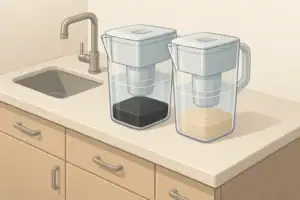
Both formats can be useful for everyday filtered drinking water. Large dispensers typically hold more water and reduce refill frequency. Pitcher filters are usually easier to move and may fit better in narrow spaces. The better choice depends on your refrigerator layout, household size, and how often you want to refill and clean the container.
Why fridge footprint matters more than total capacity
It is tempting to compare products only by how much water they hold. Capacity matters, but it does not tell the full story. A container that holds more water may take up a full shelf, limit vertical clearance, or require a level surface near the front of the refrigerator.
Fridge space is three-dimensional. The best fit depends on:
- Width: whether the container fits beside milk, juice, or meal prep containers.
- Depth: whether it can sit fully on the shelf without blocking the door from closing.
- Height: whether it fits under the shelf above, especially after the lid is opened.
- Access: whether you can pour or use a spigot without moving the container.
- Weight: whether it is comfortable to lift when full.
A slim pitcher may have a smaller capacity but fit into a door bin or a narrow shelf gap. A large dispenser may hold enough water for a day or more, but it can become a semi-permanent object that other food storage must work around.
The main tradeoff: large dispenser vs pitcher filter
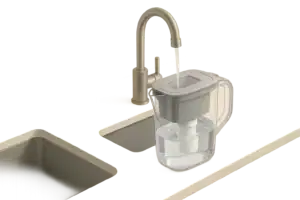
A large dispenser is generally a better match when you have a dedicated shelf area and several people regularly drink filtered water. It is also practical when you prefer filling glasses from a spigot without lifting a heavy container. If you are comparing filtration styles, it can help to review fridge filter vs pitcher differences as part of the decision.
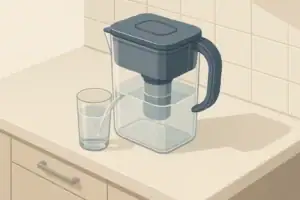
A pitcher filter is generally a better match when fridge space changes often, when you need something easy to move, or when you live in an apartment or smaller household. Pitchers are also easier to place in different fridge zones, although not every door bin is designed for heavy containers.
The tradeoff is simple: dispensers usually save labor by holding more water, while pitchers usually save flexible space by being easier to reposition.
Example values for illustration.
| Factor | Large dispenser | Pitcher filter |
|---|---|---|
| Typical fridge footprint | Wider and deeper; often needs shelf space | Narrower; may fit on shelf or door bin |
| Water capacity | Higher, often suitable for multiple users | Lower to moderate, often best for one to three users |
| Refill frequency | Less frequent | More frequent |
| Ease of moving when full | More difficult due to weight | Usually easier to lift and carry |
| Serving method | Spigot, usually while container stays in place | Lift and pour |
| Best fridge layout | Adjustable shelves with a stable front edge | Narrow shelf space or sturdy door bin |
| Best household fit | Higher daily water use | Lower or variable daily water use |
How to measure your refrigerator before choosing
Before deciding, measure the actual space where the container will live. Do not rely only on total refrigerator size. Two refrigerators with the same capacity can have very different shelf layouts. If you are setting up a smaller kitchen, a water filter setup for apartments can help you think through space constraints more systematically.
Measure the intended location
Use a tape measure to check the width, depth, and height of the shelf or door bin. Leave extra room for your hand, the lid, and normal airflow around food. If a dispenser uses a front spigot, make sure the shelf edge does not block the cup or glass.
For a pitcher, check whether the handle increases the width. Some pitchers look narrow from the front but take up more side space because of the handle or curved body.
Think about shelf adjustments
Adjustable shelves can make a large dispenser more practical. However, lowering one shelf may reduce the height available for taller groceries elsewhere. If you often store large containers, produce boxes, or leftovers, the space cost of a dispenser may be higher than it first appears.
Check door-bin use carefully
Pitchers often seem like a natural fit for the refrigerator door, but door bins vary widely. A full water pitcher can be heavy. Follow your refrigerator’s guidance for door storage and avoid overloading bins, especially if they are narrow, cracked, or loosely attached.
Capacity, refill frequency, and household size
Capacity affects fridge space because it changes how often the container needs to be refilled. A larger dispenser may be worth the shelf space if it prevents constant refilling during busy mornings or family meals.
For illustration, a household that drinks several quarts of filtered water per day may find a small pitcher inconvenient. A single person or couple may prefer a pitcher because it keeps enough chilled water available without dedicating a shelf to it.
When a large dispenser makes sense
- You have three or more regular water drinkers.
- You fill reusable bottles daily.
- You have a stable shelf area that can stay dedicated to filtered water.
- You prefer using a spigot instead of lifting a container.
- You want fewer refills throughout the day.
When a pitcher filter makes sense
- You have limited or changing fridge space.
- You want a container that is easy to lift, pour, and wash.
- You live alone, with one other person, or have light filtered-water use.
- You need something that can move between fridge zones.
- You do not want to rearrange shelves permanently.
A useful rule of thumb is to choose the smallest format that reliably meets daily use without becoming annoying to refill. Oversizing can waste fridge space; undersizing can make the filter a daily inconvenience. For a deeper comparison of capacity and cost tradeoffs, see cost per gallon calculator guidance.
Water quality goals and filter performance
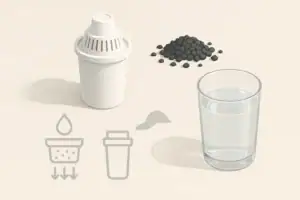
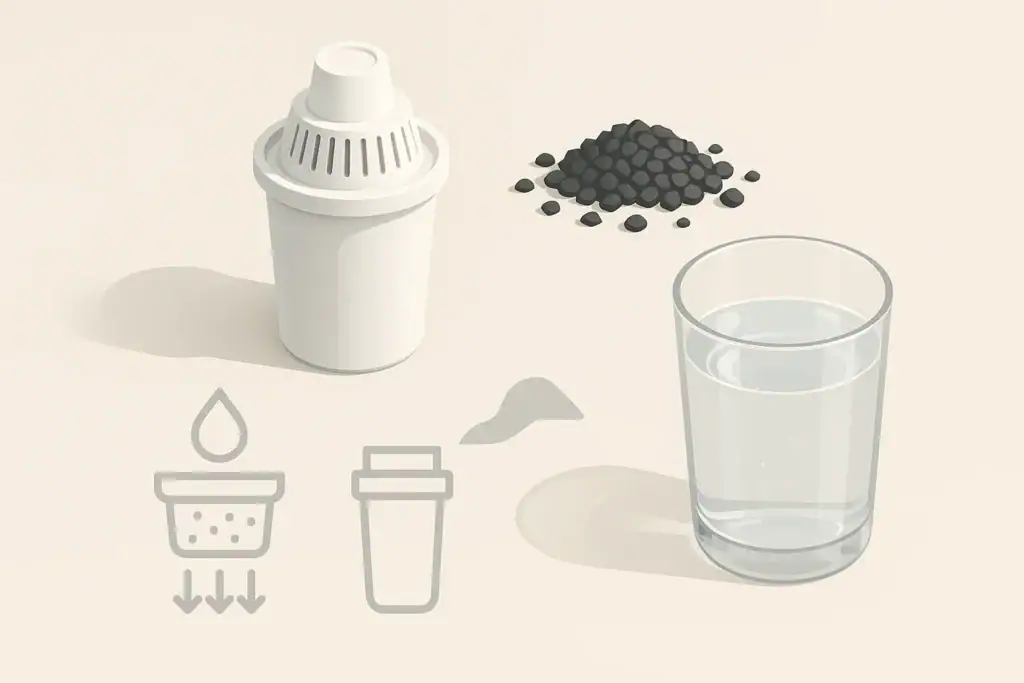
Fridge-space decisions should still account for the actual filtration goal. Pitchers and dispensers often use similar gravity-fed cartridge designs, commonly including activated carbon and sometimes ion exchange media. These are generally aimed at improving taste and reducing certain substances, depending on the filter design.
Performance varies by cartridge, water chemistry, and use conditions. If you are concerned about a specific substance such as lead, PFAS, chloramine, or volatile organic compounds, review the filter’s performance data and look for testing information that matches your goal. General claims are less useful than clear contaminant-specific documentation.
It is also important to understand what these products are not. Most pitcher and dispenser filters are not the same as reverse osmosis systems, ultraviolet systems, or whole-house treatment. They are usually point-of-use drinking water filters with modest flow rates and replaceable cartridges. If your main concern is chloramine, it is worth reading about pitcher filters and chloramine directly.
City water considerations
For many homes on treated municipal water, the main goal is taste and odor improvement. Chlorine taste, stored-water flavor, or refrigerator odors can make filtered water more appealing. If your utility uses chloramine, not every carbon filter performs the same, so check the filter’s stated capabilities.
Well water considerations
Private well users should not rely on a pitcher or dispenser as a substitute for appropriate testing and treatment. Well water conditions can vary and may involve sediment, hardness, iron, manganese, or microbial concerns. A fridge container may still be used for taste polishing, but it should be chosen with realistic expectations.
Ease of pouring, cleaning, and daily use
Convenience is closely tied to space. A container that fits but is difficult to use will likely be moved often, left empty, or pushed to the back of the refrigerator.
Using a large dispenser
A dispenser works best when the spigot can be reached without pulling the container forward. If it must be moved every time, the benefit of the larger capacity is reduced. Make sure there is enough clearance below the spigot for your usual glass or bottle.
Because a dispenser is heavier when full, refilling may require carrying it to the sink or using another container to add water. Some users like the stationary serving style; others find the size awkward during cleaning. If you notice slow pouring, a refrigerator dispenser troubleshooting guide may help diagnose flow issues.
Using a pitcher filter
A pitcher is usually simpler to carry to the sink, refill, and wash. It is also easier to take to a table or counter. The downside is that it must be lifted for every pour, and a nearly empty pitcher may need refilling at inconvenient times.
Pitchers can be a better fit for refrigerators with many small items because they can be shifted around. However, if the pitcher is too tall for the shelf or too wide for the door bin, it may become just as inconvenient as a dispenser.
Maintenance and storage habits that affect space
Filter replacement and container cleaning also affect the real-world footprint. Spare cartridges, cleaning brushes, and replacement reminders are part of ownership, even though they do not all live in the refrigerator.
Most gravity-style filters slow down as the cartridge loads with particles or reaches the end of its useful life. A slow filter can cause people to keep extra unfiltered water nearby or overfill the reservoir, which may create spills or crowding. Follow the manufacturer’s replacement schedule and adjust for your use level and water conditions. A simple filter replacement planner can help you stay ahead of changeouts.
Cleaning matters because cold storage does not eliminate the need for routine sanitation. Lids, reservoirs, spigots, and pitcher interiors should be washed as directed. If a container is hard to disassemble or too large for your sink, it may not be the best practical choice.
Storage outside the fridge also matters. A large dispenser may require more cabinet space when not in use. A pitcher may be easier to store seasonally, during travel, or when you need maximum refrigerator space for holidays or meal prep.
Example values for illustration.
| Maintenance item | Why it affects fridge space | Planning tip |
|---|---|---|
| Cartridge replacement | Slow flow can encourage storing extra water | Track time or gallons based on normal use |
| Container cleaning | Large parts may be harder to wash | Choose a size that fits your sink comfortably |
| Spigot care | Dispensers may need extra attention at the outlet | Clean as directed and check for drips |
| Reservoir refilling | Overfilling can cause spills and wasted shelf space | Leave room for the lid and normal handling |
| Spare filters | Cartridges need dry storage outside the fridge | Keep a small, labeled storage spot |
| Seasonal fridge crowding | Large containers may compete with food storage | Consider a movable pitcher if space changes often |
Related guides: Pitcher Filters for Renters • Pitcher Filter Maintenance • How Often Should You Replace Pitcher Filters? • Replacement Planner Basics
Final decision checklist
Choose a large dispenser if you have a dedicated shelf, high daily water use, and a preference for filling glasses without lifting the container. It is often the more convenient option for families or shared kitchens, as long as the refrigerator layout can support it.
Choose a pitcher filter if you value flexible fridge space, easy handling, and simple cleaning. It is often the better option for apartments, smaller households, and refrigerators where shelves are frequently rearranged.
Before buying either format, measure the intended space, consider the full weight of the filled container, and confirm that the filter type matches your water-quality goal. The best choice is the one that fits your refrigerator and your daily routine without turning filtered water into a storage problem.
Frequently asked questions
Which takes up less fridge space, a large dispenser or a pitcher filter?
A pitcher filter usually takes up less space because it has a smaller footprint and is easier to move around. A large dispenser often uses more shelf area but can be better if you need more water between refills.
Is a large dispenser better for families?
Often yes, especially if several people use filtered water every day. The larger capacity reduces refill frequency, but you need enough shelf space to keep it in place.
Can a pitcher filter fit in the refrigerator door?
Sometimes, but it depends on the pitcher’s width, height, and weight when full. Check your door bin dimensions and avoid overloading bins that are not designed for heavier items.
How do I know if a dispenser will fit my fridge?
Measure the exact shelf or bin where it will sit, including width, depth, and height. Also leave room for the lid, spigot, and easy access when pouring or refilling.
Which is easier to clean and refill?
A pitcher filter is usually easier to carry to the sink, refill, and wash. A dispenser may be less convenient to handle because it is larger and heavier when full.
Recommended next:
- Best Pitcher Water Filters for Better-Tasting Tap Water (Chlorine Focus)
- Pitcher Filter vs Bottled Water: Cost per Gallon Breakdown
- How Often Should You Replace Pitcher Filters? (By Household Size)
- TDS in Pitcher-Filtered Water: What Changes and What Doesn’t
- Pitcher Filters for Renters: What to Look For (Capacity + Fridge Fit)
- Pitcher Filter Maintenance: Cleaning & Sanitizing Without Off-Flavors
- More in Pitcher Filters →
- NSF/ANSI standards explained (42/53/401/58)
- Clear trade-offs: pitcher vs faucet vs under-sink vs RO
- Maintenance planning: cost per gallon and replacement cadence