What Vacation Mode Means for Water Filters
What Vacation Mode Means for Water Filters
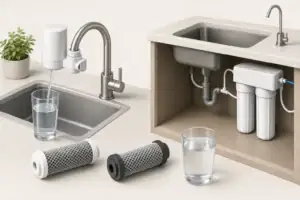
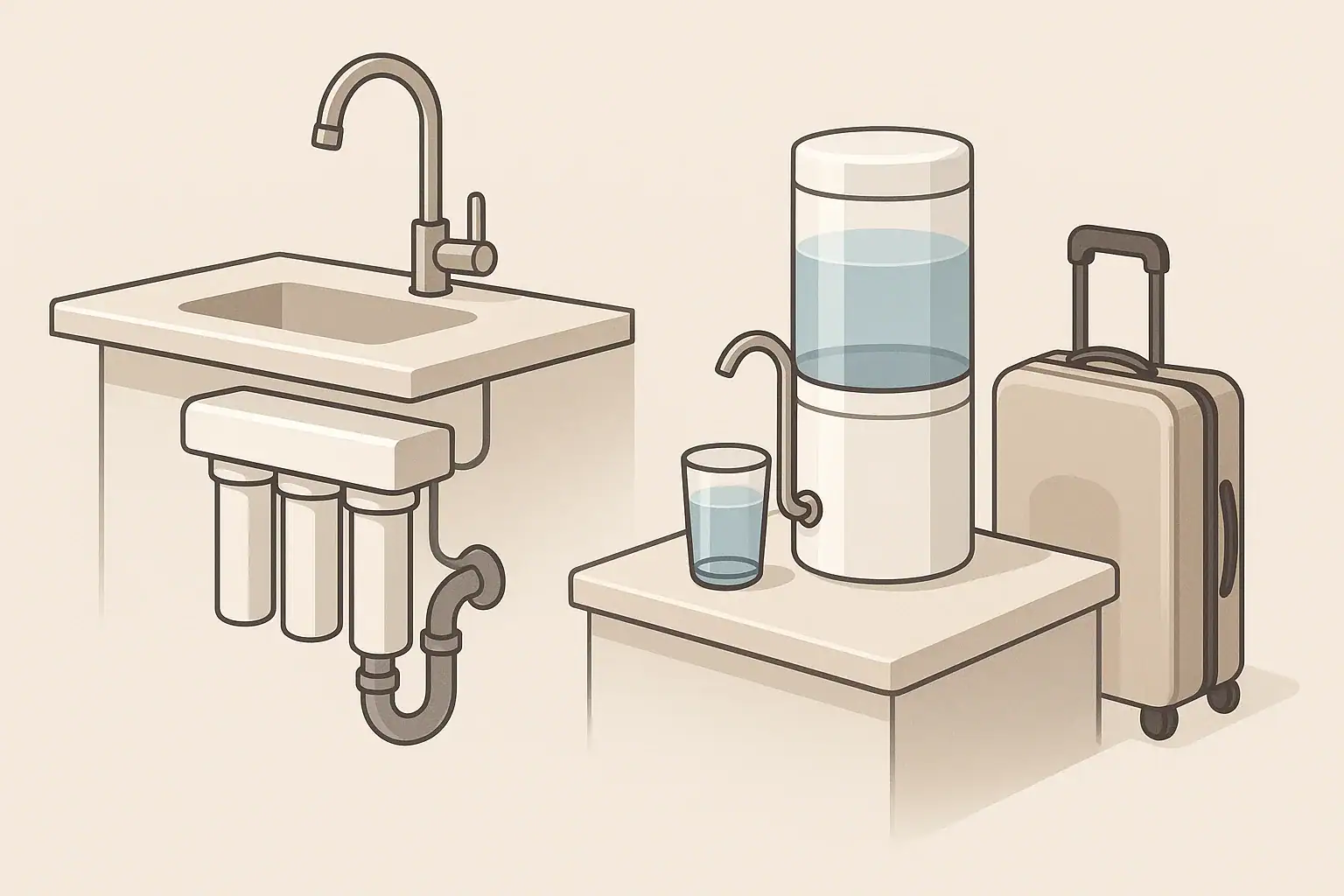
Vacation mode for water filters does not mean one universal setting. For most home systems, it means preparing the filter, water lines, storage tank, faucet, and related shutoff valves for a period of low or no water use.
When water sits still, taste can change, trapped air can collect, and small amounts of sediment may settle. In systems with storage tanks, the first water drawn after a trip may taste flat or stale. In carbon filters, stagnant water can pick up off tastes from the cartridge or plumbing. With reverse osmosis systems, the tank may need to be drained and refilled before normal use.
The right travel routine depends on the system type, how long you will be away, and whether the filter serves only drinking water or the whole house. A weekend trip usually needs little more than a short flush when you return. A multi-week absence may call for shutting off the feed water, depressurizing certain point-of-use systems, discarding stored water, and checking carefully for leaks on restart.
Always follow the manufacturer’s instructions for your specific system. This article gives general, practical steps for common residential filters without recommending unsafe plumbing changes or bypassing safety features.
Before You Leave: Prep by Trip Length
The main goal before travel is to reduce leak risk, avoid unnecessary pressure on point-of-use systems when appropriate, and make restart easier. The longer the absence, the more important it is to think about water sitting in filters, tanks, tubing, and appliances.
Short trips: one to three days
For a short trip, most filters can remain in normal operating condition. Check that faucets are fully off, inspect under-sink areas for signs of dampness, and make sure no tubing is kinked or pulled tight. If your system has a leak tray or moisture alarm, leave it in place and active.
Moderate trips: four days to two weeks
For a trip of several days to a couple of weeks, many homeowners choose to turn off the feed valve to an under-sink filter, reverse osmosis unit, refrigerator water line, or countertop system if the design allows it. This is not required for every system, but it can reduce the chance of a small leak becoming a larger problem while no one is home.
If you shut off a point-of-use feed valve, open the filtered water faucet briefly to relieve pressure, then close the faucet. Do not force valves, disconnect tubing, or cap lines unless the system instructions call for it.
Longer trips: more than two weeks
For longer travel, plan for a more complete restart. You may need to discard the first tank of reverse osmosis water, flush carbon filters longer, and run refrigerator water and ice through a reset cycle. If you have a whole-house filter, consider whether the home’s main water valve will be on or off during the absence and how that affects appliances, irrigation, and plumbing protection devices.
If you are unsure how to shut off a filter safely, ask a qualified plumber or water treatment professional before leaving. Avoid improvising with fittings, bypasses, or pressure relief steps that are not part of the system design.
Example values for illustration.
| Trip length | Typical prep | Return action |
|---|---|---|
| Weekend | Inspect for leaks and close faucets fully | Flush briefly until water runs clear and fresh |
| 4–7 days | Consider turning off point-of-use feed valves if accessible | Flush drinking water filters for several minutes |
| 1–2 weeks | Relieve pressure where instructions allow | Discard stored RO or refrigerator water as needed |
| 2–4 weeks | Plan a full restart routine | Flush, inspect fittings, and check taste and odor |
| More than 1 month | Review manual for storage or sanitation guidance | Replace cartridges if overdue or questionable |
| Any trip | Keep leak alarms active and avoid bypassing safety devices | Restart slowly and watch for drips |
System-by-System Steps Before Travel
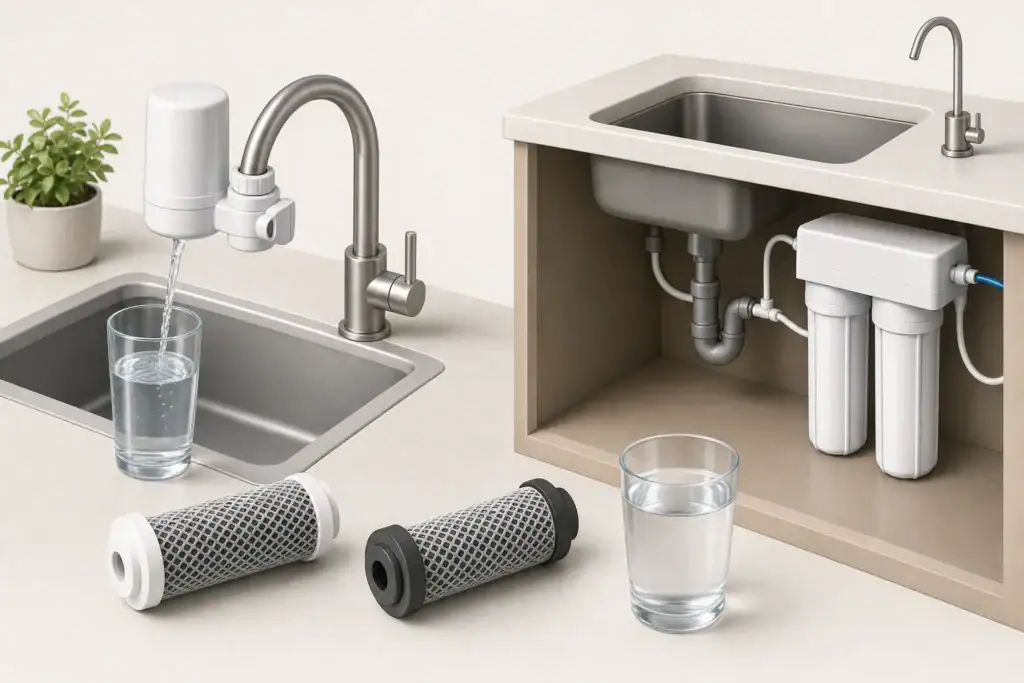
Different filters behave differently when water use stops. A pitcher in the refrigerator is not the same as a pressurized under-sink system, and a whole-house sediment filter is not the same as a reverse osmosis tank.
Pitcher and dispenser filters
Empty old water before you leave, especially if the pitcher will sit for more than a few days. Wash and dry the reservoir if the instructions allow. Store the pitcher in the refrigerator with a small amount of water only if the cartridge instructions recommend keeping it wet.
If the cartridge is already near the end of its rated life, it is often simpler to replace it after you return rather than before you leave. See the pitcher filter maintenance guide for cleaning and storage tips.
Faucet-mounted and countertop filters
Turn the faucet handle fully off and make sure the diverter is not under unusual tension. For countertop systems with a hose connected to the faucet, check that the hose is not pinched or stretched.
If the system has a dedicated inlet valve or quick-connect that is intended for routine shutoff, use it according to the instructions. Do not remove aerators, adapters, or tubing unless the manual says to do so for storage.
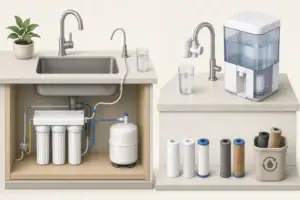
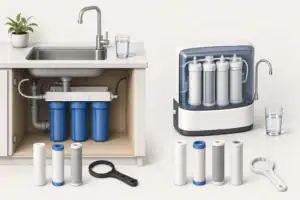
Under-sink carbon and multi-stage filters
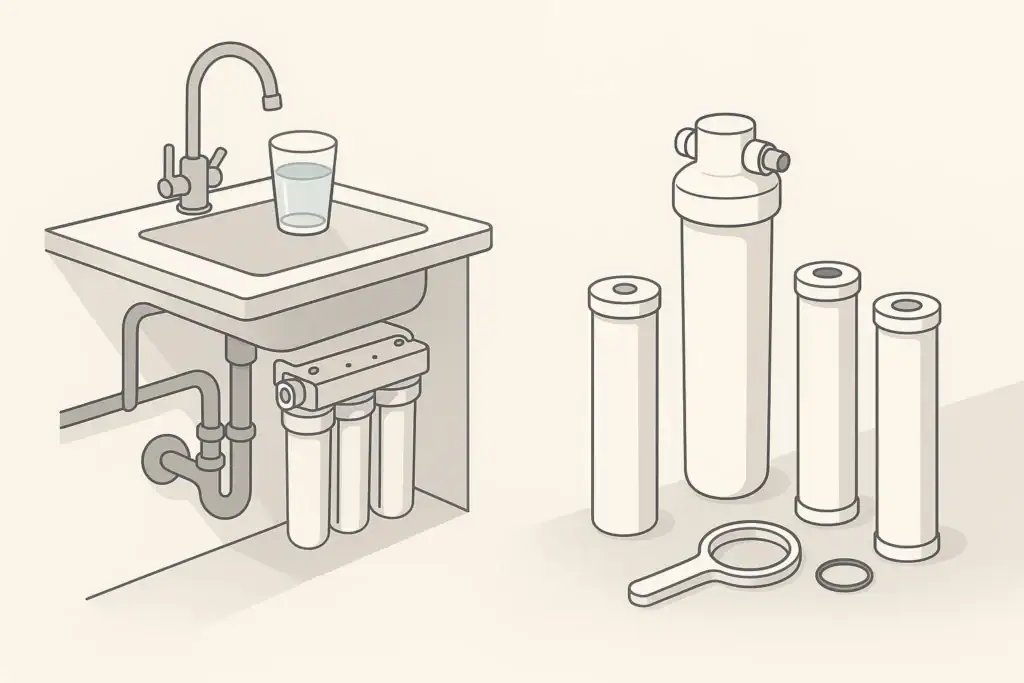
Under-sink filters are often connected to a cold-water shutoff valve and a dedicated faucet. Before travel, inspect the cabinet floor, fittings, cartridge housings, and tubing. A dry paper towel placed under the system can help reveal slow drips before you leave.
For longer trips, many owners shut off the filter’s feed valve and open the filtered faucet briefly to relieve pressure. If your system uses a leak-stop valve or automatic shutoff device, do not disable it.
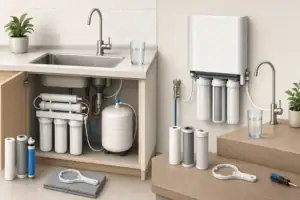
Reverse osmosis systems
Reverse osmosis systems may include prefilters, a membrane, postfilter, storage tank, automatic shutoff valve, drain connection, and dedicated faucet. Because they store water, they need more attention after travel than a simple inline carbon filter.
Before a longer trip, you can shut off the feed valve if the system design allows. Some owners also close the tank valve and relieve pressure at the faucet. Use only the steps described for your system. Do not block the drain line or modify the automatic shutoff valve.
Refrigerator water filters and ice makers
If the refrigerator has a water dispenser or ice maker, decide whether the refrigerator water line should remain on. For short trips, it usually stays on. For longer absences, some households shut off the supply valve to the refrigerator if it is accessible and in good working order.
Do not pull the refrigerator out roughly or strain the water line. If the shutoff valve is hard to reach or does not turn smoothly, leave it alone and have it serviced later.
UV systems
Residential UV systems are commonly used with well water or as a final disinfection step. They are typically installed with pretreatment such as sediment filtration. For travel, follow the unit’s instructions on whether the lamp should remain powered. Some systems are designed for continuous operation, while repeated cycling may not be ideal.
Never remove safety covers or look directly at an operating UV lamp. Restart procedures may include flushing water and checking indicator lights, but service should follow the manual.
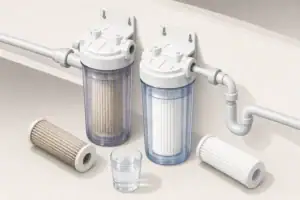
Whole-house sediment and carbon filters
A whole-house system may remain pressurized even when no water is being used. If you shut off the main water supply for travel, consider how that affects water heaters, humidifiers, toilets, irrigation, and other appliances. Some homes should not have the main valve turned off without additional planning.
Before travel, check pressure gauges if present, look for wet spots around housings, and confirm that sumps are tightened according to normal hand or tool guidance from the manufacturer. Do not overtighten housings right before leaving, as that can damage seals. If you want a broader overview, compare whole house filters vs water softeners and how they affect the home.
When You Get Home: Restart Safely
Restarting a water filter after travel should be slow and observant. The first goal is to confirm there are no leaks. The second is to flush stagnant water from filters, tubing, tanks, and fixtures before using the water for drinking or cooking.
Open valves slowly
If you turned off a feed valve, open it gradually. Listen for the system filling and watch all visible connections. A small drip may not appear immediately, so stay nearby for several minutes and check again after the first flush.
For under-sink systems, keep cabinet contents away from the filter until you are confident the area is dry. Check the faucet base, cartridge housings, tubing connections, and any drain saddle used by an RO system.
Flush point-of-use filters
Run the filtered water faucet long enough to clear standing water from the line and cartridge. The needed time varies by system size and tubing length. A small faucet filter may only need a short flush, while an under-sink system with multiple stages may need several minutes.
Use the water’s appearance and odor as practical signals, but do not rely on taste alone for safety decisions. If water is cloudy from trapped air, it often clears from the bottom up in a glass. If cloudiness persists, check the system instructions or test the water if appropriate.
For slow or inconsistent post-travel output, a filtered water flow dropped checklist can help narrow down the cause.
Drain and refill RO tanks
For reverse osmosis systems, it is common to discard the first full tank after a long idle period. Open the RO faucet until flow slows significantly, then allow the tank to refill. Depending on membrane capacity, tank size, pressure, and temperature, refilling may take a few hours.
After refill, flush again if taste or odor is still off. If the system has been unused for an extended period or cartridge replacement is overdue, follow the sanitation and replacement instructions rather than simply flushing repeatedly.
Refresh refrigerator water and ice
Dispense and discard water from the refrigerator line after travel. If the ice maker was operating while you were gone, discard old ice and allow a fresh batch to form. If the water line was shut off, reopen the valve slowly and check behind and beneath the refrigerator for leaks before pushing it back into place.
Check whole-house flow
After a whole-house filter sits idle, open a cold-water faucet slowly, preferably at a utility sink or tub where splashing is not a concern. Flushing a large-volume fixture can help move stagnant water through the main plumbing. Avoid immediately running delicate appliances if sediment or discoloration appears at first.
Common Issues After a Water Filter Sits Idle
Most post-travel issues are ordinary maintenance signals rather than emergencies. The key is to identify whether the problem is likely trapped air, stale water, an overdue cartridge, a disturbed seal, or a broader plumbing issue.
Cloudy water
Milky-looking water after restart is often caused by tiny air bubbles introduced when lines refill. Fill a clear glass and observe it for a minute. If the cloudiness clears from the bottom upward, air is a likely cause. Continued cloudiness, particles, or discoloration should be investigated further.
Flat or stale taste
Water that sat in tubing, tanks, or cartridges can taste flat. Flushing usually improves it. RO systems with storage tanks may need a complete drain and refill. Refrigerator lines may need several glasses of water discarded before the taste normalizes.
Reduced flow
Lower flow after travel can come from a partially closed valve, an air pocket, a clogged cartridge, or normal pressure differences. Check that valves you used before leaving are fully open. If flow remains low and the cartridge is near its replacement interval, replacement may be reasonable. If the issue appeared after installing or changing parts, review under-sink filter leaks and related connection checks.
Drips at housings or fittings
Small leaks may appear when a system repressurizes. Do not ignore them. Turn off the feed valve if safe to do so, relieve pressure at the faucet, and inspect according to the manual. Common causes include a housing not seated evenly, an O-ring problem, or tubing that was pulled out of alignment. If you are not comfortable correcting it, call a qualified professional.
Unusual odor
Odor after idle time may come from stagnant water in the filter, drain, sink, or plumbing rather than the filter media itself. Flush the filter, clean the sink area, and check whether the odor is present in both filtered and unfiltered water. If it appears throughout the home, the issue may be upstream of the drinking water filter.
Example values for illustration.
| Situation | Likely action | Reason |
|---|---|---|
| Cartridge is within normal service life | Flush and continue using | Idle time alone does not always require replacement |
| Cartridge was overdue before travel | Replace before regular use | Performance and flow may already be reduced |
| RO postfilter tastes stale after flushing | Consider replacing postfilter | Postfilters can affect final taste |
| System sat unused for several weeks | Review sanitation instructions | Long idle periods may need more than flushing |
| Visible particles appear after restart | Flush, inspect, and replace if needed | Sediment or carbon fines may be present |
| Leak occurred at housing | Inspect seals before reuse | O-rings and housings must seat correctly |
| Filter was stored dry against instructions | Replace or follow reconditioning steps | Some media should not dry out |
Related guides: Pitcher Filter Maintenance • RO vs Carbon Under-Sink • Whole House Filters vs Water Softeners • Why Your Filtered Water Flow Suddenly Dropped • Refrigerator Filter Leaks
Build a Simple Travel Routine
A practical water filter travel routine does not need to be complicated. Keep a short checklist near the system or in a home maintenance note. Include the filter type, cartridge dates, shutoff valve location, and any restart steps recommended by the manufacturer.
Before leaving, focus on inspection, sensible shutoff choices, and avoiding last-minute plumbing work. After returning, restart slowly, flush standing water, discard stale stored water, and check for leaks. If a cartridge was already due for replacement, travel is a good reminder to handle it before returning to normal use.
For households with multiple systems, such as a whole-house sediment filter plus an under-sink RO unit and refrigerator filter, treat each one separately. Whole-house filters affect general plumbing, while point-of-use filters affect drinking water lines. A calm, step-by-step restart helps keep the process manageable and reduces the chance of missing a small issue.
Frequently asked questions
Should I turn off my water filter before a short trip?
Usually not. For a day or two away, most filters can stay on as long as there are no leak concerns. Check for drips and make sure faucets and valves are fully closed before leaving.
What should I do with a reverse osmosis system before travel?
For longer trips, many homeowners shut off the feed valve and, if the system allows it, relieve pressure at the faucet. If the tank has been sitting for a while, plan to drain and refill it when you return.
Do I need to throw away refrigerator ice after a vacation?
Yes, if the ice maker sat unused or the line was shut off for a while. Discard the old ice and let fresh ice form before using it again.
Why does my water taste stale after I get back?
Water may have been sitting in the filter, tank, or tubing. Flush the system for several minutes and discard the first batch of stored water if you have an RO unit or refrigerator dispenser.
How do I know if a filter has a leak after being idle?
Open valves slowly, then inspect housings, fittings, and cabinet floors for moisture. A paper towel under the system can help reveal small drips before they spread.
Recommended next:
- Replacement Planner Basics: Estimate Your Next Filter Change Date
- Cartridge Change Mistakes That Cause Leaks
- Cleaning and Sanitizing Filter Housings: A Simple Routine
- Subscription Replacement Programs: Are They Worth It?
- Long-Life Filters: What “Long Life” Really Means
- How to Store Spare Filters Without Ruining Them
- More in Maintenance & Replacement →
- NSF/ANSI standards explained (42/53/401/58)
- Clear trade-offs: pitcher vs faucet vs under-sink vs RO
- Maintenance planning: cost per gallon and replacement cadence