
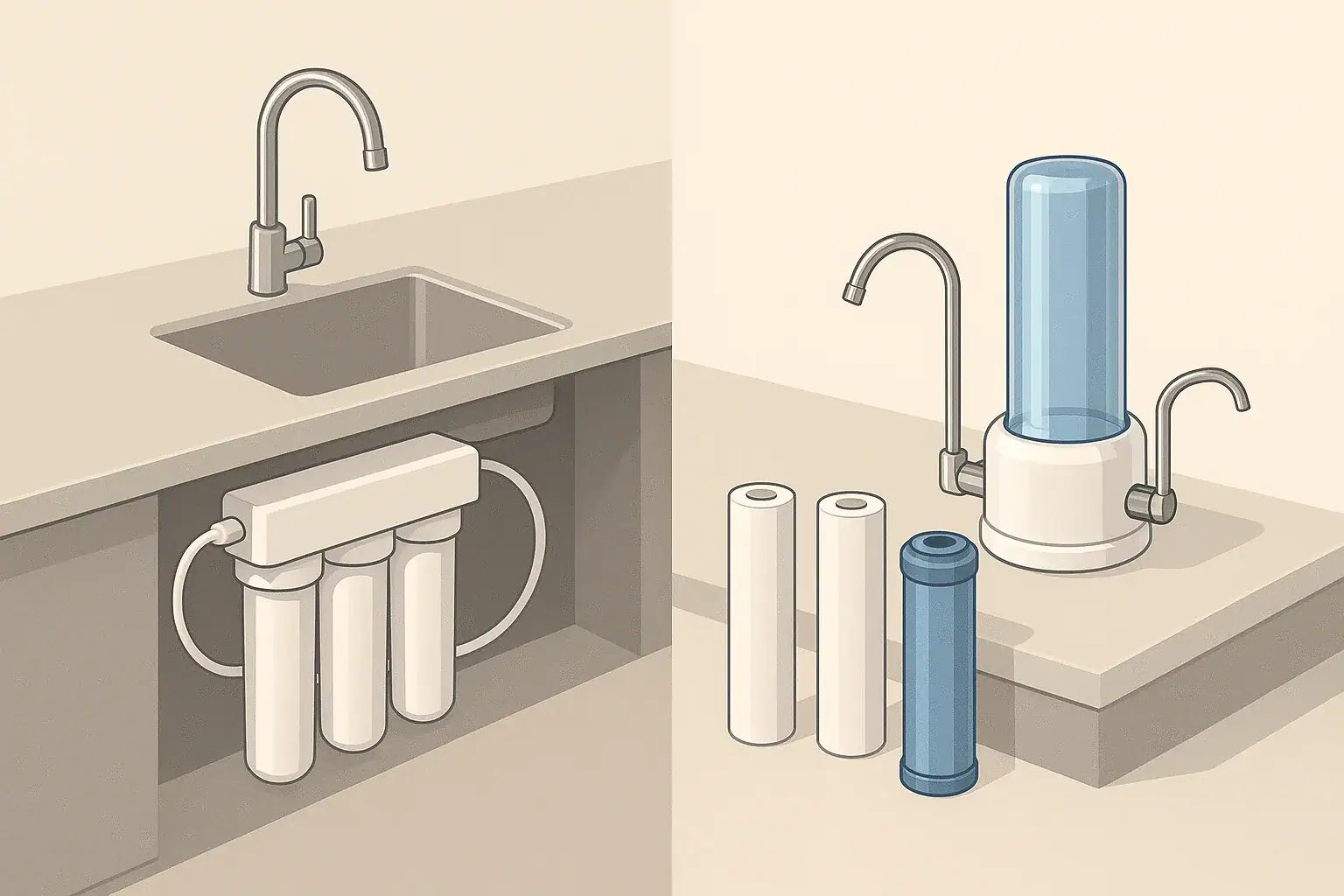
Why Spare Filter Storage Matters
Spare water filters are easiest to damage before you ever install them. Poor storage can shorten their usable life, cause clogs, create bad tastes, or make them unsafe to use. Understanding how different filter types react to temperature, moisture, and time helps you avoid wasting money and effort.
Most home filters are designed to be stored dry and sealed until use. Once a filter has been wet, manufacturers generally expect it to be in regular service, not sitting unused for long periods. That is why storage rules differ for “factory sealed and dry” filters versus “previously used or pre-soaked” filters.
This article focuses on practical, at-home storage for common residential filters, including pitchers, faucet and under-sink filters, refrigerator cartridges, and reverse osmosis (RO) components.
Dry vs. Wet Filters: Know What You Have
The first step is to identify whether a spare filter is truly dry and sealed, or if it has already been exposed to water. Storage expectations change a lot once water is involved.
Dry, Factory-Sealed Filters
Most new replacement cartridges arrive:
- Wrapped in plastic or foil-type packaging
- With caps or plugs on connection ports
- Dry to the touch if opened immediately
These typically include:
- Carbon block and granular activated carbon (GAC) cartridges
- Sediment cartridges (spun or pleated)
- Most refrigerator inline cartridges
- Many under-sink and whole-house cartridges
Dry, sealed filters are the easiest to store. Keep them unopened in a cool, dry place, away from direct sunlight and chemical fumes.
Wet, Used, or Pre-Soaked Filters
A filter is effectively “wet” if:
- It has been installed and used, even briefly
- It has been flushed or soaked before installation
- It was shipped pre-wetted (uncommon in home systems)
Wet filters are vulnerable to microbial growth when left unused. Storing them for long periods is rarely recommended, especially for carbon or multi-stage cartridges. In many cases, once a filter has been wetted, it should either remain in service or be discarded according to local guidelines.
RO membranes and some specialty cartridges are special cases; they may be shipped wet and preserved in specific solutions. For those, follow the manufacturer’s storage instructions closely, because they can differ from typical dry filters.
Example values for illustration.
| Filter type | Typical condition when new | Primary storage concern | Basic storage approach |
|---|---|---|---|
| Sediment cartridge | Dry, wrapped | Dust, physical damage | Keep sealed, avoid crushing |
| Carbon block / GAC | Dry, sealed | Odor absorption, moisture | Store in original wrap, cool & dry |
| Refrigerator filter | Dry, capped | Temperature swings, UV light | Pantry or cabinet, away from sunlight |
| RO membrane (home use) | Dry or preserved | Drying out or freezing | Follow label, avoid freezing |
| Pitcher filter cartridge | Dry, foil or plastic | High humidity, odors | Sealed in box, room temperature |
| Inline post-filter | Dry, capped | Physical impact, heat | Do not drop; avoid hot areas |
Checklist helps you spot which filters need stricter storage conditions.
General Rules for Storing Spare Filters
Most home water filters do well if you treat them like other sensitive household supplies: keep them clean, dry, and moderate in temperature.
Temperature: Avoid Heat and Freezing
Extreme temperatures are one of the fastest ways to damage unused filters.
- Avoid high heat: Do not store filters in attics, near water heaters, or in vehicles where temperatures may get very high in summer. Excess heat can warp plastic housings and degrade rubber seals.
- Avoid freezing: A dry, factory-sealed filter is usually less vulnerable to freezing, but any moisture present can expand, crack, or separate internal media.
- Target a stable, indoor range: A typical interior pantry or closet is usually suitable. Exact ranges vary by product, so check packaging if available.
Moisture and Humidity: Keep Filters Dry Until Use
High humidity can introduce moisture inside packaging or condense on filters, especially when they’re moved between hot and cold areas.
- Store in a dry indoor location rather than damp basements or garages when possible.
- Keep filters in original sealed packaging until you are ready to install them.
- If the outer box gets wet, remove it and keep the inner sealed package dry and intact.
- Do not pre-soak filters “just in case” and then leave them sitting unused.
Light and Ozone: Protect Plastics and Rubber
Long-term exposure to direct sunlight and certain air pollutants can make plastic and rubber brittle.
- Store filters inside opaque boxes or cabinets, not on a windowsill.
- Avoid shelf space right above ozone-producing equipment such as some older electronic devices or certain air purifiers.
Odors and Chemicals: Keep Adsorptive Media Away from Fumes
Carbon filters are designed to adsorb chemicals, including odors from the surrounding air.
- Do not store spare filters near paint, solvents, gasoline, or strong cleaning agents.
- Avoid musty, moldy spaces that may carry persistent odors.
- Keep them away from smoking areas and strong cooking fumes.
If a carbon filter has been stored unsealed in a strong-smelling environment, it may carry that odor into your water, at least temporarily.
Original Packaging: Use It if You Have It
Manufacturers usually design their packaging to protect filters from moisture, physical impact, and dust.
- Leave plastic or foil wrapping intact until immediately before installation.
- If the original wrap is damaged, consider placing the filter in a clean, airtight plastic bag.
- Keep any end caps or protective plugs in place so ports stay clean.
Where (and Where Not) to Store Spare Filters at Home
The best storage spot is convenient enough that you will remember your spares, but controlled enough to avoid moisture and heat.
Good Storage Locations
- Indoor pantry or kitchen cabinet: Stable temperature, easy to access when it is time to change filters.
- Bedroom or hallway closet: Usually dry, dark, and protected from temperature extremes.
- Upper shelves away from appliances: Keeps filters away from children and pets and reduces the chance of spills or leaks damaging them.
Locations to Avoid
- Attics: Can become very hot and sometimes humid, which can warp components.
- Unconditioned garages or sheds: Temperature swings, fumes from vehicles and chemicals, and potential for pests.
- Under-sink spaces with leaks: Keeping a spare near the system is convenient, but not in a cabinet that tends to be damp or has had past leaks.
- Basements with standing water or high humidity: Even boxed products can absorb moisture over time.
How Long Can You Store Spare Filters?
Most water filter components have a recommended “shelf life” when kept sealed and stored properly. This is different from the service life once installed.
Understanding Printed Dates and Shelf Life
Packaging may show one of several markings:
- Manufacture date: When the filter was produced.
- Best by date: Ideal use-by time for full performance.
- Lot or batch code: Used by manufacturers to track quality.
For dry, sealed cartridges stored under typical indoor conditions, a general example shelf-life range might be a few years from manufacture, but actual recommendations vary. Over time, materials such as rubber O-rings, adhesives, and certain filter media can slowly degrade, even if unused.
Using a filter slightly past a recommended shelf life does not automatically mean failure, but you may see:
- Weaker or cracked seals
- Changes in flow resistance
- More fragile housings
If the filter is far beyond any suggested date, visibly damaged, or has been stored in poor conditions, replacement is usually the safer choice.
Differences Between Filter Types
Common home filter elements respond differently to long-term storage:
- Sediment filters: Often tolerate long storage well if kept dry and clean. They are simple mechanical sieves.
- Carbon filters: More sensitive to odors, moisture, and breakdown of binders over many years.
- RO membranes: Very sensitive to drying if shipped wet, and to freezing. Follow labeling closely.
- Combined cartridges with media beds: Multi-stage cartridges with several types of media in a single housing can be more vulnerable to age-related changes.
Labeling and Organizing Your Spare Filters
Good storage is not only about the environment; it is also about organization so you actually use filters in a reasonable order and do not forget what you have.
Practical Labeling Tips
- Write the purchase date on the box or wrapper.
- Note the system or faucet location the filter belongs to (for example, “kitchen under-sink stage 1”).
- If there is a date code but no clear explanation, write a short note to yourself for reference.
- Group filters for the same system in a labeled bin or container.
First-In, First-Out (FIFO)
To avoid having older filters sit unused:
- Place newly purchased filters behind older stock on the shelf.
- When it is time to replace, grab the oldest appropriate filter that is still within its recommended shelf life.
- Periodically review your storage area and check for items that are no longer suitable to use.
Example values for illustration.
| Location / system | Filter type | Typical service interval (example) | How many spares to keep on hand (example) | Suggested storage note |
|---|---|---|---|---|
| Kitchen under-sink | Sediment pre-filter | Every 6–12 months | 2 spares | Label box with purchase month & year |
| Kitchen under-sink | Carbon block | Every 6–12 months | 2 spares | Store away from strong odors |
| Refrigerator | Inline carbon cartridge | Every 6 months | 1–2 spares | Keep in pantry for easy access |
| RO system | RO membrane | Every 2–3 years | 0–1 spare | Follow labeling, avoid freezing |
| Whole-house | Sediment cartridge | Every 3–6 months | 2–4 spares | Store in a dry utility closet |
| Pitcher filter | Small carbon cartridge | Every 1–2 months | 3–6 spares | Keep sealed in original box |
Adjust quantities and intervals based on your actual water use and product instructions.
Frequently asked questions
How long can I safely store an unopened water filter?
Unopened, dry filters typically keep for months to a few years if stored sealed in a cool, dry place. Check any manufacture or “best by” dates, note the purchase date on the box, and inspect seals and O-rings before installing.
Can I store a filter after it has been wet or partially used?
Generally no. Wet or used filters are vulnerable to microbial growth and should remain in service or be discarded per manufacturer guidance. Some RO membranes shipped in preservative solutions are exceptions—follow their instructions.
What is the best place in my home to store spare filters?
Choose a stable indoor spot such as a pantry, kitchen cabinet, or closet away from direct sunlight, heat sources, strong odors, and high humidity. Avoid attics, unconditioned garages, damp basements, and leak-prone under-sink areas.
What should I do if the original packaging is damaged?
If the inner sealed wrap and end caps remain intact, place the filter in a clean, airtight plastic bag, label it with the purchase date, and store it properly. If the filter shows visible damage, persistent odors, or long exposure to poor conditions, replace it.
Related guides: Replacement Planner Basics: Estimate Your Next Filter Change Date • Cleaning and Sanitizing Filter Housings: A Simple Routine • Cartridge Change Mistakes That Cause Leaks • Long-Life Filters: What “Long Life” Really Means
Recommended next:
- Replacement Planner Basics: Estimate Your Next Filter Change Date
- Cartridge Change Mistakes That Cause Leaks
- Cleaning and Sanitizing Filter Housings: A Simple Routine
- Subscription Replacement Programs: Are They Worth It?
- Long-Life Filters: What “Long Life” Really Means
- More in Maintenance & Replacement →
- NSF/ANSI standards explained (42/53/401/58)
- Clear trade-offs: pitcher vs faucet vs under-sink vs RO
- Maintenance planning: cost per gallon and replacement cadence