
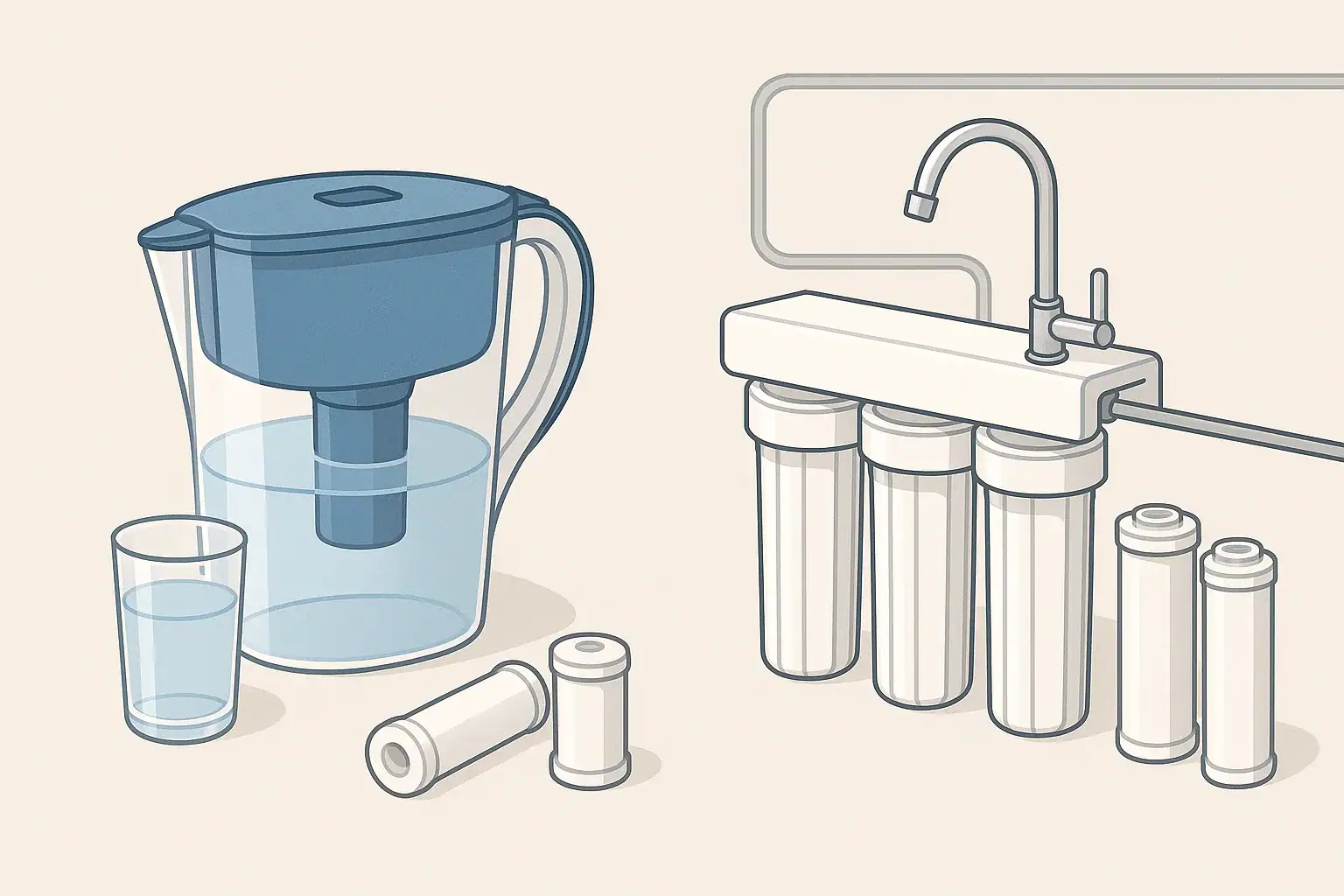
What Are Subscription Replacement Programs for Water Filters?
Subscription replacement programs automatically send you new water filter cartridges or other consumable parts at set intervals. Instead of remembering to reorder filters, you sign up once and receive replacements by mail every few months.
These programs show up across many types of home water filtration products, including:
- Pitcher and countertop filters
- Faucet-mounted filters
- Refrigerator filters
- Under-sink carbon block and multi-stage systems
- Reverse osmosis (RO) systems with multiple cartridges and a membrane
- Whole-house sediment and carbon filters
At a basic level, a subscription is just a recurring purchase with a preset schedule. The main promise is convenience: you get the right filter, at about the right time, with less chance of forgetting a change.
How Subscription Replacement Programs Typically Work
Most home water filter subscriptions share a similar structure, even if the details differ. Understanding the moving parts helps you compare them objectively.
Common Features
Typical elements of a filter replacement subscription include:
- Fixed delivery interval: Common options are every 2, 3, 6, or 12 months, based on estimated filter life.
- Product matching: The program is tied to a specific model or cartridge type, so you do not have to look up part numbers.
- Automatic billing: Charges are processed at each shipment. Some programs offer prepayment discounts.
- Pause or cancel options: Many allow you to change dates, skip a shipment, or end the subscription, though ease varies.
- Reminder emails or app alerts: You may get notifications before each refill ships.
Where the Schedule Comes From
Subscription intervals are usually based on one or more of these assumptions:
- Estimated gallons: For example, a carbon block rated for a certain number of gallons.
- Estimated daily use: A general household assumption (such as a few gallons per person per day).
- Time limits: Many filters have a maximum time in service, even at low usage, due to performance changes or microbial concerns.
Because these assumptions may not match your actual water use or water quality, the ideal replacement schedule for your home can differ from the default subscription interval.
Example values for illustration.
| Decision factor | Why it matters | What to look for |
|---|---|---|
| Household water use | Determines how fast filters load with contaminants and sediment. | Option to adjust interval (e.g., every 2–6 months). |
| Water source type | City vs. well water can affect sediment and chlorine levels. | Subscriptions suited to your source (sediment vs. carbon focus). |
| Filter complexity | Multi-stage and RO systems use several different cartridges. | Bundles that include all required stages on the right schedule. |
| Budget planning | Ongoing filter costs can exceed the price of the system. | Transparent pricing and ability to see yearly cost estimates. |
| Flexibility | Water use may change with seasons or household size. | Easy pause, skip, and interval change policies. |
| Storage space | Extra filters need dry, clean storage. | Shipments that match your available storage capacity. |
| Self-tracking habits | Some people reliably track dates and gallons; others do not. | Decide if you truly need automation or can manage manually. |
Pros: When Subscription Programs Make Sense
For many households, the advantages of a replacement program are practical. The value tends to increase as systems become more complex or as daily schedules become tighter.
1. Better Chance of On-Time Filter Changes
One of the most common issues with home filtration is simply forgetting to replace cartridges. Overused filters may:
- Clog and reduce water flow
- Stop effectively reducing target contaminants
- Allow taste and odor to return
Automatic deliveries can act as both a reminder and a supply solution. When a new filter arrives, it is a visible prompt to change out the old one.
2. Simplified Planning for Multi-Stage and RO Systems
Multi-stage under-sink and reverse osmosis systems often use several cartridges with different lifespans. For example:
- Stage 1 sediment filter might be replaced every few months (example only).
- Stage 2 and 3 carbon filters might be replaced less often.
- RO membranes might have longer service lives under normal use.
Subscriptions that bundle the right parts at reasonable intervals reduce the chance of mismatched or forgotten components. This can be especially helpful if you are not interested in tracking separate schedules for each stage.
3. Predictable Budgeting
Even when an automatic program is not the lowest-cost option, it can make expenses more predictable. Smaller, regular charges may be easier to plan for than infrequent larger purchases, especially for whole-house systems or premium cartridges.
4. Convenience and Time Savings
If you regularly:
- Run out of filters and go days or weeks without replacement
- Need to search for the correct part number each time
- Rely on in-person stores with limited inventory
a subscription may save time and reduce hassle. This benefit is subjective but valuable for some households.
5. Easier Standardization Across Multiple Filters
Some homes use several filters at once, such as a refrigerator filter, a pitcher, and an under-sink system. Coordinated subscriptions can align replacement times so you handle several changes at once, instead of addressing them piecemeal.
Cons: Potential Drawbacks and Hidden Costs
Subscription programs are not automatically the best option. Weighing their limitations is essential before committing.
1. Risk of Over-Replacement
The most common downside is replacing filters too early for your actual usage. If a schedule assumes a higher water consumption than you have, you may be discarding cartridges that still have useful capacity.
Examples of when this might happen include:
- Small households using a large-capacity system
- Vacation homes or occasional-use properties
- Single-purpose filters (such as a dedicated drinking-water tap) with low daily volume
This does not just cost money; it also means more materials to dispose of or recycle where options exist.
2. Limited Customization for Water Quality Differences
Subscriptions usually base intervals on general assumptions. But real-world filter life depends on both volume and water quality, including:
- Level of sediment or turbidity for mechanical filters
- Chlorine or chloramine levels for carbon filters
- Overall dissolved solids that influence RO performance
Homes with relatively clean, treated city water may be able to use certain filters longer (within manufacturer time limits), while homes with challenging well water may need more frequent changes. A one-size-fits-all subscription interval may not match your conditions.
3. Long-Term Cost Can Be Higher
Subscriptions may offer a small discount compared with single purchases, but not always. In some cases, buying compatible cartridges in multi-packs or during sales can lower annual costs compared with an automatically billed program.
It is worth looking at:
- The annual cost of the subscription at its default interval
- The cost of buying the same filters as needed at realistic intervals for your use
- Any shipping charges or fees that apply only to subscription orders
4. Inflexibility if Your Situation Changes
Life changes such as moving, adding household members, or switching from city water to a private well can significantly change how quickly filters load with contaminants.
If your subscription does not make it easy to modify the schedule, swap product types, or cancel without hurdles, you may end up with extra filters or an ill-suited configuration.
5. Accumulation of Unused Filters
Skipped installations, travel, or under-use can leave you with more filters than you need. While unopened cartridges generally store well in a dry, cool location, they still occupy space and tie up money.
How to Estimate the Real Cost of a Subscription
Because filter replacement is the main ongoing cost of many systems, it helps to run rough numbers before enrolling in a program.
Step 1: Identify the Expected Lifespan of Each Filter
Check the product information for each stage in your system. You will typically see both:
- An approximate gallon capacity
- A maximum recommended time in service, such as several months or a year
For mixed-use systems (for example, a RO system plus a dedicated carbon post filter), note which parts the subscription includes and which it does not.
Step 2: Estimate Your Daily Water Use Through the Filter
For drinking-water systems, consider:
- How many people typically drink filtered water
- Whether you use filtered water for cooking, coffee, or tea
- Any additional uses such as pet water or filling humidifiers
Rough example (for illustration only):
- 4 people each drink about 0.5 gallons of filtered water per day.
- Cooking and beverages add another 1–2 gallons per day.
- Total might be around 3–4 gallons per day through the filter.
Step 3: Convert to an Approximate Replacement Interval
Use your estimated daily use and the filter’s example capacity to find an approximate replacement interval in days, then compare with the manufacturer’s time limit (see our replacement planner). Always follow whichever limit (gallon or time) is reached first.
This rough calculation can show whether a subscription’s default schedule is shorter, longer, or roughly aligned with your household’s needs.
Step 4: Compare Yearly Costs
Calculate, as an example:
- Subscription plan: Cost per shipment × number of shipments per year
- Manual purchase: Price of filters if bought individually or as value packs at the interval you actually need
Also factor in non-monetary considerations, such as the time you would spend reordering or shopping in person.
Matching Subscription Frequency to Filter Type
Not all filters benefit equally from a subscription. Some are changed frequently enough that automation is convenient, while others have long lives that make subscriptions less compelling.
Good Candidates for Subscriptions
Filters that tend to pair well with replacement programs include:
- Pitcher filters: Typically smaller capacities and more frequent changes.
- Faucet-mounted filters: Often used heavily for both drinking and cooking water.
- Refrigerator filters: Easy to forget and often tied to taste and odor changes.
- Sediment pre-filters: For homes with known sediment issues, especially on wells.
Situations Where Manual Replacement May Be Enough
You may not need a subscription if:
- You track maintenance dates consistently (for example, with calendar reminders or labels on the housing).
- Your system uses long-life cartridges that you change only annually or less often, following manufacturer guidance.
- Your water usage is highly variable, such as in vacation homes, making fixed intervals inefficient.
Practical Tips to Decide If a Subscription Is Worth It
The value of a subscription is situational. Use these practical checkpoints to decide what fits your home.
1. Start by Understanding Your Water and System
Before committing to any replacement schedule, know:
- Whether you are on city water or a private well
- Your typical household size and water usage patterns
- The number and type of filter stages (sediment, carbon, RO, UV, remineralization)
This context helps you interpret the manufacturer’s guidance and assess whether the suggested subscription interval is realistic.
2. Look for Flexible, Not Rigid, Programs
When comparing options, consider how easy it is to:
- Change shipment frequency if you notice early clogging or extended life
- Pause shipments during vacations or periods of low use
- Adjust the specific cartridges if you change or upgrade your system
Flexibility helps align the subscription to real-world conditions, reducing the risk of over- or under-replacement.
3. Use the First Year as a Test
Instead of treating the initial schedule as fixed, use the first year to observe:
- Do you see noticeable flow reduction before the new filter arrives?
- Do taste and odor changes reappear well before the interval ends?
- Are you discarding filters that still appear to be performing within their intended period?
These observations can tell you whether to shorten or extend the interval (within the time limits provided by the manufacturer).
4. Keep a Simple Replacement Log
Regardless of subscription status, recording the date of each filter change—on the housing, on a card near the system, or in a note on your phone—makes it easier to detect patterns and avoid cartridge change mistakes. If filters consistently last longer or shorter than the subscription expects, you have clear evidence to adjust.
Example values for illustration.
| Filter type | Typical life (time) | Typical life (use) | Manual planning approach | Subscription planning approach |
|---|---|---|---|---|
| Pitcher carbon cartridge | About 2 months | Example: a few dozen gallons | Calendar reminder every 2 months. | Delivery every 2–3 months, adjust if taste changes early. |
| Faucet-mounted filter | About 2–3 months | Example: several hundred gallons | Use built-in indicators plus a date log. | Subscription set to match indicator experience. |
| Under-sink sediment pre-filter | About 3–6 months | Varies widely with sediment load | Inspect for discoloration and flow drop. | Start at 3 months, extend if filters remain clean and flow is stable. |
| Under-sink carbon block | About 6–12 months | Example: several hundred to over a thousand gallons | Replace at 6–12 months, guided by taste and manufacturer limits. | Subscription yearly, with option to add an extra shipment if taste changes sooner. |
| RO membrane | Often 2–3 years | Depends on feed water quality and pre-filtration | Track with annual maintenance notes and periodic TDS checks. | Less often subscribed; may be added as a separate, infrequent shipment. |
| Whole-house sediment filter | About 3–6 months | Highly dependent on well or city line conditions | Inspect visually and monitor pressure changes. | Subscription as a baseline, with manual changes when conditions fluctuate. |
Related guides: Replacement Planner Basics: Estimate Your Next Filter Change Date • Cartridge Change Mistakes That Cause Leaks • Cleaning and Sanitizing Filter Housings: A Simple Routine
Bottom Line: Are Subscription Replacement Programs Worth It?
Subscription replacement programs can be useful tools rather than must-have upgrades. They tend to be most worthwhile when:
- Your system uses cartridges that need frequent or multi-stage replacement.
- You prefer not to track dates and part numbers yourself.
- The subscription interval aligns reasonably with your water use and manufacturer limits.
- The program offers enough flexibility to adjust as you learn how your filters behave.
On the other hand, if you have stable usage patterns, long-life filters, or a strong habit of tracking maintenance, a subscription may not provide significant additional value. Evaluating convenience, cost, and flexibility together will help you decide what fits your home and your approach to water filter maintenance.
Frequently asked questions
How can I tell if a subscription interval matches my actual water use?
Estimate your daily filtered-water use and compare it to the filter’s rated capacity and manufacturer time limit. Use the first year as a trial: note flow, taste, and how long cartridges actually last, then shorten or lengthen the interval as needed within manufacturer guidance.
Can I pause, skip, or cancel a subscription to avoid waste?
Many programs allow pausing, skipping, or changing shipment dates, but policies vary. Check terms before signing up and adjust shipments when your use drops (vacations, seasonal changes) to avoid accumulating unused filters.
Are subscriptions usually the cheapest option?
Not always. Subscriptions can offer convenience or occasional discounts, but buying multi-packs or shopping sales may be cheaper. Compare the subscription’s annual cost including shipping and any fees with one-off purchase options.
Do subscriptions work well for multi-stage or RO systems?
Subscriptions can be helpful if they bundle the correct parts on schedules that match each stage. Verify that long-life components (for example, RO membranes) aren’t forced into frequent shipments and that you can customize shipments for different cartridge lifespans.
How should I store extra filters if shipments arrive early or I pause the subscription?
Keep unopened cartridges in their original packaging in a cool, dry place away from direct sunlight and extreme temperatures. Check for any manufacturer shelf-life notes and rotate stock so older items get used first. See Cleaning and Sanitizing Filter Housings: A Simple Routine for handling and storage tips.
Recommended next:
- NSF/ANSI standards explained (42/53/401/58)
- Clear trade-offs: pitcher vs faucet vs under-sink vs RO
- Maintenance planning: cost per gallon and replacement cadence