What Backwashing Is and Why It Matters
Backwashing is a maintenance process used on certain water filtration systems, especially whole-house and well-water units. During backwashing, water flows backward through the filter media to lift and rinse out trapped particles, then flushes them to drain. This helps restore flow and extends the life of the media.
Not every filter can or should be backwashed. Many common home filters, such as small carbon cartridges or refrigerator filters, are disposable and replaced rather than cleaned (Cartridge Change Mistakes That Cause Leaks). Backwashing mainly applies to:
- Backwashing carbon tanks (whole-house taste/odor or chlorine reduction)
- Multi-media or sand filters (sediment, turbidity, iron removal in some systems)
- Some iron or manganese filters that use media beds
- Certain specialty media tanks for well water treatment
Backwashing is important because it:
- Prevents severe pressure drop and poor flow in the home
- Helps keep trapped sediment from hardening in the media bed
- Reduces channeling, where water cuts “paths” through the media and bypasses treatment
- Supports more consistent performance between media replacements
Backwashing does not regenerate every type of media or remove all buildup. Some media eventually becomes exhausted and must be replaced according to the manufacturer’s recommended lifespan and water conditions (see Replacement Planner Basics: Estimate Your Next Filter Change Date).
Which Home Filters Need Backwashing (and Which Do Not)
Knowing whether your system should be backwashed starts with identifying the filter type and how it is designed to be maintained.
Common Systems That Typically Use Backwashing
These systems often include an automatic control valve that handles backwashing on a schedule or based on water use:
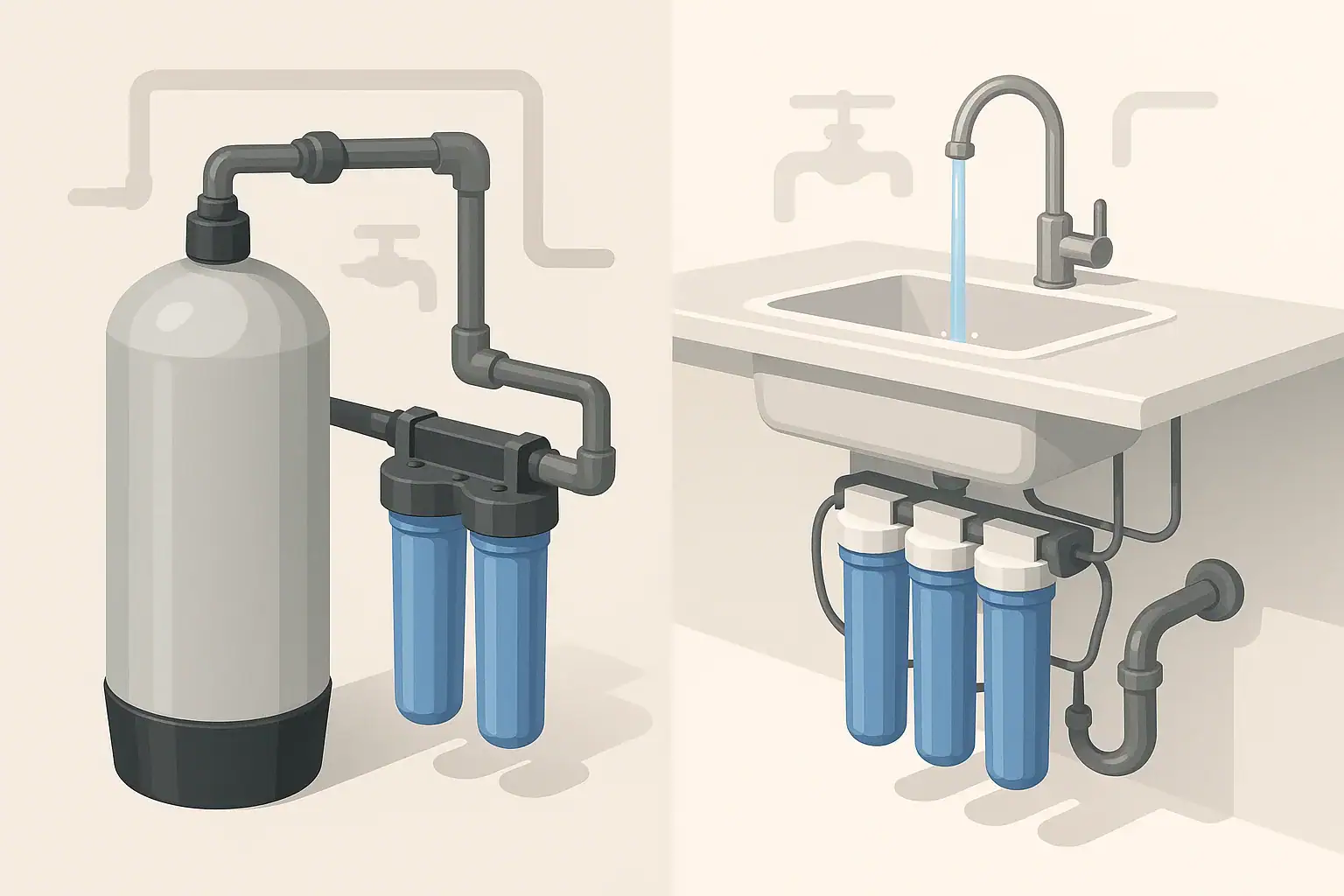
- Backwashing carbon tanks: Usually tall, narrow tanks treating all water entering the house. They reduce chlorine, some taste and odor compounds, and sometimes other contaminants depending on the media.
- Multi-media filters: Tanks filled with layers such as gravel, sand, and specialized media that trap sediment and turbidity. Common on some well systems.
- Sand or sediment filters with backwash valves: Used to capture fine particles from wells or problem water.
- Some iron/manganese filters: Media beds that trap oxidized iron and manganese and need backwashing to clear the precipitated material.
Filters That Normally Are NOT Backwashed
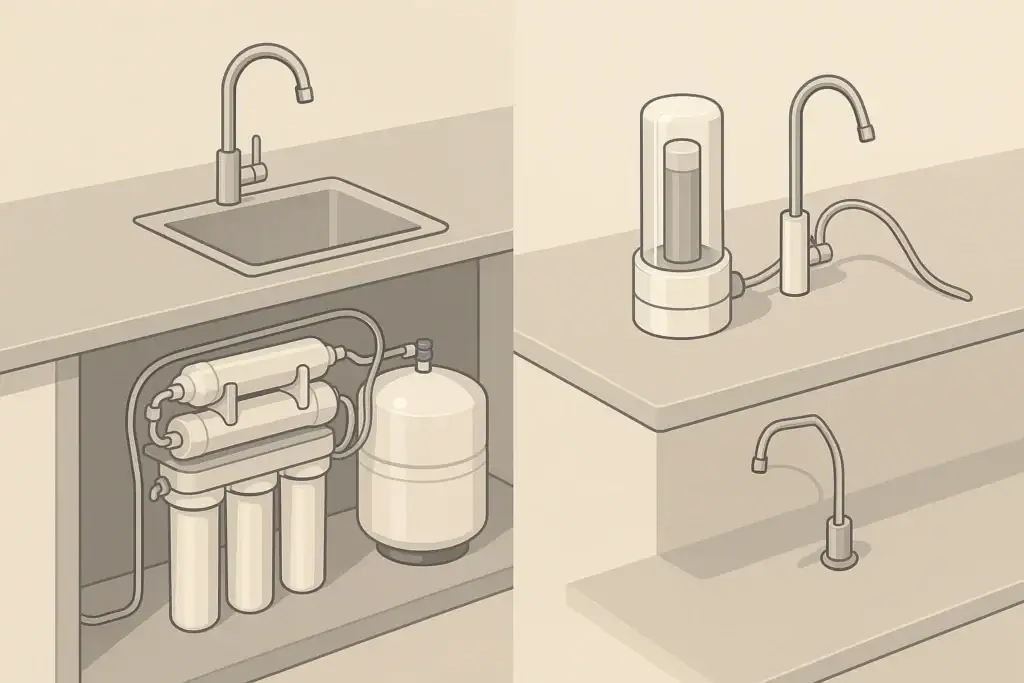
Many residential filters are designed to be replaced, not cleaned by reversing flow:
- Cartridge sediment filters (spun, pleated, string-wound)
- Inline carbon cartridges and refrigerator filters
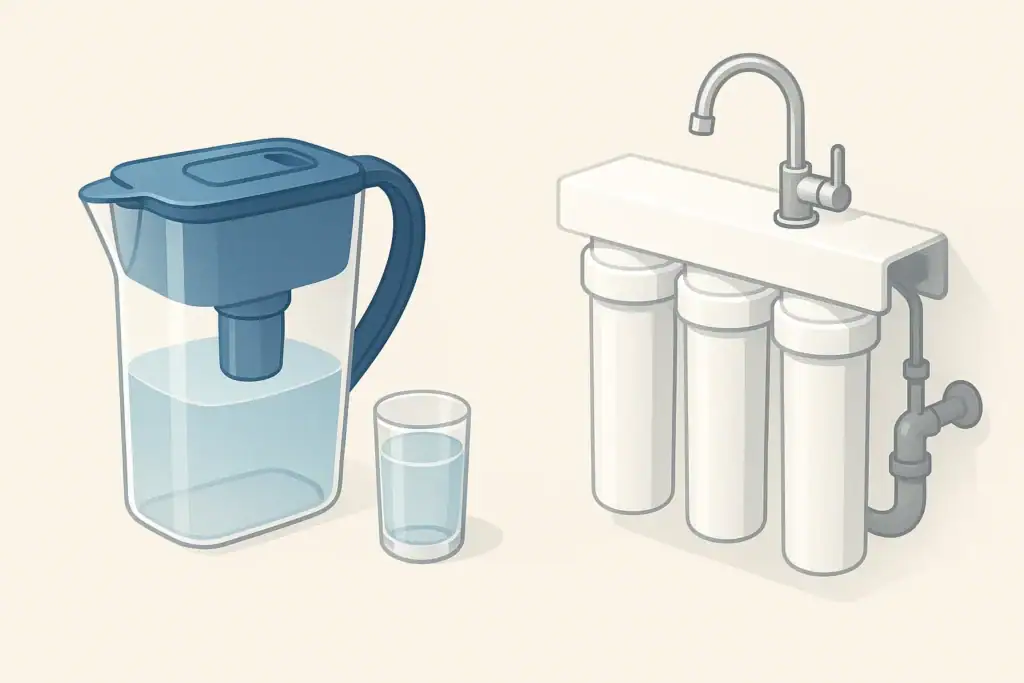
- Most faucet, pitcher, and countertop filters
- Reverse osmosis (RO) membranes and post-filters (they have rinsing/flushing, but not bed-style backwashing)
- Standard under-sink cartridge systems without a backwash valve
Trying to backwash disposable cartridges by reversing plumbing or removing safety devices can be unsafe and may damage the filter or cause leaks. Always follow the system’s documentation and intended maintenance pattern.
Example values for illustration.
| Filter type | Backwashing used? | Typical maintenance approach |
|---|---|---|
| Whole-house backwashing carbon tank | Yes | Automatic or manual backwash plus periodic media replacement |
| Multi-media or sand filter (well water) | Yes | Scheduled backwash and occasional media replacement |
| Cartridge sediment filter (10-inch housing) | No | Replace cartridge and sanitize housing when needed |
| Inline carbon cartridge (under-sink) | No | Replace on time or when taste/odor returns |
| Reverse osmosis membrane | No traditional backwash | Automatic flush in some systems; periodic membrane replacement |
| Pitcher or faucet-mounted filter | No | Replace cartridge as directed; clean housing |
| Iron/manganese media filter tank | Yes (if designed for it) | Regular backwash, check for air/chemical feed if used |
Use your specific system manual to confirm whether backwashing is appropriate.
How Often to Backwash: General Ranges and Key Factors
Backwash frequency depends on water quality, flow rate, and media type. Many residential systems are set to backwash automatically, often in the middle of the night, but the interval still needs to be appropriate for your situation.
Typical Example Backwash Frequencies
Example ranges often seen in residential systems include:
- Backwashing carbon tanks: Commonly every 3–7 days, depending on water usage and media type.
- Multi-media or sand filters: Often every 2–4 days, sometimes more frequently for heavy sediment.
- Iron/manganese media filters: Can range from daily to weekly depending on how much iron/manganese is present.
These are only broad examples. Actual recommended intervals vary by design and local conditions, so the system documentation should be your primary reference.
Water Quality and Usage Considerations
Several factors influence how often backwashing should occur:
- Source water type: Well water with high sediment, iron, or manganese often needs more frequent backwashing than relatively clean city water.
- Daily water use: A large household using more water pushes more debris into the media bed and fills it faster.
- Media capacity: Some media can hold more sediment before pressure and performance are affected.
- Plumbing and available flow: Adequate flow is required to fully expand the bed during backwash. If flow is marginal, backwashing may need to be more frequent and carefully observed.
Time-Based vs. Metered Backwash Control
Most backwashing control valves operate with one of two basic approaches:
- Time-clock control: Backwashes on a fixed schedule (for example, every 3 days at 2 a.m.). Simple but may under- or over-backwash if water use changes.
- Metered/volume-based control: Tracks water use and backwashes after a set number of gallons has passed. This can align maintenance more closely with actual loading on the media.
If you adjust the schedule, it is usually safer to make small changes and then monitor performance rather than large, abrupt shifts.
Signs Your Filter Needs Backwashing (or a Schedule Change)
Even with an automatic valve, you still need to pay attention to how the system behaves. Certain symptoms suggest that the media is plugged or that the backwash interval is not well tuned to your water.
Observable Symptoms of Insufficient Backwashing
Common signs that backwashing is overdue include:
- Noticeable pressure drop: Faucets and showers feel weaker, or it takes longer to fill tubs and appliances.
- Slower flow at specific fixtures: Heavily used fixtures may show reduced performance first.
- Visible sediment after the filter: Cloudy water or particles in sinks, tubs, or toilet tanks may mean the bed is overloaded or channeling.
- Short-term improvement after manual backwash: If performance improves for a day or two and then quickly declines, the interval may be too long or the media may be near the end of its life.
Channeling and Uneven Flow
When media is dirty or under-backwashed, water may carve narrow pathways through the bed (channeling). Signs include:
- Water that looks clear but still has taste or odor issues
- Uneven flow sounds in the tank during filtration or backwash
- Media bed not expanding evenly during backwash (if you can observe it safely through a clear tank or sight glass)
If you suspect channeling, you can often improve the situation by confirming that the backwash flow rate is adequate and that the schedule is neither too infrequent nor too short, following the system’s documentation.
When Symptoms Point to Media Replacement Instead
Backwashing cannot fix media that is chemically exhausted or physically worn. You may need media replacement if:
- Backwashing restores pressure but not taste, odor, or other target water quality indicators.
- Backwash water never runs clear, even after the full cycle.
- The system consistently clogs again shortly after each backwash, despite an appropriate schedule.
In these situations, check how long the media has been in service and compare with typical lifespan recommendations for that media type in similar conditions.
What Happens During a Backwash Cycle
Understanding the basic stages of a backwash cycle can help you recognize issues and verify that the process is running as expected.
Typical Backwash Stages
While sequences vary among control valves, a common pattern is:
- Backwash: Water flows upward through the media bed, lifting and agitating it. Trapped particles are carried out to the drain. The water is usually very dirty at first, then gradually clears.
- Rinse or rapid rinse: Flow direction may be reversed again, settling the bed and flushing out remaining debris and fines.
- Return to service: The valve returns to normal filtration mode.
Some systems have additional steps depending on media type or supplemental treatments, but the general purpose is always to clean and re-pack the bed for more effective filtration (Backwashing Filters Explained: Pros, Cons, and Maintenance).
Drain Line and Discharge Considerations
Backwashing discharges water at a relatively high rate for several minutes. Practical points to watch:
- Secure drain line: The line must be properly supported and routed to an approved discharge point to avoid leaks or backflow risks.
- Adequate capacity: The drain and plumbing should handle peak discharge flow to prevent backups.
- Visual monitoring: Occasionally observing the drain water (where accessible and safe) can show whether the backwash is removing visible debris and when it runs clear.
Do not alter plumbing or bypass safety devices to change where the backwash water goes without consulting applicable codes and a qualified professional.
Water Use, Waste, and Optimization
Backwashing uses water that does not go into household use. While necessary for performance, it is reasonable to consider how to avoid unnecessary waste while still protecting the media and plumbing.
Estimating Backwash Water Use
The amount of water used in a backwash cycle depends on:
- Tank size and media volume
- Required backwash flow rate (often several gallons per minute)
- Backwash and rinse durations (often several minutes each)
Product documentation sometimes provides example water-use estimates per cycle. You can use these as a rough planning tool when considering schedules or sizing.
Balancing Frequency and Performance
There is a practical balance between too-frequent and too-infrequent backwashing:
- Too frequent: More water use, more wear on the control valve, but a cleaner bed.
- Too infrequent: Risk of media fouling, channeling, and pressure issues that can be much more expensive to correct.
For most homeowners, the goal is to choose the longest interval that still maintains stable pressure and water quality, based on system guidelines, while monitoring for warning signs.
Practical Backwashing Maintenance Tips
Regular observation and light record-keeping can significantly improve the reliability and lifespan of a backwashing filter system.
Simple Backwash Log
Keeping basic notes can help you identify trends over time. Consider tracking:
- Date and time of each backwash cycle (especially manual ones)
- Any adjustments to schedule or valve settings
- Observed water clarity at the drain during backwash
- Household symptoms such as pressure changes or recurring taste/odor
Even a brief log can reveal patterns, such as seasonal changes in well water that require more frequent backwashing.
Routine Visual Checks
Without opening the system or altering plumbing, you can periodically check:
- Control valve display or timer: Confirm the time is correct, the schedule is what you intended, and error codes are not present.
- Bypass valves: Ensure the system is not accidentally in bypass except when intentionally set that way for service.
- Connections and fittings: Look for signs of dripping, corrosion, or moisture near the tank and control valve.
- Drain line condition: Verify the line is secure, free of kinks, and discharging properly.
When to Involve a Professional
A qualified water treatment or plumbing professional can be helpful when:
- You are unsure how to interpret control valve settings or error messages.
- Backwashing does not restore performance, and media condition is uncertain.
- You suspect flow to the system is too low to properly backwash a larger tank.
- You plan to change system configuration in ways that may affect safety or code compliance.
Example values for illustration.
| System type | Example backwash interval | Quick monthly check |
|---|---|---|
| Whole-house carbon backwashing tank | Every 3–7 days | Confirm timer, look for pressure changes or return of chlorine taste |
| Multi-media or sand sediment filter | Every 2–4 days | Check for clear drain water at end of backwash cycle |
| Iron/manganese media filter | Daily to weekly | Look for staining in fixtures and verify schedule matches water use |
| Small cartridge prefilter (no backwash) | Not backwashed | Inspect cartridge every 1–3 months and replace as needed |
| Reverse osmosis system | No bed backwash | Check flow to drain and schedule filter/membrane changes |
| Seasonal or vacation home system | As recommended when in use | Verify valve settings after long shutdowns or power outages |
Adjust intervals based on system documentation and actual water conditions.
Frequently asked questions
How can I tell if my filter needs backwashing?
Common signs are a noticeable pressure drop, slower flow at fixtures, visible sediment after the filter, or a quick but short-lived improvement after a manual backwash. These indicate the media is plugged or the schedule needs adjustment.
Can I backwash cartridge or under-sink filters myself?
No. Most cartridge, RO, and small inline filters are disposable or use flushing rather than bed-style backwashing. Attempting to backwash disposable cartridges can cause damage or leaks—follow the system manual.
How much water does a typical backwash cycle use?
Usage varies by tank size, backwash flow rate, and cycle length, but a single cycle commonly runs several gallons per minute for several minutes. Check your product documentation or estimate from tank and valve specs for a closer number.
Should I change backwash frequency for high iron or seasonal changes?
Yes — increase frequency when source water has more sediment, iron, or manganese, or during seasons with poorer water quality. Make incremental schedule adjustments and monitor pressure, clarity, and drain water to find the right balance.
Related guides: Replacement Planner Basics: Estimate Your Next Filter Change Date • Cleaning and Sanitizing Filter Housings: A Simple Routine • Cartridge Change Mistakes That Cause Leaks • Long-Life Filters: What “Long Life” Really Means
Recommended next:
- Replacement Planner Basics: Estimate Your Next Filter Change Date
- Cartridge Change Mistakes That Cause Leaks
- Cleaning and Sanitizing Filter Housings: A Simple Routine
- Subscription Replacement Programs: Are They Worth It?
- Long-Life Filters: What “Long Life” Really Means
- How to Store Spare Filters Without Ruining Them
- More in Maintenance & Replacement →
- NSF/ANSI standards explained (42/53/401/58)
- Clear trade-offs: pitcher vs faucet vs under-sink vs RO
- Maintenance planning: cost per gallon and replacement cadence