Why Whole House Sediment Filters Matter for Cloudy Water
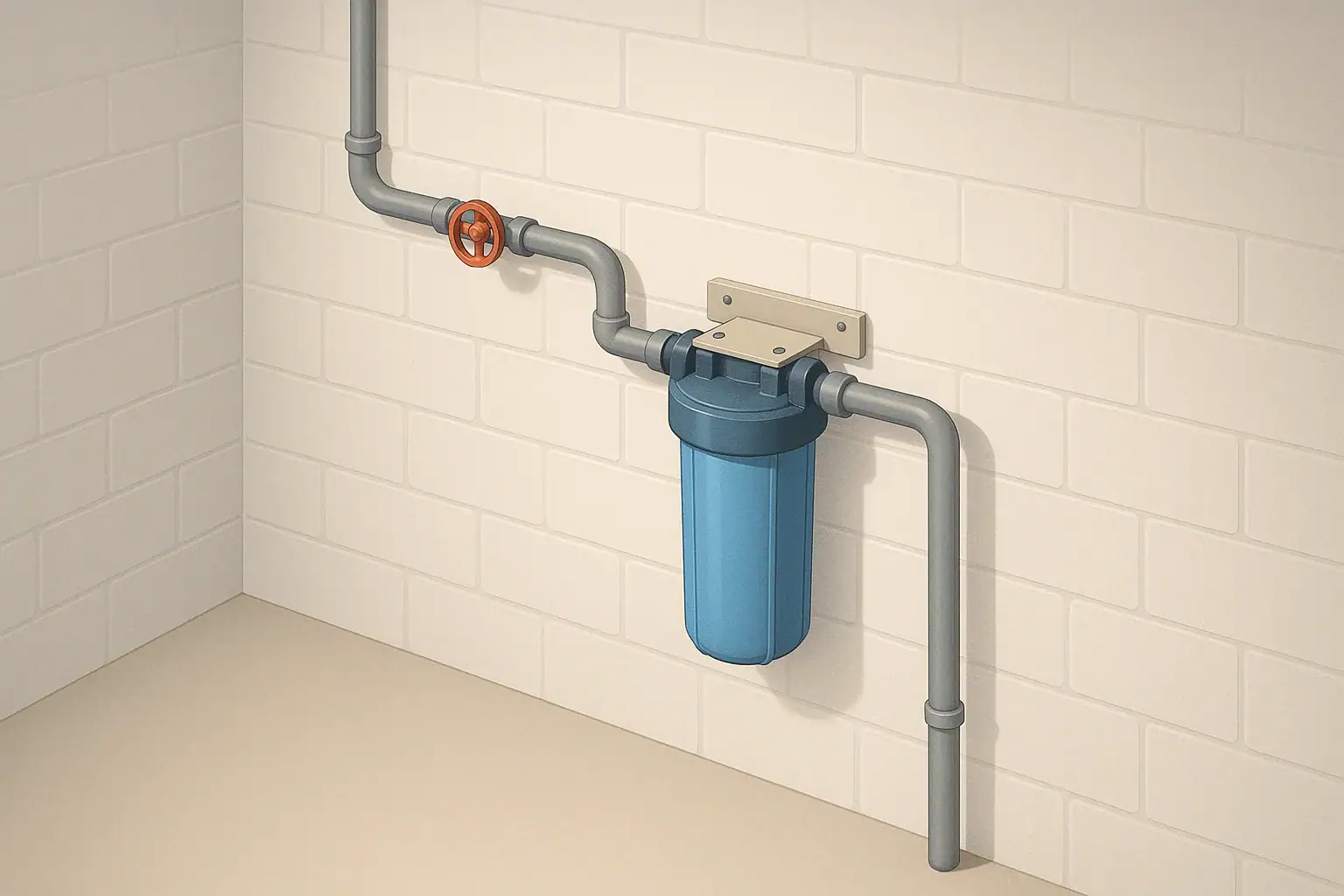
Cloudy, murky, or gritty tap water is often caused by suspended particles known as sediment. A whole house sediment filter is installed on the main water line so that all fixtures, appliances, and faucets receive filtered water. Instead of treating water at just one tap, it protects the plumbing system, water heater, and downstream filters throughout the home.
Sediment can include:
- Sand and fine soil
- Silt and clay particles
- Rust flakes and scale from pipes
- Organic debris from surface water sources
- Microplastics and other visible particles
While sediment is not always a safety issue by itself, it can affect water clarity, taste, and odor. It can also clog aerators, shorten the life of under-sink or reverse osmosis filters, and wear out valves and appliances. A properly sized whole house sediment filter helps manage turbidity (how cloudy water looks) and reduces the amount of particulate matter entering your home.
How Whole House Sediment Filters Work
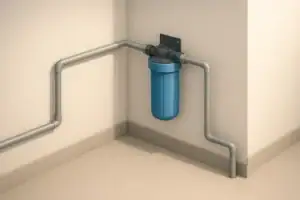
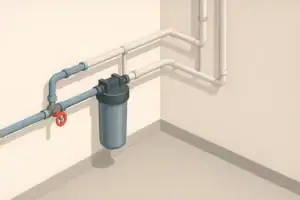
Whole house sediment filters are usually installed where the water line first enters the building, before the water heater. Water passes through filter media that physically traps particles larger than a specific size (the micron rating). The main goal is to capture solids, not dissolved substances like chlorine, lead, or PFAS. Those typically require additional treatment stages.
Common types of whole house sediment filters include:
- Spin-down or flushable filters: A mesh screen captures large particles. A bottom valve lets you purge collected sediment without replacing the whole unit.
- Screen or pleated cartridge filters: A replaceable cartridge with a large surface area traps particles and can often be rinsed and reused a few times before replacement.
- Depth cartridge filters: Spun, string-wound, or molded depth filters capture particles throughout the thickness of the media, often with a gradient that catches larger particles on the outside and finer ones inside.
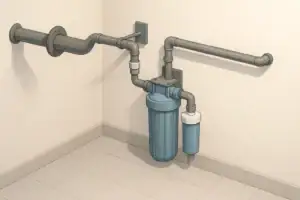
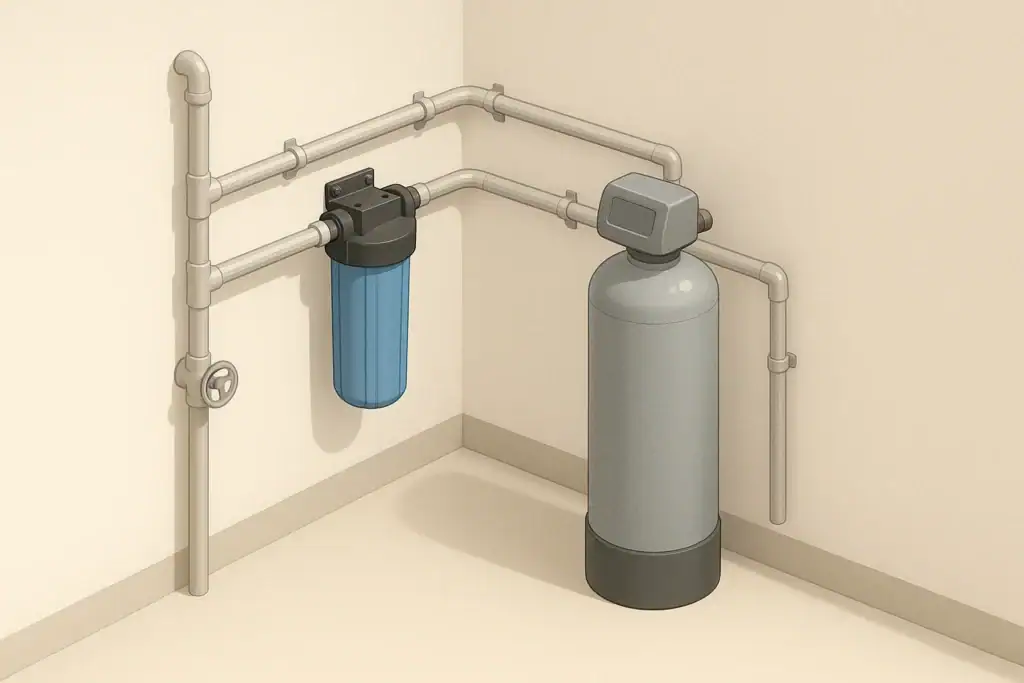
- Multi-stage housings: Separate cartridges in series, such as a coarse pre-filter followed by a finer sediment stage or a carbon stage for taste and odor.
These systems are primarily mechanical filtration. They affect:
- Turbidity: Reducing visible cloudiness and particulates.
- Flow and pressure: Adding some resistance to water flow, which must be managed through correct sizing.
- Filter life: Depending on sediment load, cartridges may last from weeks to many months.
Example values for illustration.
| Filter type | Best for | Typical micron range (example) | Maintenance style | Key trade-off |
|---|---|---|---|---|
| Spin-down / flushable screen | Very sandy or gritty well water | 50–200 micron (coarse) | Frequent flushing, occasional screen cleaning | Great for large particles, not for fine cloudiness |
| Single pleated cartridge | Moderate sediment with need to protect fixtures | 5–50 micron (varied) | Periodic replacement; some cartridges rinsable | Filter changes required; pressure drop increases as it loads |
| Depth (spun or string-wound) | Fine cloudiness and mixed particle sizes | 1–20 micron (finer) | Replacement when flow or clarity declines | May clog quickly with heavy sediment |
| Two-stage (coarse + fine) | High sediment plus need for clearer water | First stage: 20–50; second: 1–10 | Replace cartridges at different intervals | More components and space required |
| Multi-stage with carbon | Cloudy water plus taste/odor concerns | Sediment: 5–20; carbon: varies | Track sediment and carbon cartridge life | Higher initial cost and more maintenance steps |
| High-flow large canister | Homes with high peak demand (multiple bathrooms) | 5–30 micron (example) | Less frequent changes due to larger capacity | Larger footprint and heavier cartridges |
Understanding Micron Ratings, Flow, and Capacity
When choosing a whole house sediment filter, three core specifications matter: micron rating, flow rate, and capacity. Understanding these helps you balance clear water with consistent pressure and reasonable maintenance.
Micron rating and water clarity
The micron rating describes the approximate size of particles the filter is designed to capture. For perspective, a human hair is roughly 70 microns in diameter. Some common ranges:
- 50–100 micron: Captures sand, grit, and large rust flakes. Good as a first stage for very dirty water.
- 20–50 micron: Helps reduce visible particles and protect fixtures.
- 5–20 micron: Targets finer silt, many rust particles, and general cloudiness.
- 1–5 micron: Provides clearer water and helps protect more sensitive downstream filters.
Finer micron filters improve clarity but tend to clog faster and can reduce pressure if undersized. Many homes use a staged approach: a coarse filter to handle large particles, followed by one or more finer cartridges.
Nominal vs. absolute micron ratings
A nominal rating generally means the filter captures most particles around that size, while an absolute rating indicates a tighter, more consistent cutoff. Sediment cartridges for whole house use are more often nominal. For very fine filtration or specific performance goals, product data and certifications are useful references.
Flow rate and pressure drop
Whole house filters must support the home’s peak demand. Key concepts include:
- Peak flow: The highest combined flow when multiple showers, faucets, and appliances run together.
- Pressure drop: The amount of pressure lost as water passes through the filter, which increases as the filter loads with sediment.
As an example, a typical showerhead may use around 2 gallons per minute, and a washing machine may draw a similar amount when filling. With two showers and a washer running simultaneously, the system could briefly need around 6 gallons per minute or more. Selecting a filter housing and cartridge rated for higher flow than your expected peak helps keep pressure and flow acceptable.
Capacity and replacement intervals
Filter capacity is often described in terms of either approximate gallons treated or time in service. Actual life depends heavily on sediment load. A home with slightly hazy municipal water may use the same cartridge for many months, while a heavily sedimented well may need more frequent changes.
Signals that a sediment cartridge is nearing the end of its useful life include:
- Noticeable drop in water pressure or flow at multiple fixtures
- Visible discoloration or heavy loading of the filter media
- Return of cloudiness or particles in the water
Matching a Sediment Filter to Your Water Source
Water source and local conditions strongly influence which whole house sediment filter makes sense for your home. Testing and simple observation are both useful starting points.
Municipal water with occasional cloudiness
Public water systems usually manage turbidity and disinfect the water. However, construction work, hydrant flushing, and pipe issues can stir up rust and sediment, causing short-term cloudiness and orange or brown tints.
For most homes on municipal water, a whole house sediment filter serves to:
- Capture rust flakes and scale from aging distribution pipes
- Protect fixtures, aerators, and appliances from buildup
- Reduce the load on under-sink or refrigerator filters
A moderate micron rating often works well, sometimes combined with a carbon stage to address taste and odor from disinfectants. If cloudiness is persistent or extreme, contacting the water utility and considering more detailed testing can be helpful.
Private well water with visible particles
Wells can carry sand, silt, and organic material, especially in areas with shifting water tables or after heavy rain. In these cases, sediment filtration is often a first line of treatment before considering other systems for issues such as hardness, iron, or specific contaminants.
Common approaches for well water include:
- A spin-down or flushable filter as the first stage to capture sand and large grit
- A second-stage cartridge filter to address finer silt and cloudiness
- Additional specialty treatment if testing identifies issues like iron, manganese, or bacteria
Because sediment levels can change with seasons and well usage, monitoring and adjusting micron ratings or maintenance frequency over time is common.
Considering other water quality factors
Sediment filters address particle removal, but they do not treat every water quality concern. Separate or combined systems may be needed for:
- Chlorine and chloramine: Often managed with carbon filtration.
- Lead and metals: May require certified point-of-use filters, whole house systems, or plumbing changes.
- PFAS, VOCs, and other organics: Often addressed by specific filter media or reverse osmosis.
- Microorganisms: Usually handled by disinfection methods such as ultraviolet systems or chemical treatment.
In a whole house setup, sediment filtration is often the first stage, preparing the water for additional treatment if needed.
Installation Basics and Sizing Considerations
Proper installation and sizing ensure that a whole house sediment filter supports clear water without causing major flow or pressure issues. Many homeowners work with plumbers, especially when cutting into the main water line.
Where the filter is installed
Most whole house sediment filters are installed:
- Just after the main shutoff valve where the water enters the home
- Before the water heater, so both hot and cold lines are protected
- In a location with enough space to remove housings and cartridges
Access to a floor drain or a suitable bucket location can make maintenance more straightforward.
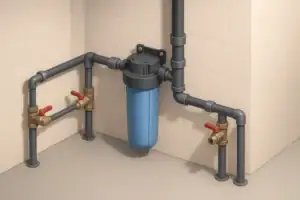
Bypass and shutoff valves
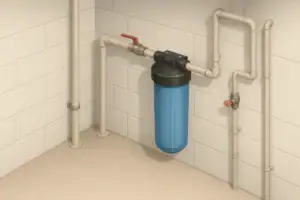
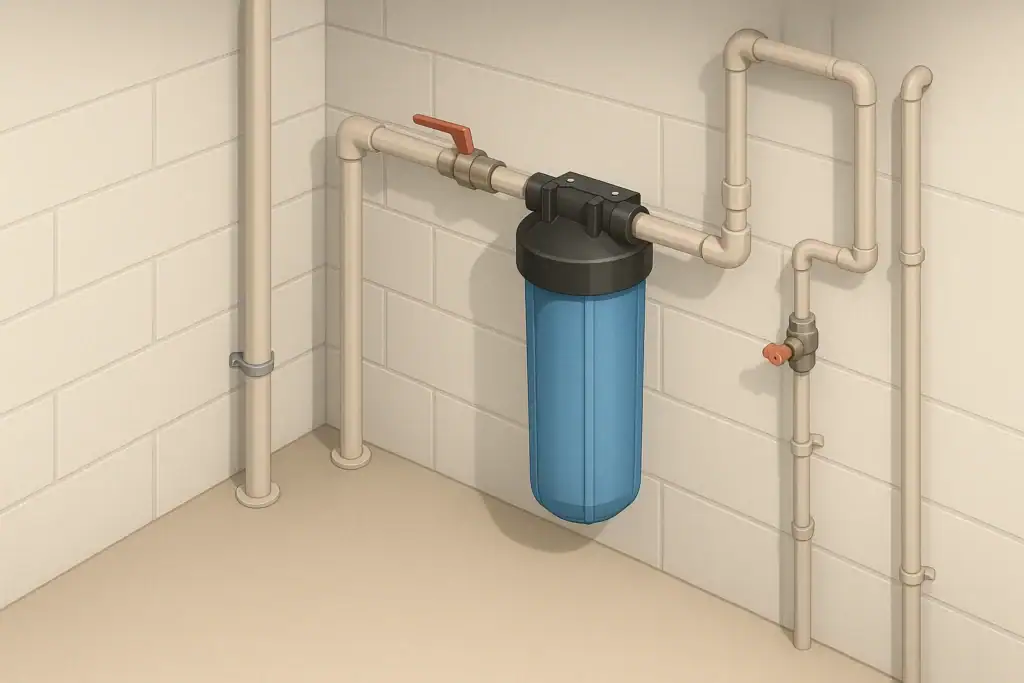
Valves around the filter let you isolate it for service:
- A shutoff on the inlet to stop incoming water
- A shutoff on the outlet to prevent backflow from the home
- An optional bypass line that allows water to flow around the filter during maintenance
Having a bypass makes it possible to keep water flowing to the house while a cartridge is being changed, though any water passing through the bypass is unfiltered.
Pipe size and flow requirements
Homes commonly have main water lines sized at 3/4 inch or 1 inch. Using a filter housing that matches or exceeds this size helps maintain adequate flow. Undersized housings can bottleneck flow even if the cartridge itself is appropriately rated.
An example approach to sizing:
- Estimate peak demand based on the number of bathrooms and typical simultaneous water uses.
- Select housings and cartridges rated for a flow somewhat higher than that estimate.
- Choose a larger housing if you need fine micron ratings but want to reduce pressure drop and extend cartridge life.
System pressure and temperature range
Filter housings are designed for specific pressure and temperature ranges. Before installation, compare household water pressure to the filter’s specified operating range. For systems with higher pressure, such as some well setups with pressure tanks, pressure regulation may be appropriate to protect plumbing and filtration components.
NSF/ANSI Standards and What They Mean for Sediment Filters
NSF/ANSI standards provide third-party verification that a filtration product has been independently evaluated for specific claims. For sediment-only filters, certifications may be more limited than for chemical or contaminant reduction, but they are still useful in understanding what a system has been tested to do.
Commonly referenced NSF/ANSI standards
In home water filtration, several standards frequently appear on product literature and data sheets:
- NSF/ANSI 42: Relates primarily to aesthetic effects such as chlorine taste and odor and particulates.
- NSF/ANSI 53: Covers certain health-related contaminants, such as some metals and organic compounds, at point-of-use.
- NSF/ANSI 401: Focuses on certain emerging contaminants like select pharmaceuticals and chemicals.
- NSF/ANSI 58: Applies to reverse osmosis systems.
Whole house sediment filters more often emphasize particulate reduction and structural integrity. In some cases, they may be part of a system that also includes carbon or more advanced media with broader certifications.
Verifying performance claims
When reviewing sediment filter options, you can look for:
- Clear statements of which NSF/ANSI standards, if any, the product is certified against
- Specific claimed capabilities, such as reduction of particulate class sizes under NSF/ANSI 42
- Information about test conditions used to determine flow, pressure drop, and capacity
If you are using multiple filtration stages, you can consider how each stage is certified and what role it plays in your overall water treatment approach.
Example values for illustration.
| Standard | Typical application | What it commonly addresses | How it relates to sediment filters |
|---|---|---|---|
| NSF/ANSI 42 | Point-of-entry and point-of-use | Aesthetic effects such as chlorine taste/odor and particulates | Some whole house systems use this for particulate reduction classes |
| NSF/ANSI 53 | Mainly point-of-use | Certain health-related contaminants, such as some metals and organics | Often applies to under-sink or faucet filters that follow a sediment stage |
| NSF/ANSI 58 | Reverse osmosis systems | System performance, including TDS reduction and structural integrity | Sediment pre-filters can help RO systems perform as designed |
| NSF/ANSI 401 | Point-of-use filters | Certain listed emerging contaminants | Usually part of advanced multi-stage systems downstream |
| NSF/ANSI 61 | Components in contact with drinking water | Material safety for system parts and fittings | Relevant to housings, pipes, and fittings used with sediment filters |
| NSF/ANSI 372 | Lead-free materials | Limits on lead content in wetted components | Supports material safety for metal housings and connectors |
Maintenance Tips to Keep Sediment Filters Working Well
Once installed, whole house sediment filters require ongoing attention to stay effective and avoid unintended pressure problems. A simple maintenance routine helps keep the system reliable.
Monitoring water clarity and pressure
Many homeowners track sediment filter performance informally by paying attention to:
- How quickly faucets and showers seem to lose pressure
- Visual changes in a clear glass of water drawn from a cold tap
- Accumulation of particles on faucet aerators
For more structure, some installations add a pressure gauge before and after the filter. A growing difference between these readings can indicate that the cartridge is loading with sediment and may need replacement.
Replacing or cleaning cartridges
The basic steps for servicing most cartridge-style housings include:
- Shutting off the inlet and outlet valves, or using the bypass if installed
- Relieving pressure at a nearby faucet to make opening the housing easier
- Removing the housing with its wrench, then taking out the used cartridge
- Cleaning the housing, checking the O-ring, and lubricating it if recommended
- Installing the new cartridge, reassembling, and slowly repressurizing the system
Some pleated cartridges can be gently rinsed to extend life, but they still eventually need replacement. Always reassemble carefully to avoid leaks.
Flushing spin-down and screen filters
For spin-down systems, regular flushing is central to maintenance. Opening the bottom valve briefly allows high-velocity water to carry out accumulated sand and debris. In some cases, removing and brushing the screen can restore flow if it has become heavily coated.
Coordinating with other filtration stages
Sediment filters often work alongside:
- Whole house carbon filters
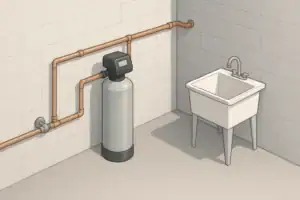
- Water softeners
- Under-sink or reverse osmosis units
- Refrigerator and ice-maker filters
Regular sediment filter maintenance helps these downstream systems operate within their expected flow and pressure ranges. Tracking filter changes in a simple log or calendar can keep replacement intervals consistent and make it easier to spot changes in sediment load over time.
Frequently asked questions
How often should I replace or clean cartridges in a whole house sediment filter?
Replacement or cleaning frequency depends on sediment load and filter type; cartridges commonly last anywhere from a few weeks to several months. Replace or clean the cartridge when you notice reduced water pressure at multiple fixtures, visible discoloration of the cartridge, or a return of cloudiness in the water.
What micron rating should I choose to clear cloudy water without losing pressure?
Choose the finest micron rating that still supports your household’s peak flow — coarse ratings (20–50 µm) are good for large particles while 1–5 µm targets finer cloudiness. Using a staged approach (coarse pre-filter followed by a finer stage) helps balance clarity with minimized pressure drop and longer cartridge life.
Can a whole house sediment filter remove dissolved contaminants like lead, chlorine, or PFAS?
No, sediment filters remove suspended particles but do not remove dissolved chemicals or many metals. Address dissolved contaminants with appropriate media such as carbon filters, ion exchange systems, or point-of-use reverse osmosis where indicated by testing.
How do I size a whole house sediment filter for peak household flow?
Estimate peak simultaneous flow by summing typical flows for showers, appliances, and faucets, then select housings and cartridges rated above that flow and matching your main pipe size (commonly 3/4″ or 1″). Choosing a larger housing or high-flow cartridge reduces pressure drop and helps maintain adequate flow during peak demand.
Are spin-down filters effective for well water with sand, and how are they maintained?
Yes — spin-down or flushable screen filters are effective as a first stage for sand and large grit in well water. Maintain them by regularly opening the bottom purge valve to flush out accumulated sediment and by removing and brushing the screen if it becomes heavily coated.
Recommended next:
- NSF/ANSI standards explained (42/53/401/58)
- Clear trade-offs: pitcher vs faucet vs under-sink vs RO
- Maintenance planning: cost per gallon and replacement cadence