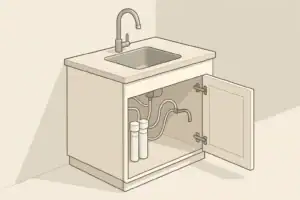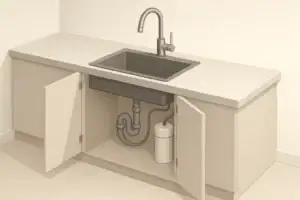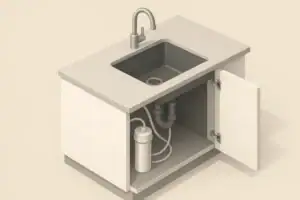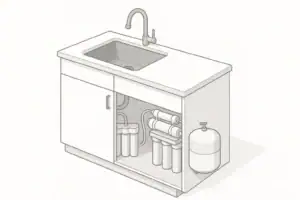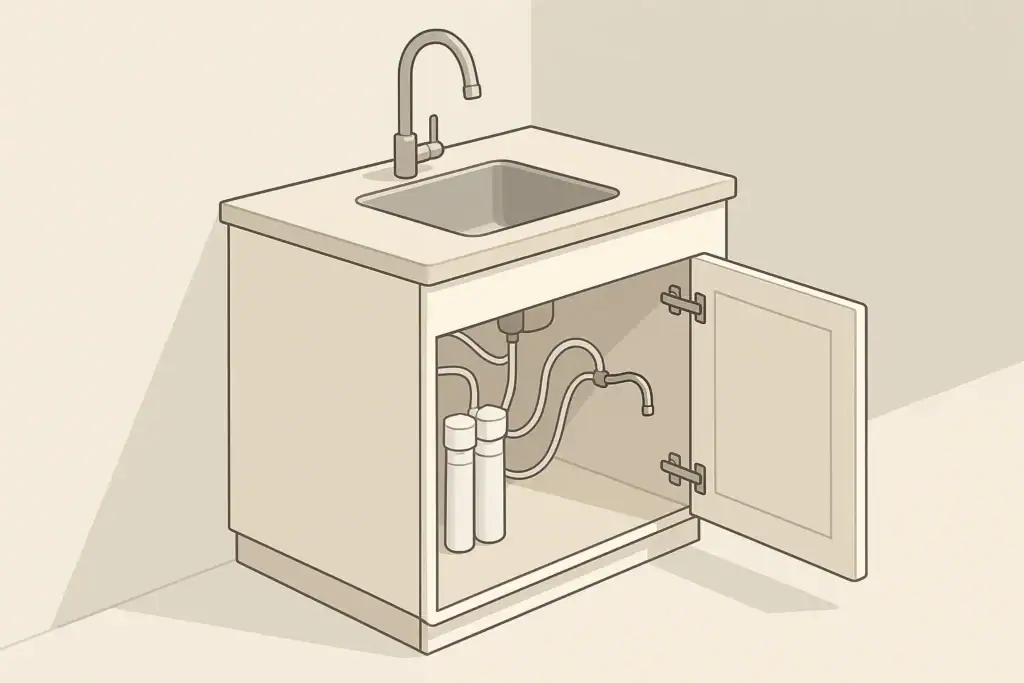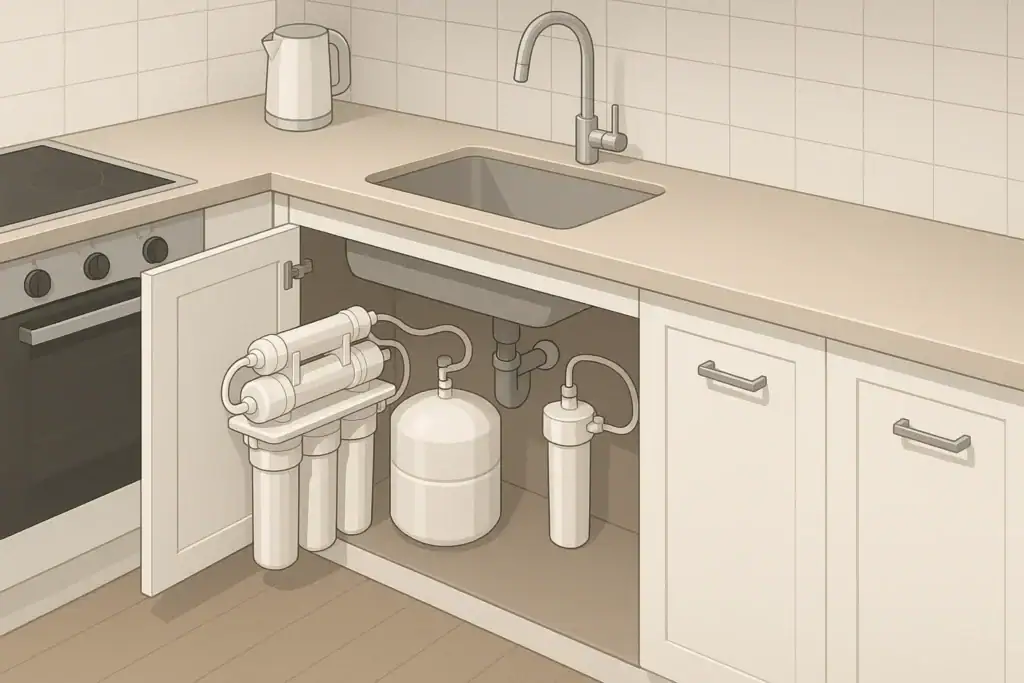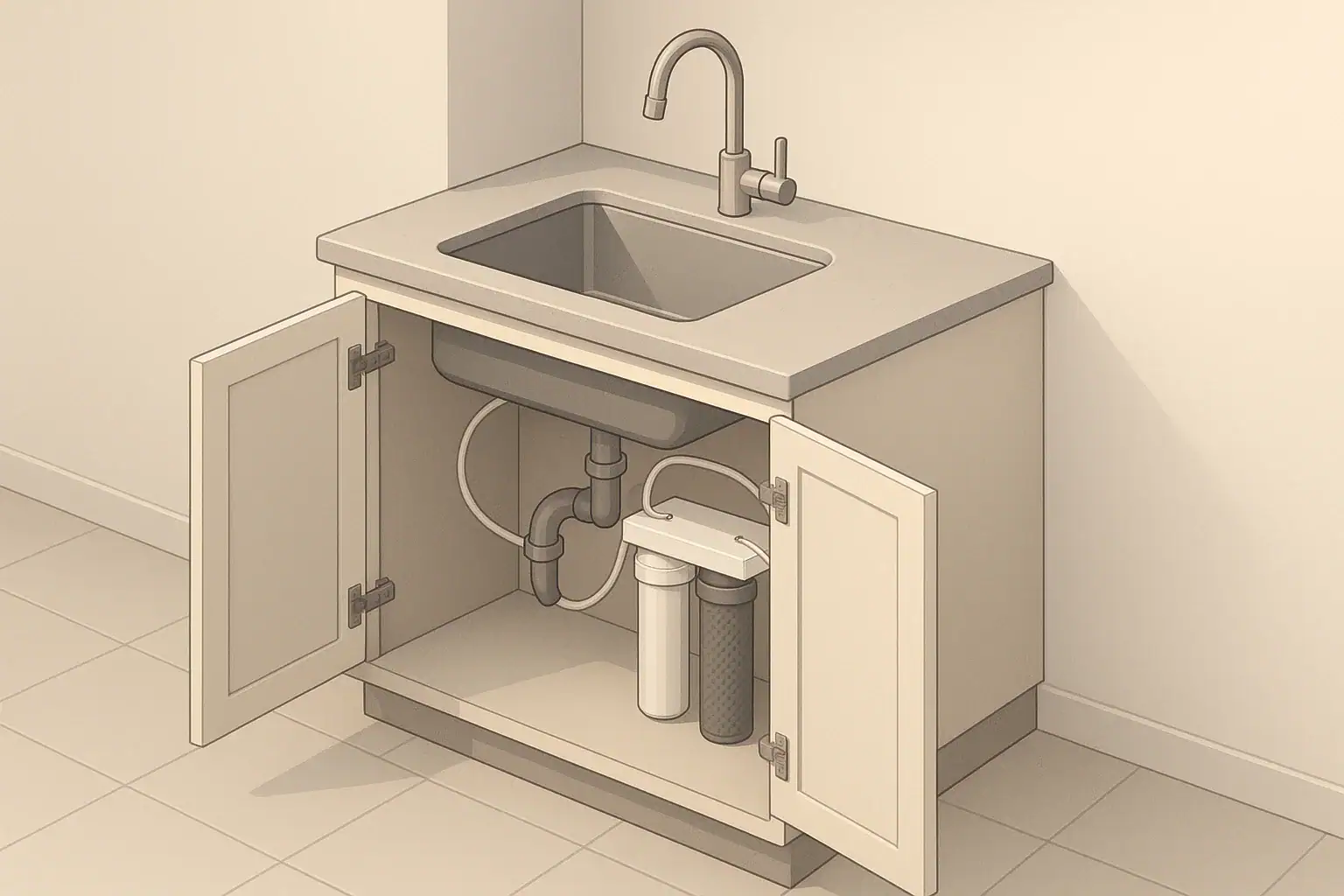
Under-sink filters are popular in U.S. homes because they improve tap water taste and odor without taking up counter space. Most of these systems rely on some form of activated carbon, but they are not all built the same. The two main formats you will see are carbon block and granular activated carbon (often shortened to GAC). Understanding how each works helps you match a filter to your water, your plumbing, and your maintenance habits.
Both carbon block and GAC filters use highly porous carbon media to adsorb certain dissolved substances from water as it flows through. This can reduce chlorine taste and odor and, depending on design and certification, may also reduce other contaminants such as some volatile organic compounds or lead. The format of the carbon strongly affects contact time, flow rate, pressure drop, and how reliably water contacts the media.
Why Under-Sink Carbon Filters Are So Common
Under-sink filters are popular in U.S. homes because they improve tap water taste and odor without taking up counter space. Most of these systems rely on some form of activated carbon, but they are not all built the same. The two main formats you will see are carbon block and granular activated carbon (often shortened to GAC). Understanding how each works helps you match a filter to your water, your plumbing, and your maintenance habits.
Both carbon block and GAC filters use highly porous carbon media to adsorb certain dissolved substances from water as it flows through. This can reduce chlorine taste and odor and, depending on design and certification, may also reduce other contaminants such as some volatile organic compounds (VOCs) or lead. The format of the carbon strongly affects contact time, flow rate, pressure drop, and how reliably water contacts the media.
What Is Activated Carbon in Water Filters?
Activated carbon is carbon that has been processed to have an extremely high internal surface area. It is typically made from materials like coconut shells, coal, or wood, then heated and treated to create a network of microscopic pores. These pores provide many sites where molecules in water can attach to the carbon surface through a process called adsorption.
In under-sink filters, activated carbon is usually used in one of two structural formats:
- Granular activated carbon (GAC): Small, loose granules or pellets of activated carbon packed into a cartridge or housing.
- Carbon block: Activated carbon ground into a fine powder and compressed with a binder into a solid, cylindrical block.
Both formats can use similar base carbon materials, but the way the media is shaped and packed changes how water moves through it and how predictable the filtration performance is.
Example values for illustration.
| Feature | Carbon Block Filter | Granular Activated Carbon (GAC) Filter |
|---|---|---|
| Media structure | Solid compressed block | Loose granules or pellets |
| Typical flow pattern | Uniform, through fine pores | Water channels through spaces between granules |
| Contact time with carbon | Generally higher and more controlled | Can be lower if channeling occurs |
| Sediment removal ability | Often finer, may capture smaller particles | Depends on added prefilter; granules alone are coarse |
| Pressure drop (resistance to flow) | Usually higher; may slightly slow flow | Usually lower; tends to allow faster flow |
| Clogging tendency | More likely if water has lots of sediment | Less likely; spaces between granules handle larger particles |
| Use in multi-stage systems | Common as a polishing or fine filtration stage | Common as an initial taste/odor stage |
Carbon Block Filters: How They Work and When They Shine
Carbon block filters are made by taking powdered activated carbon and forming it into a dense block, often with a central core and an outer shell. Water is forced through the tiny passages in the block, maximizing contact with the carbon surface. The result is often consistent performance when the block is properly designed and matched to an appropriate flow rate.
Design and Flow Characteristics
A carbon block typically has a rated micron size, which describes the approximate size of particles it is designed to capture. Under-sink carbon blocks may have nominal ratings like 1–10 microns, though exact values vary by product design. A smaller nominal micron rating generally means finer filtration but also more resistance to flow.
Because water must pass through a solid structure, carbon blocks:
- Provide controlled paths for water, reducing the chance that water bypasses the media.
- Can combine chemical adsorption (for dissolved substances) with physical filtration (for suspended particles).
- Often cause a modest pressure drop, which may slightly reduce flow at the faucet.
Typical Performance Advantages
Carbon block filters are widely used when more predictable contaminant reduction is desired. Depending on the system and laboratory testing, a carbon block under-sink filter may be certified to certain NSF/ANSI standards such as:
- NSF/ANSI 42 for aesthetic effects like chlorine taste and odor.
- NSF/ANSI 53 for reduction of specific contaminants such as lead or some VOCs, when tested and certified.
- NSF/ANSI 401 for certain “emerging” compounds, when applicable.
Certification depends on the specific design and test results, not just the fact that the media is a carbon block. Always check the exact claims and the corresponding standard, rather than assuming that all carbon blocks perform the same.
Pros and Cons of Carbon Block Under-Sink Filters
Common advantages include:
- More uniform contact between water and carbon media.
- Fine particulate filtration when designed with a small nominal micron rating.
- Often used in systems with broader contaminant reduction claims, when supported by certification.
Common limitations and trade-offs include:
- More sensitivity to sediment; high turbidity water may clog the block sooner.
- Higher pressure drop compared with a coarse GAC bed, which can modestly reduce flow.
- Typically more benefit when the incoming water is already reasonably clear, or when a separate sediment prefilter is installed.
Granular Activated Carbon (GAC) Filters: How They Differ
Granular activated carbon filters use loose carbon granules poured into a cartridge or housing. Water flows through the spaces between particles, contacting the carbon surface as it moves. This design is common in basic under-sink systems, refrigerator filters, and some whole-house units.
Flow and Channeling
Because the media is loose rather than solid, GAC filters usually offer:
- Lower resistance to flow, which can help maintain higher faucet flow rates.
- Flexibility in how much media is used and how tall or wide the cartridge can be.
However, water tends to find the path of least resistance. Over time, this can create “channels” within the bed, where a portion of the water bypasses much of the media. Proper design, flow rate control, and vertical orientation can help reduce channeling, but it is an inherent consideration in granular systems.
Typical Uses and Strengths
GAC filters are widely used for improving taste and odor, particularly in water that already meets basic regulatory standards for safety. Many are designed primarily for:
- Chlorine taste and odor reduction.
- Basic reduction of some organic compounds that affect flavor and smell.
- Use as a first stage before finer filters in multi-stage systems.
Some GAC filters are also tested and certified for additional reduction claims, but this is specific to each system. The presence of GAC alone does not guarantee particular contaminant reductions.
Pros and Cons of GAC Under-Sink Filters
Common advantages include:
- Generally less pressure drop and higher possible flow rates.
- Better tolerance of some sediment compared with fine carbon blocks, especially in larger housings.
- Simpler construction, which can be cost-effective for basic taste and odor improvement.
Common limitations include:
- Potential for channeling, which can reduce effective contact time with carbon.
- Less precise physical filtration unless combined with a dedicated sediment stage.
- Performance more sensitive to how the cartridge is oriented and installed.
Which Format Fits Your Water and Plumbing?
The choice between carbon block and GAC for an under-sink filter often comes down to your incoming water quality, your expectations, and your plumbing conditions. In many homes, both formats can significantly improve taste and odor, but one may be more convenient or robust than the other.
Consider Your Water Source
Start with a basic understanding of your tap water. For U.S. homes, useful information can come from local water quality reports for municipal supplies or from private well testing. Key characteristics to consider include:
- Turbidity and sediment: Visible particles or cloudy water may clog finer carbon blocks quickly without a prefilter.
- Chlorine or chloramine treatment: Many water systems use these disinfectants, and carbon media can help reduce associated tastes and odors.
- Specific contaminants of concern: If you are focused on particular substances such as lead, some VOCs, or certain PFAS compounds, you may want a system whose carbon stage (block or GAC) is part of a design tested and certified for those claims.
Flow Rate, Pressure, and Household Use
Under-sink filters are typically connected to either a dedicated filtered water faucet or the main kitchen faucet. Your expectations for flow and usage patterns matter:
- If you frequently fill large pots and containers, you may notice a bigger difference between higher-flow GAC systems and more restrictive fine carbon blocks.
- Homes with lower water pressure to begin with may be more sensitive to the additional pressure drop of a tight carbon block.
- For occasional drinking and cooking use, a modest decrease in flow may be acceptable in exchange for more consistent fine filtration.
Matching Format to Use Cases
In broad terms:
- Carbon block is often chosen when you want more controlled filtration and are prepared to manage sediment (for example, via a separate prefilter or relatively clear municipal water).
- GAC is often chosen when you prioritize higher flow and mainly want to improve taste and odor in already clear water.
Some under-sink systems combine both, using a GAC prefilter to handle larger loads and a carbon block as a final polishing stage.
NSF/ANSI Certifications and What They Mean for Carbon Filters
Because many under-sink systems look similar from the outside, certifications can help you compare them more objectively. NSF/ANSI standards specify test methods and performance criteria. They do not guarantee that a filter will remove every possible contaminant, but they do indicate that a system has been tested for certain claims under controlled conditions.
The most relevant standards for carbon-based under-sink filters typically include:
- NSF/ANSI 42: Focuses on aesthetic improvements such as chlorine taste and odor, and sometimes particulate reduction.
- NSF/ANSI 53: Covers reduction of specific health-related contaminants, such as certain heavy metals or organic compounds, for systems that are tested for those targets.
- NSF/ANSI 401: Addresses reduction of certain “emerging” contaminants, such as some pharmaceuticals and personal care products, for systems that undergo this testing.
- NSF/ANSI 58: Applies primarily to reverse osmosis systems, which often include carbon stages but operate differently from simple carbon-only filters.
When comparing carbon block and GAC under-sink systems, look beyond the media description and check which specific standards and contaminant reduction claims each system has been tested and certified for.
Example values for illustration.
| Standard | Focus area | What to verify on a carbon under-sink system |
|---|---|---|
| NSF/ANSI 42 | Aesthetic effects | Chlorine taste and odor claims; particulate class rating, if listed |
| NSF/ANSI 53 | Specific contaminants | Which exact contaminants (for example, a named metal or VOC) the system is certified to reduce |
| NSF/ANSI 401 | Emerging compounds | List of tested emerging compounds; not all systems include this standard |
| NSF/ANSI 58 | Reverse osmosis systems | Relevant if the under-sink system is RO-based and includes carbon stages |
| Component vs. system | Scope of certification | Whether only the cartridge or the entire installed system is certified as used |
| Performance data sheet | Detailed claims | Contaminant list, tested conditions, and rated service life for cartridges |
Maintenance, Capacity, and Cost per Gallon
Regardless of whether you choose carbon block or GAC, maintenance is essential. Both formats gradually lose adsorption capacity as they collect substances from the water. Eventually, the media becomes saturated, and performance declines even if taste and odor seem acceptable for a time.
Filter Life and Replacement Intervals
Manufacturers typically specify a maximum service life in months and/or gallons for each cartridge. Common examples for residential under-sink carbon filters might be in the range of several months to roughly a year of typical household use, depending on flow and water quality. High usage or high levels of particulates can shorten that interval.
Important points for any carbon under-sink filter include:
- Replace cartridges based on the earlier of time or volume limits provided by the manufacturer.
- Pay attention to changes in flow rate, which can indicate clogging, especially with carbon block filters.
- Monitor taste and odor changes, which may suggest the media is nearing the end of its useful life.
Calculating Approximate Cost per Gallon
You can estimate cost per gallon by dividing the price of a replacement cartridge by its rated gallon capacity. For example, if a cartridge is rated for a few hundred gallons and costs a modest amount, the resulting cost per gallon is typically a small fraction of the cost of bottled water. The actual cost per gallon may be higher if your water uses up the carbon faster than the rated capacity due to higher contaminant loads.
Sediment Management for Longer Filter Life
Carbon block filters, with their finer internal passages, are more sensitive to sediment and rust. If your water has noticeable particles or frequent plumbing work that stirs up debris, consider:
- A separate sediment prefilter upstream of the carbon stage.
- Flushing lines after plumbing repairs before running water through the filter.
- Checking for visible buildup in aerators and faucets, which can be a sign that your water carries more particulates.
GAC filters may tolerate more sediment before flow noticeably drops, but excessive particulate loading can still shorten their life and lead to more frequent cartridge changes.
Installation and Safety Considerations
Whether you install an under-sink filter yourself or hire a professional, pay attention to:
- Manufacturer instructions for orientation, especially for GAC cartridges that depend on vertical flow.
- Flushing requirements for new cartridges to remove loose carbon fines.
- Leak checks after installation and after each cartridge change.
Proper installation and regular maintenance help both carbon block and GAC systems perform as designed throughout their service life.
Frequently asked questions
Are carbon block under-sink filters better than GAC for removing lead and VOCs?
Media format alone does not guarantee specific contaminant removal; performance depends on the filter design and testing. Carbon block cartridges often deliver more consistent contact time and are commonly used in systems tested to NSF/ANSI 53 for certain contaminants, but you should check the product’s certified claims for exact reductions.
Do I need a sediment prefilter when using a carbon block under-sink filter?
If your water has visible particles, rust, or high turbidity, a sediment prefilter is recommended to prevent rapid clogging of a fine carbon block. In clearer municipal water a prefilter may be unnecessary, but it still helps extend service life and maintain flow.
How often should I replace carbon block versus GAC cartridges?
Replacement intervals depend on the manufacturer’s rated gallons and months as well as your water quality and usage; typical residential cartridges last from several months up to about a year. High usage, high contaminant loads, or visible flow reduction mean you should replace cartridges sooner, following the earlier of time or volume limits.
Will a GAC under-sink filter reduce faucet flow more than a carbon block?
No; GAC beds generally have lower pressure drop and therefore tend to maintain higher flow rates compared with tighter carbon blocks. Carbon blocks often cause a modest reduction in flow due to finer internal passages, which can be noticeable in low-pressure systems.
Can I combine GAC and carbon block stages in one under-sink system?
Yes, many multi-stage under-sink systems use a GAC stage first to handle taste/odor and larger loads, followed by a carbon block polishing stage for finer adsorption and particulate removal. Combining formats can reduce channeling, extend overall media life, and support broader certified claims when each stage is tested as part of the system.
Recommended next:
- Under-Sink vs Pitcher: Which Is Better for Families?
- Best Under-Sink Filters for Chlorine Taste & Odor
- Under-Sink Filter Installation: Tools, Parts, and Common Mistakes
- No-Drill Under-Sink Filters for Renters: What’s Possible?
- Under-Sink Filters for Lead Reduction: What Certifications to Look For
- Under-Sink Filter Flow Rate Explained: Why GPM Matters
- More in Under-Sink Filters →
- NSF/ANSI standards explained (42/53/401/58)
- Clear trade-offs: pitcher vs faucet vs under-sink vs RO
- Maintenance planning: cost per gallon and replacement cadence