Why Lead in Tap Water Is Still a Concern
Many homes in the United States can still have lead in their tap water, even if the water utility meets all legal requirements. Lead usually does not come from the water source itself. Instead, it comes from old plumbing materials that contain lead.
Lead can enter water when it sits in contact with:
- Lead service lines that connect the street main to the house
- Lead solder used on copper pipes in older homes
- Brass or bronze fixtures and valves that contain small amounts of lead
- Old faucets and fittings that were made before modern low-lead rules
Because these materials may be on your property or inside your walls, utility testing alone may not reflect the water from your kitchen tap. That is why it helps to take a few practical steps before spending money on a filter.
Step 1: Check Your Likely Lead Risk
Before buying any filtration system, it is useful to estimate how likely it is that your plumbing is contributing lead to your tap water. You may not be able to see every pipe, but several clues can help.
Look at the Age and Type of Your Home Plumbing
Lead was used more commonly in certain time periods. While details vary by location, consider these general questions:
- When was your home built? Older homes are more likely to have lead service lines or lead solder.
- What kind of visible pipes do you have? Look at pipes near the water meter, in basements, or under sinks.
- Has the plumbing been updated? Partial or full repiping may have reduced or removed lead sources.
If you can safely access the service line coming into your home, you might be able to identify its material. Many local utilities provide guidance on how to do a simple visual check or scratch test safely, or they will check for you upon request.
Review Any Information from Your Water Utility
Public water systems are required to share information about water quality, including lead sampling at selected homes. This information typically appears in an annual water quality report. Look for:
- Any mention of lead monitoring programs or replacement of lead service lines
- Whether the utility uses corrosion control treatment
- Notes about typical household plumbing as a source of lead
Even if reported lead levels look low, your individual home may still have higher lead due to its own pipes and fixtures. Treat utility information as a starting point, not a complete picture.
Example values for illustration.
| Home and Plumbing Situation | Suggested Priority Level | Reason to Act |
|---|---|---|
| Home built before mid-20th century with unknown service line | Very high | Older homes are more likely to have legacy lead plumbing materials |
| Home built before modern low-lead rules, no major repiping | High | Higher chance of lead solder and older brass fixtures |
| Older home with documented full plumbing replacement | Moderate | Newer materials help, but fixtures and stubs may still contribute |
| Newer home with certified low-lead fixtures | Lower | Lead risk is reduced but not always zero |
| Well water with original metal plumbing and fixtures | Moderate to high | Lead may still leach from in-house plumbing even without a utility |
| Home in an area with active lead service line replacements | High during work | Pipe disturbance can temporarily increase lead release |
Step 2: Decide How You Will Test for Lead
Testing your own tap water before choosing a filter gives you a clearer idea of whether you need lead reduction at all, and if you do, how aggressively to treat it. There is no single best approach for every household, but understanding the main options can help you choose.
Types of Lead Tests Commonly Available
Most households encounter three types of lead testing methods:
- Certified laboratory tests ordered through mail-in kits
- Tests arranged through local health or environmental agencies
- Simple at-home screening kits
Certified lab tests typically provide the most precise results and can report lead in parts per billion, but they may take longer and cost more. Some local agencies offer reduced-cost or no-cost testing, especially in higher-risk areas. At-home test strips can give quick yes/no style indications, but they may be less sensitive and should be treated as screening tools, not final measurements.
Collecting a Meaningful Sample
Lead levels in tap water can change depending on how long water has been sitting in the pipes and how the sample is taken. Read and follow the sample instructions closely. Common sample types include:
- First-draw samples: Collected from the tap after water has sat unused for several hours, often overnight.
- Flushed samples: Collected after running the tap for a specified time to clear out stagnant water.
- Sequential or profile samples: Multiple samples taken in sequence to help identify where lead is entering the water.
If resources allow, collecting both a first-draw and a flushed sample from the same faucet can provide a more complete picture of how lead behaves in your plumbing during normal use.
Step 3: Use Simple Everyday Practices While You Plan
Even before you decide on a filter, a few basic habits can help reduce your exposure to lead that may be present in your tap water.
Flush Stagnant Water
Lead levels are often higher when water has been sitting unused in household pipes. You can usually reduce this by:
- Running the tap for a period of time after long periods of non-use
- Using water for dishwashing, laundry, or cleaning first, then using the tap for drinking and cooking
The exact flushing time varies depending on pipe length and flow rate. Choose a routine that is reasonable for your household and based on local guidance where available.
Use Cold Water for Drinking and Cooking
Hot water can dissolve metals from pipes and fixtures more quickly than cold water. As a basic precaution, many guidance documents recommend:
- Using only cold tap water for drinking and preparing beverages
- Using cold water for cooking and then heating it separately
If your home uses a water heater with older internal components, this habit may also limit contact with any metal parts inside the heater.
Choose Which Faucet to Treat
Before buying a filter, decide which tap you actually use for drinking and cooking. Many people focus on:
- The main kitchen sink faucet
- A separate dedicated drinking water tap at the sink
- A refrigerator dispenser that draws from the cold-water line
Knowing which faucet matters most will help you choose an appropriate filter type and avoid paying for more capacity or coverage than you need.
Step 4: Match Filter Types to Lead Concerns
Once you understand your likely risk and have some test information, you can narrow down which filtration formats make sense for lead. Each format has strengths and trade-offs related to installation, ongoing maintenance, and how thoroughly it can treat water at a specific point of use.
Pitcher and Dispenser Filters
Pitcher-style filters are among the most common starting points for improving taste and reducing some contaminants. For lead, pay attention to:
- Whether the specific cartridge type is certified for lead reduction
- The stated capacity (number of gallons or liters) between cartridge changes
- How long water must stay in contact with the filter media to be treated properly
Pitchers can be convenient if you mainly need filtered water for drinking and have a relatively low-to-moderate lead concern. They may be less convenient for larger households or for cooking needs.
Faucet-Mount Filters
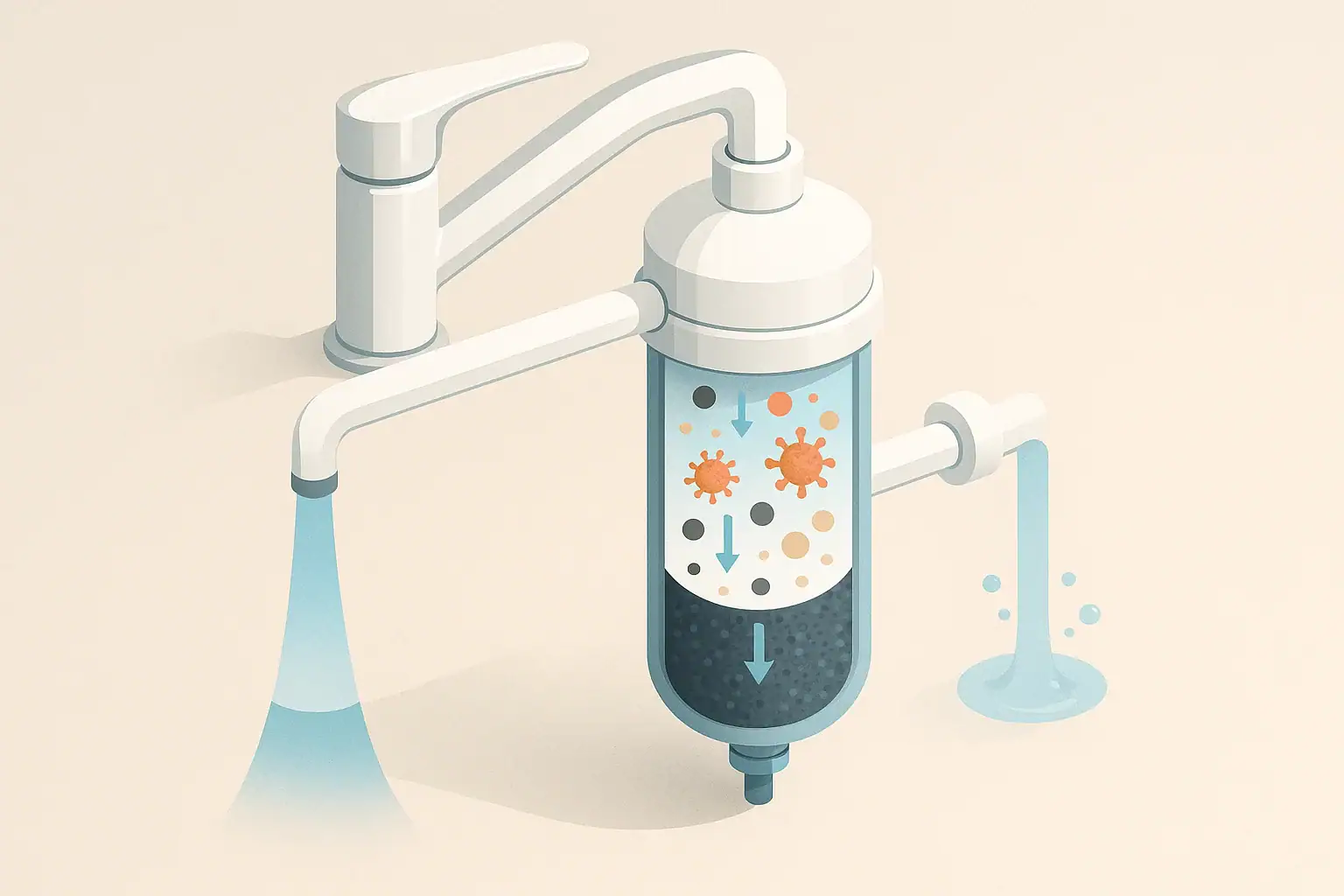
Faucet-mount filters attach directly to the kitchen faucet and can switch between filtered and unfiltered water. When used for lead:
- Confirm that the filter mode, not the bypass mode, is being used for water you drink or cook with
- Check if lead reduction is part of the performance claims, not just chlorine taste and odor
- Consider whether your existing faucet is compatible with a mount-style filter
These units can be helpful if you want filtered water on demand without storing a pitcher, but they may be more visible and can reduce water flow while filtering.
Under-Sink and Reverse Osmosis Systems
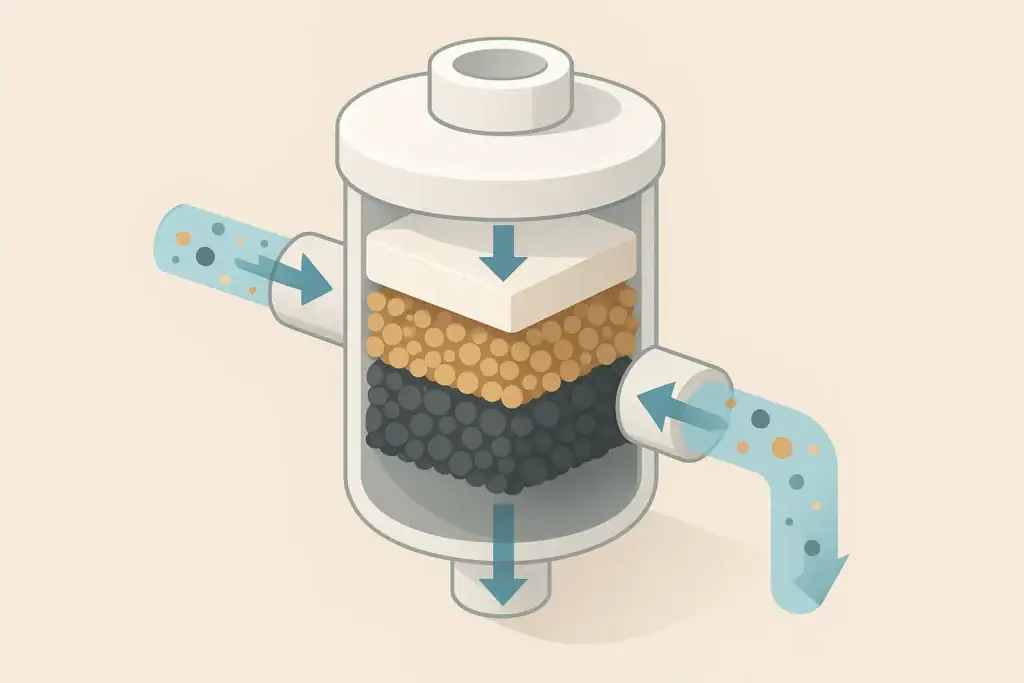
Under-sink systems can include standard carbon-based filters, reverse osmosis (RO) systems, or combinations of different media. For lead concerns:
- Look for systems that specify lead reduction and reference relevant standards
- Note whether they use a separate dedicated drinking water faucet
- Review how often each cartridge or membrane needs replacement
RO systems are often used when households want broad contaminant reduction, not only for lead. They require more installation effort and maintenance planning, and usually waste some water during operation, which is important to consider.
Whole-House Filters
Whole-house filters are installed where water enters the home and treat nearly all water used indoors. Most whole-house systems are designed primarily for sediment, chlorine, or hardness, not for lead removal specifically. For lead in particular:
- Do not assume a whole-house system reduces lead unless it states that purpose and references appropriate standards
- Remember that point-of-use filters (at a specific faucet) are often more common for lead reduction
Whole-house filters may still be part of an overall plan, especially for taste and general water quality, but they are not automatically the main solution for lead.
Step 5: Understand Lead-Related Certifications and Claims
When reading packaging or product descriptions, you will see references to standards that relate to taste, appearance, and various contaminants. For lead, it is helpful to understand the difference between a general filter and one that has been independently tested to reduce lead.
Key NSF/ANSI Standards Relevant to Lead
Several widely recognized standards apply to home drinking water treatment units. In simplified terms:
- NSF/ANSI 42 relates mainly to aesthetic effects, such as chlorine taste and odor or visible particles.
- NSF/ANSI 53 covers filtration systems designed to reduce specific health-related contaminants, which can include lead.
- NSF/ANSI 401 applies to certain emerging or incidental contaminants (for example, some pharmaceuticals), not specifically focused on lead.
- NSF/ANSI 58 applies to reverse osmosis systems, which can address multiple contaminants depending on the configuration.
If you want a filter to help with lead, look for language indicating that the system has been tested and certified for lead reduction under an appropriate standard, often NSF/ANSI 53 or NSF/ANSI 58, depending on the technology.
How to Read Lead Reduction Statements
Lead-related claims may appear in several ways:
- As part of a list of specific contaminants the filter is designed to reduce
- As a reference to standardized testing protocols
- Along with details about when cartridges must be replaced to maintain performance
Pay close attention to any conditions on which the lead reduction performance depends. For example, performance may be based on certain water pressures, flow rates, and cartridge replacement intervals. Using a filter past its stated capacity or at significantly higher flow rates than intended can reduce effectiveness.
Example values for illustration.
| Standard | Typical Focus | What to Verify on Packaging |
|---|---|---|
| NSF/ANSI 42 | Aesthetic effects (chlorine taste, odor, some particulates) | Confirm it is not being treated as a guarantee of lead reduction by itself |
| NSF/ANSI 53 | Specific contaminants with health relevance, including potential lead claims | Look for lead listed explicitly under the certified reduction claims |
| NSF/ANSI 58 | Reverse osmosis systems and their overall performance | Check whether the RO system claims and supports lead reduction |
| NSF/ANSI 401 | Selected emerging or incidental contaminants | Understand this does not automatically cover lead unless stated |
| NSF/ANSI 372 | Low-lead content of materials contacting drinking water | Note that low-lead construction is different from lead removal performance |
| Independent laboratory marks | Additional verification beyond manufacturer testing | Confirm which specific contaminants and standards were evaluated |
Step 6: Plan for Maintenance and Cost Before You Commit
Lead-focused filtration only works if the system is installed correctly, used as intended, and maintained on schedule. Before choosing a solution, think through how it will fit into your household routines and budget.
Cartridge Lifespan and Cost per Gallon
Filter cartridges have a recommended capacity, often expressed as a certain number of gallons or months of typical use. Actual lifespan depends on how much water you use and how much sediment or other material your water contains. To avoid surprises, consider:
- Estimating your daily filtered water use (for example, how many pitchers, glasses, or pots you fill)
- Dividing cartridge cost by its stated capacity to get an approximate cost per gallon
- Factoring in multiple stages if your system uses more than one cartridge
If you routinely exceed the intended capacity without changing cartridges, lead reduction performance can decline, even if flow seems acceptable.
Monitoring Flow Rate and Taste
Over time, filters can clog with particles and slow down. While slower flow is common with more thorough filtration, a sudden or severe drop in flow can be a cue that maintenance is due. Other cues include:
- Water taking much longer to fill a container than when the cartridge was new
- Visible particles in filtered water that were not present before
- Return of chlorine-like taste or odor if your filter also treats those aspects
These signs are not specific to lead, but they tell you the filter may no longer be performing as designed, including for any lead reduction it once provided.
Record-Keeping and Labels
Because lead is not something you can see, smell, or taste, it is useful to treat filter changes like other scheduled home maintenance tasks. Simple approaches include:
- Writing the installation date on the cartridge or housing with a marker
- Keeping a note on the refrigerator or in a calendar app with the next expected change date
- Saving receipts and product information sheets in a dedicated spot for quick reference
Planning ahead helps ensure your filter continues to operate inside the conditions under which its lead reduction performance was tested.
Re-Test if Your Plumbing or Usage Changes
Lead release can vary if your plumbing is disturbed or your water use patterns change significantly. Consider repeating testing or reviewing your approach when:
- There is construction or pipe replacement on your street or your property
- You replace the main service line or a section of interior plumbing
- Your household water use increases or decreases substantially
Checking again after such changes can confirm whether your current filtration setup remains appropriate for your home.
Frequently asked questions
How can I tell if my home has a lead service line?
Start with the age of the house and visible pipe material: lead service lines are more common in older homes and appear as soft, dull gray metal that can be scratched with a key. Contact your water utility to confirm service-line material since many utilities maintain records or will inspect on request. If records are inconclusive, a water test from a certified lab can show whether lead is present.
Are at-home lead test kits accurate enough to decide on a filter?
At-home kits are useful for quick screening but are generally less sensitive and less precise than certified laboratory tests. Use a certified lab test or local health-department testing if you need definitive concentrations to guide treatment decisions. If an at-home kit indicates the possibility of lead, follow up with a lab test before making a major purchase.
Which types of filters reliably reduce lead and what certifications should I check?
Point-of-use carbon filters that are explicitly certified for lead reduction (commonly under NSF/ANSI 53) and reverse osmosis systems certified under NSF/ANSI 58 are among the technologies shown to reduce lead. Always verify the product lists lead under its certified reduction claims and read any conditions on the label, such as flow rate and replacement intervals. Remember that a materials standard for low-lead construction (NSF/ANSI 372) is different from a certification that removes lead from water.
Will flushing my faucet eliminate lead exposure permanently?
Flushing reduces short-term exposure by clearing water that has sat in pipes, which can lower lead levels in that first-draw water, but it does not remove lead from plumbing materials. If lead is present in service lines, solder, or fixtures, flushing is an interim action and should be combined with testing, filtration, or plumbing replacement for long-term protection. Consider regular use of certified point-of-use filtration or removal of lead plumbing to address ongoing risk.
How often should I replace cartridges to keep lead reduction effective?
Replace cartridges according to the manufacturer’s stated capacity (gallons or months) and consider your household’s actual water use and water quality, since higher use or sediment can shorten life. Performance can decline before visible signs appear, so track installation dates or volumes and replace on schedule; re-test water periodically if lead is a concern. If flow drops sharply or you notice changes in water quality, replace the cartridge sooner and retest.
Recommended next:
- NSF/ANSI standards explained (42/53/401/58)
- Clear trade-offs: pitcher vs faucet vs under-sink vs RO
- Maintenance planning: cost per gallon and replacement cadence