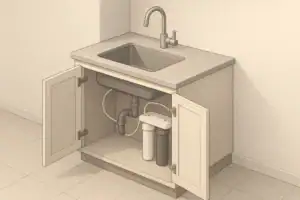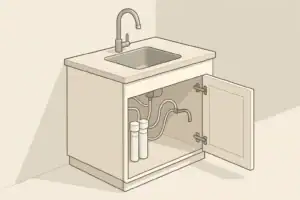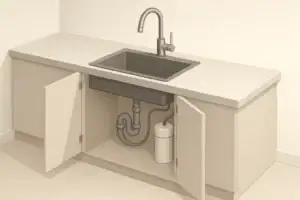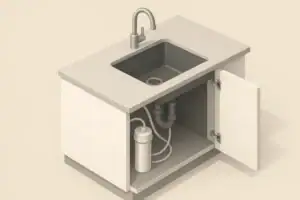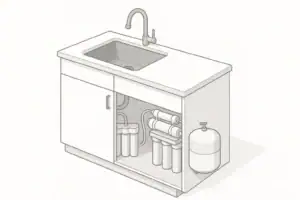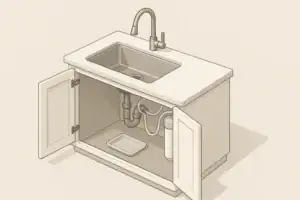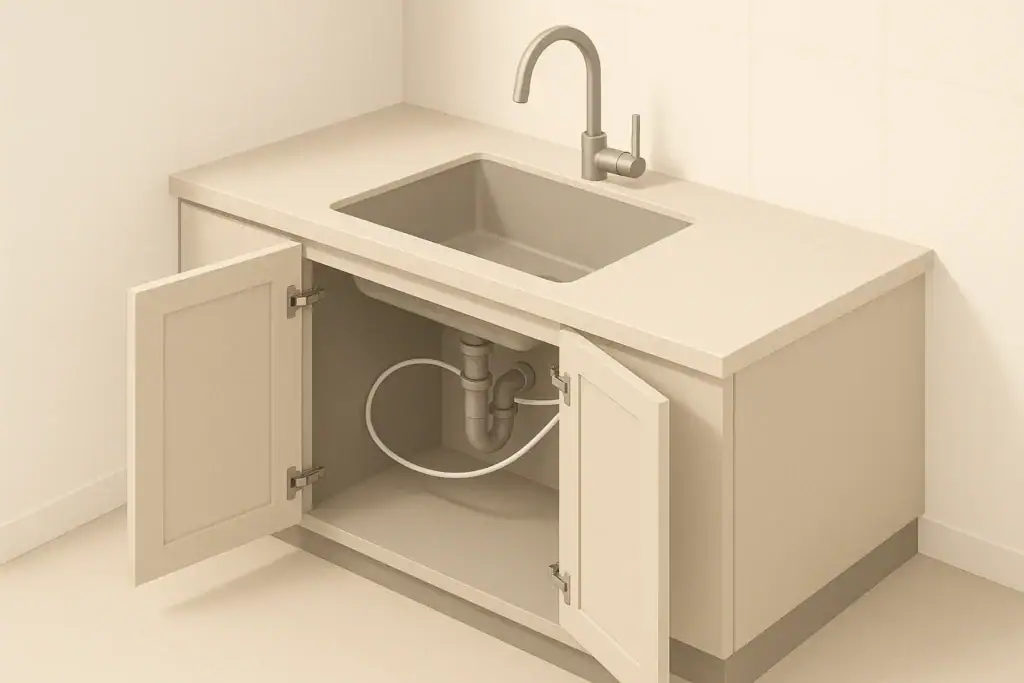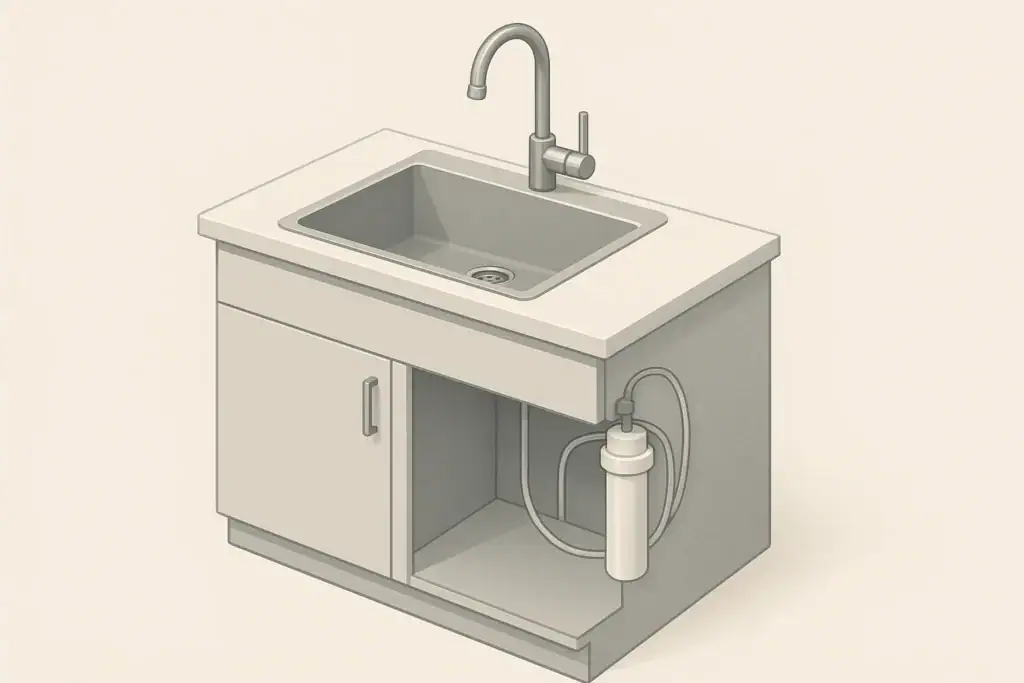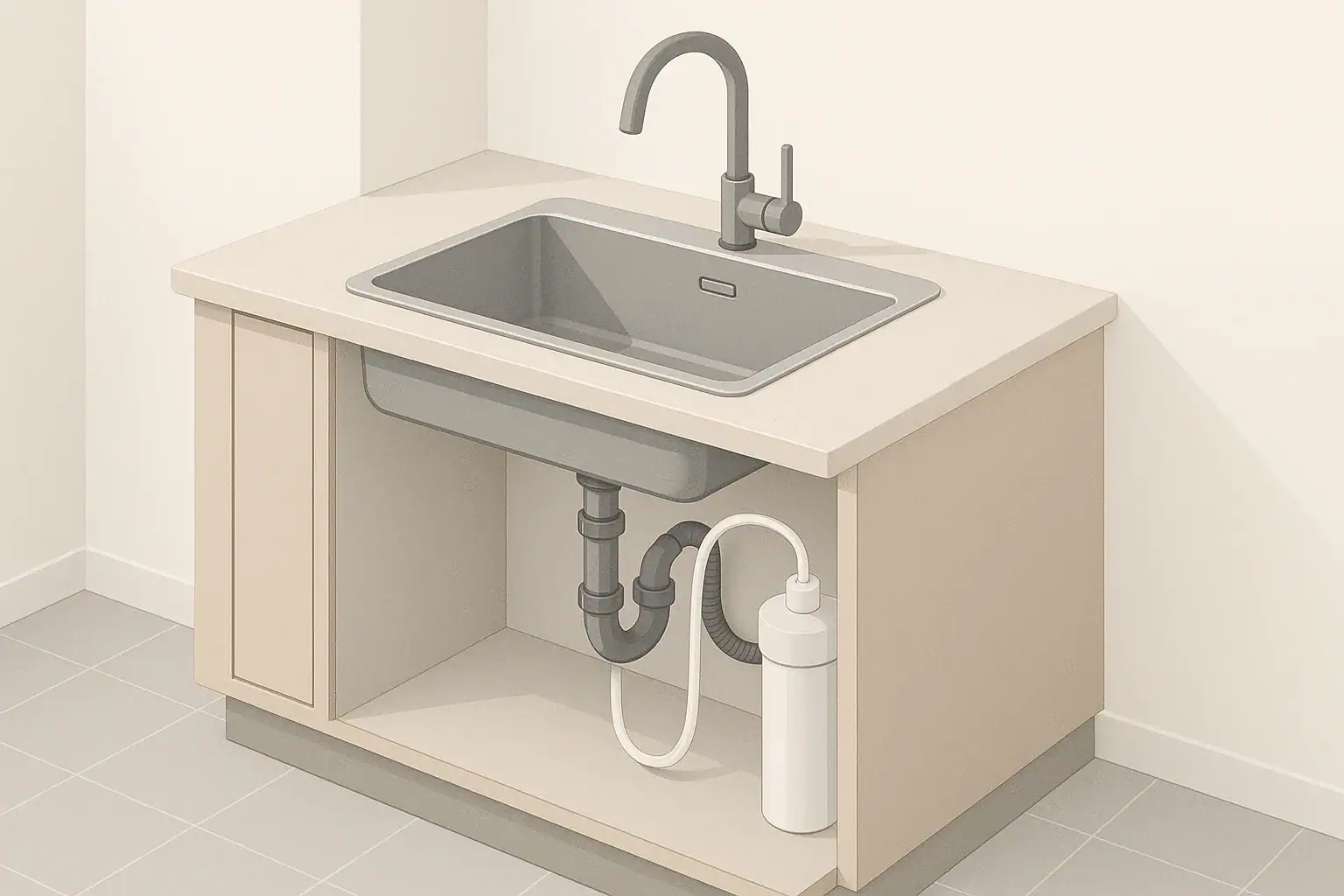
Many renters want better-tasting water but cannot drill into cabinets, countertops, or plumbing. No-drill under-sink filters offer an option between a small pitcher and a full remodel-style system. They usually mount with removable hardware or simply stand in the cabinet, and they connect to existing plumbing fittings without permanent changes.
In most rentals, the main limits are:
- Lease rules against altering cabinets, countertops, or pipes
- Need to restore the kitchen to original condition when moving out
- Limited space under the sink and shared space with cleaning supplies or trash bins
No-drill under-sink setups focus on quick connections, compact housings, and easy removal. With careful planning, they can provide higher capacity and convenience than countertop pitchers while keeping the landlord’s property unchanged.
Why Renters Look for No-Drill Under-Sink Filters
Many renters want better-tasting water but cannot drill into cabinets, countertops, or plumbing. No-drill under-sink filters offer an option between a small pitcher and a full remodel-style system. They usually mount with removable hardware or simply stand in the cabinet, and they connect to existing plumbing fittings without permanent changes.
In most rentals, the main limits are:
- Lease rules against altering cabinets, countertops, or pipes
- Need to restore the kitchen to original condition when moving out
- Limited space under the sink and shared space with cleaning supplies or trash bins
No-drill under-sink setups focus on quick connections, compact housings, and easy removal. With careful planning, they can provide higher capacity and convenience than countertop pitchers while keeping the landlord’s property unchanged.
What “No-Drill” Really Means for Under-Sink Filters
“No-drill” usually covers two separate issues: how the filter connects to your plumbing, and how it is physically secured inside the cabinet.
Plumbing Connections Without Drilling
Under-sink filters need a way to tap into your cold water line and then deliver filtered water. In a rental, you generally want connections that:
- Use existing shutoff valves and flexible hoses
- Can be removed without leaving marks or holes
- Do not require soldering, cutting pipes, or new holes through the cabinet
Common no-drill plumbing approaches include:
- Inline connection to the existing faucet: The filter is installed between the shutoff valve and your current faucet hose. You still use the same faucet handle, and all cold water is filtered.
- Adapter plus small countertop dispenser reusing a hole: If there is an existing hole (for example, a soap dispenser) you can sometimes reuse it, as long as you are not drilling a new one. This still counts as no-drill if you keep the original parts to restore later.
- Quick-connect fittings: Push-fit or compression fittings can connect to flexible supply lines without tools beyond basic wrenches.
Physical Mounting Without Screws
Many traditional under-sink systems rely on brackets screwed into the cabinet wall. For rentals, you can look for or adapt systems that use:
- Free-standing housings: Cartridges sit upright on the cabinet floor, sometimes with a weighted base.
- Adhesive or removable hooks: Some renters use strong removable strips or hooks on the cabinet wall, provided they can be taken off cleanly. Check your lease before relying on adhesives.
- Clamp-on or tension mounts: A small number of designs use tension rods or clamp-style brackets that avoid screw holes.
Regardless of the method, the goal is stability without permanent fasteners. If the filter is tall or heavy, consider mild restraints (like a non-slip mat or a removable strap) to keep it from tipping when you open or close the cabinet door.
| Situation | Preferred no-drill option | Why it fits |
|---|---|---|
| No changes to faucet allowed | Inline under-sink filter feeding existing faucet | All cold water filtered, no faucet replacement |
| Very small cabinet space | Single-cartridge compact filter | Minimal footprint, fewer hoses and fittings |
| Landlord bans any adhesive or screws | Free-standing filter on non-slip mat | No mounting hardware attached to cabinet |
| Existing soap dispenser hole available | Under-sink filter with separate small dispenser | Reuses existing hole; easy to restore later |
| Need fastest installation and removal | Quick-connect inline kit | Push-fit fittings, minimal tools needed |
| Sharing kitchen with multiple roommates | Under-sink filter serving main cold faucet | Everyone gets filtered water without extra steps |
| Concern about leaks or drips | System with shutoff and drip tray under filter | Extra layer of protection for landlord’s cabinet |
Types of No-Drill Under-Sink Systems Renters Commonly Use
Not every under-sink filter is suited to a rental. Some require a new dedicated faucet hole, a drain connection, or heavy mounting brackets. The following types are more compatible with no-drill setups.
Inline Under-Sink Filters on the Existing Faucet
Inline filters connect between your cold water shutoff valve and the existing faucet supply hose. They usually involve installing a small tee or adapter on the cold line. When you turn on the cold tap, water passes through the filter first.
Key characteristics:
- No new faucet required: The main faucet stays the same, which is often important for landlords.
- Under-sink only: There is no countertop footprint or visible accessory.
- Simplified daily use: No separate lever or dispenser—just use the cold tap normally.
Potential trade-offs include reduced flow rate on cold water and the need to manage filter capacity more closely, since all cold water use (including dish rinsing) may run through the cartridge.
Under-Sink Filters with a Separate Dispenser (Using Existing Holes)
Some under-sink filters deliver water through a small, separate dispenser spout. In many owner-occupied homes, that means drilling a new hole in the countertop. Renters typically cannot do that, but there are scenarios where this style can still be no-drill:
- You already have a soap dispenser or sprayer hole that can be temporarily repurposed.
- You keep all original parts to reinstall when you move out.
- You avoid enlarging or altering the existing opening.
This approach can reduce how much water passes through the filter because you draw only drinking and cooking water from the small dispenser, not all cold water. That can extend cartridge life compared with inline systems on the main faucet.
No-Drill Reverse Osmosis (RO) in Rentals: When Is It Realistic?
Reverse osmosis systems are more complex. They typically require:
- Feed connection to the cold water line
- Storage tank under the sink
- Drain line connection to the sink drain
- Usually a dedicated RO faucet
In rentals, the main challenges are the drain line and the dedicated faucet hole. Some renters manage a relatively non-invasive install by using clamp-style drain saddles and existing holes, but this still may not meet strict no-drill or no-modification lease language.
If you are considering RO in a rental:
- Check the lease and, if needed, get written permission for any drain connection.
- Plan how you will restore everything, including the drainpipe, to original condition.
- Ensure you have enough cabinet space for both filter modules and the tank.
For many renters, non-RO under-sink filters or countertop RO systems (which sit on the counter and use a faucet adapter) may be more practical than an under-sink RO requiring multiple penetrations and drains.
Common Contaminants and What No-Drill Filters Typically Address
No-drill under-sink filters use the same core technologies as other point-of-use systems. What they can reduce depends on the filter media and design, not on whether you drilled any holes. However, it is useful to understand which contaminants are commonly targeted by under-sink systems in general.
Basic Aesthetic Improvements: Taste and Odor
Many under-sink cartridges focus on improving how water tastes and smells, especially in areas with noticeable chlorine from municipal treatment. These systems often rely on activated carbon in block or granular form.
They may help with:
- Chlorine taste and odor
- Some chloramine reduction, depending on design
- Some reduction of certain dissolved organic compounds that contribute to off-flavors
These filters are often certified under NSF/ANSI 42 for aesthetic effects like chlorine reduction and clarity.
Under-Sink Filters Aimed at Specific Contaminants
Beyond basic taste and odor, some under-sink designs target additional concerns. Depending on the cartridge and certification, a system may be designed to address:
- Lead and other selected metals
- Certain volatile organic compounds (VOCs)
- Some emerging contaminants covered under specialized standards
- Particulate matter such as rust or fine sediment
Some specialized cartridges may be evaluated under NSF/ANSI 53 (for selected health-related contaminants) or NSF/ANSI 401 (for certain additional compounds of interest). Again, the ability to reduce any particular substance depends on the filter design, testing, and certification, not on the no-drill nature of the installation.
Sediment and Turbidity Under the Sink
In older buildings or where plumbing has accumulated scale, renters may encounter visible particles in water: rust flakes, sand-like grit, or cloudy water. Under-sink systems that include a sediment prefilter can help capture larger particles before they reach carbon or other media.
Key points:
- Finer sediment filters have lower micron ratings but may clog faster.
- High turbidity or heavy sediment can reduce flow if the filter plugs quickly.
- Prefilters protect more delicate media, which can be important in areas with aging pipes.
Space, Flow, and Capacity: Practical Constraints in a Rental Kitchen
Even if your lease allows a no-drill under-sink filter, the layout of your kitchen can still limit what works. Understanding basic water metrics helps you choose a system that fits daily use without constant frustration.
Measuring the Space You Actually Have
Before choosing any under-sink system, measure your cabinet:
- Height: Ensure the filter can stand upright with room to remove cartridges.
- Depth: Account for the garbage disposal or P-trap that may reduce usable depth.
- Width: Leave room for trash bins or cleaning supplies you rely on.
Many renters also place a waterproof mat or shallow tray under the filter. This can help protect the cabinet floor and makes it easier to spot any drips during cartridge changes.
Flow Rate and Water Pressure Considerations
Under-sink filters add resistance to the water path. This can reduce your flow rate at the tap. If your apartment already has low pressure, you may notice this more than someone in a high-pressure building.
To set reasonable expectations:
- Recognize that finer filtration or multiple stages usually means slower flow.
- Inline systems that handle all cold water demand may feel slower when filling pots or washing dishes.
- Separate dispensers often have lower flow but are used mainly for drinking and cooking water.
If you suspect very low water pressure, you can perform a simple bucket-and-timer test on your faucet before installing a filter. This does not replace professional measurement but can give you a rough idea of baseline flow.
Filter Capacity and Cost per Gallon in a Rental
Capacity determines how long a cartridge lasts before needing replacement. Some under-sink cartridges are rated for lower volumes, others for higher. In a rental where you may move in a year or two, it can help to match capacity to your expected stay.
To think about cost per gallon:
- Estimate daily use for drinking and cooking (for example, a few gallons per person).
- Multiply by the number of people and days between replacements.
- Divide the cartridge price by total estimated gallons to compare with alternatives like pitchers.
Inline systems that filter all cold water can use capacity faster than systems feeding a dedicated dispenser, since they handle more volume overall.
NSF/ANSI Certifications and Documentation to Check
Because renters may not be able to customize plumbing extensively, it is especially useful to rely on clear, third-party documentation when selecting a no-drill under-sink system. Certifications help you understand what the filter has been tested to address, under defined conditions.
Key Certification Families Relevant to Under-Sink Filters
Common standards you may see on under-sink filter documentation include:
- NSF/ANSI 42: Often associated with aesthetic effects such as chlorine taste and odor and apparent clarity.
- NSF/ANSI 53: Covers certain contaminants of potential health concern, like lead and some other specified substances, for products designed and tested for those claims.
- NSF/ANSI 401: Applies to some filters evaluated for selected emerging compounds beyond the traditional lists.
- NSF/ANSI 58: Applies specifically to reverse osmosis drinking water treatment systems.
For renters, one practical strategy is to start from your local water quality report or known concerns in your region, then look for systems whose documentation lists testing for those categories, instead of starting from the filter and working backward.
How to Read Certification and Performance Information
When you look at product literature, you may see a mix of claims. To interpret them:
- Distinguish between general marketing language and specific statements tied to a standard.
- Look for which contaminants were actually tested, under which standard, and at what conditions.
- Check the recommended replacement interval and operating parameters like temperature range and pressure range.
Some manufacturers also provide separate performance data sheets. These can offer more detailed information on test conditions, even if you are mainly focused on basic taste and odor improvement.
| Standard | Typical focus | What a renter might verify |
|---|---|---|
| NSF/ANSI 42 | Aesthetic factors like chlorine taste, odor, and clarity | Whether chlorine reduction is listed, and any notes on filter life |
| NSF/ANSI 53 | Selected contaminants of potential health concern | Which specific substances are named (for example, lead or certain metals) |
| NSF/ANSI 401 | Some additional emerging compounds | Whether compounds of local interest appear in the tested list |
| NSF/ANSI 58 | Reverse osmosis systems | That the system as a whole (not just one stage) is evaluated |
| Material safety | Contact materials suitable for drinking water use | Statements that wetted parts are evaluated for contact with potable water |
| Structural integrity | Pressure-related performance of housings and components | Pressure rating compatible with typical residential plumbing |
Installation, Maintenance, and Move-Out Planning
For renters, installing a no-drill under-sink filter is not just about day-one setup. It also involves keeping up with maintenance and planning for eventual removal so you can leave the kitchen as you found it.
Installation Steps to Plan Before You Start
Before opening any fittings, it helps to:
- Take clear photos of the plumbing under your sink, including close-ups of flex hoses and shutoff valves.
- Identify which valve controls the cold water line to your faucet.
- Confirm that existing hoses and fittings are in good condition.
- Lay out towels or a small tray to catch residual water when you disconnect hoses.
If connections seem corroded, stuck, or damaged, consider consulting building maintenance or a licensed plumber instead of forcing fittings. That way, you avoid responsibility for pre-existing issues.
Routine Cartridge Changes in a Tight Space
Under-sink cartridge changes can be more awkward than swapping a pitcher. To make them easier in a rental environment:
- Keep a small bucket or pan handy to catch drips when opening housings.
- Follow the recommended shutoff procedure to relieve pressure before loosening any components.
- Note the date of each replacement on a simple label or in a calendar reminder.
- Check surrounding surfaces for moisture after re-pressurizing the system.
Any time you notice a significant drop in flow, unusual taste, or visible sediment in clear water, compare what you are seeing with the manufacturer’s maintenance guidance. Some changes can indicate a clogged cartridge, while others may be related to building plumbing conditions.
Removing the System and Restoring the Rental
Moving out without leaving a trace is one of the main benefits of a no-drill approach. When you are ready to remove your filter:
- Shut off the cold water supply and relieve pressure at the faucet.
- Disconnect fittings in the reverse order of installation, using your original photos as a reference.
- Reinstall the original hoses, soap dispenser, or sprayer hardware you saved.
- Wipe down the cabinet and check for any marks from non-slip mats or removable mounts.
Storing your original hardware in a labeled bag taped inside the cabinet during your tenancy can make the restoration step much easier.
When a Different Filter Type Might Be Simpler
Even with careful planning, some rentals are not well suited to under-sink plumbing changes. For instance, you may encounter:
- Shared plumbing arrangements that are difficult to access safely
- Unusual fittings that do not match common adapters
- Lease terms that prohibit any changes to under-sink connections
In those cases, you may find that a pitcher, countertop filter, or faucet-mount device with a simple screw-on connection is more realistic. These options can still help with taste and odor improvement and are easier to move between homes.
Using Water Reports and Simple Metrics to Guide Your Choice
Finally, when deciding whether a no-drill under-sink filter is worth the effort in your rental, it helps to combine several kinds of information:
- Your local water utility’s quality report, for a broad overview of treatment and test results.
- Basic home observations such as noticeable chlorine smell, staining in fixtures, or visible particles.
- Simple measurements like hardness or total dissolved solids (TDS), if you choose to use consumer test kits or meters.
These inputs, along with lease rules and cabinet layout, can help you choose a system that fits your rental now and can move with you later, maintaining a balance between practicality, taste and odor preferences, and routine maintenance effort.
Frequently asked questions
Can I install a no-drill under-sink filter in a rental without landlord permission?
Many no-drill options are designed to avoid permanent changes by using existing shutoff valves, quick-connect fittings, free-standing housings, or existing dispenser holes. However, you should check your lease and get written permission if the lease forbids any plumbing or cabinet changes, since interpretations vary between landlords.
Will a no-drill under-sink filter remove lead or other specific contaminants?
Removal of specific contaminants depends on the filter media and certification, not on whether it was installed without drilling. Look for systems tested to NSF/ANSI 53 for lead or other named contaminants and review the product performance sheet to confirm tested reductions.
How do no-drill under-sink filters connect to the faucet without drilling a hole?
Common non-invasive plumbing approaches include installing an inline adapter between the cold shutoff valve and the faucet supply hose, using push-fit or compression fittings, or reusing an existing soap dispenser hole for a small dispenser. These methods avoid soldering, cutting pipes, or creating new cabinet penetrations.
Is it realistic to install a reverse osmosis (RO) system under the sink without drilling in a rental?
RO systems typically require a drain connection and a dedicated faucet, which makes true no-drill installs harder in rentals. Some renters use clamp-style saddles and existing holes, but because RO involves additional penetrations and a storage tank, countertop RO or simple under-sink non-RO options are often more practical for rentals.
How can I prevent leaks and protect the cabinet when using a no-drill under-sink filter?
Place a waterproof mat or shallow drip tray under the filter, keep a small bucket and towels during cartridge changes, and ensure fittings are tightened to the recommended torque. Taking photos before installation and storing original hoses/helpful parts makes restoration and leak response easier.
Recommended next:
- NSF/ANSI standards explained (42/53/401/58)
- Clear trade-offs: pitcher vs faucet vs under-sink vs RO
- Maintenance planning: cost per gallon and replacement cadence