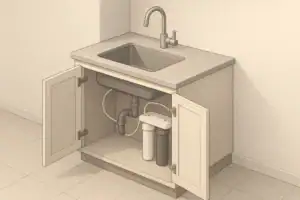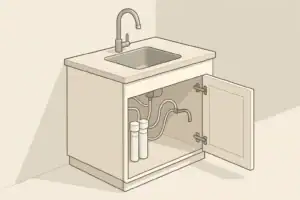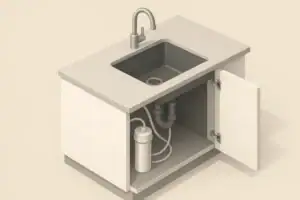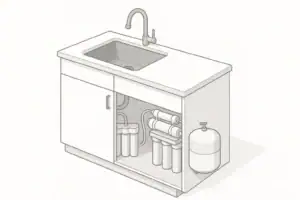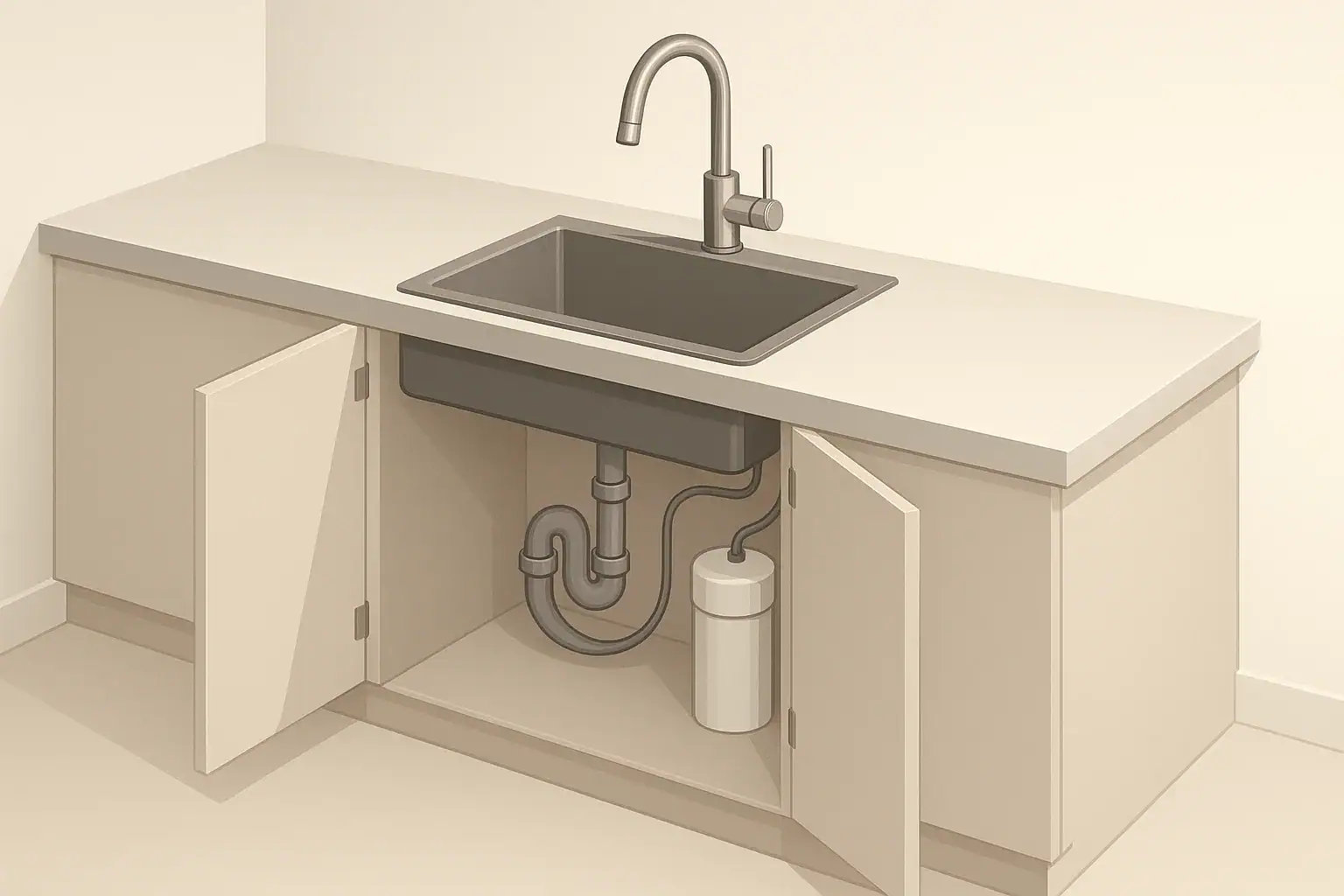
Why Under-Sink Filters Sometimes Clog Too Soon
Under-sink filters are designed to last for a set capacity or time, often several months under typical household use. When a cartridge clogs after only a few weeks, it usually indicates something unusual about the water, the plumbing, or how the system is being used.
“Clogging” usually shows up as:
- Noticeably slower flow at the filtered faucet
- Very weak stream or just a trickle
- Filter housing filling with discolored water or visible debris on the cartridge
Most early clogs come down to one or more of these factors:
- High sediment or rust in the incoming water
- Very fine particles (like silt) that plug pores quickly
- Unexpected contaminants from aging plumbing or a disturbed water main
- Filter type or micron rating that is too fine for the water conditions
- Higher-than-expected water use through the filter
- Incorrect installation or skipped flushing steps
Understanding which of these applies to your home will help you choose the right fix instead of repeatedly replacing cartridges early.
Common Water and Plumbing Causes of Fast Clogging
The quality of the water entering your under-sink system has a direct impact on how quickly filters plug up. Some homes have water that looks clear at the tap but still contains enough suspended solids to overload fine cartridges.
High Sediment in Municipal or Well Water
Sediment is one of the most common reasons for early clogs. It includes sand, grit, silt, and other small particles that are physically trapped by the filter media.
Possible signs of a sediment problem include:
- Cloudy or hazy water at certain times (for example, after heavy rain or nearby pipe work)
- Fine sand or grit in faucet aerators or at the bottom of a glass
- Visible brown or gray particles inside the filter housing when you open it
Well water and homes at the end of long municipal lines are more likely to see noticeable sediment swings.
Rust and Scale from Old Pipes or Water Heater
Corroding metal pipes and aging water heaters can release rust flakes and scale. These particles may be large enough to quickly choke a fine under-sink cartridge.
Clues that rust or scale are contributing to clogs:
- Reddish-brown or orange tint in the filter cartridge or housing
- Small flakes or chips that look metallic or chalky
- Intermittent bursts of discolored water from hot lines or after the water has been off
If the filter on your cold line clogs repeatedly but other fixtures show rust staining, your plumbing and heater may be the source of debris entering the filter.
Very Fine Silt and Turbidity
Even if water looks clear, it can have enough very fine particles to raise turbidity and plug tight filter pores. This is especially common with surface-fed wells or surface water supplies.
Signs of fine silt issues:
- Filter cartridges that look evenly gray or tan without obvious large debris
- Cartridges that feel slimy or heavily coated when rinsed
- Fast loss of flow despite the filter not appearing obviously dirty
In these cases, the particles are often too small to see individually but numerous enough to clog within the filter depth.
Temporary Disturbances in the Water System
Water main breaks, utility work, and changes in well pumping can stir up sediment. A single event can load a new filter with an entire season’s worth of debris in a few hours.
Typical patterns:
- Flow suddenly drops within a day or two of utility notices or visible road work
- Water was visibly dirty for a short time, then cleared, but the filter never recovered its normal flow
When this happens, the cartridge is often permanently overloaded and will not regain normal flow even if the incoming water later clears.
Example values for illustration.
| Observed pattern | Likely cause | Helpful next step |
|---|---|---|
| Filter clogs within weeks, visible sand or grit | High sediment load | Consider adding a coarser prefilter upstream |
| Brown flakes on cartridge surface | Rust or scale from plumbing | Inspect aerators, consider plumbing and heater evaluation |
| Cartridge evenly gray, no large debris | Very fine silt or turbidity | Use staged filtration with a slightly larger micron prefilter |
| Flow drops sharply after utility pipe work | Short-term disturbance in supply | Replace cartridge once water has cleared |
| Only cold filtered line has issues, hot water fine | Filter overloaded or undersized | Check filter capacity vs. household water use |
| Repeated clogs despite new cartridges | Filter type poorly matched to water | Re-evaluate filter micron rating and configuration |
Filter Design and Installation Issues That Lead to Early Clogging
Even with moderately challenging water, a well-matched under-sink system should operate for its expected lifespan. When cartridges still clog too fast, the design or installation may be part of the problem.
Micron Rating Too Fine for Incoming Water
The micron rating describes the approximate size of particles a filter is designed to capture. Smaller numbers capture finer particles but clog faster in sediment-heavy water.
Common situations where micron rating contributes to premature clogging:
- Using a tight sediment cartridge on water with visible sand or grit
- Using only a carbon block (which often has a fine nominal rating) without any coarser prefilter
- Upgrading to a “finer” cartridge for taste without accounting for sediment levels
If your cartridges look heavily coated on the outside surface, the water might benefit from a staged approach with a larger-micron prefilter upstream.
Undersized Filter Capacity for Household Use
Filter lifespan is usually given as a volume of water or a time estimate based on typical daily usage. If your household uses more filtered water than assumed, the cartridge will reach its capacity sooner.
Common ways actual use exceeds assumptions:
- Using filtered water for all cooking and drinking, including filling large pots
- Connecting the under-sink filter to a refrigerator or ice maker
- Large households or frequent guests drawing more water per day
If a cartridge rated for several months based on moderate daily use is handling double or triple that volume, a one- or two-month lifespan can still be within expectations.
Incorrect Installation or Skipped Flushing
Improper installation can both reduce flow and contribute to clogging. Common issues include:
- Cartridges not fully seated in the housing, allowing bypass or uneven loading
- Lines connected backwards, forcing water through the filter in the wrong direction
- Skipped or shortened initial flushing, leaving loose fines to migrate and pack into the media
- Kinks in tubing that restrict flow and make minor clogs more obvious
Re-checking installation against the manufacturer’s diagram and ensuring all flush steps are followed can prevent some early clogging complaints.
Pressure and Flow Characteristics
Incoming water pressure and the design of the faucet or flow restrictor affect how clogging feels at the tap. Low supply pressure means that even mild clogging inside the filter will cause a big drop in flow rate.
You may notice:
- Filter working acceptably in the morning but struggling when other fixtures are running
- Significant flow loss compared with neighbors or with a similar system in another home
When pressure is limited, using a filter with a lower pressure drop (often a looser micron rating or larger housing) can extend the period before flow becomes inconvenient.
How to Diagnose Why Your Under-Sink Filter Is Clogging
Before changing equipment, it helps to identify what is actually clogging the filter and how fast. A simple, structured check can point you toward the right solution.
Step 1: Inspect the Used Cartridge
Turn off the water to the filter, relieve pressure at the faucet, and open the housing. Carefully remove the used cartridge and take note of:
- Color: Brown/orange suggests rust; gray or tan can suggest silt; black smudges may be from carbon fines.
- Texture: Gritty, sandy deposits vs. slimy or clay-like coatings.
- Loading pattern: Heavy buildup on the outside surface vs. more uniform discoloration throughout.
These clues help distinguish between coarse sediment, fine silt, rust, or general organic loading.
Step 2: Compare Flow Before and After Filter
If possible, measure or estimate flow from:
- The cold kitchen tap (unfiltered line)
- The filtered faucet with a new cartridge
- The filtered faucet again after the flow begins to feel slow
A modest decrease over months is expected as filters load. A sharp drop within days indicates either severe sediment spikes or an installation or design mismatch.
Step 3: Check Neighboring Fixtures and Aerators
Remove and inspect aerators from other faucets and the main kitchen tap:
- If you find sand, rust, or flakes, your entire plumbing system is seeing debris.
- If only the filtered line shows debris, the filter housing or tubing might be shedding material, or the filter is the primary collection point for widespread particles.
This helps confirm whether the issue is localized to the filter or part of a broader water quality pattern in the home.
Step 4: Consider Basic Water Quality Information
If available, look at any recent municipal water quality reports or past well tests for:
- Comments on turbidity or sediment events
- Notes about aging distribution lines or periodic flushing
For private wells, periodic testing and visual checks (for cloudiness after pumping) can help decide if pre-sediment filtration upstream is needed.
Practical Fixes to Reduce Premature Clogging
Once you have a general idea of what is clogging the filter and how quickly, you can apply targeted fixes. Most solutions focus on staging the filtration or better matching the cartridge to the water and usage.
Add a Sediment Prefilter Upstream
If you see obvious particles or heavy coating on the outside of your cartridges, a sediment prefilter can capture most of the load before it reaches finer media. Options include:
- A simple spun or pleated sediment cartridge with a larger micron rating installed before the main under-sink filter
- A point-of-entry sediment filter on the main line if multiple fixtures experience debris
Using a staged approach, where a 5–20 micron filter protects a finer carbon block, can extend the life of the more expensive cartridge and maintain better flow over time.
Select a More Appropriate Micron Rating
If your water has moderate sediment and you are using a very tight filter for taste and odor, you may get better overall performance by slightly relaxing the micron rating or choosing a filter designed to handle both sediment and chlorine.
Consider:
- Changing only one stage at a time and tracking how long it lasts
- Balancing taste improvement with practical flow and lifespan
A slightly coarser filter can still provide noticeable taste and odor reduction while being less prone to plugging.
Right-Size the System for Your Water Use
If you regularly use large amounts of filtered water, a single small cartridge may simply be undersized. To address this, you can:
- Move to larger-capacity housings that hold bigger cartridges
- Add a second filter housing in parallel (when compatible) to share the load
- Reserve filtered water for drinking and specific cooking uses instead of every task at the sink
These steps can reduce the per-cartridge load and align actual use better with rated capacity.
Verify Installation and Maintenance Practices
Double-check that:
- Cartridges are oriented correctly and fully seated
- Inlet and outlet lines match the markings on the housing
- Initial flushing times were followed so that loose fines were cleared
- O-rings are in place and lightly lubricated if recommended, avoiding bypass paths that cause uneven loading
Careful reassembly can resolve some cases where cartridges appear to clog prematurely due to internal flow issues rather than actual capacity being reached.
Plan Around Temporary Disturbances
If your filter clogs quickly only after occasional events like main flushing or well maintenance, you may be dealing with short-term loads rather than ongoing water quality issues.
Useful strategies include:
- Temporarily bypassing the under-sink filter during visible sediment events, then flushing lines before bringing it back online
- Keeping a spare sediment cartridge on hand for replacement after known disturbances
This can prevent a single event from consuming much of a cartridge’s expected life.
Monitoring Filter Performance and Lifespan
Even when you do not have access to laboratory testing, simple at-home tracking can help you understand whether your under-sink filter is performing as expected and when it is truly time to replace it.
Track Approximate Filtered Water Volume
You can approximate how much water passes through your under-sink filter:
- Estimate daily usage by counting typical uses, such as glasses, refilled bottles, and cooking pots.
- Multiply by an average volume per use to estimate daily filtered gallons.
- Track days in use to get an approximate total volume over the cartridge’s life.
Comparing this estimate with the cartridge’s rated capacity (provided by the manufacturer) can clarify whether early clogging is due to unexpected sediment or simply higher water usage.
Observe Taste, Odor, and Flow Together
While avoiding health interpretations, you can still use sensory cues to judge basic performance:
- Taste and odor changes may indicate that the filter’s adsorptive media is approaching its capacity.
- Flow reduction often reflects physical loading with particles.
It is possible for a filter to maintain acceptable taste and odor while flow declines due to sediment. In this case, focusing on upstream sediment reduction may help restore a more normal replacement interval.
Keep Simple Notes for Each Cartridge
A brief record helps you identify trends:
- Installation date and estimated starting water conditions
- Approximate volume or days in service before noticeable flow loss
- Visual notes on the spent cartridge (color, texture, any unusual deposits)
Over time, this log will show whether changes you make—such as adding a prefilter or adjusting micron ratings—actually extend useful life in your specific home.
NSF/ANSI Certifications and What They Mean for Clogging
Filter clogging is mainly about physical loading, while NSF/ANSI certifications focus on verified performance claims for specific contaminants or characteristics. However, understanding certifications can still guide you toward systems that perform reliably.
How Certifications Relate to Real-World Use
Common NSF/ANSI standards for point-of-use drinking water filters include:
- NSF/ANSI 42: Evaluates reduction of aesthetic contaminants such as chlorine, taste, and odor.
- NSF/ANSI 53: Evaluates reduction of certain contaminants considered of health concern, such as some metals and particulates.
- NSF/ANSI 401: Evaluates reduction of certain emerging contaminants like select pharmaceuticals and chemicals.
- NSF/ANSI 58: Applies primarily to reverse osmosis systems, covering multiple performance aspects.
Some filters also include particulate reduction claims under these standards. While certification does not prevent clogging, it can assure that the filter, when properly maintained, meets specific reduction claims for its rated life and conditions.
What to Check on Product Literature
When evaluating under-sink filters, look beyond the certification mark to:
- Confirm which specific standard(s) the system is certified to and for which types of reduction claims.
- Review the rated capacity (in gallons or liters) and any conditions used in testing, such as pressure and influent water characteristics.
- Check whether the system is tested for particulate reduction, which relates more directly to physical clogging potential.
This information helps ensure your expectations about lifespan and performance are aligned with how the system was tested.
Example values for illustration.
| Standard | Focus area | What a homeowner can check |
|---|---|---|
| NSF/ANSI 42 | Aesthetic effects (taste, odor, chlorine) | Confirm it lists specific claims like chlorine taste and odor reduction |
| NSF/ANSI 53 | Certain contaminants of concern and particulates | Check the contaminant list and note if particulate reduction is included |
| NSF/ANSI 401 | Selected emerging compounds | Review which substances are included and the rated capacity for those claims |
| NSF/ANSI 58 | Reverse osmosis system performance | Verify it applies if you are using an RO-type under-sink system |
| Particulate ratings | Reduction of particles of certain size ranges | Look for the particulate class to gauge how fine the filtration is |
| Capacity and conditions | Rated volume and test parameters | Compare the rated capacity to your estimated usage and water conditions |
When to Consider Changing Systems
If you have adjusted micron ratings, added prefiltration, and confirmed proper installation but your under-sink filter still clogs far earlier than expected, it may be time to consider a different overall approach.
Situations where a different system may be more appropriate include:
- Very high sediment levels that overwhelm point-of-use filters
- Multiple fixtures experiencing similar clogging or flow issues
- Needs that extend beyond basic taste, odor, and particulate reduction
Options can range from whole-house sediment filtration to multi-stage under-sink or reverse osmosis systems, depending on overall water goals. Evaluating your water quality, usage patterns, and long-term maintenance costs together can guide a more sustainable choice.
Frequently asked questions
Why did my under-sink filter clog after only a few weeks?
Early clogging most often results from unusually high sediment or very fine silt in the incoming water, a micron rating that is too fine for local conditions, higher-than-expected filtered water use, or installation issues such as skipped flushing. Inspecting the spent cartridge and checking other fixtures for debris will help pinpoint the cause.
Can I clean and reuse a clogged under-sink cartridge to save money?
Most under-sink cartridges are designed to be replaced rather than cleaned; rinsing may remove loose surface debris on some pleated types but will not restore full performance for adsorptive or depth-media cartridges. Replacing the cartridge and addressing upstream sediment (for example with a prefilter) is usually the more reliable approach.
How can I tell if rust, sand, or fine silt is causing my filter to clog?
Visual and tactile clues help: reddish-brown flakes or staining indicate rust, gritty sand points to coarse sediment, and an even gray or tan coating that feels slimy suggests fine silt or turbidity. Checking aerators and other faucets for similar particles provides additional confirmation.
Will switching to a coarser micron rating stop my under-sink filter from clogging so fast?
Using a coarser micron rating can reduce clogging frequency but may also lower removal of very fine particulates and certain contaminants. A better strategy for many homes is staged filtration—a coarser sediment prefilter upstream protects a finer cartridge used for taste and chemical reduction.
What immediate steps should I take if a water main flush or disturbance causes my under-sink filter to clog?
During visible sediment events, temporarily bypass the under-sink filter if possible, flush the lines until water runs clear, and then replace or install a sediment cartridge to protect downstream media. Keeping a spare prefilter and monitoring flow after the event helps prevent repeated premature cartridge loss.
Recommended next:
- Under-Sink vs Pitcher: Which Is Better for Families?
- Best Under-Sink Filters for Chlorine Taste & Odor
- Under-Sink Filter Installation: Tools, Parts, and Common Mistakes
- No-Drill Under-Sink Filters for Renters: What’s Possible?
- Under-Sink Filters for Lead Reduction: What Certifications to Look For
- Under-Sink Filter Flow Rate Explained: Why GPM Matters
- More in Under-Sink Filters →
- NSF/ANSI standards explained (42/53/401/58)
- Clear trade-offs: pitcher vs faucet vs under-sink vs RO
- Maintenance planning: cost per gallon and replacement cadence