
Why Chloramine Changes the Filter Decision
Many city water systems disinfect drinking water before it reaches the tap. For decades, people commonly associated that disinfectant with free chlorine, which is relatively familiar to filter shoppers because many carbon filters are marketed for chlorine taste and odor reduction.
Chloramine is different. It is formed when chlorine is combined with ammonia, and some utilities use it because it can remain more stable in long distribution systems. That stability is useful for municipal treatment goals, but it also affects home filtration decisions. A filter that performs well for free chlorine does not automatically perform the same way for chloramine.
This distinction matters most when you are choosing an under-sink filter for drinking water, coffee, cooking, or an icemaker line. Under-sink systems are often expected to deliver better flow and longer life than pitchers or faucet-mounted units. If chloramine is the main taste or odor issue, the media type, contact time, cartridge size, and replacement interval all become important. For a broader comparison of layouts, see faucet-mount vs under-sink filters.
The practical question is not whether a filter is good or bad. It is whether the filter has been selected for the disinfectant actually used in your local water. A standard chlorine reduction claim may be helpful, but it may not tell the full story for a chloraminated supply.
Standard Chlorine Claims Are Not the Same as Chloramine Claims
Filter packaging and product descriptions often use broad phrases such as reduces chlorine taste and odor. In many cases, that claim refers to free chlorine, not chloramine. Free chlorine is generally easier for activated carbon to reduce under typical household conditions.
Chloramine is more persistent. Reducing it effectively often requires carbon designed for the task, longer contact time, slower flow, or a larger cartridge. Catalytic carbon is commonly used for this purpose because it is processed to improve its ability to promote reactions that break down chloramine. Some conventional activated carbon cartridges may reduce some chloramine, but performance can vary widely.
The difference is especially important in compact filters. A small cartridge with a high flow rate may provide only brief contact between water and the media. That can be enough to improve taste from free chlorine but not enough for meaningful chloramine reduction throughout the cartridge life.
When comparing under-sink filters, look for wording that specifically mentions chloramine reduction, not only chlorine. If a system references testing to recognized drinking water treatment standards, read the scope carefully. Certification or testing language should identify what was tested, under what general conditions, and whether the claim applies to the full system or only a component.
Example values for illustration.
| Filter wording or feature | What it usually suggests | Chloramine decision note |
|---|---|---|
| Chlorine taste and odor reduction | Often focused on free chlorine | Do not assume chloramine reduction unless stated |
| Activated carbon block | Good general taste and odor media | May need slower flow or larger size for chloramine |
| Catalytic carbon | Carbon modified for more reactive performance | Common choice for chloramine-focused systems |
| Reverse osmosis with carbon stages | Membrane plus prefilters or postfilters | Carbon stages matter for chloramine control |
| High flow compact cartridge | Convenient dispensing speed | Short contact time can limit performance |
| Specific chloramine reduction claim | Claim is targeted to the disinfectant | Review rated capacity and conditions |
How Under-Sink Filter Types Handle Chloramine
Under-sink filters come in several formats. Some connect to a dedicated drinking water faucet, while others filter the cold water line to the main kitchen faucet. Some are simple single-cartridge systems, and others combine sediment, carbon, reverse osmosis, and polishing stages.
For chloramine, the specific design matters more than the number of stages printed on the box. A well-sized catalytic carbon stage may be more relevant than several generic stages that are not designed for the problem. If you need help choosing between media types, the carbon block vs activated carbon breakdown can help.
Standard activated carbon filters
Activated carbon is widely used for reducing taste, odor, and some organic compounds. It is available as granular activated carbon or carbon block. Carbon block cartridges can provide more uniform flow through the media, while granular carbon may allow faster flow depending on design.
For free chlorine, standard activated carbon often works well in many household applications. For chloramine, it may help but may not provide the same reduction, especially at higher flow rates. If chloramine is the target, a standard carbon claim is a starting point, not a final answer.
Catalytic carbon filters
Catalytic carbon is frequently used in drinking water filters aimed at chloramine reduction. It is still carbon, but it is designed to have enhanced catalytic activity compared with ordinary activated carbon. In practical terms, it can be more effective for chloramine when the system is sized correctly.
Even with catalytic carbon, contact time is important. A very small cartridge may not perform like a larger cartridge with the same media. The rated flow rate and capacity should match how the kitchen sink is actually used.
Reverse osmosis systems
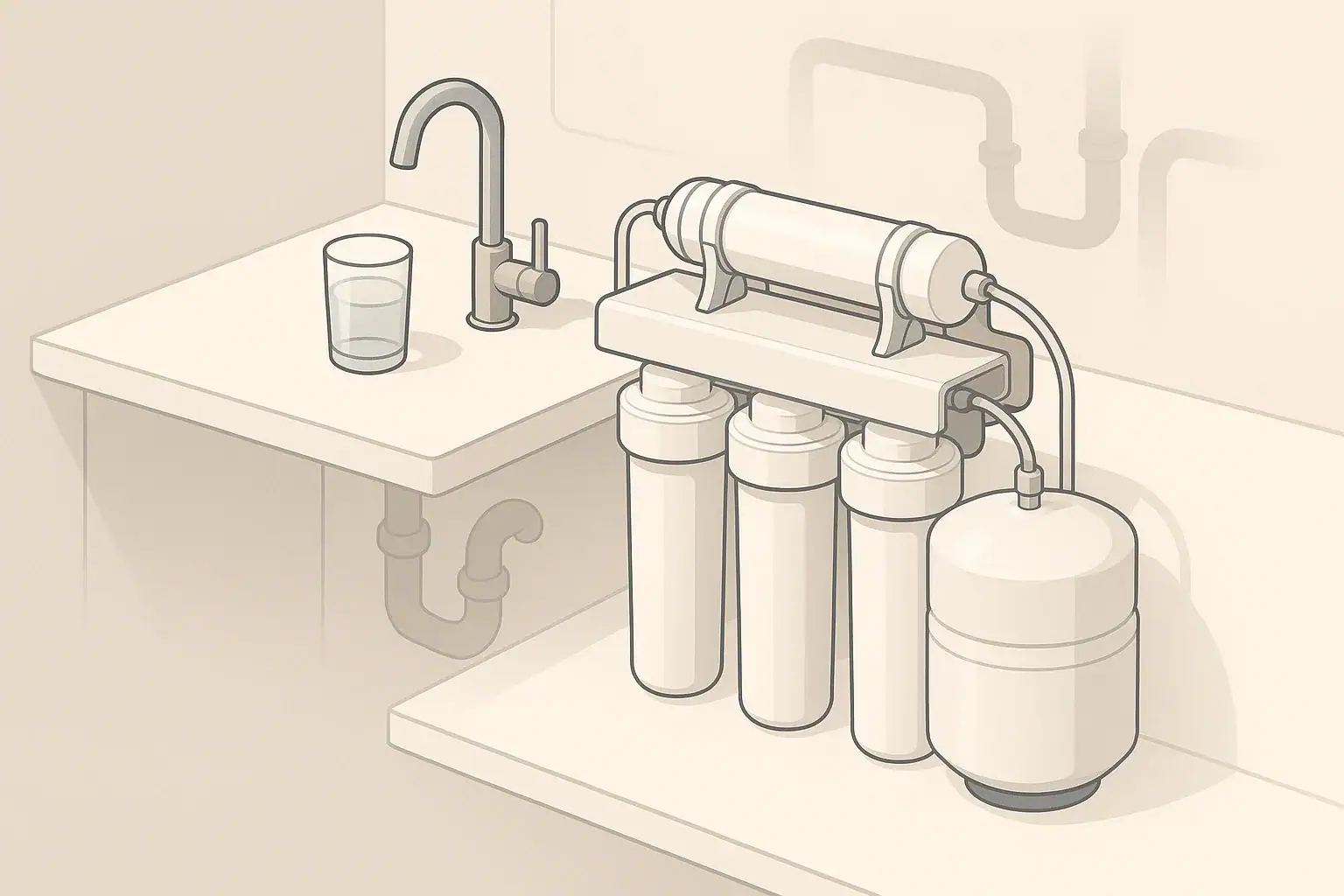
Reverse osmosis systems are often chosen for broader dissolved solids reduction, but the RO membrane itself is not the only part to consider. Most under-sink RO systems include carbon prefiltration to protect the membrane and carbon postfiltration to improve finished-water taste.
Where chloramine is present, the carbon stages need careful attention. Chloramine can be more challenging for standard carbon than free chlorine. A system intended for chloraminated water may use catalytic carbon or a larger carbon prefilter to improve performance before water reaches the membrane. For a deeper look, see RO for chloramine.
RO systems also have practical tradeoffs. They may use a storage tank or tankless design, require adequate water pressure, and send some water to drain during operation. Those details do not make RO unsuitable, but they should be part of the decision.
Multi-stage systems
Multi-stage under-sink systems can be useful, but more stages do not automatically mean better chloramine reduction. A sediment prefilter may protect later stages from particles. A carbon stage may address disinfectant taste. A membrane may reduce many dissolved substances. A final carbon stage may polish taste.
The key is matching the stages to the water quality issue. If the concern is chloramine, the filter media and performance claim should reflect that specific job.
How to Read Chloramine Performance Claims
Filter claims can be hard to compare because they use different language. Some claims are based on internal testing, some on third-party testing, and some on certification to recognized standards. The most useful claims are specific and limited rather than broad and vague.
Look for several pieces of information together:
- The claim names chloramine, not only chlorine.
- The rated capacity is listed in gallons or months.
- The rated flow rate is realistic for the application.
- The claim applies to the complete system or the exact replacement cartridge.
- The test conditions are described in general terms.
- The replacement schedule is easy to follow.
Be cautious with absolute language. No home filter makes water universally pure, and performance depends on the incoming water, installation, flow, pressure, and maintenance. A reliable filter decision is based on a realistic match between the claim and the use case. When you see certification language, a guide to verify water filter certification can help you read it correctly.
If your water utility publishes an annual water quality report, it may indicate whether free chlorine or chloramine is used as the residual disinfectant. If the report is unclear, the utility may provide that information through customer service or public water quality resources. Home test strips may help with screening, but they are not a substitute for understanding the utility treatment method.
Flow Rate, Contact Time, and Cartridge Size
Flow rate is one of the easiest details to overlook. Many households want an under-sink filter because they do not want to wait for water. But chloramine reduction generally benefits from more contact time between water and carbon.
Contact time is influenced by:
- Cartridge volume
- Carbon type
- Water flow rate
- Internal cartridge design
- Water temperature
- Amount of chloramine entering the filter
A filter rated for a high flow rate may be convenient, but if the cartridge is small, water may pass through too quickly for the intended chloramine reduction. A larger cartridge or a dedicated drinking water faucet with a moderate flow rate can provide more practical contact time.
Pressure drop also matters. Dense carbon blocks can reduce flow as they load with particles or as water pressure varies. If your home has lower pressure, a very restrictive cartridge may make the faucet feel slow. If your water contains visible particles or you have older plumbing, a sediment prefilter may help protect the carbon stage, but it must also be maintained.
For RO systems, flow is more complex. The tank, membrane production rate, pressure, temperature, and postfilter all affect how quickly water is available. A chloramine-aware RO setup still depends on appropriate carbon prefiltration.
Replacement Timing and Real-World Use
Chloramine reduction is not only an installation question. It is also a maintenance question. Carbon media can become exhausted, and performance may decline before the water tastes noticeably different. Waiting for a strong taste change is not a reliable maintenance plan.
Replacement schedules are usually given as months, gallons, or both. The better limit is whichever comes first. A household that fills large water bottles, cooks frequently, and feeds a refrigerator line may reach the gallon rating sooner than expected. A small household may reach the time limit first.
General replacement planning should account for:
- Number of people using the filtered faucet
- Daily drinking and cooking water use
- Use for coffee, tea, ice, or pets
- Incoming sediment level
- Rated capacity of the cartridge
- Whether the system serves one faucet or multiple outlets
Sanitation is also part of ownership. Follow the manufacturer instructions for cartridge changes, flushing new filters, and checking for leaks after service. Do not bypass pressure relief features, air gaps, check valves, or other safety-related parts. If a system ties into a supply line, drain, refrigerator, or dedicated faucet, use code-compliant fittings and consider professional installation when needed. If you are already dealing with slow flow, it can help to review filtered water flow dropped troubleshooting steps before replacing parts.
Example values for illustration.
| Use condition | Likely effect on cartridge life | Practical planning step |
|---|---|---|
| One or two light users | Time limit may be reached first | Mark the calendar after installation |
| Family cooking and filling bottles daily | Gallon limit may arrive sooner | Track typical weekly use |
| Filtered water used for ice or refrigerator | More total filtered volume | Include all connected outlets |
| Noticeable sediment in water | More clogging or pressure drop | Consider maintained sediment prefiltration |
| Lower household water pressure | Flow may feel slower as filters age | Choose rated flow carefully |
| Chloramine-specific carbon stage | Performance depends on capacity | Replace by rated gallons or months |
Related guides: RO for Chloramine: Do You Need Special Carbon Stages? • Choosing a Filter for Chloramine: Standards and Media That Help • How to Read Your City’s Consumer Confidence Report • Under-Sink Filter Flow Rate Explained: Why GPM Matters
Practical Buying Checklist for Chloraminated City Water
Before choosing an under-sink filter, confirm the disinfectant used by your water system if possible. If it is chloramine, make the filter comparison more specific. A product that only makes a standard chlorine taste and odor claim may still improve flavor, but it may not be designed or tested for chloramine.
Use this checklist to narrow the options:
- Confirm whether your utility uses chloramine or free chlorine.
- Look for a chloramine-specific reduction claim.
- Check whether the carbon is catalytic carbon or otherwise designed for chloramine.
- Compare rated flow rate with the way you use the sink.
- Compare rated capacity with expected household volume.
- For RO systems, review the carbon prefilter as well as the membrane.
- Make sure replacement cartridges are practical to obtain and install.
- Plan for leak checks, flushing, and routine sanitation.
The main takeaway is simple: chlorine and chloramine are related, but they are not identical filtration targets. For a chloraminated municipal supply, an under-sink system should be evaluated by its chloramine-specific media, contact time, tested claims, and maintenance requirements rather than by a broad chlorine statement alone.
Frequently asked questions
How do I know if my city water uses chloramine?
Check your utility’s water quality report or customer service resources. The report may list chloramine, monochloramine, or free chlorine as the residual disinfectant.
Can a standard carbon filter reduce chloramine?
Sometimes, but performance varies. Standard carbon is often better for free chlorine, while chloramine usually needs a filter specifically designed or rated for that use.
Is catalytic carbon better for chloramine?
It is commonly a better choice because it is designed to improve chloramine reduction. Even so, cartridge size, flow rate, and replacement timing still matter.
Do reverse osmosis systems remove chloramine?
RO systems usually rely on carbon prefilters or postfilters for chloramine control. The membrane alone is not the main part that handles chloramine.
Why does flow rate matter so much?
Chloramine reduction depends on contact time with the filter media. Faster flow can reduce that contact time and lower performance, especially in small cartridges.
How often should I replace a chloramine filter?
Follow the manufacturer’s month or gallon rating, whichever comes first. Heavy use, lower pressure, and sediment can shorten useful life.
- NSF/ANSI standards explained (42/53/401/58)
- Clear trade-offs: pitcher vs faucet vs under-sink vs RO
- Maintenance planning: cost per gallon and replacement cadence