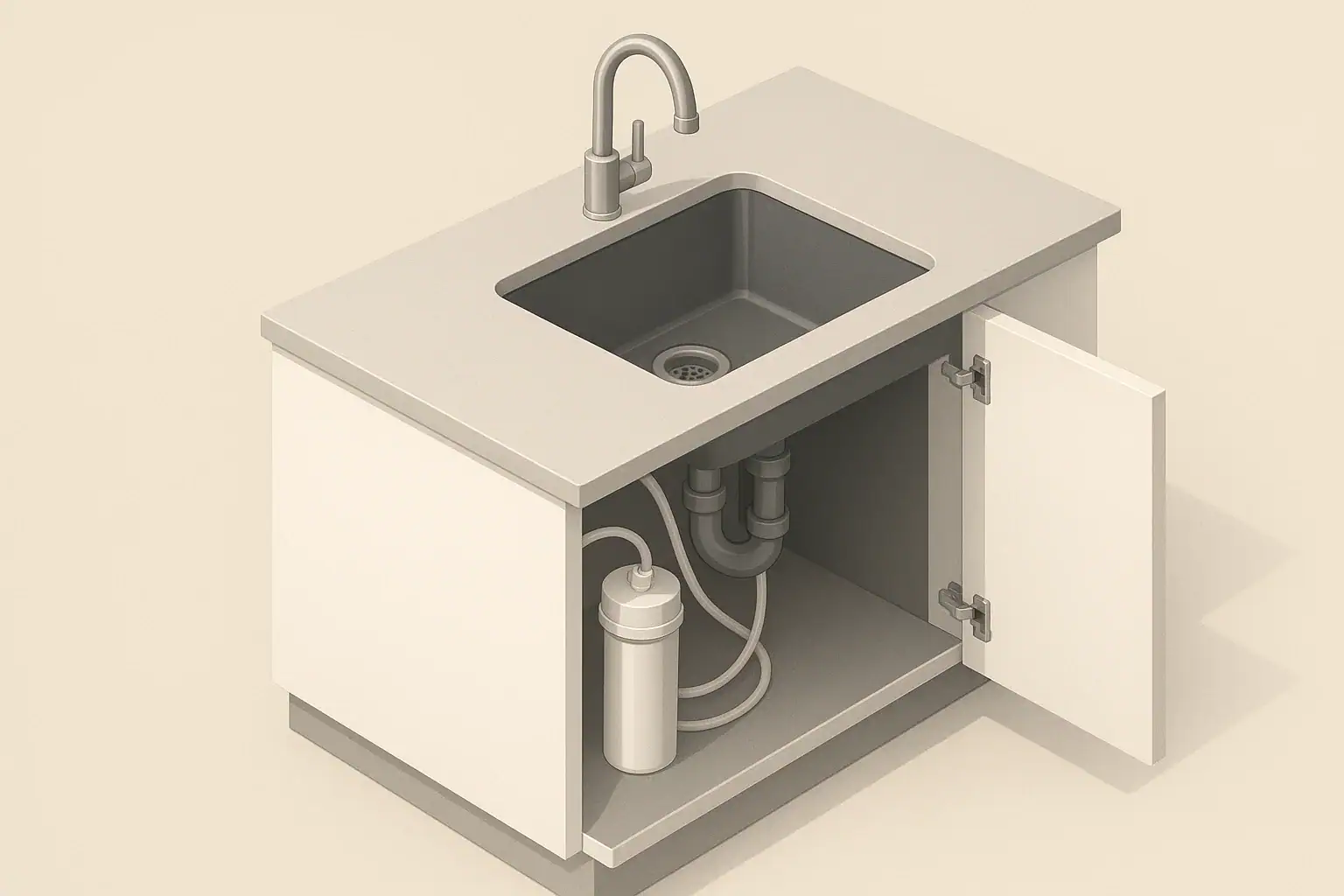
This article helps you choose under-sink filters specifically for homes that use a lot of water. It focuses on systems and cartridges that deliver higher flow rates and longer service life so busy kitchens remain convenient and predictable. You’ll find guidance on the technical specs that matter most under heavy use, how to estimate real-world cartridge life from daily habits, and which under-sink formats tend to hold up best when multiple people fill glasses, kettles, and large containers. There’s also practical advice on plumbing and installation details that affect flow, plus maintenance planning tips to avoid unexpected drops in performance. Use the section list below to jump to the parts that matter for your household’s patterns and water quality.
Why High-Consumption Homes Need Different Under-Sink Filters
Homes that use a lot of water put very different demands on an under-sink filter than a small apartment or low-usage household. High-consumption situations often include:
- Large families or multi-generational households
- Homes where most drinking and cooking water comes from the kitchen tap
- People who regularly fill large bottles, kettles, or stockpots
- Shared housing with frequent guests
In these homes, two factors become especially important:
- High flow rate so the tap stays fast even when several people use it back-to-back.
- Long filter life so cartridges do not need constant replacement and costs stay predictable.
Standard under-sink filters can work, but they may feel slow or reach their rated capacity far sooner than expected. Planning for realistic flow and capacity up front helps avoid frustration, pressure drops, and rushed emergency replacements.
Key Specs for High Flow and Long-Life Performance
Before comparing under-sink filter formats, it helps to understand the core performance specs that matter most in high-consumption homes.
Flow Rate vs. Household Demand
Flow rate describes how much filtered water can pass through the system in a given time, usually expressed as gallons per minute (gpm). For everyday kitchen use, considerations include:
- Comfortable single-user flow: Many people find roughly 1–2 gpm at the dedicated filtered faucet or main kitchen faucet to feel “normal.”
- Multiple users: If several people fill glasses, pots, or coffee makers in a short window (for example, breakfast rush), a low-flow system can feel sluggish.
- Plumbing and pressure: Real-world flow also depends on your home’s water pressure and plumbing layout. Even a high-rated filter can feel slow if the incoming pressure is low.
High-consumption homes usually benefit from systems designed to handle stronger flow without excessive pressure drop, especially when the cartridge starts to load with sediment over time.
Filter Capacity and Replacement Interval
Capacity describes how much water a cartridge is designed to treat before the manufacturer recommends replacement. It is commonly given in gallons. For planning, think in terms of:
- Daily filtered use: Estimate how many gallons you use for drinking, cooking, and pet water each day. For example, a busy household might easily use 10–20 gallons of filtered water daily.
- Expected cartridge life: From that daily estimate, you can approximate how many months a given capacity might last under your conditions.
- Water quality: Higher sediment, iron, or other particulates reduce practical life compared with the rated capacity.
High-consumption homes generally benefit from higher-capacity cartridges or multi-cartridge setups so that replacements are needed less frequently and are easier to schedule.
Contaminant Targets and Certification
High flow and long life matter, but the filter still needs to address the issues in your local water. Common goals include:
- Taste and odor: Reduction of chlorine or chloramine for better-tasting drinking and cooking water.
- Particles: Removal of sediment, rust, and visible particles that can cloud water or settle in kettles.
- Specific contaminants: Reduction of substances such as lead, certain PFAS, or some organic chemicals, depending on your water report.
For under-sink filters, look for relevant NSF/ANSI certifications, such as 42 for aesthetic improvement (taste, odor, chlorine) and 53 or 401 for certain other contaminants, and verify claims through official listings rather than marketing summaries.
Example values for illustration.
| Household pattern | Flow priority | Typical daily filtered use (example) | Under-sink approach that often fits |
|---|---|---|---|
| Small family, frequent cooking | Moderate | 8–12 gallons | Single high-capacity carbon cartridge under-sink filter |
| Large family, shared kitchen | High | 15–25 gallons | Dual-cartridge system (sediment + carbon) at main kitchen faucet |
| Heavy water drinkers, large bottles | High | 20–30 gallons | High-flow under-sink filter with dedicated tap and large capacity |
| Home office with many visitors | High | 20+ gallons | Commercial-style high-capacity cartridge compatible with kitchen plumbing |
| Light cooking, mostly cold drinks | Moderate | 5–10 gallons | Compact under-sink carbon block with moderate capacity |
| Apartment with low water pressure | Moderate | 5–12 gallons | Under-sink filter labeled for low-pressure operation |
Under-Sink Filter Formats Suited to High-Consumption Use
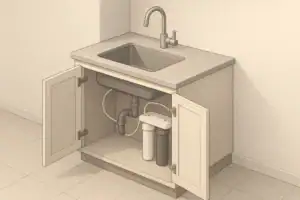
Under-sink filters come in several basic configurations. For high-consumption homes, design choices around flow path, media volume, and plumbing connection matter more than compact size or minimal installation effort.
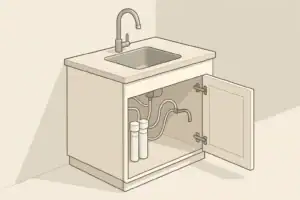
Single-Stage Carbon Block Systems
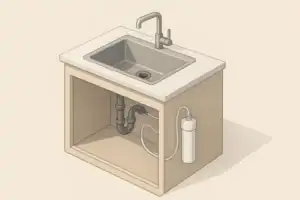
Single-stage under-sink filters usually contain one cartridge, often a carbon block. Their advantages for busy households include:
- Simplicity: Only one cartridge to monitor and replace.
- Reasonable flow: Many are designed to maintain comfortable flow at a typical kitchen tap.
- Compact footprint: Leaves more storage space under the sink.
Tradeoffs include more limited contaminant coverage compared to multi-stage or reverse osmosis systems, and the fact that a single cartridge must handle both sediment and chlorine or other targets. In high-sediment areas, clogging can occur sooner than the rated capacity suggests.
Multi-Stage Under-Sink Filters (Sediment + Carbon)
Two- or three-stage systems often combine:
- A sediment pre-filter to catch larger particles
- One or more carbon cartridges for taste, odor, and additional contaminant reduction
For high-consumption homes, staged filtration offers several practical benefits:
- Better protection of the main carbon block: The sediment stage can extend the useful life of the more expensive cartridges.
- More consistent flow over time: When sediment is captured early, pressure drop at the tap tends to creep up more slowly.
- Flexible media choices: Different cartridges can target different concerns identified in your water quality report.
The main drawbacks are increased under-sink space usage and more cartridges to track on the maintenance schedule.
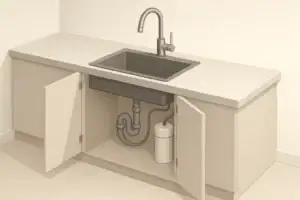
High-Flow Under-Sink Filters at the Main Kitchen Faucet
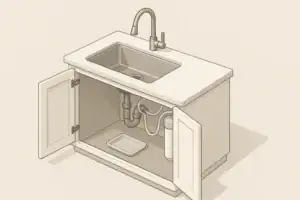
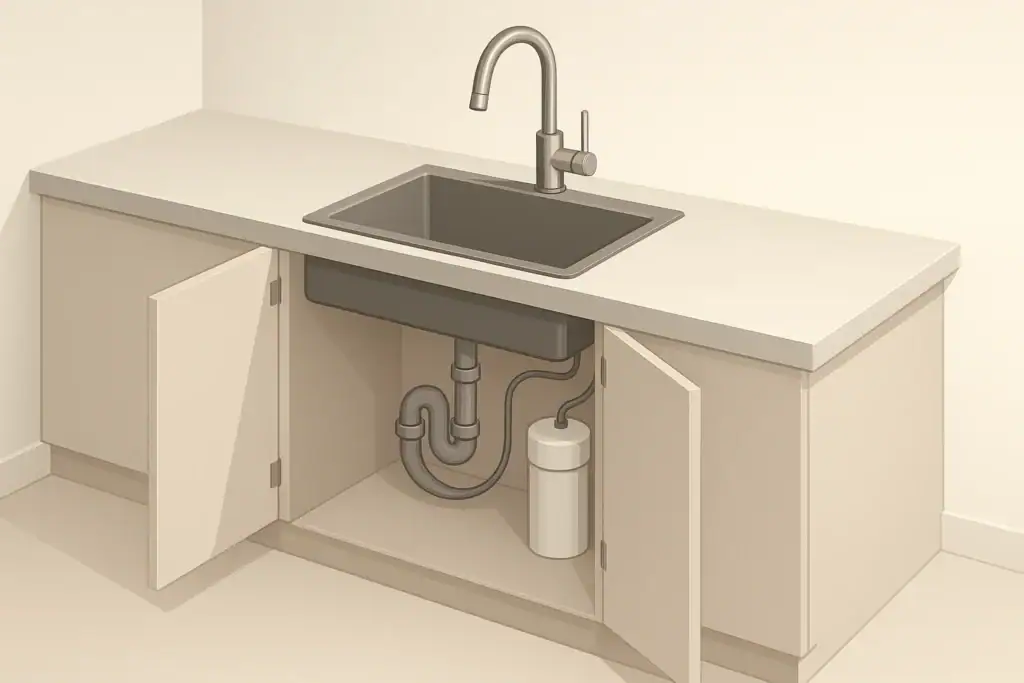
Some under-sink filters are plumbed directly into the cold-water line feeding the main kitchen faucet instead of a separate filtered faucet. In high-consumption homes, this approach can be attractive because:
- Everyone uses the same tap without thinking about which handle to choose.
- Filling large pots and pitchers is fast and convenient.
- The system takes full advantage of the faucet’s existing high-flow design.
When evaluating these systems, look for designs specifically described as high-flow or full-flow and check that the filter’s rated flow aligns with your expectations for the main faucet. As always, local water pressure will influence the real-world result.
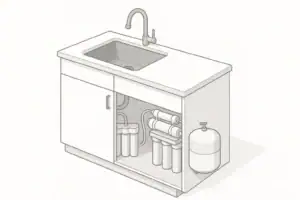
When Reverse Osmosis Is Considered
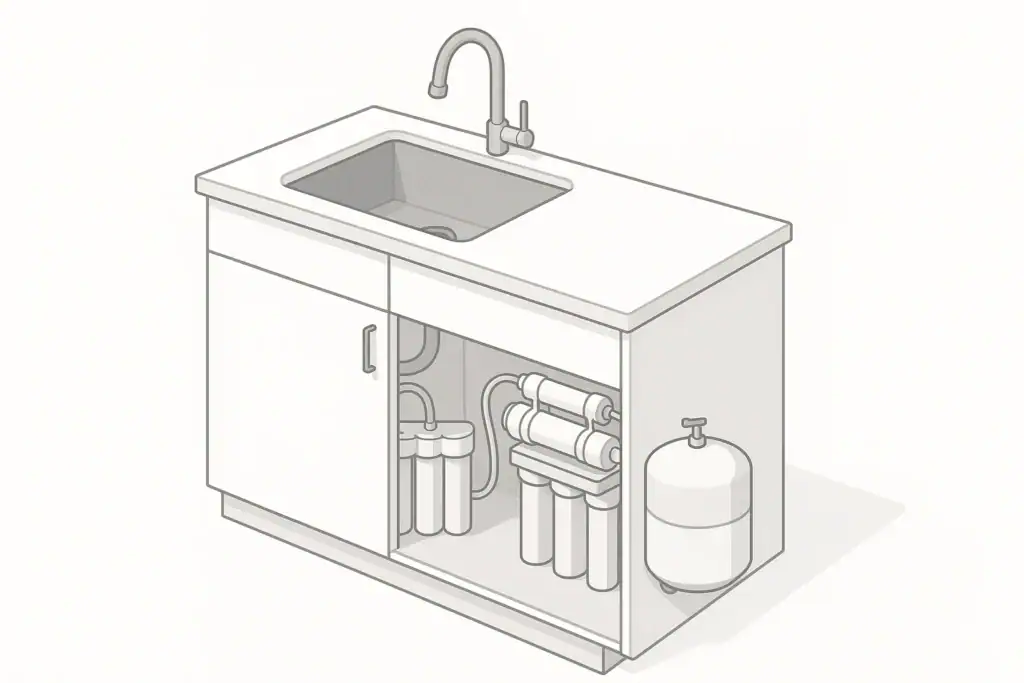
Reverse osmosis (RO) systems are also installed under the sink but work differently. They commonly include several stages of filtration plus a membrane and storage tank. Many high-consumption homes prefer high-flow carbon-based systems because RO typically has:
- Lower flow rate from the RO faucet than a full-flow filter
- A storage tank that can be temporarily depleted by heavy use
However, some households accept slower RO flow for specific contaminant reduction goals. In those cases, look for systems designed for higher tank refill rates and consider whether a larger tank fits in your under-sink space.
Matching Filter Capacity to High Consumption
Choosing a cartridge with a realistic capacity is one of the most important steps for high-use households. This helps avoid both premature clogging and overbuying capacity that you do not actually need.
Estimating Your Daily Filtered Water Use
A simple way to estimate daily filtered water use is to count how often you fill common items and approximate their volume:
- Drinking glasses (for example, 8–12 ounces each)
- Reusable bottles (for example, 16–32 ounces each)
- Cooking pots and kettles
- Coffee makers and tea pots
For example, a family of four each drinking several glasses plus cooking and hot beverages can easily use many gallons per day. Even if the exact number is imprecise, a ballpark estimate helps you distinguish between light, medium, and heavy usage patterns.
Translating Rated Capacity into Replacement Frequency
Once you have a rough daily usage number, you can estimate how often you would likely replace a given cartridge capacity. For instance:
- If your household uses around 15 gallons of filtered water per day and your cartridge is rated for a certain number of gallons, divide the capacity by 15 to estimate days of use.
- Convert that to months as a planning guide, recognizing that real-world replacement is also influenced by sediment load and taste or flow changes.
Many households choose a capacity that yields a replacement interval they find manageable, such as every 6 or 12 months, then adjust based on experience.
Whole-House vs Under-Sink Capacity
Some high-consumption homes also use a whole-house filter to handle sediment or certain aesthetic issues before water reaches the kitchen. In those cases:
- The under-sink filter’s sediment load is lower, which can extend cartridge life.
- The under-sink system can focus on finer particulate and chemical targets.
Coordinating whole-house and under-sink filtration lets you share the workload between systems and reduce the burden on any one cartridge.
Plumbing, Pressure, and Flow Considerations
Even the best high-flow cartridge will not perform well if the surrounding plumbing limits water movement. In high-consumption homes, certain installation details deserve extra attention.
Incoming Water Pressure
Most under-sink filters are designed to work within a broad pressure range. However:
- Low incoming pressure can make any system feel slow.
- Very high pressure can stress plumbing and may require pressure regulation.
If your home has consistently low pressure, consider filters marketed as having low-pressure compatibility and keep the overall flow path as simple and direct as possible.
Tubing Length and Fittings
Every extra turn, fitting, and foot of tubing adds some resistance to flow. Practical tips for high-consumption setups include:
- Placing the filter cartridges as close as reasonably possible to the faucet connection.
- Avoiding tight bends in tubing that can pinch flow.
- Using fittings sized appropriately for your plumbing, rather than undersized adapters.
A neat, direct plumbing layout helps maintain the flow rate your cartridges are capable of delivering.
Dedicated Faucet vs. Full-Flow Connection
Deciding whether your filtered water comes from a small dedicated faucet or from the main kitchen faucet affects perceived performance:
- Dedicated faucet: Keeps filtered water separate and can be easier to plumb, but often has a narrower spout and lower perceived flow, especially when filling large containers.
- Full-flow connection: Uses the main faucet, making heavy use more convenient and often faster, but ensures that all cold-water use at that tap runs through the filter, increasing cartridge usage.
High-consumption homes that truly want all cold water at the kitchen sink filtered often accept the higher cartridge usage for the convenience of a full-flow configuration.
Maintenance Planning for High-Use Under-Sink Filters
High-consumption means more water through each cartridge, so maintenance planning becomes central to reliable, good-tasting water. A few simple habits can prevent surprises.
Signs a Cartridge Is Near End of Life
Beyond the rated capacity, pay attention to day-to-day cues:
- Noticeable flow reduction not explained by other plumbing issues.
- Return of chlorine taste or odor if your system targets chlorine.
- Cloudiness or visible particles if you normally see clear water.
When these changes appear, it is usually time to replace cartridges even if your estimated gallon count suggests there should be some life left. Water conditions can vary over the year, especially with seasonal changes in municipal treatment or well conditions.
Stocking Spare Cartridges
High-consumption homes often benefit from keeping at least one full set of replacement cartridges on hand. This approach:
- Prevents gaps in filtration if cartridges clog earlier than expected.
- Allows weekend or evening replacements without a special trip.
- Makes it easier to coordinate filter changes with other routine tasks.
Store spare cartridges in a dry area away from direct sunlight and follow any shelf-life guidance provided by the manufacturer.
Cost per Gallon Under Heavy Use
For high-usage homes, the cost per gallon is as important as the purchase price of the system. To approximate this:
- Estimate the number of gallons per cartridge change using your real-world experience.
- Divide cartridge cost by that gallon estimate to find approximate cost per gallon.
- Compare across filter types, keeping in mind differences in what each filter removes.
This method helps you weigh a higher upfront system cost against potentially lower long-term operating costs under heavy use.
Example values for illustration.
| Item to track | Typical cue in high-use homes | Planning method |
|---|---|---|
| Sediment pre-filter | Flow drop or visibly discolored housing | Check monthly; replace on earliest of schedule or flow change |
| Main carbon cartridge | Return of chlorine taste or odor | Estimate gallons per day; set reminder several weeks before expected end |
| System fittings and tubing | Moisture or drips in cabinet | Inspect during each cartridge change with a quick visual check |
| Flow rate | Noticeably slower filling of bottles or pots | Periodically time how long it takes to fill a known container |
| Filter housing cleanliness | Build-up on housing or inside sump | Wipe housings during cartridge changes using manufacturer-safe methods |
| Spare cartridge inventory | Last spare installed | Reorder whenever you install your final spare set |
Using Water Quality Information to Fine-Tune Your Choice
To refine your under-sink filter selection for a high-consumption home, combine an understanding of flow and capacity with local water data. Steps that help include:
- Reviewing your municipal water quality report or recent private well test.
- Listing the contaminant types you care most about, such as chlorine, particulates, or specific metals and chemicals.
- Matching those concerns with under-sink systems whose certifications and media are appropriate for those targets.
- Checking that your plumbing layout and pressure can support the flow rate you expect in daily family use.
By aligning filter format, capacity, and certified performance with the way your household actually uses water, you can set up an under-sink system that stays fast, dependable, and straightforward to maintain even under heavy demand.
Frequently asked questions
What flow rate should I target for an under-sink filter in a household that frequently fills large bottles and pots?
Aim for a system rated to deliver around 1–2 gallons per minute at the faucet for comfortable single-user performance; for heavier, repeated use, look toward the upper end of that range. Also verify the rated flow at typical operating pressure because real-world output depends on your home’s incoming pressure and plumbing layout.
How can I estimate how often I’ll need to replace cartridges in a high-consumption home?
Estimate your household’s daily filtered-water usage (gallons per day), then divide the cartridge’s rated capacity by that daily use to get a rough number of days between changes. Remember to adjust for local water quality: high sediment or seasonal shifts can shorten practical life, and taste or flow changes should trigger replacement sooner.
Should I plumb the filter to the main kitchen faucet or use a dedicated filtered faucet for a busy household?
Connecting to the main faucet provides convenience and typically higher perceived flow but increases cartridge usage because all cold-water draws use the filter. A dedicated faucet reduces cartridge demand but may have lower flow and be less convenient for filling large containers; choose based on whether convenience or cartridge longevity is the priority.
Will a whole-house sediment filter meaningfully extend under-sink cartridge life?
Yes — a whole-house sediment prefilter can remove large particles before water reaches the under-sink unit, reducing clogging and pressure drop and often extending the life of under-sink carbon cartridges. The under-sink system can then focus on finer particulates and chemical targets for better overall performance.
Is reverse osmosis practical for a high-consumption family that wants robust contaminant reduction?
Reverse osmosis provides strong contaminant removal but typically yields lower direct faucet flow and relies on a storage tank that can be depleted during heavy use. For high-consumption homes, consider RO systems sized with larger tanks or higher recovery rates, or pair RO for contaminant-sensitive uses with a separate high-flow carbon line for general filling and cooking.
Recommended next:
- Under-Sink vs Pitcher: Which Is Better for Families?
- Best Under-Sink Filters for Chlorine Taste & Odor
- Under-Sink Filter Installation: Tools, Parts, and Common Mistakes
- No-Drill Under-Sink Filters for Renters: What’s Possible?
- Under-Sink Filters for Lead Reduction: What Certifications to Look For
- Under-Sink Filter Flow Rate Explained: Why GPM Matters
- More in Under-Sink Filters →
- NSF/ANSI standards explained (42/53/401/58)
- Clear trade-offs: pitcher vs faucet vs under-sink vs RO
- Maintenance planning: cost per gallon and replacement cadence