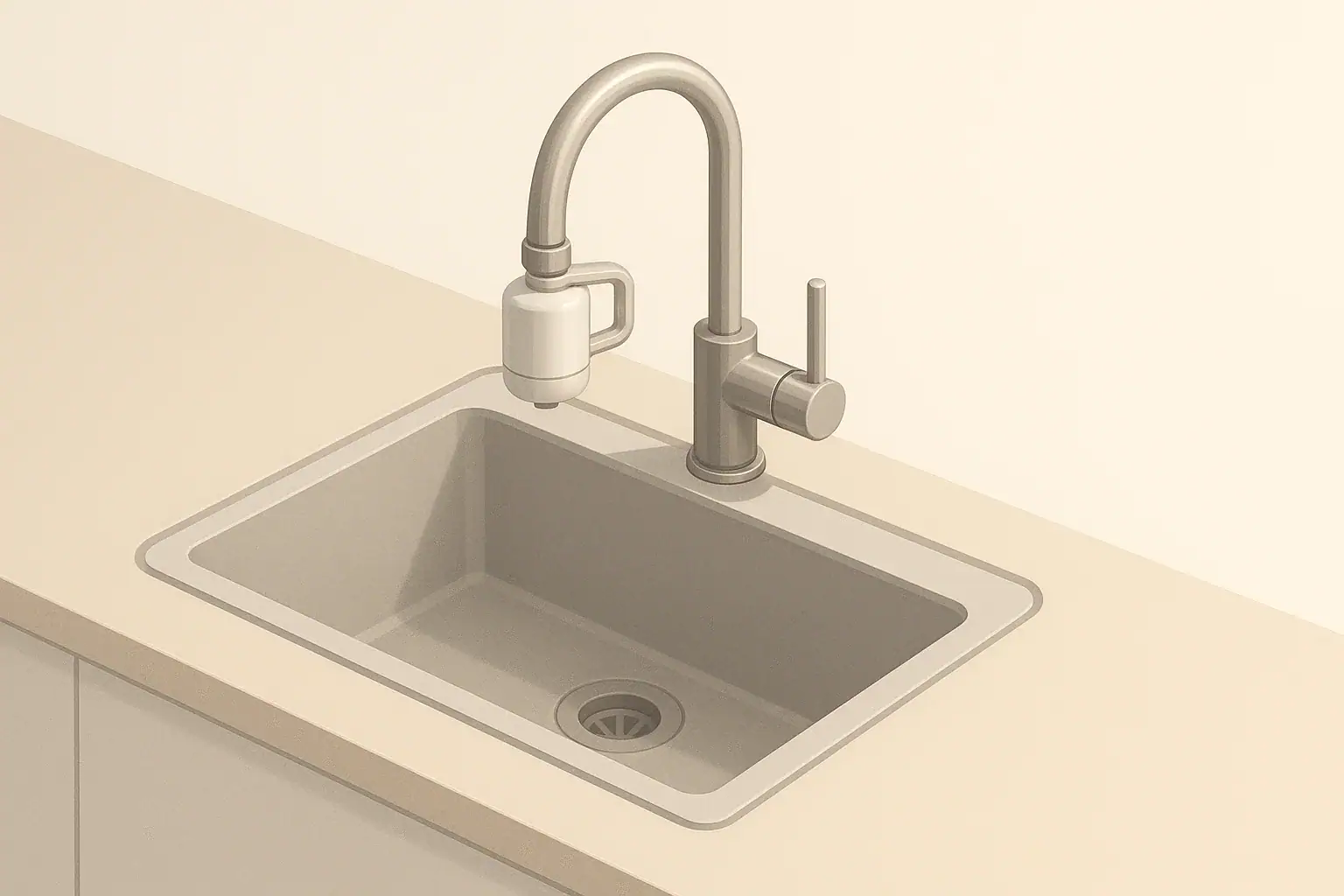
Overview: Two Popular Options for Better-Tasting Tap Water
Faucet-mount and under-sink filters are two of the most common ways to improve tap water taste and reduce everyday contaminants in U.S. homes. Both connect directly to your plumbing, so you are not constantly filling a pitcher, but they differ in convenience, performance, and how visible they are in your kitchen.
This guide breaks down how each type works, what each is typically good at, and how to match a filter to your water, kitchen layout, and maintenance habits. It focuses on practical use, taste and odor, standards, and long-term costs rather than health claims.
How Faucet-Mount Filters Work
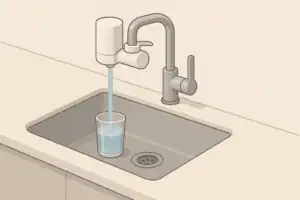
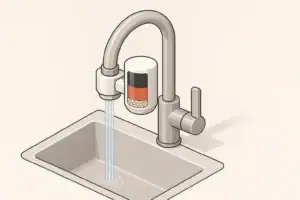
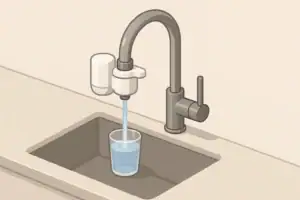
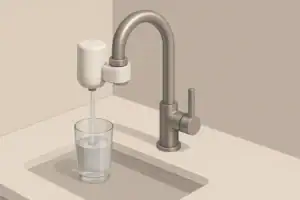
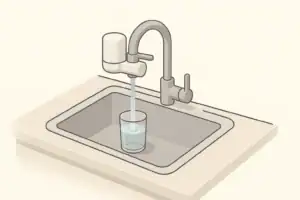
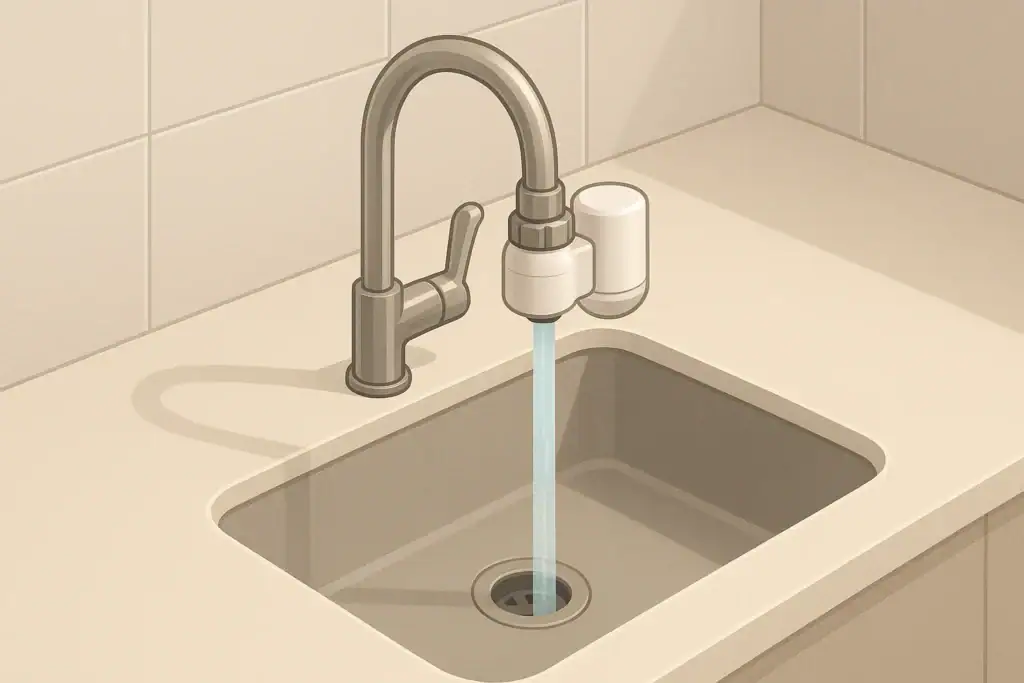
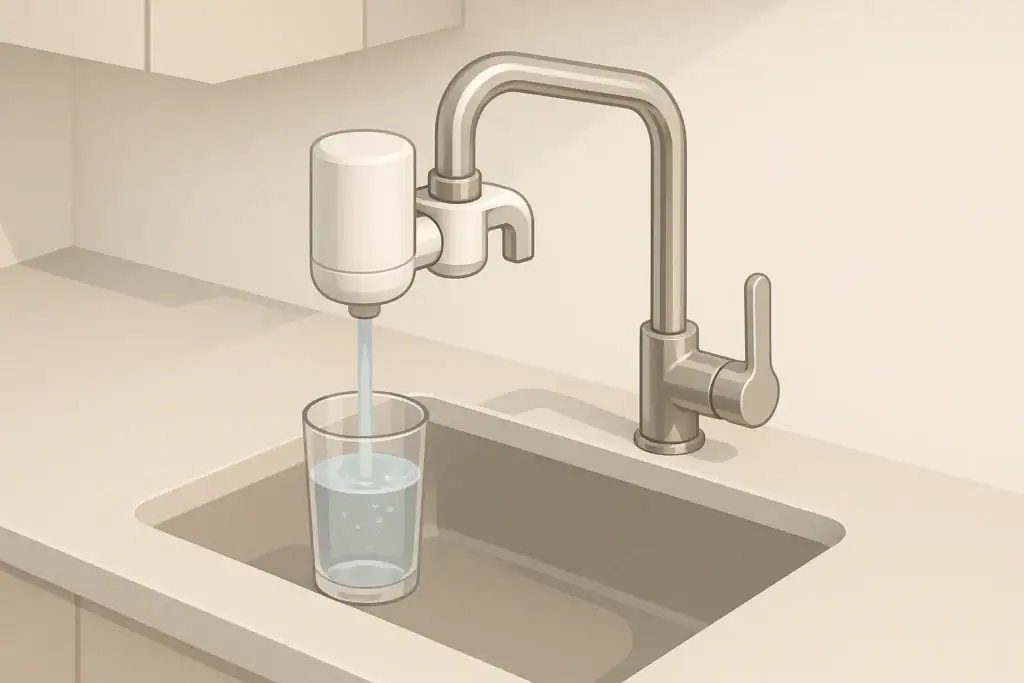
Faucet-mount filters attach directly to the end of your kitchen faucet. Most are small housings that contain a replaceable cartridge and a simple mechanism to switch between filtered and unfiltered water.
Basic Operation
Inside a faucet-mount unit you will usually find:
- Mechanical filtration: A fine screen or sediment layer that helps trap sand, rust, and debris.
- Activated carbon media: Porous carbon that adsorbs substances linked to chlorine taste and odor and selected organic compounds.
- Optional additional media: Some cartridges add extra layers intended to target specific metals or other contaminants.
When you flip the switch to “filtered,” water is routed through the cartridge before it leaves the faucet. When you switch it off, water bypasses the filter for tasks like washing dishes.
Typical Advantages
Faucet-mount filters are often chosen for their simplicity and low upfront cost. Common benefits include:
- Easy DIY installation: Usually no tools beyond a supplied adapter; they screw onto the faucet aerator threads.
- Immediate access to filtered water: No waiting for a pitcher to drip-filter.
- Compact and portable: Often suitable for renters, dorms, or temporary setups, as they can usually be removed without damage.
- On-demand switching: Quickly toggle between filtered water for drinking and unfiltered for cleaning.
Common Limitations
Because they are small and sit directly on the faucet, faucet-mount units come with trade-offs:
- Reduced flow rate when filtering: The small cartridge can slow the stream, especially as it nears the end of its life.
- Limited filter capacity: Cartridges are generally smaller and may need more frequent replacement compared with under-sink systems.
- Clutter at the faucet: The attachment changes the look and feel of the faucet and can interfere with large pots or sprayers.
- Compatibility issues: Some pull-down or unusual faucet designs may not accept a faucet-mount unit.
Example values for illustration.
| Factor | Faucet-Mount Filter | Under-Sink Filter |
|---|---|---|
| Installation complexity | Simple screw-on at faucet; usually DIY | Connects to cold-water line; may need basic tools |
| Upfront cost (example) | Lower, often one cartridge included | Higher, includes housing and plumbing fittings |
| Cartridge size and capacity | Small; more frequent changes | Larger; typically longer intervals |
| Effect on sink appearance | Visible on main faucet | Mostly hidden under sink |
| Flow while filtering | Often noticeably reduced | May be closer to normal faucet flow |
| Portability | Easy to remove and take along | Less portable once installed |
| Typical use cases | Rentals, small households, quick upgrade | Long-term setups, higher daily use |
How Under-Sink Filters Work
Under-sink filters install out of sight in the cabinet and connect to your cold-water line. They either feed a dedicated filtered-water faucet or route filtered water through the main kitchen faucet, depending on the design.
Basic Operation
Most under-sink systems are larger than faucet-mount units and can include multiple stages, such as:
- Pre-filter: Captures sediment, rust, and visible particles that could clog later stages.
- Activated carbon block or granular carbon: Targets chlorine taste and odor and a range of organic compounds.
- Additional media or stages: Some systems add specific media layers aimed at reducing certain metals or other targeted contaminants.
Because there is more space under the sink, these filters can be physically larger, with more media volume and potentially higher rated capacity than faucet-mount cartridges.
Typical Advantages
Under-sink filters are often selected for performance and aesthetics:
- Higher capacity: Larger cartridges can often handle more gallons before replacement (always check the manufacturer’s rated capacity).
- Potentially better flow: A wider housing and media path can support more consistent water flow.
- Cleaner look: The equipment is hidden in the cabinet, leaving the sink area less cluttered.
- More configuration options: Multi-stage setups are more common in under-sink formats.
Common Limitations
The main trade-offs for under-sink filters relate to installation and accessibility:
- More involved installation: You typically must shut off water, disconnect and reconnect plumbing, and mount hardware.
- Less portable: Not ideal if you move frequently or cannot alter plumbing (for example, in some rentals).
- Cabinet space usage: Cartridges and tubing take up storage room under the sink.
- Less obvious reminders: Because the system is hidden, it is easier to forget cartridge changes unless you track them.
Performance: What Each Format Typically Handles Well
Both faucet-mount and under-sink filters can improve taste and reduce common contaminants, but performance depends heavily on the specific cartridge design and its certified claims. The format alone does not guarantee specific results.
Taste, Odor, and Basic Aesthetic Issues
For many households, the primary goal is simply better-tasting and better-smelling water. Both formats frequently use activated carbon, which is commonly used to address:
- Chlorine-related taste and odor
- Some disinfection by-products (depending on media and design)
- Certain volatile organic compounds (VOCs), as specified by the manufacturer
Look for NSF/ANSI 42 certification when you are comparing filters for taste and odor performance. This standard covers aesthetic effects like chlorine reduction and particulate reduction, not health-related claims.
Common Contaminants and Standards
Filters are sometimes designed to address specific contaminants beyond basic taste and odor. Examples include:
- Lead and certain metals: Often associated with NSF/ANSI 53 certifications.
- Some pharmaceuticals and certain chemicals of emerging concern: Sometimes associated with NSF/ANSI 401.
- Microbial reduction: Some advanced cartridges are designed for bacteria, cysts, or viruses, though this is less common in simple faucet-mount or basic under-sink units and depends entirely on the product design and testing.
Under-sink systems are more likely to offer multi-stage designs aimed at a broader range of contaminants, but many faucet-mount filters are also certified for specific reduction claims. Always check whether the unit is certified, which standard applies, and which contaminants are actually listed.
Water Quality Metrics That Influence Choice
Certain water characteristics can affect both performance and maintenance:
- Turbidity and sediment: Cloudy water or visible particles can clog small faucet-mount cartridges more quickly. An under-sink system with a dedicated sediment pre-filter may perform better in these conditions.
- Hardness: Hard water can contribute to scale buildup inside plumbing and filter housings. Neither format is a full water softener, but larger cartridges may tolerate scaling and flow reduction for longer.
- Water pressure: Both formats rely on household water pressure. Very low pressure can feel more limiting with faucet-mount filters because of their smaller internal passages.
Convenience: Daily Use and Kitchen Workflow
Even a high-performing filter is not useful if it disrupts how you use your kitchen. Convenience is where faucet-mount vs under-sink filters differ most clearly.
Everyday Operation
Faucet-mount filters place the control right on the spout. This can be helpful if you frequently switch between filtered and unfiltered water for various tasks. Under-sink systems that feed a dedicated faucet give you a clear separation: one tap for filtered drinking and cooking water and your main faucet for everything else.
If your main concern is quickly filling glasses and small pots, both formats can work well. If you regularly fill very large containers, you may prefer a setup that maintains higher flow and is easier to place items under, which often favors under-sink installations (especially those that feed the main faucet).
Space and Aesthetics
Faucet-mount units are visible and may not fit every sink setup. Under-sink units are hidden, but they take cabinet space that might otherwise hold cleaning supplies or bins. Consider:
- How much room you have around the faucet spout.
- Whether you are comfortable giving up some cabinet space.
- How much visual clutter you are willing to accept at the sink.
Renters vs Homeowners
For renters, faucet-mount filters are often easier because they typically do not require permanent changes to plumbing. Under-sink systems, especially those that add a new faucet hole or modify hard plumbing, may require landlord approval. Some under-sink designs use existing knock-out plugs or accessory holes, but always confirm what is allowed in your specific living situation.
Installation: What to Expect with Each Format
Installation difficulty is a deciding factor for many households. While every product is different, general patterns exist for both formats.
Installing a Faucet-Mount Filter
Typical steps (always follow your specific product manual) include:
- Unscrew the existing aerator from your faucet.
- Choose the adapter that matches your faucet threads, if needed.
- Screw on the faucet-mount filter body, ensuring a snug, leak-free fit.
- Flush the new cartridge for the recommended time before drinking the water.
Most people can complete installation in a short time without shutting off the water main. Some specialty faucets, including pull-down sprayers, may not accept a faucet-mount filter at all.
Installing an Under-Sink Filter
Under-sink installations usually take longer and may require tools:
- Shut off the cold-water supply valve under the sink.
- Relieve pressure by opening the faucet.
- Disconnect the cold-water line as instructed.
- Install a tee or adapter that feeds the filter inlet.
- Mount the filter housing on the cabinet wall.
- Connect tubing from the adapter to the filter inlet and from the outlet to either the main faucet or a dedicated filtered-water faucet.
- Turn water back on and check carefully for leaks.
If a new dedicated faucet is included, you may need to drill or use an existing accessory hole in the sink or countertop, which some people prefer to have handled by a plumber.
Cost Over Time: Upfront vs Ongoing
When comparing faucet-mount vs under-sink filters, consider both initial setup and ongoing cartridge replacement costs.
Upfront Costs
Faucet-mount systems usually cost less at the start because they include a smaller housing and cartridge and require minimal hardware. Under-sink systems can cost more upfront because they include mounting hardware, tubing, fittings, and sometimes a dedicated faucet.
Cartridge Replacement and Cost Per Gallon
Over time, most of the cost comes from replacement cartridges. A simple way to compare systems is to estimate cost per gallon:
- Estimate your daily filtered water use (for example, a few gallons per day for drinking and cooking).
- Multiply by days between recommended cartridge changes to estimate total gallons per cartridge.
- Divide the cartridge price by that gallon estimate to get a rough cost per gallon.
Because under-sink cartridges are often larger, they may have a lower cost per gallon even if each cartridge costs more. Faucet-mount cartridges can be competitive for low-volume users or those who only filter small amounts daily.
Maintenance: Keeping Either System Working Well
Both formats require regular maintenance to function as intended. This mainly involves changing cartridges on time and occasionally checking for leaks or damage.
Replacement Intervals
Manufacturers typically give recommended replacement intervals based on time (for example, every few months) and/or gallons filtered. Real-world schedules can vary depending on:
- How much water you filter daily.
- Your water’s sediment level and turbidity.
- Whether your feed water contains substances that clog media more quickly.
Clues that a filter may be due (or overdue) for replacement include a noticeable drop in flow when filtering, a return of chlorine-like taste or odor, or discoloration in the housing or cartridge. Always follow the product’s instructions and do not extend cartridges far beyond the recommended change schedule.
Simple Maintenance Habits
- Set a calendar reminder based on the expected cartridge life for your household.
- Note the installation date and an estimated replacement date on a label under the sink or near the faucet.
- Wipe external surfaces occasionally to keep connections clean and easy to inspect.
- Check for any damp spots or drips under the sink after replacing cartridges.
Example values for illustration.
| What you notice | Likely issue | Safe checks to perform |
|---|---|---|
| Sudden drop in filtered flow | Cartridge nearing end of life or clogged | Confirm age of cartridge; replace if due; check for kinked tubing (under-sink) |
| Water tastes or smells like chlorine again | Carbon media exhausted | Verify replacement schedule; install new cartridge; flush as directed |
| Drips at faucet-mount connection | Loose threads or worn washer | Hand-tighten; reseat washer; ensure correct adapter is used |
| Damp cabinet floor under sink | Slow leak at fitting or housing | Dry area; inspect joints; gently retighten fittings; contact a plumber if leak persists |
| Unusual noise when turning on filtered water | Air in lines or loose connection | Run water to purge air; check that tubing is fully seated in connectors |
| Indicator light (if present) shows cartridge due | Usage or time limit reached | Replace cartridge; reset indicator per instructions |
Certifications and Verifying Claims
Whether you choose a faucet-mount or an under-sink filter, look closely at independent certifications. NSF/ANSI standards commonly seen on point-of-use filters include:
- NSF/ANSI 42: Aesthetic effects, such as chlorine taste and odor and some particulate reduction.
- NSF/ANSI 53: Specific health-related contaminant reduction claims, such as certain metals and selected organic compounds.
- NSF/ANSI 401: Selected emerging compounds, such as certain pharmaceuticals and chemical residues.
- NSF/ANSI 58: Reverse osmosis systems, which is a different category than standard faucet-mount or basic under-sink carbon filters.
To verify claims, confirm which organization tested the filter and which specific contaminants are listed under each standard. The presence of a standard number alone does not mean the filter is certified for every contaminant covered by that standard; only those explicitly listed in the product documentation or certification listing.
By comparing certified claims, your local water quality report, and your household’s space and installation limits, you can decide whether the convenience of a faucet-mount filter or the typically higher capacity of an under-sink filter fits better with how you use water every day.
Frequently asked questions
Which type of filter is more effective at reducing lead in drinking water?
Effectiveness depends on the filter media and whether the specific cartridge is certified for lead reduction. Look for independent certification listing lead as a reduced contaminant; under-sink systems more commonly offer larger, multi-stage cartridges that include lead-targeting media, but some faucet-mount cartridges are also certified. Verify the product’s certified contaminant list rather than assuming performance based on format alone.
How often should I replace cartridges for faucet-mount vs under-sink filters?
Replacement intervals vary by manufacturer and are based on time and/or gallons treated. Faucet-mount cartridges are typically smaller and may need changing every few months or after a few hundred gallons, while under-sink cartridges often last longer (commonly six to twelve months) under similar use. Monitor changes in flow, taste, or any indicator lights to determine when replacement is due.
Can I install a faucet-mount filter on a pull-down or spray-style faucet?
Many pull-down, pull-out, or spray-style faucets are incompatible with standard faucet-mount attachments because their aerator threads or integrated hoses differ. Some adapters exist, but compatibility is not guaranteed; if your faucet won’t accept an adapter, an under-sink system or a dedicated filtered-water faucet is usually a better option. Always check the filter’s compatibility guide before purchase.
Which option is more cost-effective over time: faucet-mount or under-sink?
Under-sink systems often have a lower cost per gallon because their larger cartridges hold more media, even though they cost more up front. Faucet-mount systems have lower initial costs but smaller cartridges that require more frequent replacement, which can be more expensive for higher-volume users. Calculate cost per gallon using your household’s usage and cartridge life to compare accurately.
Will either filter type protect against bacteria or viruses?
Most standard faucet-mount and basic under-sink carbon filters are not designed or certified to remove bacteria or viruses. If microbial reduction is a concern, choose a product explicitly tested and certified for those organisms or consider treatment methods specifically intended for microbial contaminants. Check product testing documents and your local water quality report to determine appropriate protections.
Recommended next:
- Best Faucet-Mount Filters for Chlorine Taste (High Flow Picks)
- Faucet-Mount Filter Compatibility: How to Check Your Faucet Type
- How to Install a Faucet-Mount Filter Without Leaks
- Faucet-Mount Filters for Renters: No-Drill Setup Guide
- Troubleshooting a Faucet-Mount Filter with Slow Flow
- Do Faucet-Mount Filters Remove Lead? Reading the Label
- More in Faucet-Mount Filters →
- NSF/ANSI standards explained (42/53/401/58)
- Clear trade-offs: pitcher vs faucet vs under-sink vs RO
- Maintenance planning: cost per gallon and replacement cadence