Hard water is water that contains higher levels of dissolved calcium and magnesium. These minerals are common in groundwater across many parts of the United States. While they are not usually a safety concern on their own, they change how water behaves on your skin, hair, soap, and fixtures.
In the shower, hard water can create several noticeable effects:
- Soap that does not rinse easily: You may feel a lingering film or drag on your skin.
- Less lather: Soap and shampoo may not foam as much, so you use more product.
- Mineral spots: White or chalky spots on glass doors, tile, and fixtures.
- Showerhead buildup: Clogged nozzles and uneven spray patterns over time.
The “feel” of the water in the shower is mainly about how minerals interact with soap, your skin’s natural oils, and any disinfectants like chlorine or chloramine. When you compare a shower with no treatment, one with a filter, and one with a softener, you are really comparing how each setup changes these interactions.
Why Hard Water Feels Different in the Shower
Hard water is water that contains higher levels of dissolved calcium and magnesium. These minerals are common in groundwater across many parts of the United States. While they are not usually a safety concern on their own, they change how water behaves on your skin, hair, soap, and fixtures.
In the shower, hard water can create several noticeable effects:
- Soap that does not rinse easily: You may feel a lingering film or drag on your skin.
- Less lather: Soap and shampoo may not foam as much, so you use more product.
- Mineral spots: White or chalky spots on glass doors, tile, and fixtures.
- Showerhead buildup: Clogged nozzles and uneven spray patterns over time.
The “feel” of the water in the shower is mainly about how minerals interact with soap, your skin’s natural oils, and any disinfectants like chlorine or chloramine. When you compare a shower with no treatment, one with a filter, and one with a softener, you are really comparing how each setup changes these interactions.
Showering With No Treatment: Living With Hard Water
Leaving your water as-is, with no filter or softener, is the default for many homes. Municipal water supplies are generally treated for safety, but not necessarily adjusted for hardness unless the local utility chooses to do so.
How Untreated Hard Water Feels
The feel will depend on how hard your water is. In general, you may notice:
- Soap scum: A sticky film where minerals combine with soap, leaving residue on skin and surfaces.
- “Grippy” rinse: Skin can feel squeaky or tight rather than slick or smooth.
- Hair texture changes: Hair may feel weighed down, less shiny, and harder to detangle.
Some people prefer the “squeaky” feel because it can seem like soap is completely gone. Others interpret it as dryness or residue. The experience is subjective, but it’s directly tied to the interaction between minerals and soap.
Pros of Doing Nothing
- No upfront cost: You do not have to buy equipment or cartridges.
- No maintenance: No cartridges to change, no salt to refill.
- Simplest setup: Nothing installed on plumbing or fixtures.
Tradeoffs and Practical Considerations
- More cleaning work: Mineral spots and soap scum can require more frequent scrubbing.
- Showerhead performance: Buildup may gradually reduce water flow and spray quality.
- Product use: Soap and shampoo may not lather as well, so you may use more over time.
If you are mainly concerned about safety, your local water quality report is more important than the feel in the shower. But if comfort, cleaning effort, and fixture appearance matter to you, it can be useful to compare staying with hard water to using a filter or softener.
Example values for illustration.
| Aspect | Nothing (Hard Water) | Shower Filter Only | Water Softener (Whole House) |
|---|---|---|---|
| Mineral hardness in shower | Unchanged | Unchanged | Significantly reduced |
| Chlorine/chloramine feel and odor | Present as supplied | Often reduced (model-dependent) | May be reduced if combined with carbon |
| Soap lathering | Reduced in harder water | Similar to untreated | Typically increased |
| Skin feel after rinsing | Squeaky or tight for many people | Similar, but may feel less dry if chlorine is reduced | Smoother or more slippery for many people |
| Scale on glass and fixtures | Visible spots and buildup | Similar mineral spotting | Usually greatly reduced |
| Upfront investment | None | Low | Moderate to high |
| Ongoing maintenance | None | Cartridge changes | Salt refills and periodic service |
Shower Filters: Changing Feel Without Softening
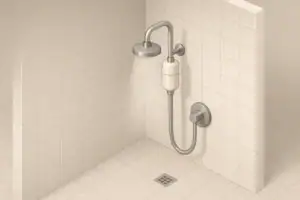
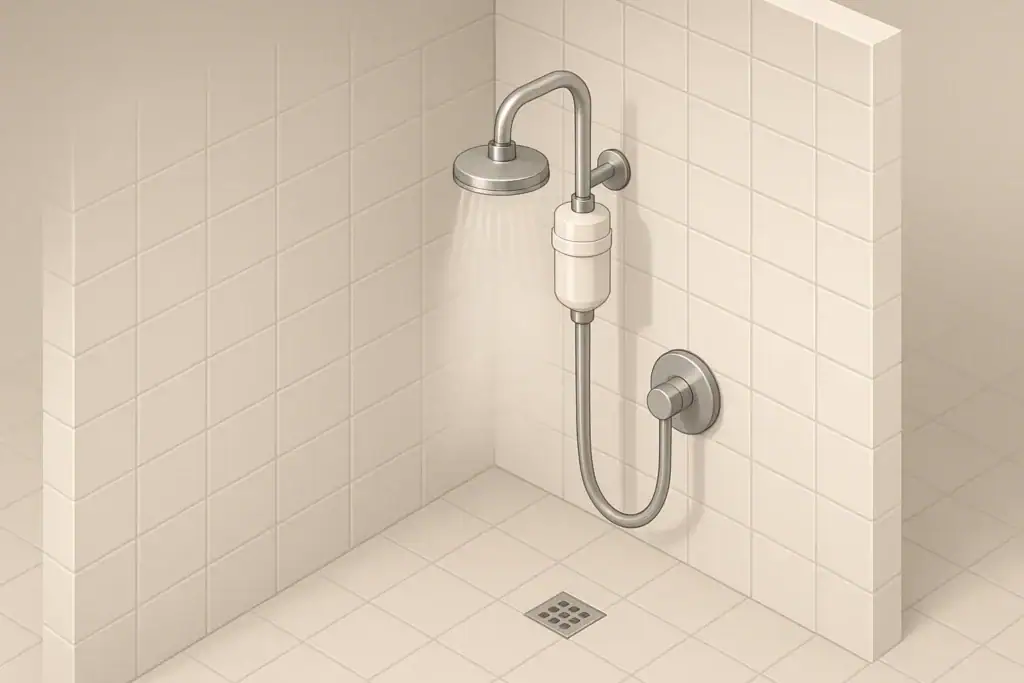
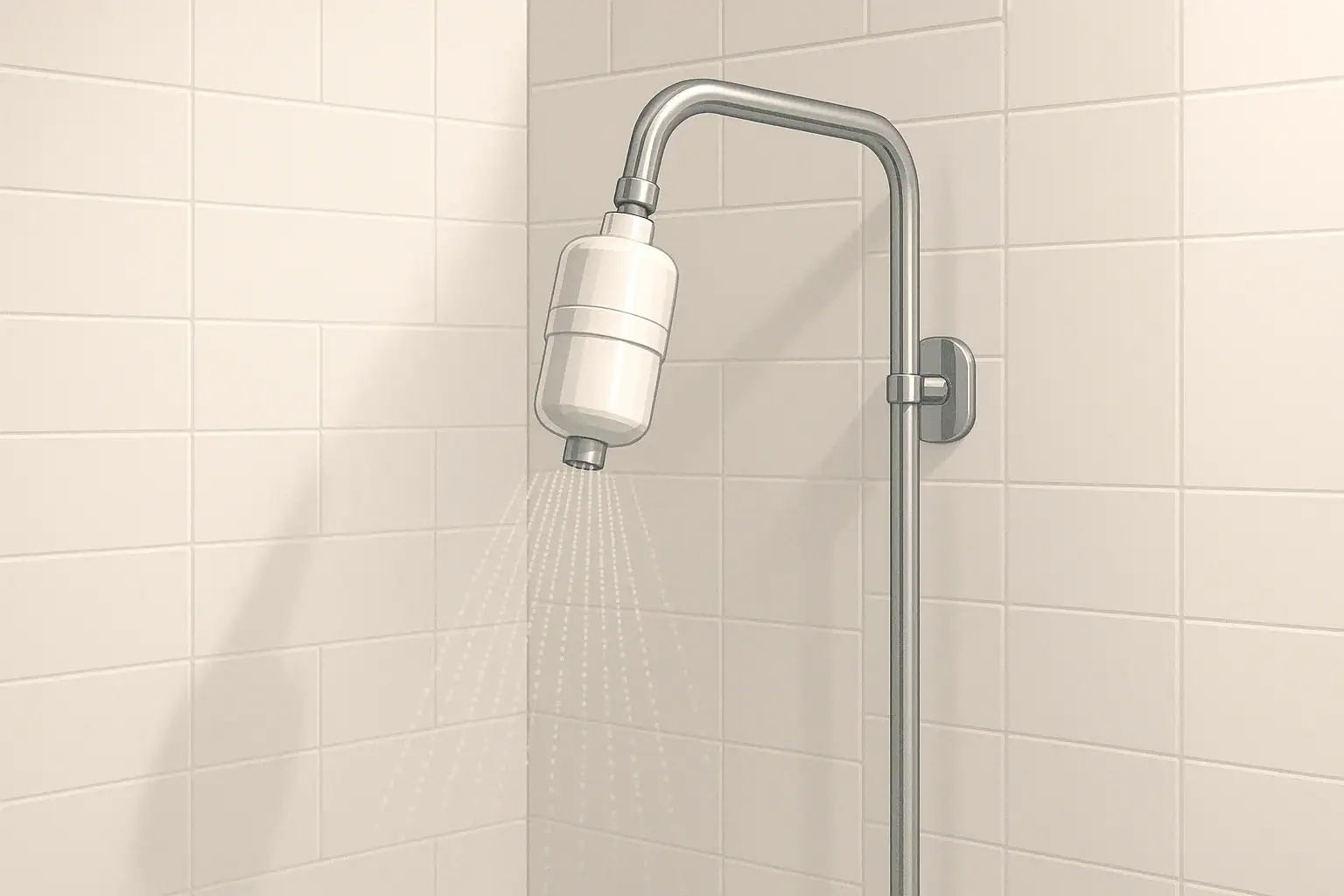
A shower filter is a device installed directly on the shower arm or integrated into a showerhead. Its main purpose is usually to reduce chlorine, chloramine, and sometimes sediment or certain other contaminants. It does not normally reduce hardness minerals in a significant way.
What Shower Filters Typically Do
Most shower filters use one or more of these media types:
- Activated carbon: Helps reduce chlorine, some disinfection byproducts, and certain organic compounds.
- KDF or similar media: Granular metal alloys that can help with chlorine reduction and scale inhibition.
- Sediment media: Simple screens or layers that capture rust flakes or larger particles.
Some filters may be tested or certified against specific standards, such as NSF/ANSI 42 for aesthetic chlorine reduction. Verifying those claims through independent documentation can give you a better idea of what the filter is designed to do.
How a Shower Filter Changes the Feel
Because shower filters generally do not remove calcium and magnesium, they do not make soft water in the traditional sense. However, they can noticeably change the experience in other ways:
- Less chlorine odor: Many people report a milder smell compared with untreated municipal water.
- Water feel: Some users notice water feels less harsh on skin or hair when chlorine is reduced.
- Spray consistency: Sediment reduction can help keep spray nozzles from clogging as quickly.
The “slippery” feel associated with soft water usually does not appear with a standard shower filter alone, because hardness minerals remain. If your main concern is the classic hard water effects—spots on glass, reduced lather, mineral scale—a shower filter by itself will not address those fully.
Pros and Limitations of Shower Filters
Advantages:
- Focused on the shower only, with relatively low upfront cost.
- Simple, often tool-free installation in most bathrooms.
- Can improve taste and odor for those who occasionally rinse their mouth or brush teeth in the shower.
Limitations:
- Does not significantly change hardness or mineral spotting.
- Cartridges require periodic replacement, often every few months to a year depending on usage and design.
- Flow rate may be reduced if the cartridge clogs or if the design is highly restrictive.
If you mainly want to soften water for the whole home, a shower filter is not a substitute for a softener. If your focus is chlorine odor, simple installation, and limited cost, it can be a reasonable option.
Water Softeners: The Classic “Slippery” Shower Feel
A traditional water softener is typically installed on the main water line to treat most or all of the water entering the home. The most common type uses ion exchange resin and salt to reduce hardness.
How Water Softeners Work
Typical ion exchange softeners:
- Pass hard water through a resin bed charged with sodium or potassium ions.
- Exchange calcium and magnesium in the water for sodium or potassium on the resin.
- Periodically regenerate the resin using a brine solution, flushing hardness minerals to the drain.
This process can reduce hardness substantially. The result is water that interacts very differently with soap and surfaces, throughout the house—not just in the shower.
Why Softened Water Feels “Slippery”
In softened water, soap no longer reacts with calcium and magnesium to form hard residues. Instead, it stays dissolved more easily. The effects in the shower include:
- Increased lather: Soap and shampoo may foam more with less product.
- Smoother rinse: Skin often feels more slick or slippery, even after rinsing thoroughly.
- Reduced soap scum: Less mineral-soap buildup on tile, glass, and tubs.
Some people interpret the slippery feel as soap not rinsing off, but it is largely a result of water having fewer hardness minerals for soap to bind with. A longer rinse usually convinces most users that the soap is gone even if the water still feels smoother than what they are used to.
Whole-House Impact Beyond the Shower
Because a softener usually treats the entire plumbing system, it also affects:
- Laundry: Detergent may work more effectively in softened water.
- Dishwashing: Fewer mineral spots on dishes and glassware.
- Appliances: Reduced scale in water heaters and plumbing fixtures.
However, a standard softener does not normally reduce chlorine, chloramine, or many other contaminants of concern. If those are issues in your local supply, a separate carbon filter or combination system is often used along with the softener.
Pros and Tradeoffs of Water Softeners
Advantages:
- Addresses hardness at the source for the entire home.
- Reduces mineral spots and scale on fixtures and glass surfaces.
- Produces the classic “soft water” feel many people prefer.
Tradeoffs:
- Higher upfront cost and more complex installation than a shower filter.
- Requires ongoing salt purchases and periodic servicing or inspections.
- Increases water use slightly during regeneration cycles.
From a shower-only perspective, a softener may feel like more system than you strictly need. But if hardness affects many aspects of your home water use, the comfort in the shower is only one of several benefits.
Deciding Between Filter, Softener, or Nothing for Shower Feel
The choice between doing nothing, adding a shower filter, or installing a water softener depends on your priorities, water conditions, and budget. Looking at a few key questions can help you align the feel you want with the right type of treatment.
1. How Hard Is Your Water?
Water hardness is commonly measured in grains per gallon (gpg) or milligrams per liter (mg/L as calcium carbonate). Many local reports group hardness into ranges such as “soft,” “moderately hard,” or “very hard.”
- Lower hardness: If your water is already relatively soft or only mildly hard, the difference a softener makes in the shower may be subtle.
- Higher hardness: If hardness is high, you are more likely to notice a dramatic change in feel, lather, and spotting with a softener.
You can check your water utility’s annual report or use a basic hardness test to get a sense of where your supply falls.
2. Is Your Main Concern the Feel, the Smell, or the Cleaning Effort?
Different issues point toward different solutions:
- Feel and lather throughout the house: A softener changes how water interacts with soap everywhere, not just in the shower.
- Chlorine smell in the shower: A shower filter or whole-house carbon filter may be more targeted to this issue.
- Mineral spots and scale: A softener is more effective for reducing visible mineral buildup.
If the primary annoyance is chlorine odor or a slightly harsh feel on skin during showering, a local filter can be a practical first step. If you are washing mineral spots off glass weekly, you may be more satisfied with whole-house softening.
3. How Much Installation and Maintenance Do You Want?
Each option comes with a different level of involvement:
- Nothing: No installation; only regular bathroom cleaning.
- Shower filter: Typically a quick install with hand tools; cartridge changes every few months to a year based on usage and design.
- Water softener: Professional installation is common; requires salt, system checks, and occasional service.
If you rent or cannot modify plumbing, a shower filter is often the most accessible option. Homeowners planning long-term use may see more value in a properly sized and maintained softener.
4. Cost Per Gallon and Long-Term Perspective
While exact costs vary, you can compare options by thinking in terms of cost per gallon of shower water:
- No treatment: Your cost per gallon is simply your water and energy cost.
- Shower filter: Spread the cost of each cartridge over the estimated gallons it treats. For example, if a cartridge is rated for a certain number of gallons, you can divide its price by that number to estimate cost per gallon.
- Water softener: Consider equipment, installation, salt, and regeneration water over several years, then estimate cost per gallon for the whole home.
In many cases, a shower filter adds only a modest cost for the water used in that one fixture. A softener carries more total cost, but the benefits extend to all fixtures and appliances, which may shift the balance when considering the entire household.
Testing, Standards, and Verifying Performance
Whichever path you choose, basic testing and awareness of standards can help you understand what is changing in your water and whether your equipment is performing as expected.
Simple Ways to Track Changes
For shower comfort and maintenance, you can monitor:
- Hardness test strips or kits: Before and after a softener installation, to confirm hardness reduction.
- Chlorine test strips: Before and after adding a shower filter or carbon filter.
- Visual inspection: Checking for scale on fixtures, glass, and showerheads over time.
Keeping a simple log when you install or replace filters or adjust softener settings can make it easier to spot trends, like a gradual return of hardness or diminished chlorine reduction.
Understanding Relevant NSF/ANSI Standards
NSF/ANSI standards are voluntary testing benchmarks that some manufacturers use to demonstrate that their products meet specific claims. For shower feel and general home water quality, the following are often relevant:
- NSF/ANSI 42: Covers aesthetic effects such as chlorine taste and odor, and particulate reduction.
- NSF/ANSI 53: Focuses on reduction of certain contaminants that can be a health concern.
- NSF/ANSI 58: Applies to reverse osmosis systems, which are more relevant at the point of use (such as kitchen sinks) than in showers.
- NSF/ANSI 401: Addresses reduction of certain emerging compounds, often at point-of-use drinking water systems.
Softeners also may be evaluated under different standards that look at capacity and hardness reduction performance. When selecting equipment, looking for clear statements about which standards a product is tested against, and for what specific performance claims, can help you set realistic expectations.
Example values for illustration.
| Standard | Main focus | Common use in the home | What to verify on documentation |
|---|---|---|---|
| NSF/ANSI 42 | Aesthetic improvements (taste, odor, chlorine, particulates) | Shower filters, faucet filters, whole-house carbon | Specific claims such as chlorine taste and odor reduction |
| NSF/ANSI 53 | Reduction of certain contaminants of potential health concern | Under-sink and countertop drinking water filters | Which contaminants were tested and to what reduction level |
| NSF/ANSI 58 | Reverse osmosis system performance and safety | Kitchen RO systems for drinking and cooking water | System capacity, recovery ratio, and performance claims |
| NSF/ANSI 401 | Certain emerging compounds and incidental contaminants | Advanced under-sink and pitcher-style drinking systems | Which compounds were included in testing |
| Hardness reduction standards | Ion exchange softener capacity and efficiency | Whole-house water softeners | Grain capacity and salt efficiency ratings |
| Particulate reduction standards | Reduction of sediment and visible particles | Pre-filters on whole-house and shower systems | Particle size ratings (for example, nominal micron levels) |
Putting Your Shower Experience in Context
Hard water feel in the shower is only one piece of your overall home water picture. A shower filter can target chlorine and odor where you feel it most. A water softener can transform how water behaves with soap and surfaces throughout the house. Leaving the water untreated keeps things simple but may mean more work dealing with mineral buildup and harder-to-rinse soap.
By understanding how each option affects hardness, chlorine, and maintenance, you can choose the setup that best matches your expectations for comfort, cleaning, and long-term upkeep in your bathroom and beyond.
Frequently asked questions
How does hard water feel in the shower compared to soft water?
Hard water often leaves a tight or “squeaky” sensation because calcium and magnesium react with soap to form residues that reduce lather and leave a film on skin and hair. Softened water typically feels slicker or more slippery since soap stays dissolved and rinses differently, often producing more lather with less product.
Will a shower filter remove the hard water feel in the shower?
Most shower filters are designed to reduce chlorine, chloramine, and some particulates but do not remove calcium and magnesium that cause hardness. That means a filter can reduce chlorine odor and may make water feel less harsh, but it usually will not eliminate mineral spots, soap scum, or the reduced lather associated with hard water.
Can a water softener eliminate soap scum and mineral spots in the shower?
A whole-house water softener using ion exchange can substantially reduce hardness minerals, which in turn decreases soap scum and mineral spotting on glass and fixtures. It will change how soap lathers and rinses throughout the home, but it typically does not remove chlorine or other non-hardness contaminants unless paired with additional filtration.
How can I test whether hard water is causing the shower feel?
Use hardness test strips or a basic lab kit to measure calcium and magnesium levels in a tap sample; compare readings before and after any treatment to confirm changes. You can also track visual signs (scale on fixtures), frequency of lathering problems, and results from chlorine test strips if odor or disinfectant taste is a concern.
Are there downsides to switching to softened water for showering?
Softened water can leave a slippery feel that some people initially mistake for soap residue, and ion-exchange softeners add sodium or potassium to treated water. Softeners require upfront cost, periodic salt or media maintenance, and produce a small amount of regeneration wastewater, so weigh these tradeoffs against comfort and appliance benefits.
Recommended next:
- NSF/ANSI standards explained (42/53/401/58)
- Clear trade-offs: pitcher vs faucet vs under-sink vs RO
- Maintenance planning: cost per gallon and replacement cadence