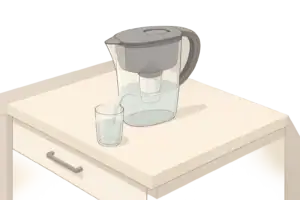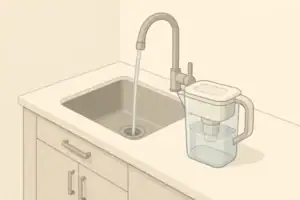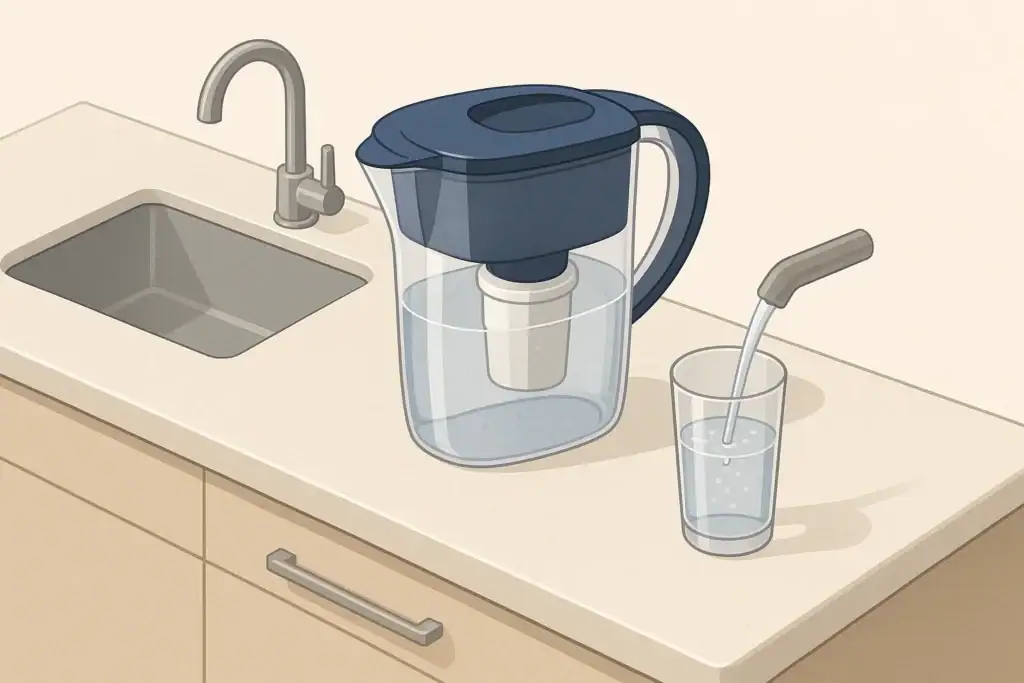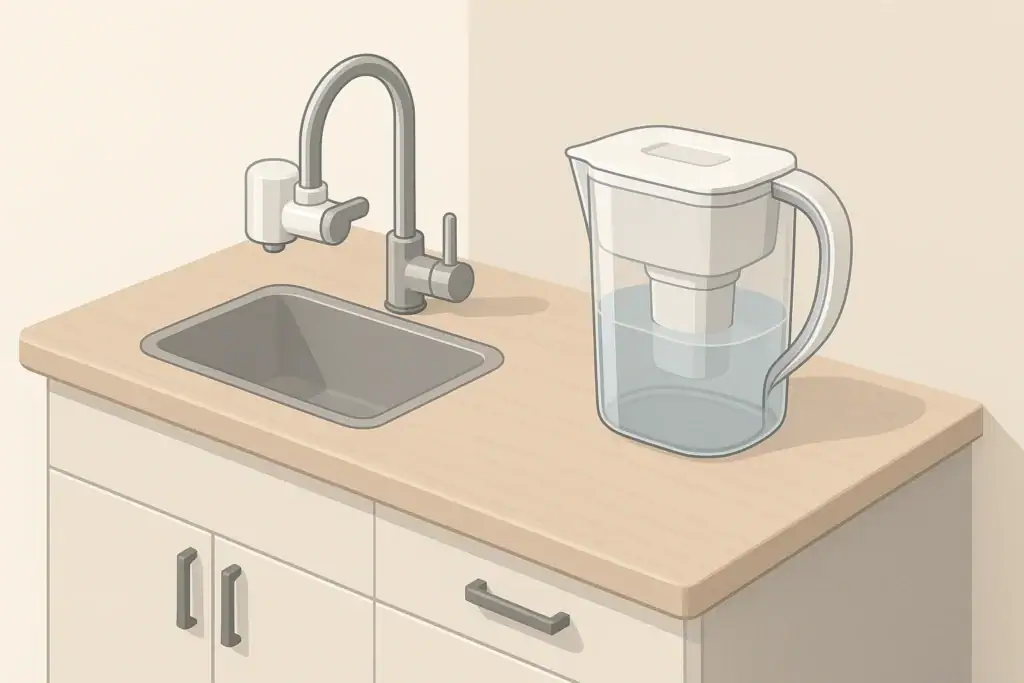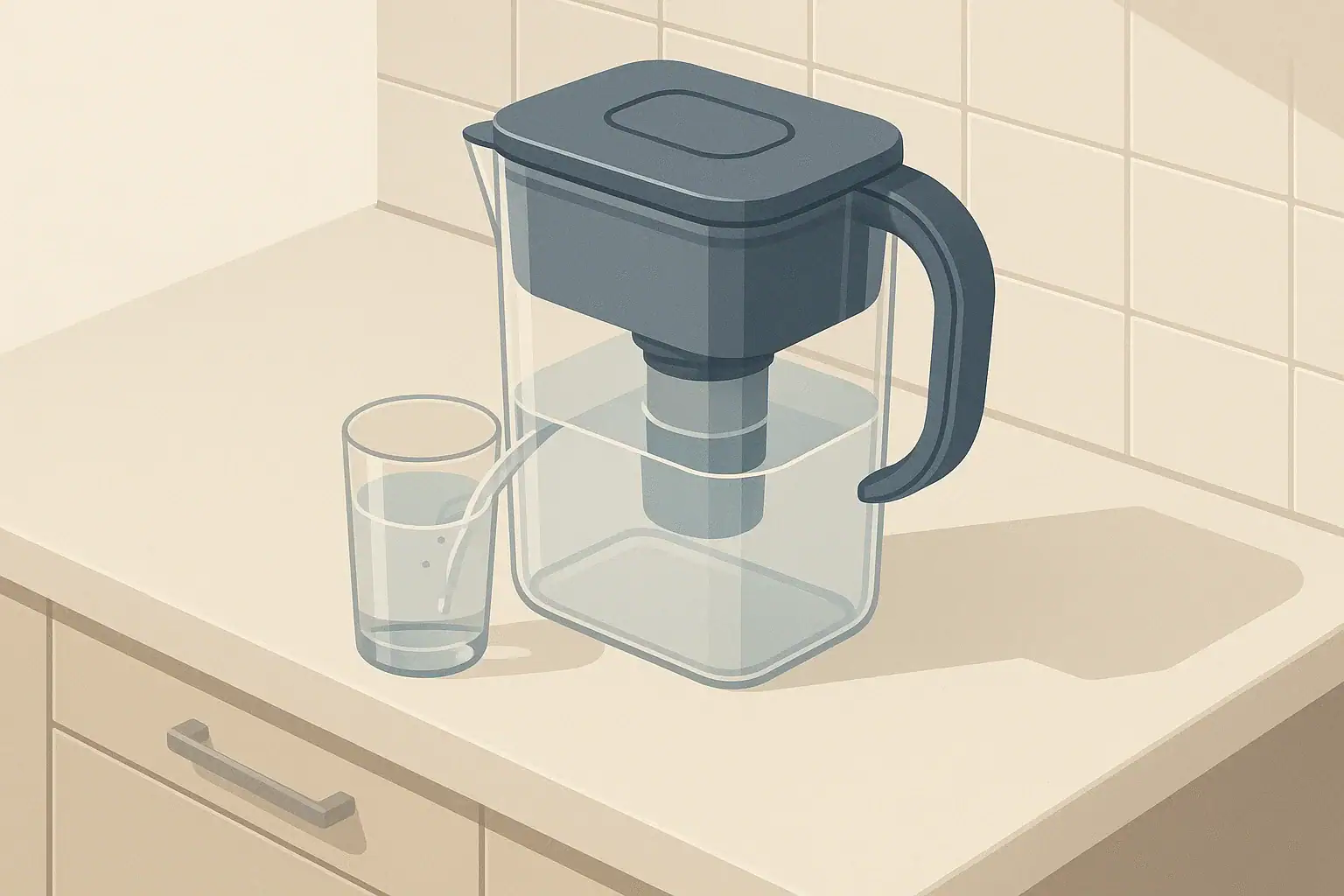
Pitcher filters are popular because they are simple, inexpensive, and easy to store in the refrigerator. Many people expect them to instantly improve the taste and smell of tap water. When the water tastes worse after filtering, it can be surprising and frustrating.
Most pitcher filters use a combination of activated carbon and other media to reduce chlorine, some off-flavors, and certain contaminants. However, several normal and fixable conditions can make water from a pitcher taste flat, musty, metallic, or even slightly sour. Taste changes do not automatically mean the water is unsafe, but they are an important early warning that something in the system needs attention.
This guide explains the most common reasons filtered water tastes worse, what those flavors often indicate, and practical steps to improve taste while keeping your pitcher filter working as designed.
Why Filtered Water Can Taste Worse than Tap
Pitcher filters are popular because they are simple, inexpensive, and easy to store in the refrigerator. Many people expect them to instantly improve the taste and smell of tap water. When the water tastes worse after filtering, it can be surprising and frustrating.
Most pitcher filters use a combination of activated carbon and other media to reduce chlorine, some off-flavors, and certain contaminants. However, several normal and fixable conditions can make water from a pitcher taste flat, musty, metallic, or even slightly sour. Taste changes do not automatically mean the water is unsafe, but they are an important early warning that something in the system needs attention.
This guide explains the most common reasons filtered water tastes worse, what those flavors often indicate, and practical steps to improve taste while keeping your pitcher filter working as designed.
How Pitcher Filters Change Water Taste
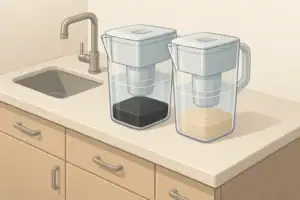
To understand taste problems, it helps to know what a pitcher filter actually does to tap water. Most designs rely on gravity to move water through a cartridge that usually contains:
- Activated carbon to reduce chlorine and some organic compounds that cause odors
- Ion exchange resins to adjust certain dissolved minerals
- Mechanical filtration (fine pores) to capture larger particles like sediment
These materials can improve taste by reducing chlorine and some organic compounds that cause odors
At the same time, they can also change taste in ways you may not expect:
- Mineral balance can shift, leading to flatter-tasting water.
- Dissolved solids may be reduced slightly, especially if the filter targets hardness or specific ions.
- pH can change a little depending on the media and your incoming water.
Because taste is influenced by chlorine level, mineral content, temperature, and freshness, a new pitcher filter can make water taste better, worse, or simply different from what you are used to. Consistent, unpleasant changes usually point to an issue with installation, usage, or cartridge condition rather than with the idea of filtering itself.
Example values for illustration.
| Water source | Typical taste profile | Common user expectations | How a pitcher filter changes it |
|---|---|---|---|
| Chlorinated city tap water | Noticeable chlorine, sometimes chemical or pool-like | Want less chlorine smell and smoother taste | Often reduces chlorine; may taste softer or flatter |
| Hard tap water | Mineral, sometimes metallic or bitter | Expect less mineral aftertaste | Can slightly reduce some hardness ions; overall taste may be muted |
| Softened tap water | Very smooth, sometimes slightly salty | Want cleaner taste without added salt flavor | Carbon may reduce some off-notes; low minerals can taste bland |
| Well water with mild odor | Earthy or musty tones | Expect removal of odor and color | Carbon can help, but strong odors may exceed pitcher capacity |
| Chilled bottled-style taste | Clean, consistent, lightly mineral | Hope to match bottled taste from tap | Pitchers may get closer, but mineral mix remains different |
| Unfiltered refrigerator tap | Similar to kitchen tap, slightly cooler | Want colder and fresher-tasting water | Pitcher in fridge adds both cooling and chlorine reduction |
Common Pitcher Filter Taste Problems and What They Mean
Unpleasant tastes usually fall into a few recognizable categories. While personal perception varies, these patterns can help you narrow down the cause.
1. Earthy, Musty, or “Stale” Taste
A musty or stale flavor is one of the most frequent complaints. It can develop gradually or appear after the pitcher has sat for a while.
Possible causes include:
- Old or saturated cartridge that is no longer effectively adsorbing organic compounds.
- Slow bacterial growth on the filter or in the reservoir if the pitcher is rarely cleaned.
- Standing water stored for days without being emptied and refilled.
Even when the incoming water is treated and generally safe, any damp, carbon-rich medium can develop biofilm if not replaced on schedule and kept clean. This does not necessarily indicate harmful organisms, but it can strongly influence taste.
2. Metallic or Bitter Taste
A metallic or bitter taste may be described as “pennies,” “battery-like,” or sharp on the tongue.
Potential contributors include:
- High metals in source water (such as iron or manganese) that exceed what a basic pitcher cartridge can handle.
- Cartridge at the end of its life, no longer reducing certain ions effectively.
- Initial rinse water not fully flushed from a new cartridge, especially if fine particles are present.
If the metallic taste is present in the tap water and only slightly changed by the filter, the pitcher may be functioning as expected but is not designed to address that particular issue fully.
3. Chemical, Plastic, or “New Filter” Taste
Right after installing a replacement cartridge, some users notice a chemical-like or plastic taste.
This often results from:
- Manufacturing residues or dust from the filter media that need to be flushed out.
- New plastic components in the reservoir or lid that have not been washed thoroughly.
- Insufficient priming, such as skipping the recommended number of initial fill-and-discard cycles.
In most cases, this type of taste diminishes after proper rinsing and a short break-in period, as long as the filter is installed according to the instructions.
4. Flat, Dull, or “Empty” Taste
Some people describe filtered water as tasteless in a way that feels unsatisfying, especially compared with mineral-rich tap or bottled water.
This can happen when:
- Chlorine and some flavor-contributing minerals are reduced, leaving water that tastes very neutral.
- Water is very low in total dissolved solids (TDS), either naturally or because of previous treatment such as softening or reverse osmosis upstream.
- Water is stored very cold, which can suppress some flavors while enhancing perception of flatness.
This type of taste is not necessarily a sign of malfunction. It mainly reflects personal preference and the mineral profile of the original water.
5. Sour or Slightly “Off” Flavor
A faint sour note or generally “off” flavor can be harder to describe but is usually recognized when water no longer tastes clean or neutral.
Possible reasons include:
- Expired cartridge that has been used significantly beyond its rated capacity.
- Organic buildup from infrequent cleaning of the reservoir, lid, or spout.
- Mixing of filtered and unfiltered water due to poor assembly or a loose insert, leading to inconsistent taste.
If the taste changes suddenly, especially when you are otherwise using the pitcher the same way, it is often a sign that the filter needs replacement or that a thorough cleaning is overdue.
Installation and Break-In: Getting Past the “New Filter” Taste
Many taste complaints occur right after people install a new cartridge. Correct installation and initial flushing are important for predictable taste.
Rinse and Flush the New Cartridge
Most pitcher filters require at least one of the following steps:
- Rinsing under cold water for a specified time to wash away loose carbon dust.
- Soaking the cartridge to help remove trapped air and ensure even flow.
- Discarding the first few batches of filtered water instead of drinking them.
If these steps are rushed or skipped, the first glasses of water may contain residual fine particles that make the taste slightly gritty, dusty, or chemical-like.
Wash the Pitcher Components
New plastic parts can also affect flavor. Before using the pitcher for drinking water, it is helpful to:
- Hand-wash the reservoir, body, and lid with mild dish soap and rinse thoroughly.
- Allow parts to air dry or drain upside down to avoid soap residue.
- Check that no packing materials or labels remain in water-contact areas.
Residual soap, manufacturing oils, or packing dust can create a subtle but distinct taste if not fully removed.
Allow a Short Break-In Period
Even when installed correctly, a new cartridge may need some use before taste stabilizes. It is common for taste to improve after several full reservoirs have been filtered and discarded or consumed. During this time, the water should still smell and look normal; persistent strong off-flavors after proper flushing may indicate a defective cartridge or incompatibility with your water conditions.
Filter Age, Capacity, and Taste Degradation
Every pitcher filter cartridge has a finite capacity, often expressed as a certain number of gallons or a number of weeks or months of typical household use. When that capacity is exceeded, the media can become saturated.
How an Overused Filter Affects Taste
As the cartridge nears the end of its life, several taste-related changes may appear:
- Chlorine reduction weakens, so the water begins to smell and taste more like city tap water again.
- Organic compounds break through the carbon media, contributing to musty or earthy flavors.
- Flow can slow down, increasing contact time in a way that sometimes emphasizes stale flavors.
This does not mean the filter suddenly stops working at a precise moment; performance declines gradually. A noticeable return of chlorine odor or other original tap-water tastes is often a good indicator that replacement is due, even if the calendar suggests there is some life left.
Matching Capacity to Your Household Use
If you use more water than a typical rating assumes, you may reach the cartridge’s taste limit long before the suggested replacement date. For example, a cartridge estimated for a few months of use at a low daily volume might only deliver good taste for a shorter time if:
- Several people rely on the pitcher as their primary drinking water source.
- You also use it for cooking, pet water, or making ice regularly.
- Your tap water has higher levels of chlorine or organic material than average.
In practice, this means you may need to track actual usage volume or simply observe taste, odor, and flow rate to decide whether to replace more frequently than the basic guideline.
Cleaning, Storage, and Biofilm: Preventing “Fridge Funk”
Even with timely cartridge changes, a neglected pitcher can develop flavors unrelated to the filter media itself. Cold storage slows but does not stop microbial growth and organic buildup.
Clean the Pitcher Regularly
Over time, invisible films can form on the reservoir walls and lid where condensation, splashes, and airborne particles settle. To minimize this:
- Wash the reservoir, lid, and any removable parts on a regular schedule with warm, soapy water.
- Rinse thoroughly until no soap scent remains.
- Let parts dry fully when possible before reassembly.
Check the pitcher for any trapped moisture or residue around seals, hinges, or pouring spouts, as these spots can concentrate off-odors.
Avoid Long Periods of Standing Water
Leaving filtered water sitting in the pitcher for many days can alter taste even if the original water was fine. To keep water tasting fresh:
- Refill the pitcher with smaller, more frequent batches instead of letting one fill last for a week.
- Discard and refill if water has been sitting untouched for several days.
- During long trips, empty and dry the pitcher and remove the cartridge if recommended by the manufacturer.
These simple habits help limit stale or refrigerator-like flavors that can otherwise be absorbed into the water.
Refrigerator Odors and Cross-Contamination
Water stored without a tight seal can easily pick up smells from nearby foods in the refrigerator. Strong-smelling items like onions, garlic, or leftovers can subtly influence water taste over time.
To reduce this effect:
- Position the pitcher away from uncovered or strong-smelling foods.
- Ensure the lid fits firmly so odors cannot easily enter.
- Keep both the pitcher and fridge generally clean and decluttered.
If you notice your water suddenly tastes like the refrigerator environment, checking food storage and lid fit can be as important as examining the filter.
Water Quality, Taste Preferences, and Realistic Expectations
Not every taste concern points to a defect or misuse. Some are the result of how your particular tap water interacts with the filter and your personal taste preferences.
Source Water Matters
Pitcher filters are generally designed for municipally treated tap water that already meets local drinking water regulations. They are not intended to correct every taste issue, especially when:
- Well water has strong sulfur, iron, or other distinctive flavors.
- Very hard water has a strong mineral taste that exceeds what a simple cartridge can modify.
- Heavily chlorinated water needs more extensive treatment to reach your preferred taste.
In these situations, a pitcher filter may provide some improvement but may not match expectations shaped by bottled water or more complex systems.
Filtered Water Will Not Always Taste Like Bottled Water
Many bottled waters have specific mineral formulations that give them a particular flavor profile. A basic pitcher that mainly targets chlorine and some organics cannot reproduce that exact taste profile, especially when the starting water varies by location.
If your primary concern is consistent taste similar to your favorite bottled option, you may need to:
- Experiment with different filtration types (such as under-sink or reverse osmosis combined with remineralization).
- Consider the mineral content of your tap water and how much you want to change it.
- Decide how much maintenance and cost per gallon you are comfortable with for the level of taste control you want.
NSF/ANSI Certifications and Taste Performance
Many pitcher filters list one or more NSF/ANSI standards on their packaging. These standards do not guarantee that you will like the taste, but they can help you understand what the product is evaluated to do.
Key Standards Related to Taste and Odor
Several NSF/ANSI standards are commonly associated with home water filtration:
- NSF/ANSI 42 typically covers aesthetic effects such as chlorine taste and odor, and sometimes particulate reduction.
- NSF/ANSI 53 relates to reduction of certain contaminants that may affect safety, such as some metals or organic compounds.
- NSF/ANSI 401 addresses selected emerging compounds like some pharmaceuticals and chemicals.
- NSF/ANSI 58 is usually associated with reverse osmosis systems, not standard pitcher filters.
For taste-specific concerns, NSF/ANSI 42 is often the most directly relevant, since it focuses on the sensory experience of the water (like chlorine odor), even though it does not address every possible flavor problem.
What Certifications Can and Cannot Tell You About Taste
When you see a certification claim, it usually means the product has been tested to reduce certain substances under specified conditions. However:
- Standards are based on controlled test water, not every possible local water supply.
- They do not measure personal taste preference, only reduction of specific measurable parameters.
- Proper installation and maintenance are assumed in the testing; real-world deviations can change taste results.
If your water tastes worse after filtering, yet the filter is certified, the issue may lie more in how the system is used, the condition of the cartridge, or the characteristics of your tap water rather than a failure to meet the certified claim.
Example values for illustration.
| Standard | General focus | Relevance to taste | What a homeowner can verify |
|---|---|---|---|
| NSF/ANSI 42 | Aesthetic effects (chlorine, odor, particulates) | Directly related to chlorine taste and smell | Check marking on packaging and confirm claim language matches chlorine/odor reduction |
| NSF/ANSI 53 | Health-related contaminant reduction | Indirect; may reduce metals or compounds that influence flavor | Review which specific contaminants are listed as tested under this standard |
| NSF/ANSI 401 | Selected emerging compounds | May affect subtle tastes in some locations | Look for a list of emerging compounds included in the performance data |
| NSF/ANSI 58 | Reverse osmosis systems | Associated with low-TDS water that can taste very flat | Confirm this applies only if using an RO system, not a basic pitcher filter |
| Particulate reduction under 42 or 53 | Reduction of visible or fine particles | Helps water look clearer; can influence mouthfeel | Check which particulate class is claimed and whether your water is visually cloudy |
| Chlorine reduction claims | Specific tested reduction level | Major factor in reducing chemical-like taste | Verify that chlorine reduction is explicitly stated and not just implied |
Practical Checklist When Filtered Water Tastes Worse
When pitcher-filtered water tastes worse than your tap, working through a simple checklist can often restore acceptable taste without major changes.
Step-by-Step Quick Review
- Compare tap and filtered water side by side. Determine whether the filter is adding a new flavor or simply failing to reduce an existing one.
- Check cartridge age and usage. If it is near or past its suggested replacement point, swap it out.
- Inspect and clean the pitcher. Wash all water-contact components, rinse well, and reassemble carefully.
- Reinstall and thoroughly flush a new or existing cartridge according to the instructions.
- Monitor taste over several refills. Minor changes often stabilize within the first few uses.
- Consider your source water characteristics. If problems persist, the issue may be beyond what a pitcher is intended to handle.
If, after careful cleaning, correct installation, and timely cartridge replacement, the filtered water consistently tastes worse than the tap, it may be worth exploring other filtration formats that better match your local water profile and taste preferences.
Frequently asked questions
Why does my pitcher-filtered water taste musty even though my tap water doesn’t?
A musty taste commonly comes from a cartridge that is saturated, slow bacterial growth (biofilm) in the reservoir, or water that has been left standing for too long. Clean all removable parts thoroughly, replace the cartridge if it’s near its capacity, and avoid long periods of standing water to resolve the issue.
Can a new pitcher filter make water taste chemical or plastic, and how long will it last?
Yes; new cartridges and plastic components can release manufacturing residues or odors that affect taste. Follow the manufacturer’s rinse/prime instructions and discard the first few fills; taste usually improves after several full reservoirs but persistent off-flavors may indicate a defective cartridge or incomplete cleaning.
How can I tell when a cartridge has reached the end of its life and is affecting taste?
Common signs include a return of chlorine odor, the emergence of musty or metallic notes, reduced flow rate, or a general decline in taste quality. Replace the cartridge when these symptoms appear or when you reach the recommended usage limit, whichever comes first.
Could refrigerator odors or storage practices cause my filtered water to taste off?
Yes. If the pitcher is not sealed well or is placed near strong-smelling foods, those odors can be absorbed into the water; ensure the lid fits properly, keep the fridge and pitcher clean, and position the pitcher away from pungent items.
If filtered water tastes worse, does that mean it’s unsafe to drink?
Taste changes do not automatically indicate the water is unsafe. Off-flavors often stem from cartridge saturation, biofilm, or storage issues; however, if you suspect contamination or experience any health concerns, have the water tested or consult a local public health or water professional.
Recommended next:
- Best Pitcher Water Filters for Better-Tasting Tap Water (Chlorine Focus)
- Pitcher Filter vs Bottled Water: Cost per Gallon Breakdown
- How Often Should You Replace Pitcher Filters? (By Household Size)
- TDS in Pitcher-Filtered Water: What Changes and What Doesn’t
- Pitcher Filters for Renters: What to Look For (Capacity + Fridge Fit)
- Pitcher Filter Maintenance: Cleaning & Sanitizing Without Off-Flavors
- More in Pitcher Filters →
- NSF/ANSI standards explained (42/53/401/58)
- Clear trade-offs: pitcher vs faucet vs under-sink vs RO
- Maintenance planning: cost per gallon and replacement cadence