Many people buy a water pitcher expecting it to fix a strong tap water taste or odor, only to find that the problem barely improves. A common reason is chloramine. While most pitcher filters were originally optimized for free chlorine, an increasing number of U.S. water utilities now use chloramine instead.
Understanding how chloramine behaves, and how pitcher filters actually work, explains why results vary so much from one home to another.
Both chlorine and chloramine are disinfectants used to control microbes in public water systems. The big practical difference in a home is how stubborn they are when you try to remove them.
- Chlorine (free chlorine) is relatively reactive and volatile. It tends to dissipate more easily and is usually straightforward for basic activated carbon filters to reduce.
- Chloramine is a combination of chlorine and ammonia. It is more chemically stable and stays in the water longer, which helps utilities maintain residual disinfectant through long pipe networks.
That extra stability makes chloramine harder to reduce with simple filtration. Where a basic pitcher may noticeably improve chlorine taste, the same filter may do little against chloramine.
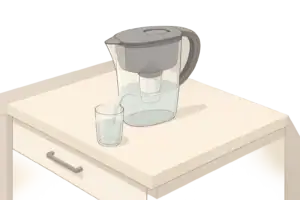
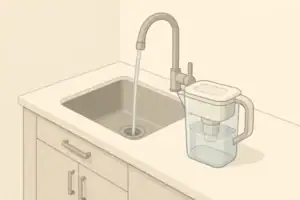
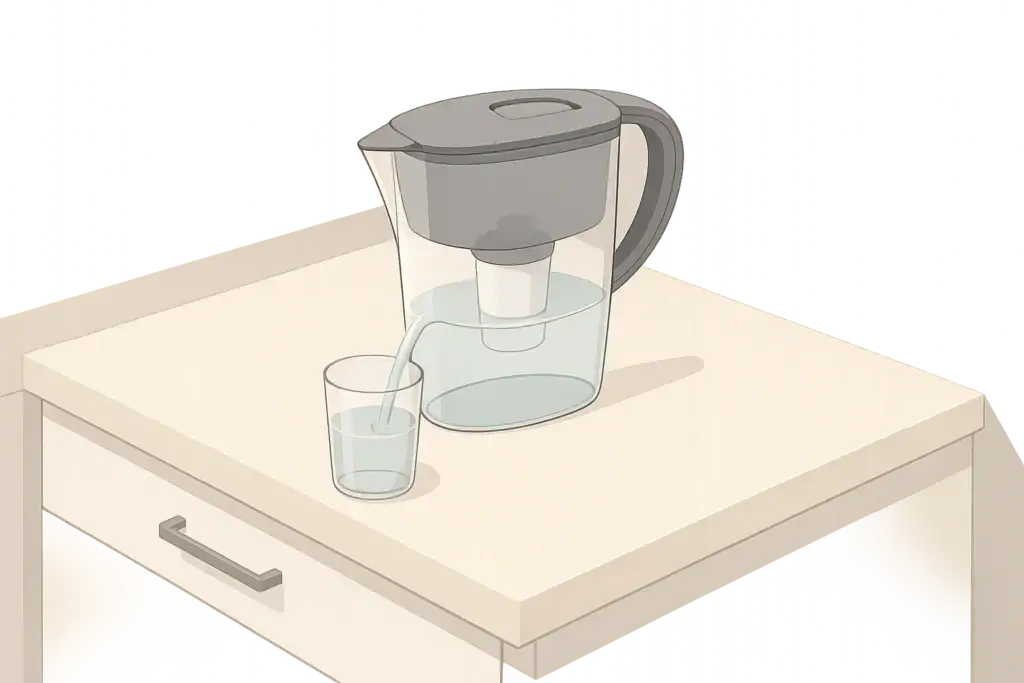
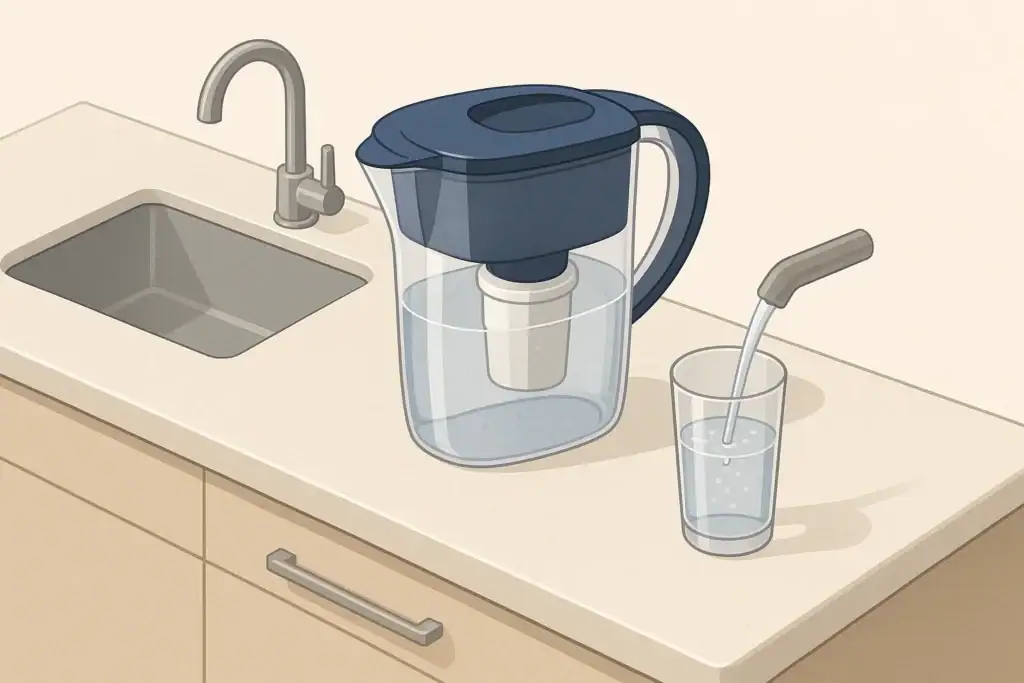
Common water pitcher filters are simple gravity systems. Water drips through a small cartridge, usually containing:
- Granular activated carbon or a carbon block for taste, odor, and some chemical reduction
- Ion exchange resins to help with some metals and hardness-related taste
- Screening or non-woven media to catch visible particles
These components were originally optimized to improve taste and odor from chlorine, reduce some metals like copper and mercury, and trap basic sediment. Chloramine reduction requires more careful carbon design and enough contact time between water and the media. In a compact, fast-draining pitcher cartridge, that contact time is limited.
Why Chloramine Is Tougher on Pitcher Filters Than Chlorine
Many people buy a water pitcher expecting it to fix a strong tap water taste or odor, only to find that the problem barely improves. A common reason is chloramine. While most pitcher filters were originally optimized for free chlorine, an increasing number of U.S. water utilities now use chloramine instead.
Understanding how chloramine behaves, and how pitcher filters actually work, explains why results vary so much from one home to another.
Chlorine vs. Chloramine in Municipal Water
Both chlorine and chloramine are disinfectants used to control microbes in public water systems. The big practical difference in a home is how stubborn they are when you try to remove them.
- Chlorine (free chlorine) is relatively reactive and volatile. It tends to dissipate more easily and is usually straightforward for basic activated carbon filters to reduce.
- Chloramine is a combination of chlorine and ammonia. It is more chemically stable and stays in the water longer, which helps utilities maintain residual disinfectant through long pipe networks.
That extra stability makes chloramine harder to reduce with simple filtration. Where a basic pitcher may noticeably improve chlorine taste, the same filter may do little against chloramine.
How Typical Pitcher Filters Work
Common water pitcher filters are simple gravity systems. Water drips through a small cartridge, usually containing:
- Granular activated carbon or a carbon block for taste, odor, and some chemical reduction
- Ion exchange resins to help with some metals and hardness-related taste
- Screening or non-woven media to catch visible particles
These components were originally optimized to improve taste and odor from chlorine, reduce some metals like copper and mercury, and trap basic sediment. Chloramine reduction requires more careful carbon design and enough contact time between water and the media. In a compact, fast-draining pitcher cartridge, that contact time is limited.
Why Many Pitcher Filters Struggle With Chloramine
Not all pitcher filters are designed with chloramine in mind. Several design and usage factors explain why results can be disappointing in chloraminated water.
Contact Time and Flow Through the Cartridge
Chloramine reduction is strongly influenced by how long the water stays in contact with the carbon. In a pitcher filter:
- The cartridge is small, so there is limited media.
- Water often flows relatively quickly under gravity, especially when the cartridge is new.
- If the user pours again immediately after a fill, the filter may spend even less time in contact with each batch.
Some advanced pitcher cartridges slow the flow or use different carbon structures to increase contact time, but many basic designs do not prioritize chloramine.
Carbon Type and Optimization
Activated carbon comes in many forms, and its effectiveness depends on pore size distribution, surface chemistry, and processing. In general:
- Standard granular carbon may be more than enough for free chlorine but less suited to chloramine.
- Specially treated or catalytic carbons can be more effective for chloramine, but they are not present in every pitcher cartridge.
Manufacturers may or may not design their pitcher cartridges for chloramine. Without performance data or certification specifically mentioning chloramine (as part of a chlorine or taste and odor claim), it is difficult for a homeowner to know what to expect.
Filter Aging and Breakthrough
Even when a pitcher filter can reduce chloramine initially, performance usually declines as the cartridge is used. Over time:
- Carbon sites become occupied by other substances.
- Flow paths can channel through the media, reducing actual contact area.
- Higher overall volume of water treated increases the chance of disinfectant “breakthrough” to the pitcher.
If cartridges are used beyond their recommended capacity or time limit, disinfectant taste and odor can return or even seem worse because users have come to expect better-tasting water.
Expectations vs. Design Limits
Many people assume that any filter that helps with chlorine will also perform similarly for chloramine. However:
- Some pitcher filters are tested and marketed primarily for chlorine reduction and general taste and odor improvement.
- Chloramine may be mentioned less clearly, or not at all, even if the utility uses it.
- Pitchers are often purchased based on general reputation or convenience rather than detailed performance data.
This mismatch between expectation and actual design is one of the main reasons homeowners feel that their pitcher “does not work” on their water.
Example values for illustration.
| Filter format | Typical installation | Chloramine handling (general) | Convenience factors |
|---|---|---|---|
| Pitcher filter | Countertop, gravity-fed | Varies widely; many focus on chlorine, some optimized for chloramine | Very easy to start using; small capacity and frequent refills |
| Faucet-mount filter | Attached directly to kitchen faucet | Moderate potential if designed for chloramine, with slightly longer contact time | On-demand filtered water; flow rate can be slower |
| Under-sink carbon system | Plumbed under sink with dedicated tap | Often better for chloramine when using larger carbon cartridges | Higher capacity; installation effort is greater |
| Reverse osmosis with carbon prefilters | Under-sink, multi-stage | Typically includes carbon stages that can be configured for chloramine | Produces low-TDS water; requires tank space and regular maintenance |
| Whole-house carbon filter | Installed on main water line | Designed models can address chloramine for entire home supply | Higher upfront cost; benefits all fixtures |
| Fridge/ice filter | Built into refrigerator or inline | Generally focused on taste and odor; chloramine performance varies | Convenient for cold water and ice; limited capacity in small cartridges |
How to Tell If Your Water Has Chloramine
Before deciding whether a pitcher is the right tool for your situation, it helps to confirm how your water is disinfected.
Utility Water Quality Reports
Public water systems in the U.S. publish annual Consumer Confidence Reports. These often specify whether the utility uses free chlorine, chloramine, or combinations. Look for words such as:
- “Chloramines” or “monochloramine”
- “Secondary disinfection” methods involving ammonia
For private wells, chloramine is rarely used at the household level, so issues are more likely related to other contaminants or treatment equipment.
Home Test Options
Homeowners sometimes use simple color-strip tests to check for free chlorine and total chlorine. The difference between these can suggest chloramine presence, because:
- Free chlorine tests detect just the uncombined chlorine portion.
- Total chlorine tests detect free chlorine plus combined forms such as chloramine.
If your total chlorine reading is noticeably higher than your free chlorine reading, your water likely contains chloramine or other combined chlorine species. Instructions and interpretation should be followed carefully, as tests can be sensitive to handling and timing.
What Helps Pitcher Filters Perform Better on Chloramine
If you are committed to using a pitcher, or you need one as a simple starting point, there are practical ways to get more reliable results in chloraminated water.
Look for Clear Performance Claims and Standards
One of the most concrete tools available is certification under NSF/ANSI standards. For taste and odor issues related to disinfectants, look for filters evaluated under:
- NSF/ANSI 42 for aesthetic effects such as chlorine taste and odor reduction
Some products provide specific data about chloramine performance within this framework or in separate performance sheets. While certifications may not always mention chloramine by name, independently verified testing can be a useful indicator that a pitcher has been engineered for more than basic chlorine only.
Choose Larger or Slower-Flow Designs When Possible
Within the pitcher category, designs differ in how much carbon they contain and how quickly they allow water to pass. Features that can help with chloramine include:
- Thicker or denser carbon sections that naturally slow gravity flow
- Multi-stage cartridges that combine sediment pre-filtration followed by carbon, helping maintain effective pathways
- Longer listed capacities when backed by data, suggesting more media volume
Because packaging details vary, looking beyond basic claims and paying attention to capacity, media type, and any chloramine-related wording can be useful.
Change Cartridges on Time (or Slightly Early)
Staying on top of cartridge changes is particularly important with chloramine. To maintain more consistent performance:
- Follow the shorter of the time-based recommendation (for example, every few months) and the volume-based recommendation (for example, a certain number of gallons).
- Consider replacing cartridges a bit earlier than the maximum if you notice return of disinfectant taste or odor.
- Track usage realistically. A household that fills the pitcher multiple times per day will reach capacity much faster than a single user.
Some pitchers provide manual or mechanical indicators to remind you when to change the filter. Even so, simple habits such as marking change dates on a calendar or using a phone reminder can help avoid overused cartridges.
Use Pitchers Strategically in a Larger Setup
In chloraminated areas, many households get better results when they view the pitcher as one part of a broader strategy rather than the only line of defense. Examples include:
- Using a whole-house carbon filter or under-sink system to address chloramine and relying on the pitcher for additional polishing.
- Combining the pitcher with a faucet-mount filter for day-to-day cooking water, reserving the pitcher mainly for drinking water.
- Using the pitcher in locations where installing a plumbed filter is not possible, such as dorm rooms or rentals, while acknowledging its limitations.
This layered approach can help when chloramine levels are particularly noticeable or when taste sensitivity is high.
Signs Your Pitcher Filter Is Not Keeping Up With Chloramine
Because chloramine is added for disinfection, it is important not to defeat your tap water treatment without understanding the broader implications. That said, most homeowners are focused on practical cues like taste and odor. Several everyday signs can hint that the pitcher is not doing as much as you expect.
Persistent or Returning Taste and Odor
Common observations include:
- Water from the pitcher still has a noticeable disinfectant smell similar to pool water or cleaning agents.
- Tea, coffee, or soups prepared with filtered water still have an off-flavor compared with water from other sources.
- Guests who are not accustomed to your tap water notice an unusual taste.
If these persist even with a fresh cartridge, your pitcher may not be closely matched to chloramine removal.
Very Quick Filter Exhaustion
If taste and odor improve significantly with a brand-new cartridge but degrade again within a short time, you may be:
- Exceeding the cartridge’s intended volume capacity due to high daily use.
- Dealing with higher-than-typical disinfectant levels in your water.
- Using the pitcher in a way that increases flow speed, such as filling under strong tap pressure that disturbs the filter.
This pattern often suggests the need for either a different cartridge design or a larger filtration format.
Visual Clues Inside the Pitcher
While chloramine itself is not visible, the condition of the pitcher can offer general hints about overall maintenance:
- Noticeable slimy films or biofilm inside the pitcher or on the lid.
- Cloudiness or particles in the stored filtered water.
- Staining or residue around the cartridge housing.
These issues do not directly measure chloramine, but they can signal that cleaning and filter replacement intervals are too long, which can indirectly affect performance and taste.
Comparing Pitchers to Other Options for Chloramine Management
Pitcher filters are popular due to low initial cost and simplicity. For chloramine, however, other filter categories sometimes offer more robust performance thanks to greater media volume and controlled flow.
Faucet-Mount and Countertop Filters
Faucet-mount and countertop filters connect directly to the tap and often include larger carbon cartridges than pitchers. Possible benefits include:
- More contact time compared with small gravity cartridges.
- On-demand filtering, so water is treated just before use.
- The ability to bypass filtering when water will not be used for drinking or cooking.
For renters or those who cannot modify plumbing under the sink, these filters can be an intermediate step beyond pitchers while still remaining relatively simple to install and replace.
Under-Sink Carbon and Reverse Osmosis Systems
Under-sink systems, including dedicated carbon units and reverse osmosis (RO) systems, can be configured to handle chloramine more reliably:
- Full-size carbon cartridges can hold much more media, extending capacity.
- Multiple stages allow sediment removal before carbon, helping maintain performance.
- RO systems typically include carbon prefilters designed for disinfectant reduction before the membrane.
These systems require installation and periodic maintenance but can be suitable when chloramine taste and odor are a persistent concern and when higher daily volumes of filtered water are needed.
Whole-House Treatment for Chloramine
Where chloramine taste and odor are noticed in showers, laundry, or multiple sinks, some households consider whole-house carbon filters that treat water at the main line.
This approach:
- Helps reduce disinfectant-related taste and odor across the entire home.
- Requires careful sizing based on flow rate and household water usage.
- Still benefits from additional point-of-use filters for drinking, especially when specific contaminants other than chloramine are a concern.
Whole-house solutions involve higher upfront and media replacement costs, so they are usually part of a broader home water strategy rather than a simple substitution for a pitcher.
Example values for illustration.
| What to track | Typical cues | Planning method |
|---|---|---|
| Filter change interval (time) | Manufacturer suggests a number of weeks or months per cartridge | Mark replacement date on a calendar or in a reminder app |
| Filter change interval (volume) | Suggested gallons per cartridge; higher use shortens real interval | Estimate daily refills and adjust schedule if you exceed average use |
| Taste and odor changes | Return of disinfectant smell or off-flavors in beverages | Note when taste shifts and compare with your last filter change date |
| Pitcher cleanliness | Visible film, residue, or cloudiness in the reservoir | Rinse and wash pitcher body regularly according to instructions |
| Flow rate through cartridge | Water begins to trickle much more slowly than when new | Use slow flow as one indicator that cleaning or replacement is due |
| Storage time of filtered water | Pitcher sits in refrigerator for several days between uses | Discard long-stored water and refill more frequently for best taste |
| Overall system fit | Pitcher alone does not provide desired taste despite maintenance | Consider combining pitcher with another filter type in the home |
Key Takeaways for Using Pitcher Filters With Chloramine
Pitcher filters can play a useful role in a home water setup, but their ability to handle chloramine depends on cartridge design, contact time, and how carefully they are maintained. Confirming how your water is disinfected, looking for relevant certifications and performance information, and being realistic about capacity help set expectations.
For households that find chloramine taste and odor particularly noticeable, it is often worth considering whether a larger carbon system, a multi-stage under-sink unit, or a whole-house approach should complement or replace the pitcher. Matching the filtration approach to the disinfectant in your water is the most reliable way to improve everyday taste and usability at the tap.
Frequently asked questions
Can a pitcher filter remove chloramine from tap water?
Some pitcher filters can reduce chloramine if they use specially treated or catalytic carbon and provide enough contact time, but many standard pitchers designed for free chlorine are not effective. Check independent performance data or certification details to confirm whether a specific pitcher is engineered for chloramine reduction.
How can I tell if my tap water contains chloramine?
Check your local utility’s Consumer Confidence Report or contact the water provider, which usually states whether chloramines are used. At home, comparative test strips for free chlorine versus total chlorine can indicate combined chlorine species like chloramine when total chlorine is higher than free chlorine.
What features in a pitcher improve chloramine reduction?
Features that help include thicker or denser carbon sections, catalytic or specially treated carbon, multi-stage cartridges that control flow, and verified performance data or certifications. Slower gravity flow and larger media volume increase contact time, which is important for tackling chloramine.
How often should I change pitcher cartridges if my water has chloramine?
Follow the manufacturer’s time-based and volume-based guidelines, and consider replacing cartridges slightly earlier if you notice returning taste or odor. Households with high daily use or elevated disinfectant levels may need more frequent changes than the nominal interval.
If my pitcher can’t handle chloramine, what are better alternatives?
Better alternatives include faucet-mount or countertop filters with larger carbon cartridges, under-sink carbon systems or reverse osmosis setups with appropriate carbon prefilters, and whole-house carbon filters sized for household flow. These options offer more media volume and controlled flow, but they require proper selection and maintenance.
Recommended next:
- Best Pitcher Water Filters for Better-Tasting Tap Water (Chlorine Focus)
- Pitcher Filter vs Bottled Water: Cost per Gallon Breakdown
- How Often Should You Replace Pitcher Filters? (By Household Size)
- TDS in Pitcher-Filtered Water: What Changes and What Doesn’t
- Pitcher Filters for Renters: What to Look For (Capacity + Fridge Fit)
- Pitcher Filter Maintenance: Cleaning & Sanitizing Without Off-Flavors
- More in Pitcher Filters →
- NSF/ANSI standards explained (42/53/401/58)
- Clear trade-offs: pitcher vs faucet vs under-sink vs RO
- Maintenance planning: cost per gallon and replacement cadence