Why Chloramine Matters in RO Systems
Many municipal water systems in the United States now use chloramine instead of chlorine as a disinfectant. Chloramine is more stable than free chlorine, which helps maintain disinfection in long distribution networks, but that same stability also makes it harder to remove with standard carbon filtration.
Reverse osmosis (RO) systems almost always include one or more carbon stages before the membrane. These carbon filters are primarily responsible for reducing chlorine or chloramine to protect the membrane and improve taste and odor. The RO membrane itself is not designed to handle disinfectants directly; prolonged exposure to oxidants can damage it.
For households on chloraminated city water, the key question is whether a standard RO setup is enough, or if you need special carbon stages specifically optimized for chloramine reduction. Understanding how chloramine behaves and how carbon works will help you choose and configure an RO system more effectively.
How Chloramine Removal Differs from Chlorine Removal
Chlorine and chloramine are both used for disinfection, but they behave differently in filtration systems:
- Chlorine is relatively reactive and easy to remove with granular activated carbon (GAC) or carbon block filters at typical residential flow rates.
- Chloramine is more chemically stable and requires longer contact time and often more specialized carbon media to achieve similar reduction.
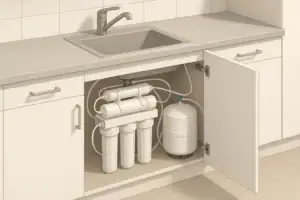
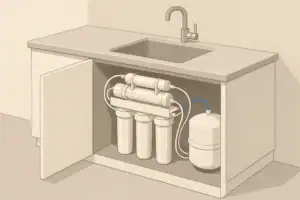
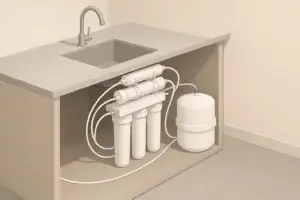
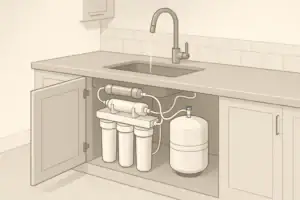
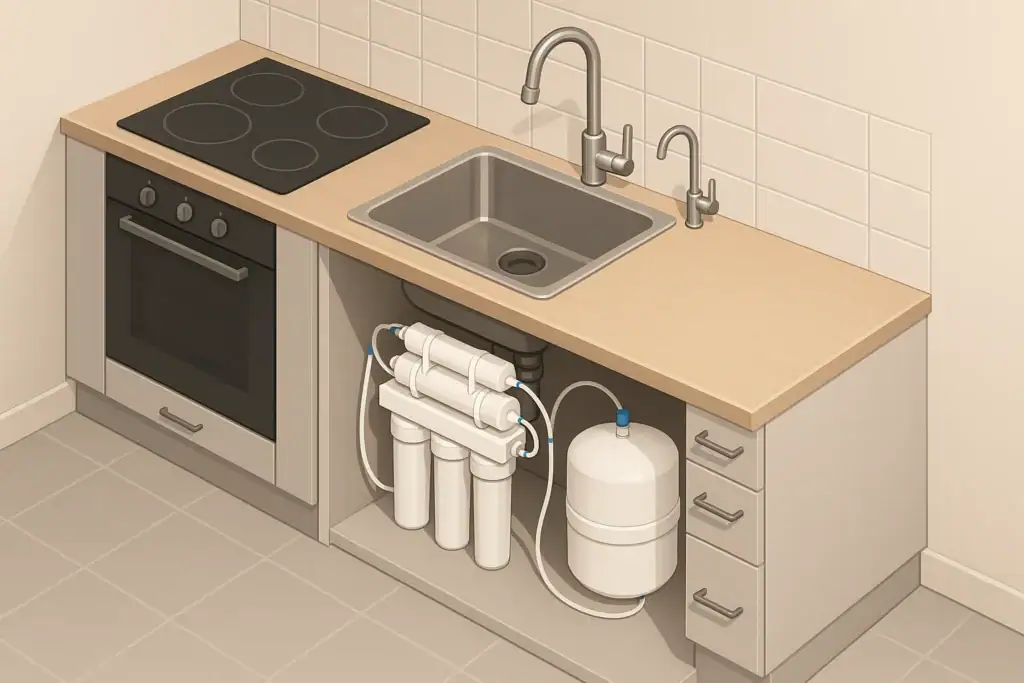
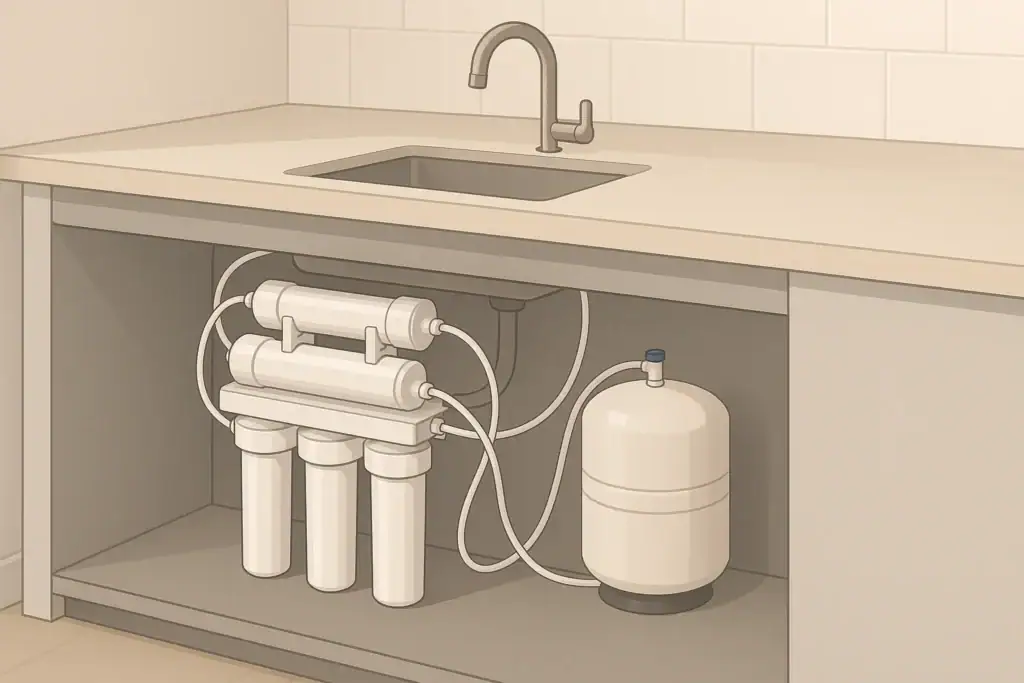
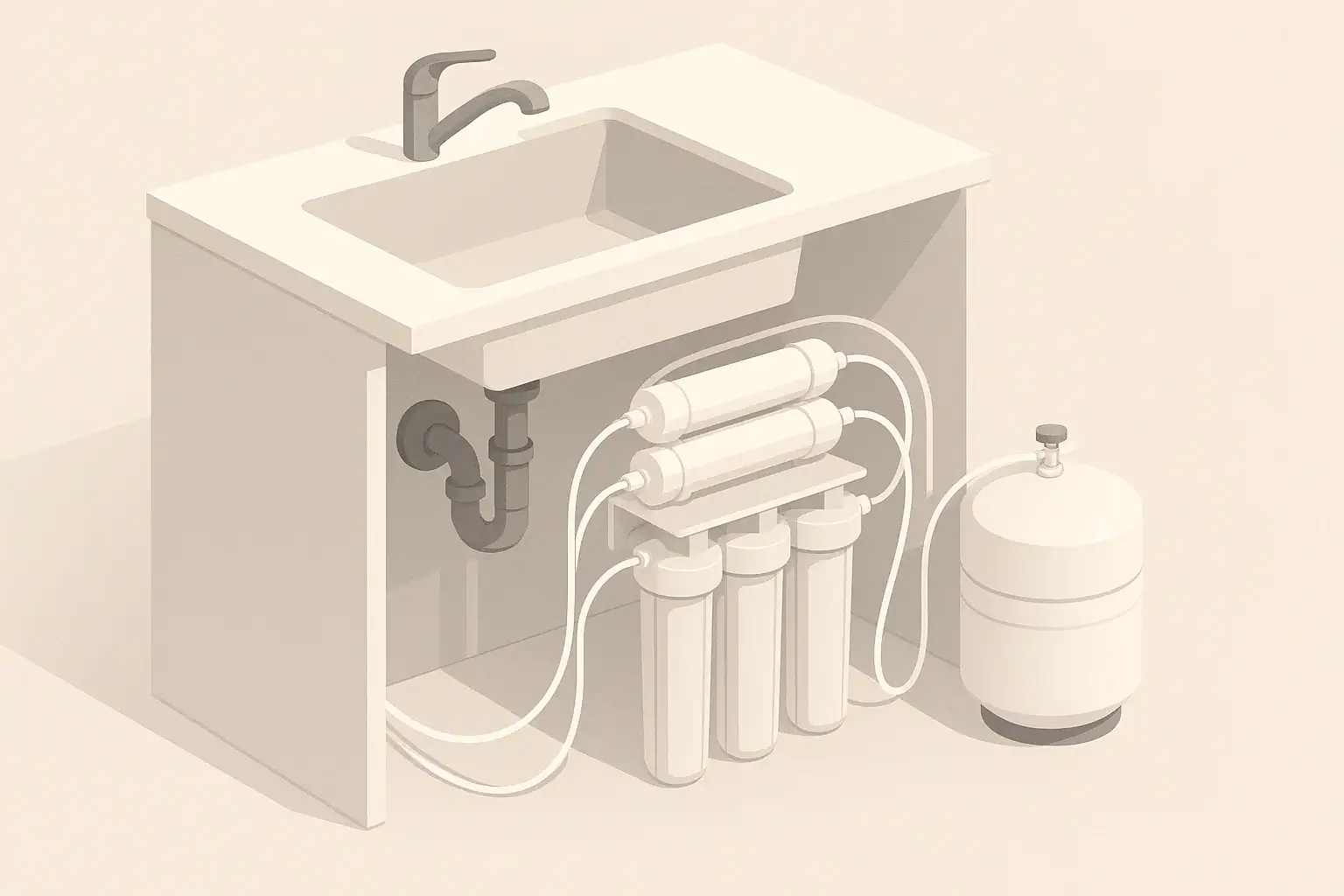
In a typical under-sink RO system, water passes through a sediment prefilter and one or more carbon stages before reaching the RO membrane. With chlorinated water, a single good-quality carbon block with appropriate capacity is usually sufficient for protecting the membrane and improving taste and odor.
With chloraminated water, however, the situation changes:
- Standard carbon filters may not provide enough contact time to significantly reduce chloramine at typical residential flow rates.
- Inadequate chloramine reduction can lead to residual taste and odor and may contribute to gradual membrane degradation over time.
- Many RO setups for chloraminated water rely on multiple carbon stages, enhanced carbon media, or both, to manage this disinfectant effectively.
Example values for illustration.
| Household situation | Chloramine level info | RO system configuration | Suggested carbon approach |
|---|---|---|---|
| Small household, low usage | Utility shows moderate chloramine | RO with 2 prefilters (sediment + carbon) | Use high-capacity carbon block rated for chloramine |
| Medium household, typical kitchen use | Chloramine noted in annual water report | RO with sediment + carbon + carbon | Two carbon stages or one enhanced chloramine cartridge |
| Large household, frequent cooking and drinking | Chloramine plus elevated organic matter | RO with multiple prefilters and booster pump | Dedicated chloramine-optimized carbon in series |
| Apartment, occasional RO use | Uncertain disinfectant type | Compact RO with 1 carbon prefilter | Check water report; if chloramine, consider adding second carbon stage |
| Home with whole-house carbon filter | Whole-house filter rated for chloramine | Under-sink RO mainly for TDS and taste | Standard RO carbon stages often sufficient |
| Very high daily RO usage | High chloramine reported by utility | High-output RO with large prefilters | Multiple large carbon blocks or specialized chloramine cartridges |
Standard vs. Chloramine-Specific Carbon in RO Systems
The main practical difference between standard carbon stages and chloramine-optimized stages is not that one “works” and the other “does not,” but how efficiently they reduce chloramine at realistic flow rates and volumes.
Types of Carbon Used in RO Systems
Common carbon formats found in RO prefilters include:
- Granular activated carbon (GAC): Loose carbon granules in a cartridge. Offers flexible flow paths but can have channeling if not carefully designed.
- Carbon block: Compressed carbon material, often with a specified micron rating. Typically provides more consistent contact time and some particulate filtration.
- Enhanced or catalytic carbon: Carbon processed or formulated to more effectively address chloramine and some other compounds at similar contact times.
In standard RO setups designed mainly for chlorine, a single carbon block or a combination of GAC plus block is common. For chloramine, many systems use either catalytic carbon or two carbon stages in series to increase total contact time and capacity.
Contact Time and Flow Rate
Chloramine reduction is highly dependent on contact time between water and carbon. Two main factors affect this in a residential RO system:
- Flow rate through the carbon filters: Faster flow means less contact time. RO systems often have relatively low permeate flow, but prefilter flow can be higher, especially during tank refills.
- Filter size and media design: Larger cartridges and well-designed carbon structures can increase the effective contact time without cutting flow too much.
Because chloramine needs more contact time than free chlorine, relying on a single small carbon cartridge at high flow may not be ideal for heavily chloraminated water. Additional or specialized carbon stages can compensate by expanding the available media and residence time.
Indicators That Your Existing Carbon Stages May Be Insufficient
Some practical signs that your RO system might not be reducing chloramine effectively include:
- Persistent disinfectant-like taste or odor in RO water despite recent filter changes.
- Noticeable difference in odor between RO water and water treated by a separate carbon filter with longer contact time.
- RO membranes needing replacement more frequently than typical for your usage and water conditions.
These indicators do not confirm a specific chloramine problem on their own, but they suggest it may be worth reviewing your prefilter configuration and water quality reports.
How to Tell If Your Water Has Chloramine
Before deciding on specialized carbon stages, it helps to confirm which disinfectant your water utility uses. Many U.S. cities have shifted to chloramine, but practices vary by region and sometimes season.
Check Your Water Utility Documents
Most public water systems provide an annual water quality report. In many cases, the disinfectant type is clearly listed under treatment methods or in a dedicated section. Look for words such as:
- “chloramine” or “monochloramine”
- “chlorine” or “free chlorine”
- notes about seasonal changes in disinfectant
These reports may also summarize average disinfectant levels over the year. While the exact numbers vary with system design and regulations, this gives context for how consistently chloramine is present.
Simple Field Tests
Some home test kits distinguish between free chlorine and total chlorine. If total chlorine is significantly higher than free chlorine, this can suggest the presence of chloramine, because chloramine contributes to total chlorine but not to free chlorine.
These simple tests are approximate. They are useful for giving a general sense of disinfectant presence, not for precise quantification. For more detailed analysis, you would need more advanced testing methods usually performed by laboratories or specialized instruments.
Why Knowing the Disinfectant Type Matters
The choice between standard and chloramine-optimized carbon stages affects:
- How many carbon cartridges you may need.
- How often you should replace them for consistent performance.
- The overall cost per gallon for your RO system.
If your water utility uses only free chlorine, standard carbon stages are typically adequate when appropriately sized and maintained. If they use chloramine, investing in better contact time and media tailored for chloramine can improve taste and membrane protection over the long term.
Designing RO Pre-Filtration for Chloraminated Water
Once you know chloramine is present, you can evaluate whether your RO system needs adjustments. The core elements are sediment filtration, one or more carbon stages, and the RO membrane itself.
Role of Sediment Prefilters
Sediment filters do not remove chloramine, but they protect your carbon and membrane by capturing particles such as sand, rust, and silt. Cleaner water entering carbon filters helps maintain effective contact between water and carbon media.
Common sediment filter ratings include several microns, depending on plumbing and local water conditions. Finer filters may capture smaller particles but can clog more quickly.
Choosing Carbon Configurations
For chloraminated water, common RO prefilter layouts include:
- Sediment + carbon block (larger size): Suitable for lower chloramine levels and modest usage, when the carbon block is specifically rated for chloramine reduction.
- Sediment + GAC + carbon block: The GAC stage can provide initial contact, with the block offering additional contact and particulate filtration.
- Sediment + carbon block + carbon block: Two blocks in series extend total contact time and capacity, useful for higher levels or higher daily throughput.
- Sediment + chloramine-optimized carbon: A dedicated cartridge engineered for chloramine can often perform better than standard GAC at the same flow.
The best choice depends on your daily water use, typical flow rates, and how aggressively your utility doses chloramine. It is often safer to err on the side of larger or multiple carbon stages if space and plumbing allow.
Protecting the RO Membrane
RO membranes are sensitive to oxidants such as chlorine and chloramine. Prolonged exposure can shorten membrane life and reduce performance. Adequate prefiltration helps:
- Reduce disinfectants before they reach the membrane.
- Limit organic and particulate fouling that can clog the membrane surface.
- Maintain more stable rejection performance over the membrane’s lifespan.
For chloramine specifically, the combination of sufficient carbon contact time and timely filter replacement is key. Even chloramine-optimized carbon can become exhausted; once it is saturated, effectiveness declines and more disinfectant can reach the membrane.
NSF/ANSI Certifications Relevant to Chloramine and RO
Certifications can help you understand what a filter or RO system has been independently tested to do. For chloramine and RO setups, several NSF/ANSI standards are especially relevant.
NSF/ANSI 42 and Chloramine
NSF/ANSI 42 covers filters that improve aesthetic aspects such as taste and odor, as well as chlorine. Some filters are specifically tested for chloramine reduction under this standard.
When considering carbon stages for chloraminated water, pay attention to whether a given filter is:
- Certified for chlorine taste and odor only, or
- Certified specifically for chloramine reduction.
Certification for chloramine reduction indicates that the filter has been tested under defined conditions to reduce chloramine to a certain level for at least its rated capacity. This does not guarantee performance under all conditions, but it is a useful reference point.
NSF/ANSI 58 and RO Systems
NSF/ANSI 58 applies to point-of-use RO systems. It addresses factors such as structural integrity, material safety, and performance claims for TDS reduction and other specific contaminants, depending on the system.
An RO system certified to this standard has been evaluated as a complete unit. Individual replacement filters used in the system may also have their own certifications under standards like NSF/ANSI 42 or 53, depending on their claims.
Other Standards You May See
In addition to 42 and 58, you may encounter:
- NSF/ANSI 53: For filters claiming reduction of certain health-related contaminants (such as lead or specific organic compounds).
- NSF/ANSI 401: For reduction of certain emerging compounds, such as some pharmaceuticals and personal care products.
These additional certifications focus on contaminants beyond disinfectants. They are relevant if you want your RO prefilters or postfilters to address a broader range of substances, but they do not replace the need for adequate chloramine management when chloramine is used in your water supply.
Example values for illustration.
| Standard | Typical focus | What to verify on RO or carbon filters |
|---|---|---|
| NSF/ANSI 42 | Taste, odor, chlorine, basic particulate | Check if chloramine reduction is specifically listed, not just chlorine |
| NSF/ANSI 53 | Selected health-related contaminants | Confirm which contaminants are claimed; not all are tested |
| NSF/ANSI 58 | Point-of-use RO system performance and safety | Look for complete-system certification, including TDS reduction |
| NSF/ANSI 401 | Emerging compounds (selected chemicals) | See which specific compounds were evaluated, if any |
| NSF/ANSI 372 | Lead content in materials | Verify for components in contact with drinking water |
| Component vs. system marks | Individual parts vs. whole systems | Distinguish whether the cartridge alone or the full RO system is certified |
Maintenance and Cost Considerations for Chloramine-Focused RO
Focusing an RO system on chloramine reduction has practical implications for maintenance schedules and cost per gallon.
Filter Replacement Frequency
Carbon filters gradually lose their effectiveness as they adsorb contaminants and react with disinfectants. For chloramine, the effective life of a cartridge depends on:
- The concentration of chloramine in your water.
- Your average daily water usage through the RO system.
- The type and size of carbon media in the cartridge.
It is common to replace carbon prefilters on a time basis (for example, every several months) or after a certain estimated volume of water. If chloramine levels are high or usage is heavy, more frequent replacement may be appropriate to maintain consistent reduction and protect the RO membrane.
Monitoring Performance Over Time
There is no simple, single indicator that directly shows chloramine breakthrough in a home RO system. However, you can track several indirect cues:
- Changes in taste or odor of RO water over time.
- More frequent RO membrane replacements than expected, suggesting higher oxidant exposure.
- Visible sediment or discoloration in prefilters, indicating heavy loading and possible reduced effectiveness.
Using a log to record filter changes, approximate daily usage, and any noticeable changes in taste or odor can help you refine your maintenance schedule.
Balancing Upfront Cost and Long-Term Protection
Specialized chloramine-optimized carbon stages may cost more than standard carbon cartridges. However, they can:
- Provide more consistent chloramine reduction at realistic flow rates.
- Help protect higher-value components like the RO membrane.
- Reduce the likelihood of needing very frequent membrane replacements.
When evaluating cost per gallon, consider not only cartridge prices but also the cost and frequency of membrane replacement, as well as your expectations for taste and odor control.
Summary: Do You Need Special Carbon Stages for Chloramine?
Whether you need special carbon stages for chloramine in an RO system depends on your local water conditions and usage patterns. If your water is disinfected with free chlorine only, standard carbon stages sized and maintained appropriately are often adequate. If your water utility uses chloramine, especially at higher concentrations or with substantial daily RO use, additional contact time and chloramine-optimized carbon media can provide more reliable reduction and membrane protection.
By confirming your disinfectant type, understanding the role of contact time, and paying attention to certifications and maintenance, you can configure an RO system that better matches the characteristics of chloraminated water in many U.S. homes.
Frequently asked questions
How can I tell whether my RO prefilters are removing chloramine effectively?
Direct measurement at home is difficult, but you can use free chlorine vs. total chlorine test kits to infer chloramine presence and watch for changes in odor or taste after filter changes. Persistent disinfectant-like taste, faster-than-expected membrane wear, or a tested mismatch between free and total chlorine suggests your carbon stages may not be removing chloramine effectively.
Is a standard carbon block ever sufficient for chloramine in an under-sink RO?
A standard carbon block can be sufficient if it is specifically rated for chloramine and has adequate size and capacity for your usage; otherwise it may be marginal. For consistent protection many households add a second block or use catalytic/chloramine-optimized media to increase contact time and capacity.
What are practical ways to increase contact time for chloramine reduction in an RO prefilter train?
Practical options include installing larger carbon cartridges, putting two carbon stages in series (GAC followed by block or two blocks), or using media formulated for chloramine (catalytic carbon). These approaches increase effective media volume and residence time without dramatically reducing system flow.
Do NSF certifications mean a filter will remove chloramine at my home’s flow conditions?
NSF/ANSI 42 or other marks mean the filter was tested under defined laboratory conditions; look specifically for a claim or test for chloramine reduction. Laboratory conditions may not match your exact flow rates or water chemistry, so verify rated capacity and consider larger or multiple stages for reliable real-world performance.
How often should I replace carbon cartridges when treating chloraminated water?
Replacement frequency depends on chloramine concentration, daily RO throughput, and cartridge size/type; high levels or heavy use typically mean more frequent changes. Monitor taste and membrane life, follow any manufacturer guidance for chloramine-rated cartridges, and keep a usage log to refine the schedule.
Recommended next:
- Reverse Osmosis 101: What RO Removes (and What It Doesn’t)
- NSF/ANSI 58 Explained: What It Means for RO Systems
- RO vs Carbon Under-Sink: Taste, TDS, and Maintenance Compared
- RO System Installation Guide: Space-Saving Layout Under the Sink
- RO Waste Water Ratio: What’s Normal and How to Reduce It
- RO Filter Replacement Schedule: Prefilters vs Membrane
- More in Reverse Osmosis (RO) →
- NSF/ANSI standards explained (42/53/401/58)
- Clear trade-offs: pitcher vs faucet vs under-sink vs RO
- Maintenance planning: cost per gallon and replacement cadence