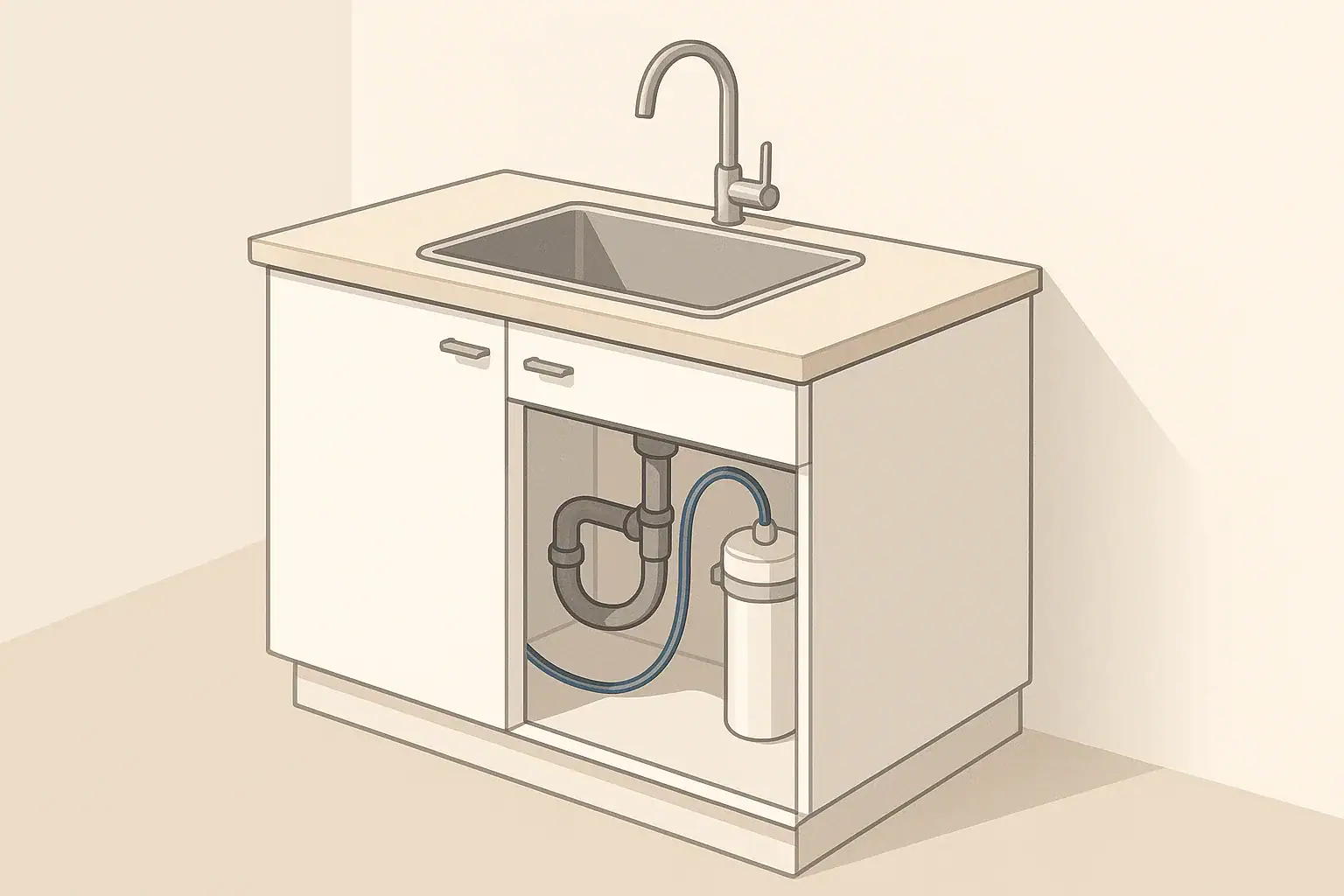
This article explains how under-sink filter flow rate, typically measured in gallons per minute (GPM), affects everyday use, filtration effectiveness, and maintenance. It covers how flow relates to incoming water pressure, how manufacturers specify operating ranges and test conditions, and how contact time influences reduction of taste, odor, and certain contaminants. You’ll find guidance on estimating household needs, practical checks to preserve or improve flow (like inspecting valves, tubing, and aerators), and the trade-offs between convenience and treatment performance. The piece also compares under-sink systems to pitchers, faucet-mounted units, reverse-osmosis setups, and whole-house filters, and it outlines how flow interacts with cartridge capacity and pressure drop over time. Use the sections below to jump to details about certifications, capacity considerations, and simple maintenance steps that help keep filtered water flowing as expected.
What Flow Rate Means for an Under-Sink Filter
Flow rate describes how much water passes through your under-sink filter in a given amount of time. For home use, it is usually expressed in gallons per minute, or GPM. When you open your kitchen faucet and use filtered water for drinking, cooking, or making coffee, the flow rate determines how fast that water comes out.
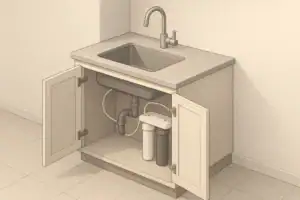
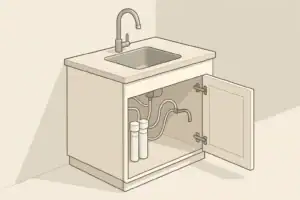
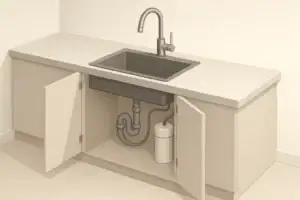
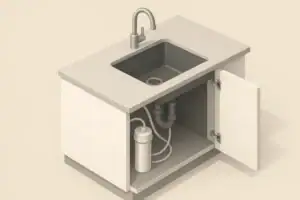
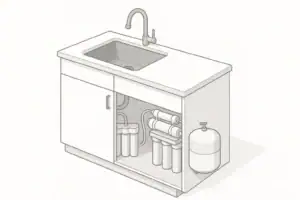
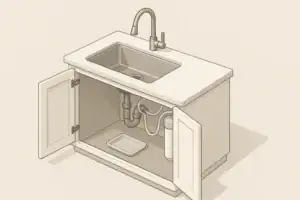
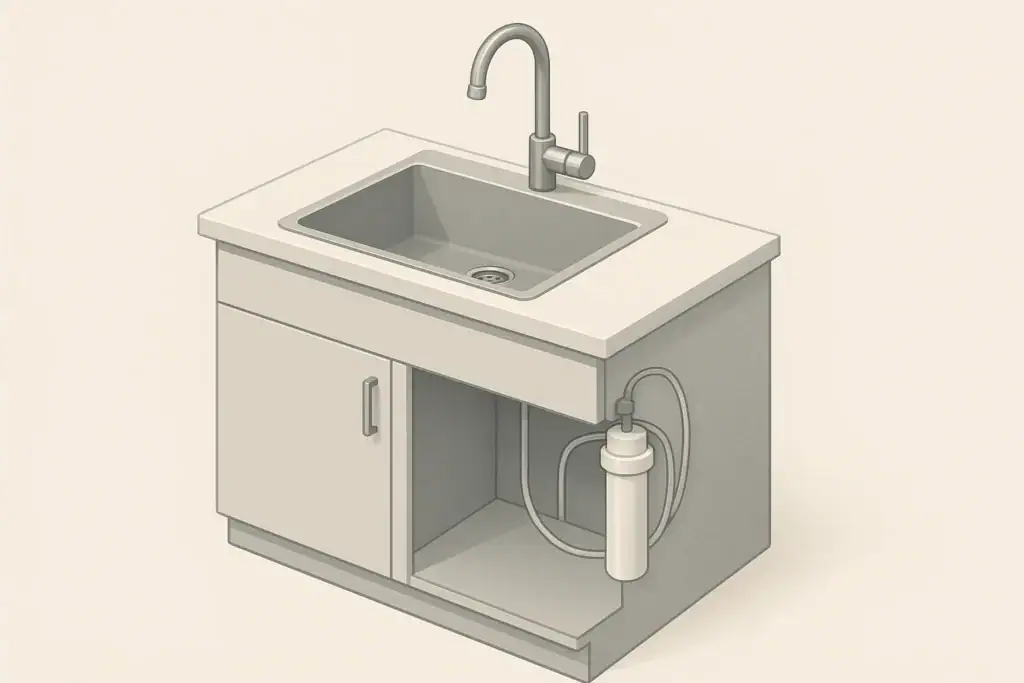
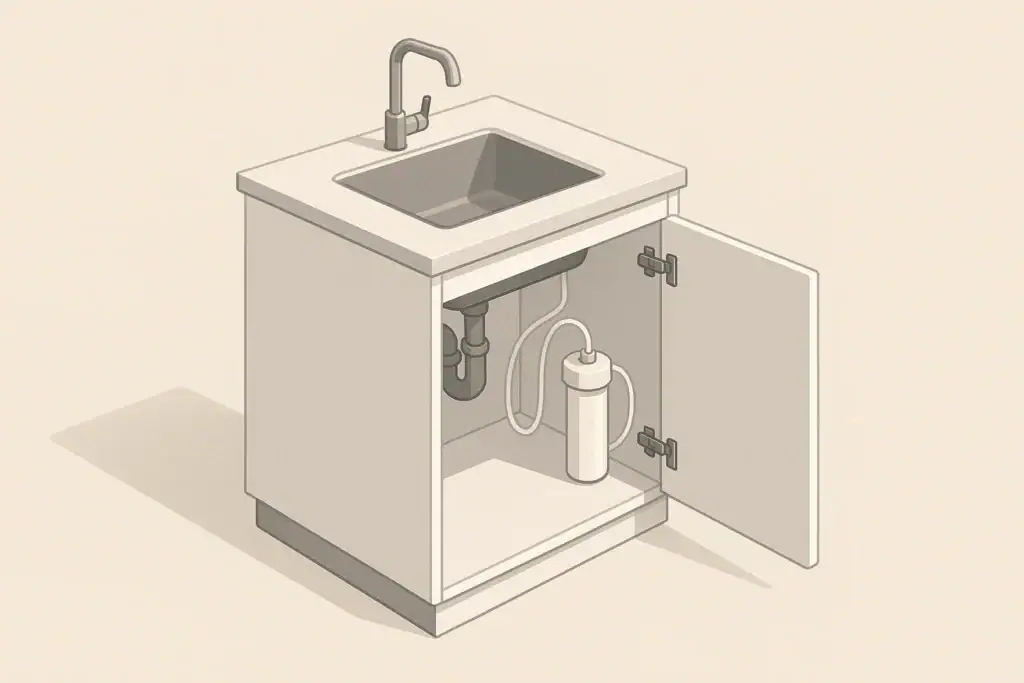
Under-sink filters sit between your home’s cold water line and the faucet. As water moves through the filter media, it slows down. The amount of slowing depends on several factors:
- Incoming water pressure from your plumbing
- The design and size of the filter cartridge
- How tightly packed the filter media is
- How much sediment or buildup is inside the cartridge
Understanding flow rate helps you balance convenience at the sink with how thoroughly the filter treats your water. Too low, and filling a pot takes a long time. Too high, and water may pass through the filter media too quickly for effective treatment, depending on the system design.
Why GPM Matters for Everyday Sink Use
Gallons per minute is more than just a number on a specification sheet. It directly affects how you use your kitchen sink every day. Under-sink systems typically provide filtered water for:
- Drinking and refilling reusable bottles
- Cooking, boiling pasta, and washing produce
- Making coffee, tea, and other beverages
- Sometimes, feeding refrigerators or ice makers
If the flow rate is too low, common tasks feel slow and inconvenient. For example, filling a one-gallon container at 0.3 GPM could take over three minutes, while at 0.8 GPM it would be under a minute and a half. These are only illustrative numbers, but they show why flow rate is noticeable in daily use.
At the same time, flow rate interacts with how the filter works. Many filters are designed so that water spends a certain amount of time in contact with the filter media. This contact time helps reduce chlorine, improve taste and odor, and capture particles like sediment and rust. The filter’s internal design balances contact time with flow, so using the system within its intended GPM range supports both convenience and performance.
Example values for illustration.
| Kitchen usage pattern | Sink tasks most affected | Illustrative GPM range to consider | Potential trade-offs to keep in mind |
|---|---|---|---|
| Single person, light use | Drinking water, small kettles | About 0.3–0.5 GPM (example only) | Acceptable wait times, compact systems may be sufficient |
| Couple, moderate cooking | Pots for pasta, rinsing produce | About 0.5–0.8 GPM (example only) | Better balance between speed and filtration contact time |
| Family, frequent cooking | Large pots, multiple bottles | About 0.8–1.2 GPM (example only) | Faster fills, may require larger or multiple cartridges |
| Entertaining guests often | Pitchers, coffee makers, many glasses | About 1.0–1.5 GPM (example only) | Convenient for peak use, plan for adequate capacity |
| Feeding fridge or ice maker | Consistent demand over time | Manufacturer-compatible range (example: ~0.5+ GPM) | Check appliance requirements and pressure needs |
| Low water pressure homes | All filtered tasks feel slower | Lower GPM filters designed for low pressure | May prioritize efficient media and minimal restriction |
How Flow Rate Interacts with Water Pressure
Flow rate and water pressure are closely linked. In simple terms, higher pressure can push more water through a filter, increasing flow rate, while lower pressure reduces it. Most municipal water systems in the United States fall within a common pressure range, but individual homes vary based on plumbing layout, elevation, and local infrastructure.
Under-sink filters introduce resistance to flow. As water passes through carbon block media, sediment layers, or fine membranes, it loses pressure. The combined effect depends on:
- Your incoming water pressure at the kitchen line
- The number of filter stages in series
- Any narrow tubing or valves in the installation
If your home already has low pressure, adding a restrictive filter can make the faucet feel weak. Conversely, a very high-pressure system paired with a filter designed for a lower operating range could cause noise, stress on fittings, or uneven performance.
When reviewing under-sink filter information, pay attention to any indicated minimum and maximum operating pressures, along with typical GPM at a given pressure. These figures are generally measured under controlled conditions and serve as guidance rather than a guaranteed outcome in every home.
Contact Time, Contaminant Reduction, and Flow
Flow rate is closely tied to how effectively the filter treats specific contaminants. Many under-sink systems use activated carbon, sometimes combined with sediment filters or specialty media. These materials work best when water spends enough time in the media, often called “contact time.”
In general terms:
- Slower flow increases contact time, which can support better taste and odor improvement from chlorine and related compounds.
- Faster flow decreases contact time, which may reduce how fully certain contaminants are addressed, depending on system design.
However, more contact time is not always better if it significantly limits convenience or if the filter is not designed for extremely low flows. Manufacturers usually design cartridges to achieve their intended performance within a target flow range. Operating far above or below that range can change real-world results.
NSF/ANSI Certifications and Flow Conditions
Some under-sink filters are tested and certified against NSF/ANSI standards, such as:
- NSF/ANSI 42 for aesthetic effects like chlorine taste and odor
- NSF/ANSI 53 for certain contaminants of health concern, such as lead and some volatile organic compounds (VOCs)
- NSF/ANSI 401 for select emerging compounds, such as some pharmaceuticals and PFAS family chemicals
- NSF/ANSI 58 for reverse osmosis (RO) systems
Certification tests are run under specified conditions, including flow rate and pressure. If a filter is certified, its documentation typically indicates the operating conditions used for testing. While you do not need to match those conditions precisely in your home, using the system in a way that is reasonably close (including flow rate) helps you stay within the performance envelope the tests represent.
Comparing Under-Sink Filters to Other Formats
Under-sink filters sit between simple point-of-use devices like pitchers and faucet-mount filters, and more complex systems like multi-stage RO units or whole-house filtration. Flow rate is one of the key differences among these formats.
In broad terms:
- Pitcher filters rely on gravity and often have slow flow into the pitcher but normal flow when pouring.
- Faucet-mount filters share the main faucet and can feel restrictive when in filter mode, especially at high household demand times.
- Under-sink filters usually offer a dedicated or combined faucet with more consistent flow, since they use line pressure and larger cartridges.
- RO systems may have lower immediate flow from the faucet but rely on a storage tank to provide usable volume.
- Whole-house systems are sized for much higher flow rates, since they serve showers, appliances, and multiple taps.
For many kitchens, under-sink filters offer a middle ground: better taste and odor reduction than basic devices, with more comfortable flow for cooking and cleaning tasks than some small point-of-use options.
Flow Rate vs. Filter Capacity and Cartridge Life
Flow rate also intersects with how long your under-sink filter cartridge lasts and how well it handles sediment and other particulates over time. Two key concepts are capacity and pressure drop.
Capacity and gallons treated
Filter capacity is often given as an approximate number of gallons the cartridge is designed to treat, or as a time-based recommendation such as six or twelve months. These figures assume typical household usage at a reasonable flow rate.
If you regularly draw water at the high end of the system’s flow range, you may reach the capacity limit sooner in terms of calendar days. This does not necessarily harm the system, but you may need to replace cartridges more frequently to maintain taste and flow quality.
Pressure drop and clogging over time
As the filter captures sediment, rust, and fine particles, it becomes more restrictive. This phenomenon, known as pressure drop, shows up at the faucet as weaker flow. If you notice a gradual decline in flow rate over weeks or months, it can be a sign that the cartridge is approaching the end of its service life or that your water contains more particulates than expected.
In some installations, a separate sediment pre-filter is used ahead of a carbon block or specialty cartridge. This setup can help maintain more stable flow over the life of the primary filter, especially in areas with visible particles in tap water.
Estimating Your Household’s Flow Needs
Choosing an appropriate under-sink filter flow rate starts with understanding how your household uses the kitchen sink. You can make a simple assessment with a few observations:
- Count how many people regularly drink water from the kitchen faucet.
- Note how often you cook meals that require large pots of water.
- Consider whether you fill pitchers, coffee makers, or reusable bottles multiple times a day.
- Check if the filter will also feed a refrigerator, ice maker, or another fixture.
You can also time how long it currently takes to fill a known container, such as a one-gallon jug, from your unfiltered tap. Dividing the volume by the time gives an approximate existing GPM. Under-sink filters will usually provide a slower flow than this baseline, but it gives you a starting point for what feels comfortable.
Homes that primarily use bottled or dispenser water for drinking and only occasionally rely on the sink for filtered water may accept a lower GPM. In contrast, households that lean heavily on the kitchen faucet as their main drinking water source may prefer higher flow, balanced with appropriate filtration design.
Practical Ways to Manage and Improve Flow Rate
If you already have an under-sink filter and are concerned about flow rate, there are several practical checks and adjustments you can make without specialized tools:
- Inspect shutoff valves: Ensure the cold-water shutoff and any intermediate valves are fully open.
- Check tubing and kinks: Look for sharply bent or pinched tubing under the sink that could restrict flow.
- Clean faucet aerators: Mineral buildup at the faucet outlet can mimic low filter flow.
- Review cartridge age: Compare current usage to the suggested replacement interval; a near-end-of-life cartridge commonly reduces flow.
- Consider pre-filtration: If your water contains noticeable sediment, a separate sediment stage may help keep the main cartridge flowing longer.
For new installations, thoughtful routing of tubing, minimizing unnecessary elbows, and using appropriately sized fittings all help preserve flow. If your home has consistently low pressure, selecting a filter designed for efficient operation in low-pressure conditions can make day-to-day use more comfortable.
Example values for illustration.
| What to track | Typical interval (example only) | Common cues it is time to act | Simple planning method |
|---|---|---|---|
| Cartridge replacement | Every 6–12 months or set gallons | Noticeable drop in flow, taste changes | Mark install date on cartridge or calendar |
| Flow rate check | Every 3–6 months | Filling common containers takes longer | Time how long to fill a known-volume jug |
| Faucet aerator cleaning | Every 3–4 months | Spray pattern becomes uneven | Remove and rinse aerator components |
| Under-sink leak check | Monthly quick glance | Damp cabinet floor, drips, or sounds | Keep area clear enough to see tubing and joints |
| Sediment buildup observation | Every 6 months or after plumbing work | Visible particles in cold tap water | Consider adding or checking a sediment pre-filter |
| Record of parts and dates | Update whenever you service system | Uncertainty about last change | Keep a simple log or note under the sink |
Key Takeaways for Choosing and Using Under-Sink Flow Rate
Flow rate in GPM is a practical way to think about how an under-sink filter will feel in everyday use. Matching the system’s expected flow to your household’s habits makes it easier to rely on filtered water for drinking and cooking without frustration at the faucet.
When evaluating or operating an under-sink filter, consider:
- Your existing water pressure and basic unfiltered flow at the sink
- How many people will regularly use the filtered faucet, and for what tasks
- The relationship between flow, contact time, and the contaminants the system is designed to address
- Any NSF/ANSI certifications and the operating conditions under which they were tested
- A maintenance routine that includes monitoring flow rate along with cartridge age
By paying attention to both GPM and maintenance, you can keep your under-sink system delivering water that meets your expectations for taste, odor, and day-to-day usability.
Frequently asked questions
How can I measure my under-sink filter’s GPM at home?
Use a one-gallon jug and time how long it takes to fill from the filtered faucet at normal use. Divide the gallon volume by the elapsed time in minutes to get GPM, and repeat the test a few times to average out small variations. Make sure valves are fully open and the aerator is clean before testing.
What flow rate should I look for if I cook for a family of four?
Families that cook frequently typically prefer higher flow in the range of roughly 0.8–1.2 GPM to speed pots and multiple fills, while balancing cartridge size and contact time. Choosing a larger cartridge or multi-stage system can help preserve both higher flow and treatment performance. Check the system’s specified operating range to ensure it meets your expectations.
Can very low flow improve contaminant removal or cause problems?
Lower flow generally increases contact time, which can improve reduction of taste-and-odor compounds and some contaminants, but systems are engineered for an intended flow range. Operating far below the designed range may change flow patterns or not activate certain media optimally, while very low flow can also indicate clogging that signals a near-end-of-life cartridge. Treat low flow as a cue to inspect valves, tubing, and cartridge condition.
Why does my filtered flow drop over time and how do I know if the cartridge needs replacing?
Flow typically drops as cartridges capture sediment and particulates, increasing pressure drop across the media. If you notice a steady decline in flow or taste changes, check for open valves, kinks in tubing, and clogged aerators, then time a fill to compare against your baseline; persistent reduction usually means it is time to replace the cartridge. In areas with visible sediment, adding a pre-filter can slow this decline.
Do NSF/ANSI certifications require me to match the tested flow rate exactly at home?
Certification tests are performed at specified flow rates and pressures, and the documentation lists those conditions for each claim. You do not need to match the test conditions exactly, but staying reasonably close to the tested flow and pressure helps ensure similar performance; operating far outside those conditions may yield different results. Review the certification details when assessing expected in-home performance.
Recommended next:
- Under-Sink vs Pitcher: Which Is Better for Families?
- Best Under-Sink Filters for Chlorine Taste & Odor
- Under-Sink Filter Installation: Tools, Parts, and Common Mistakes
- No-Drill Under-Sink Filters for Renters: What’s Possible?
- Under-Sink Filters for Lead Reduction: What Certifications to Look For
- More in Under-Sink Filters →
- NSF/ANSI standards explained (42/53/401/58)
- Clear trade-offs: pitcher vs faucet vs under-sink vs RO
- Maintenance planning: cost per gallon and replacement cadence