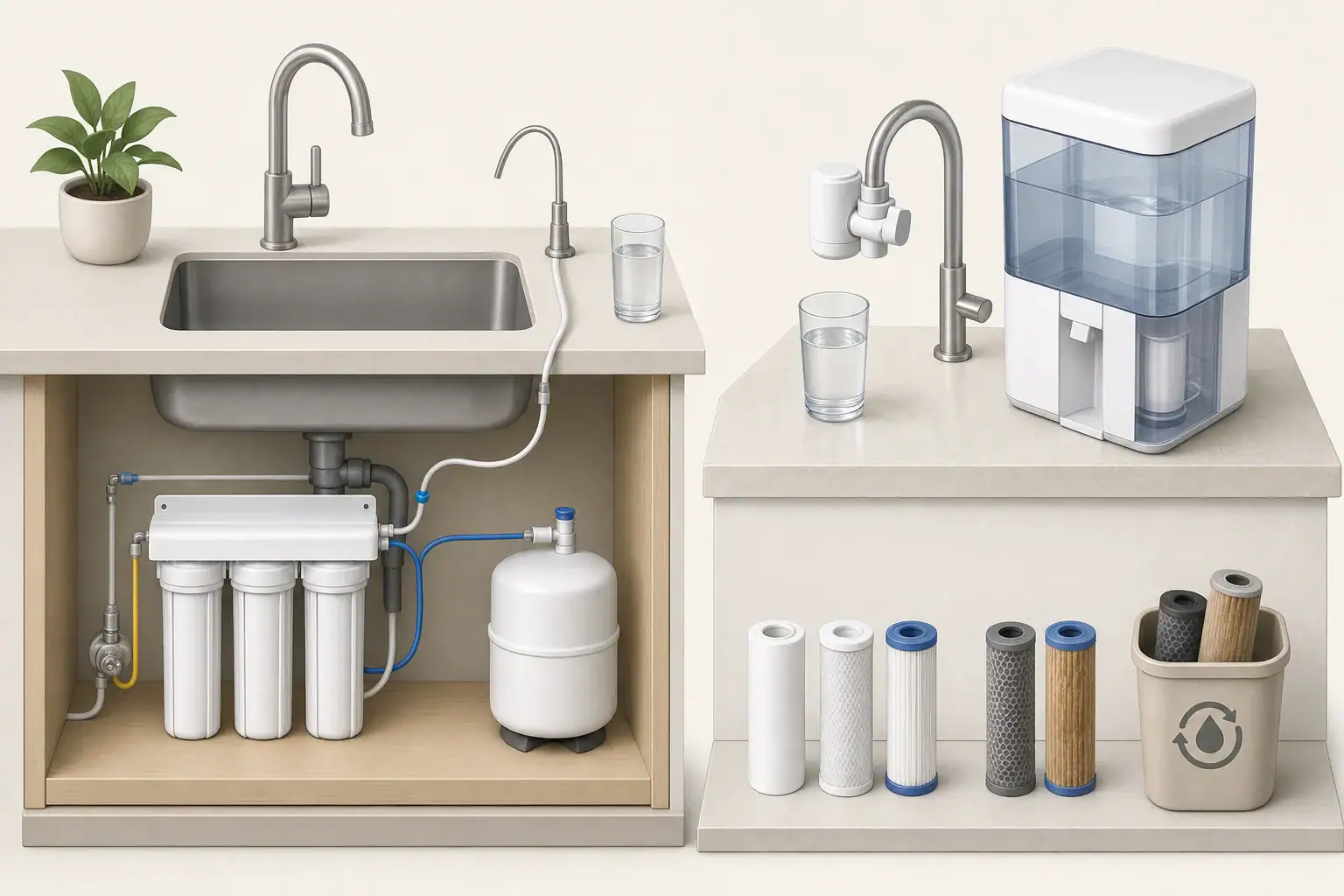
Replacing a water filter raises a practical question: What should you do with the used cartridge? The answer depends on the cartridge material, the filtration media inside it, available take-back programs, and local waste rules.
Most ordinary household water filter cartridges cannot go in a curbside recycling bin. They combine plastic, rubber, fabric, adhesives, and filtration media that standard recycling facilities are not designed to separate. In many communities, a drained cartridge belongs in household trash unless a manufacturer, retailer, or local facility specifically accepts it.
Responsible used water filter disposal begins with identifying the filter and checking local instructions rather than assuming that every plastic-looking cartridge is recyclable.
Why Water Filter Disposal Varies
Water filters are composite products. A typical cartridge may contain a rigid plastic shell, bonded activated carbon, sediment fabric, resin beads, rubber seals, or a membrane. Even when the outer shell carries a resin identification symbol, the complete cartridge may not be accepted as recyclable.
Recycling symbols identify plastic resin types; they do not guarantee that a local program accepts a product. A cartridge may also contain residual water and collected material, both of which can interfere with normal recycling operations.
Disposal options are influenced by several factors:
- Filter construction: Sealed cartridges are difficult to dismantle and sort.
- Filtration media: Carbon, resin, membrane layers, and sediment material follow different processing paths.
- Local rules: Waste and recycling requirements vary by municipality and service provider.
- Take-back availability: Some cartridge types are accepted through dedicated mail-in or drop-off programs.
- Water conditions: Filters used in response to an unusual chemical release or other known contamination may require additional guidance.
For a cartridge used under ordinary residential conditions, disposal in household trash is commonly permitted when no specialized program is available. Local waste authorities remain the best source for location-specific requirements.
Identify the Cartridge Before Disposing of It
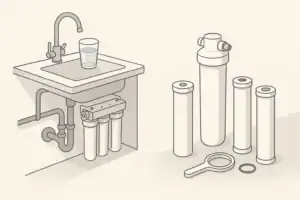
Start by checking the system manual, replacement packaging, or markings molded into the cartridge. Look for the filter type, housing material, and any disposal or take-back instructions. Do not rely on color or shape alone because visually similar cartridges can contain different media.
Common Cartridge Materials
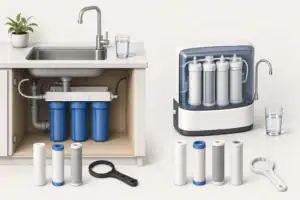
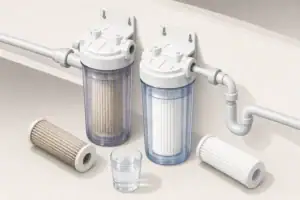
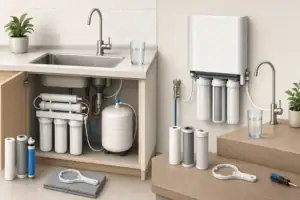
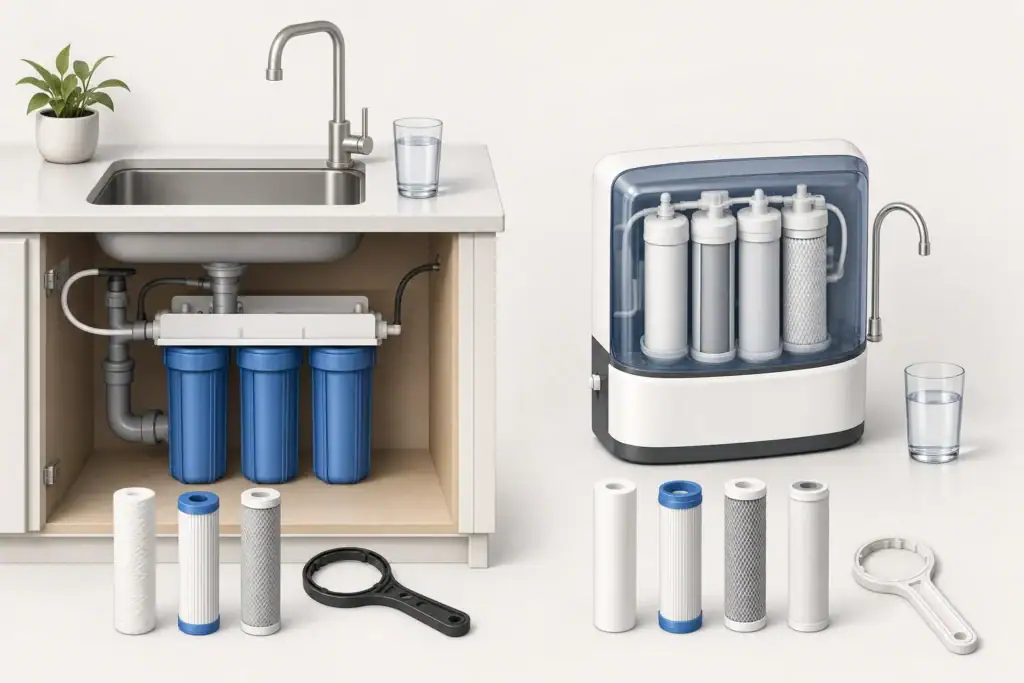
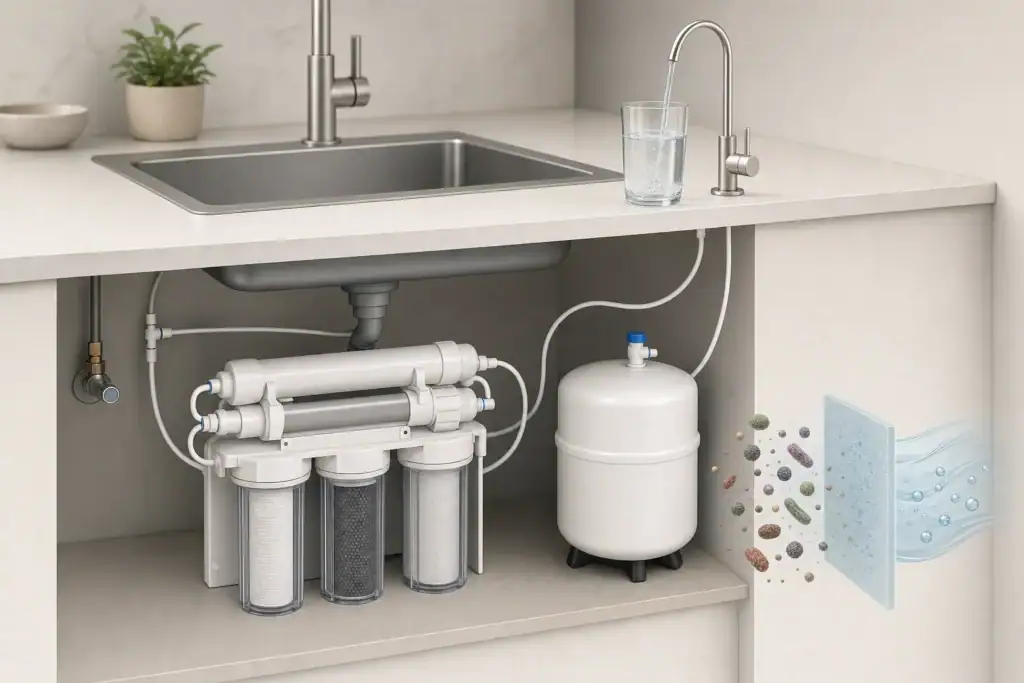
Activated carbon cartridges may contain loose granular carbon or a compressed carbon block. Sediment filters often use spun or pleated synthetic material. Reverse osmosis systems can include several prefilters and postfilters plus a thin-film membrane. Other systems may use ion exchange resin or specialty adsorption media.
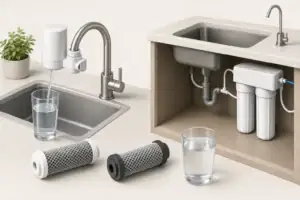
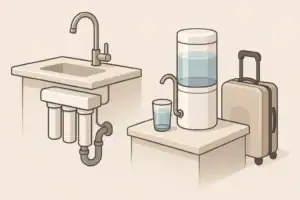
Refrigerator, pitcher, faucet-mounted, countertop, and under-sink filters are commonly sealed units. Whole-house systems may use either disposable cartridges or refillable media tanks. Refillable tanks are generally serviced differently and should not be emptied without following the system provider’s instructions.
Example values for illustration.
| Filter type | Typical construction | Practical first option |
|---|---|---|
| Carbon block cartridge | Plastic shell and bonded carbon | Check take-back options; otherwise use household trash if locally allowed |
| Granular carbon cartridge | Shell containing loose media | Keep sealed and follow local trash guidance |
| Pleated sediment filter | Synthetic fabric and plastic core | Drain, bag, and place in trash unless specifically accepted |
| Spun sediment filter | Bonded synthetic fibers | Use household trash under normal conditions |
| Reverse osmosis membrane | Layered membrane in a plastic body | Check specialty programs; otherwise follow local trash rules |
| Ion exchange cartridge | Plastic shell and resin beads | Keep intact and check for a take-back program |
| Refrigerator or faucet cartridge | Mixed plastic, carbon, and seals | Use an approved return program or household trash |
How to Prepare an Old Cartridge for Disposal
Proper preparation limits drips, odors, and mess. Follow the system’s replacement procedure, including its normal shutoff and pressure-relief steps. Do not bypass valves, modify plumbing, or force open a pressurized housing.
Remove and Drain the Filter
- Follow the system manual to stop water flow and relieve pressure using the provided controls.
- Place a shallow container or absorbent towel beneath the housing.
- Remove the cartridge carefully and keep it upright when possible.
- Allow free water to drain into a sink or bucket.
- Place the cartridge in a bag or other leak-resistant container.
- Clean and sanitize reusable housings according to the system instructions before installing the replacement.
A cartridge does not need to be completely dry before disposal, but it should no longer release substantial amounts of water. A wet cartridge can add unnecessary weight and may leak inside a trash or shipping container.
Avoid Opening Sealed Cartridges
Cutting open a cartridge is generally unnecessary. It can release carbon dust, resin beads, accumulated sediment, or sharp plastic fragments. Separating components at home also does not make them acceptable to a recycling program unless that program explicitly requests disassembly.
Do not rinse collected material down a drain, scatter filter media outdoors, burn the cartridge, or place the media in compost. These approaches can create a mess and do not provide a dependable disposal benefit.
Can Used Water Filters Be Recycled?
Some can be recycled through dedicated programs, but most should not be placed in ordinary curbside recycling. Standard facilities generally need clean, single-material items. Filter cartridges are usually wet, sealed, and made from several bonded materials.
Check Dedicated Take-Back Programs
A take-back program may accept cartridges by mail or at a collection site. Before participating, confirm:
- The exact cartridge types accepted
- Whether third-party cartridges are eligible
- How cartridges must be drained and packaged
- Whether caps, seals, or wrapping must be removed
- Whether there are quantity or shipping restrictions
Only use a program that clearly states how the cartridges are handled. A general recycling claim is less useful than specific acceptance and preparation instructions.
Do Not Rely Only on the Plastic Symbol
A molded recycling symbol may apply only to the cartridge shell. It does not account for the carbon, membrane, fabric, adhesives, or seals inside. Putting an unaccepted cartridge in a curbside bin can contaminate a recycling load or require manual removal.
If no dedicated option exists, placing a drained cartridge in household trash is often more appropriate than wish-cycling it. Confirm this with the local solid waste provider when rules are unclear.
When Special Handling May Be Appropriate
A filter used on normal residential water is not automatically household hazardous waste merely because it captured unwanted substances. However, circumstances outside routine home filtration may call for more specific advice.
Contact the local water utility, public works department, environmental agency, or household hazardous waste program if the cartridge was used:
- During a documented chemical spill or contamination incident
- For water affected by fuel, solvents, pesticides, or industrial chemicals
- In a commercial, laboratory, agricultural, or industrial process
- With an unknown liquid rather than normal household water
- Under instructions that specify controlled disposal
Keep the cartridge sealed while seeking guidance. Do not attempt to recover, wash out, or test the media at home.
UV Lamps and Electronic Components
Ultraviolet treatment systems are sometimes installed alongside cartridge filters, but a used UV lamp is not a filter cartridge. Certain lamps require lamp-recycling or household hazardous waste handling because of their construction. Electronic controls, sensors, and powered treatment components may also fall under local electronic-waste rules.
Keep lamps and electronics separate from spent cartridges. Avoid breaking a lamp, and follow the equipment instructions and local disposal requirements.
Reduce Cartridge Waste Through Better Replacement Planning
Replacing a cartridge on schedule helps maintain flow and treatment performance, but changing it substantially earlier than needed creates avoidable waste. Use the manufacturer’s interval as the starting point, then consider actual water use, sediment loading, pressure drop, taste or odor changes, and any monitoring features built into the system.
Do not extend service life indefinitely to reduce waste. An overloaded filter may lose flow or no longer perform as intended. Record installation dates and estimate your next filter change date.
Where appropriate, a larger-capacity cartridge may reduce replacement frequency, but it must fit the housing and match the system’s flow and pressure requirements. Refillable treatment tanks can reduce disposable cartridge use in some applications, although they require their own maintenance and media replacement procedures.
Example values for illustration.
| Filter location | Replacement trigger | Disposal preparation |
|---|---|---|
| Pitcher or countertop unit | Rated use, timer, or reduced performance | Drain upright and check for a return program |
| Faucet-mounted filter | Indicator or specified service interval | Remove over a sink and bag the cartridge |
| Refrigerator filter | Indicator or documented installation date | Drain and keep protective caps if required for return |
| Under-sink carbon filter | Service interval, taste change, or flow reduction | Relieve pressure normally, drain, and contain drips |
| Reverse osmosis prefilter | Schedule or pressure and production changes | Separate it from the membrane and identify each part |
| Whole-house sediment filter | Pressure drop or visible loading | Use gloves, drain it, and place it in a sturdy bag |
Related guides:
Cartridge Change Mistakes That Cause Leaks •
Cleaning and Sanitizing Filter Housings: A Simple Routine •
Replacement Planner Basics: Estimate Your Next Filter Change Date •
RO Filter Replacement Schedule: Prefilters vs Membrane
Frequently Asked Questions About Old Water Filters
Can a used filter cartridge go in the regular trash?
In many US communities, a drained household cartridge can go in regular trash when no take-back program is available. Rules vary, so check the local waste provider’s guidance, especially if the filter was used during an unusual contamination event.
Should carbon be emptied into compost or soil?
No. Carbon from a used household filter may contain collected sediment and adsorbed substances. It is also difficult to separate cleanly from binders and other cartridge materials. Keep the cartridge intact unless an authorized program provides different instructions.
Can filter cartridges go in curbside recycling?
Usually not. Their mixed materials, residual water, and internal media make them unsuitable for most curbside programs. Only place one in a recycling bin if the local program specifically lists that complete cartridge as accepted.
Is a filter that reduced lead, PFAS, or other contaminants hazardous waste?
Not automatically. Household disposal classifications depend on local rules and the circumstances of use. For routine residential filtration, follow the cartridge instructions and local waste guidance. Seek specific advice after a confirmed spill or other exceptional contamination incident.
How long should a cartridge drain before disposal?
There is no universal time. Let it drain until it no longer releases a steady stream or substantial drips. Keep it in a leak-resistant bag or container during storage, transport, or disposal.
Can an old cartridge be reused?
Disposable cartridges are generally not designed to be cleaned, regenerated, or reused at home. Rinsing does not reliably restore the media. Reusable housings and specifically designed refillable systems should be serviced only according to their instructions.
Frequently asked questions
Should I leave the old water filter in its plastic wrapper for disposal?
No. Remove any replacement packaging, but keep the used cartridge itself intact. Place the drained cartridge in a leak-resistant bag if it may drip.
Can I throw away a refrigerator water filter with the cap still on?
Yes, if local trash rules allow the cartridge. Keep caps or plugs in place when they help prevent leaks, unless a return program gives different packaging instructions.
What should I do if a used cartridge smells bad?
Bag the drained cartridge and dispose of it promptly according to local guidance. Avoid opening it or trying to deodorize the filter media.
Do I need gloves to dispose of a water filter cartridge?
Gloves are optional for most routine household cartridge changes, but they can help with dirty sediment filters and reduce contact with collected residue. Wash your hands after handling the cartridge.
Can I store used cartridges until I have several for a take-back program?
Yes, if the program accepts stored cartridges. Drain and bag each one, keep them in a dry area away from food, and follow any program-specific storage or shipping instructions.
- NSF/ANSI standards explained (42/53/401/58)
- Clear trade-offs: pitcher vs faucet vs under-sink vs RO
- Maintenance planning: cost per gallon and replacement cadence