
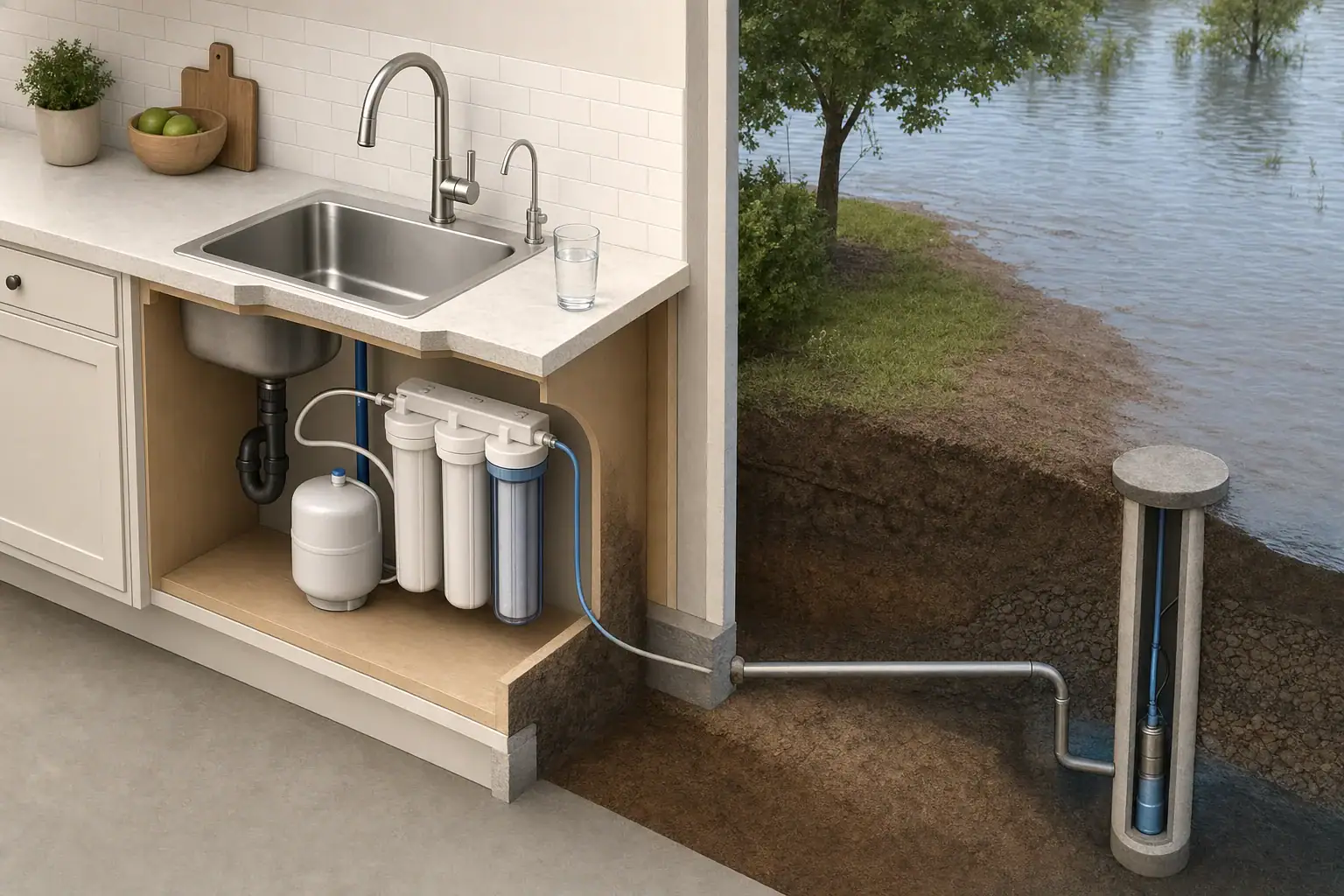
Do not drink water from a flood-affected private well until the well has been inspected, disinfected when appropriate, and tested by a qualified laboratory. Use bottled water or another confirmed safe supply for drinking, cooking, brushing teeth, making ice, washing produce, and preparing infant formula.
This precaution applies when floodwater reached the wellhead, covered the casing, entered a well pit, damaged nearby ground, or may have carried sewage, fuel, pesticides, or other contaminants toward the well. Water that looks, smells, and tastes normal can still be contaminated.
When to stop using well water
Floodwater can enter through a loose or damaged cap, a cracked casing, faulty seals, vents, buried well components, or saturated soil around the well. Shallow wells, older wells, and wells in pits are often more vulnerable, but any well can be affected.
| Condition | Recommended action |
|---|---|
| Floodwater covered or reached the wellhead | Stop drinking the water. Arrange inspection, disinfection, and post-disinfection testing. |
| Casing, cap, wiring, pump, or pressure equipment is damaged | Do not operate or repair wet electrical equipment. Contact a qualified well contractor or electrician. |
| Flooding occurred nearby but did not visibly reach the well | Check for erosion, standing water, pressure changes, or damage. Ask the local health department whether testing is advised. |
| Fuel, chemicals, or pesticide containers were involved | Do not rely on chlorination or boiling. Contact local environmental or health officials about targeted testing. |
| A bacterial test is positive | Continue using a safe alternative supply while the source is corrected, the well is disinfected, and follow-up testing is completed. |
Do not assume that indoor filters make flood-affected water safe. Common sediment and carbon filters are not designed to provide complete protection from disease-causing organisms, and no single treatment device removes every possible flood contaminant.
Wait for safe access before inspecting the well
Testing should begin only after floodwater has receded enough to approach the well safely. Standing water, unstable ground, damaged electrical service, and submerged pump controls can create immediate hazards.
A qualified well contractor should examine the system if the well was submerged or visibly damaged. The inspection may include the casing, sanitary cap, vent, seals, electrical connections, pressure equipment, and surrounding ground. Physical defects should be repaired before disinfection; otherwise, contaminated water may simply enter again.
Changes in water pressure, unusual sediment, cloudiness, or new odors are reasons to stop using the water and request an assessment. Their absence does not confirm that the water is safe.
When well disinfection is appropriate
Shock chlorination is commonly recommended after floodwater enters a well, after repairs that open the system, or after testing detects coliform bacteria. It is intended to disinfect the well and plumbing system from microbial contamination.
Disinfection is not a repair and does not remove fuel, pesticides, nitrate, metals, salts, or every other chemical contaminant. If a spill, leaking fuel tank, agricultural chemical release, or sewage overflow occurred nearby, local authorities may recommend specialized sampling before the well returns to service.
Why professional help may be appropriate
The correct disinfectant amount depends on well diameter, water depth, storage equipment, and plumbing volume. Too little may provide inadequate disinfection, while too much can damage components, create strong fumes, or complicate flushing.
A well contractor or local health department can provide instructions appropriate to the well. Professional service is particularly important when:
- The casing, cap, wiring, or pump has been damaged.
- The well is in a pit or was fully submerged.
- Well construction details or water depth are unknown.
- The property has extensive treatment equipment.
- Chemical contamination may have occurred.
- Repeated bacterial tests remain positive.
Keep chlorine products away from acids, ammonia, and other cleaners. Never enter a well pit or touch submerged electrical controls. Highly chlorinated discharge should also be managed carefully so it does not damage a septic system, landscaping, streams, or ponds.
Account for existing treatment equipment
Water softeners, cartridge housings, ultraviolet systems, reverse osmosis units, storage tanks, and other treatment components may require separate servicing. A cartridge exposed to contaminated water may need replacement rather than continued use.
Do not send concentrated disinfectant through treatment equipment unless its instructions or a qualified service provider specifically allow it. Ultraviolet treatment also depends on electricity, adequate water clarity, proper flow, and a maintained lamp; it should not be treated as a substitute for inspecting and restoring the well.
When to test after flooding
Testing is most useful after the flood has receded, damage has been repaired, any required disinfection is complete, and disinfectant has been flushed from the system. Sampling too early can produce a misleading result because residual chlorine may suppress bacteria in the sample.
General CDC guidance has recommended waiting about 7 to 10 days after disinfection before collecting a post-disinfection sample. Follow the timing and sampling instructions supplied by the local health department or laboratory, which may differ based on local conditions.
Start with microbial testing
A state-certified or otherwise qualified drinking-water laboratory can test for total coliform bacteria and E. coli. These are common indicators used to evaluate possible contamination of a private well. Ask the laboratory how to obtain a sterile bottle and collect the sample; using another container or touching the inside of the cap can compromise the result.
A proper sample generally comes from a suitable cold-water tap after removing attachments such as an aerator, but the laboratory’s directions should control. Record whether the well was flooded, repaired, disinfected, and flushed so the laboratory or health department can interpret the result in context.
Choose additional tests based on the flood source
A negative bacterial result does not rule out every contaminant. Additional testing should reflect nearby land uses and known flood hazards:
- Nitrate: may be relevant where floodwater crossed fertilized fields, livestock areas, or failing septic systems.
- Fuel-related compounds: may be relevant near damaged tanks, garages, marinas, or industrial sites.
- Pesticides or other agricultural chemicals: may require targeted testing when storage areas or treated land flooded.
- Metals and other local contaminants: may be recommended based on industrial sites, mines, landfills, or regional groundwater conditions.
Do not order a broad test panel solely because it contains many items. A local health department, environmental agency, or laboratory can help identify tests that match the actual flood pathway and nearby contamination sources.
When drinking can resume
Continue using a confirmed safe water source until repairs and disinfection are complete and the laboratory results meet the local authority’s criteria. If total coliform is detected in well water or E. coli is detected, follow the laboratory or health department’s instructions for repeat sampling, additional disinfection, or investigation of a continuing defect.
Some authorities may recommend another test several weeks after the first acceptable result, especially after extensive flooding or major repairs. Routine private well testing remains important because a single acceptable result only describes the sample collected at that time.
Why boiling and household filters are not complete solutions
Boiling can inactivate many microorganisms when public health officials specifically recommend it, but it does not remove contaminants such as nitrate, fuel compounds, pesticides, or metals. Because flood contamination may be mixed or unknown, boiling should not be used as a general substitute for a safe alternative supply, inspection, and testing.
Pitcher filters, refrigerator filters, faucet filters, sediment cartridges, and standard carbon systems have limited and contaminant-specific capabilities. Even a device certified for reducing a particular contaminant is not automatically suitable for untreated floodwater or a damaged well system.
Use flood-affected well water for toilets, cleanup, bathing, or laundry only if local officials say those uses are appropriate. If chemical contamination is suspected, avoid household use until authorities have assessed the situation. Prevent potentially contaminated water from entering the mouth or contacting open wounds.
Common mistakes after a well floods
- Drinking water because it is clear: bacteria and many chemicals do not change appearance, taste, or odor.
- Testing before repairing damage: an unrepaired cap, casing, or seal can allow contamination to return.
- Sampling while chlorine remains: disinfectant can interfere with a meaningful bacterial result.
- Assuming chlorination removes chemicals: shock disinfection primarily addresses microbial contamination.
- Relying on one household filter: floodwater may contain contaminants outside the device’s verified reduction claims.
- Handling wet electrical equipment: submerged pump controls and wiring require qualified assessment.
- Ignoring recurring positive results: repeated contamination may indicate a construction defect, poor drainage, or another continuing pathway.
Related guides: Private well water testing schedule • What a positive total coliform test means • Well water test results checklist
Post-flood well recovery checklist
- Switch to bottled water or another confirmed safe supply.
- Wait until the well and surrounding ground can be approached safely.
- Have structural and electrical damage assessed and repaired.
- Ask local health officials whether chemical hazards require targeted testing.
- Disinfect the well and plumbing when recommended.
- Service or replace affected treatment components as appropriate.
- Flush the system and wait for the recommended post-disinfection interval.
- Use a qualified laboratory for bacterial and location-specific testing.
- Resume drinking only after acceptable results and any required local clearance.
Keep records of the flood, inspection, repairs, disinfection, and laboratory results. Those details can help identify recurring problems and guide future testing after severe storms.
Frequently asked questions
Can I drink well water after a flood if it looks and smells normal?
No. Flood-related bacteria and chemical contaminants may not change the water’s appearance, taste, or odor. Use a confirmed safe supply until the well has been assessed and testing supports its return to service.
How long should I wait to test my well after shock chlorination?
Testing should occur after repairs are complete, chlorine has been flushed from the system, and the laboratory or local health department’s waiting period has passed. General CDC guidance has recommended waiting about 7 to 10 days after disinfection.
Does shock chlorination make flood-contaminated well water safe?
Shock chlorination can address microbial contamination in the well and plumbing, but it does not remove fuel, pesticides, nitrate, metals, or other chemical contaminants. Chemical hazards may require targeted testing and further action.
What should I test for after my well floods?
Start with total coliform bacteria and E. coli testing through a qualified laboratory. Add tests for contaminants such as nitrate, fuel-related compounds, or pesticides when nearby flood conditions or land uses make them relevant.
Can I use a pitcher or refrigerator filter after flooding?
Do not rely on household filters to make water from a flood-affected well safe. Their capabilities are limited and contaminant-specific, and they are not a substitute for inspection, appropriate disinfection, and laboratory testing.
- NSF/ANSI standards explained (42/53/401/58)
- Clear trade-offs: pitcher vs faucet vs under-sink vs RO
- Maintenance planning: cost per gallon and replacement cadence