What a Positive Total Coliform Test Means
A positive total coliform result in well water means the lab found a group of indicator bacteria in the sample. Total coliform bacteria are common in soil, plants, surface water, and the environment. By themselves, they do not identify a specific illness-causing organism, but they can indicate that the well or plumbing may be open to outside influence.
For a private well owner, the result is a signal to slow down and investigate before choosing a filter. It may point to a sampling issue, a well construction problem, a damaged cap, flooding around the well, a failing seal, nearby surface runoff, or contamination inside household plumbing. The practical response is to confirm the result, look for the source, and decide whether treatment is needed after the cause is understood.
Total coliform is different from E. coli. A test report may list total coliform, fecal coliform, and E. coli separately. E. coli is a more specific warning sign of fecal contamination and should be treated as more urgent. If E. coli is detected, contact your local health department, state well program, or a qualified water professional for next steps.
With total coliform only, the situation still deserves attention. A filter can be part of the final plan, but it should not be the first assumption. A filtration device installed without correcting the source may create ongoing maintenance issues and may not address the actual pathway letting bacteria enter the water system.
Why Filtering Is Not the First Step
Many home water filters are designed to improve taste, reduce sediment, reduce chlorine, or address specific chemical contaminants. These systems are not automatically intended to disinfect water. A standard carbon cartridge, sediment filter, or refrigerator filter should not be treated as a bacteria treatment system unless it is specifically designed, installed, and maintained for that purpose.
A positive total coliform result asks a basic question: how did outside bacteria get into the sample? If the answer is a cracked well cap, a loose conduit seal, recent flooding, a poor sample collection method, or contamination in a faucet aerator, adding a filter may not solve the root problem.
Common reasons a test may be positive
- Sampling error: The bottle, faucet, hands, or aerator may have introduced bacteria during collection.
- Recent well work: Pump replacement, pressure tank service, or plumbing repairs can temporarily disturb the system.
- Damaged well components: A loose cap, cracked casing, poor sanitary seal, or unsealed wire opening can allow insects, soil, or runoff to enter.
- Surface water influence: Heavy rain, flooding, or poor drainage around the well can increase risk.
- House plumbing conditions: Biofilm, unused lines, or contaminated treatment equipment can affect the sample.
Before buying equipment, review the test report, consider whether the sample was collected correctly, and inspect the well area. If the well has visible damage or sits in a low spot where water pools, treatment equipment alone is unlikely to be the complete answer.
Example values for illustration.
| Situation | What it may suggest | Practical next step |
|---|---|---|
| Total coliform positive, E. coli absent | Possible environmental entry or sample issue | Review collection method and retest promptly |
| Total coliform and E. coli positive | More serious contamination concern | Contact local health or water professionals |
| Positive after heavy rain or flooding | Possible surface water influence | Inspect drainage, cap, casing, and grading |
| Positive after pump or plumbing work | System disturbance or sanitation need | Discuss proper disinfection and retesting |
| Only one faucet tests positive | Possible fixture or local plumbing issue | Clean fixture area and compare another sample point |
| Repeated positives from multiple points | Likely well or whole-system issue | Investigate well integrity and long-term treatment |
| Positive with cloudy or sandy water | Sediment or surface influence may be present | Test broadly and evaluate sediment control |
How to Confirm the Result Without Guesswork
A single positive total coliform result is important, but it should be interpreted carefully. Confirmation helps separate a true water system issue from a collection or fixture problem. The best retesting approach depends on the original sample location, recent weather, recent plumbing work, and local guidance.
Retest with careful sampling
Use a certified laboratory or accepted local testing program when possible. Follow the lab’s instructions exactly. Bacteria sample bottles are typically sterile and may contain a preservative. Do not rinse them. Keep the inside of the cap and bottle untouched, and submit the sample within the required holding time given by the lab.
Many labs recommend sampling from a clean cold-water tap that does not have a swivel spout, hose, filter, softener bypass complication, or dirty aerator. If the goal is to understand raw well water, ask the lab or local water specialist where to sample in relation to existing treatment equipment.
Test for more than total coliform when appropriate
Total coliform is an indicator, not a full water quality profile. If a well has never been tested or conditions have changed, it is reasonable to ask about related testing. Common well water testing categories include:
- E. coli: To clarify whether fecal contamination is indicated.
- Nitrate: Often recommended for private wells, especially near agriculture or septic systems.
- Iron and manganese: Important for staining, taste, and treatment planning.
- Hardness: Useful for scale and appliance planning.
- pH and alkalinity: Helpful for corrosion and treatment compatibility.
- Turbidity or sediment: Relevant because particles can interfere with some disinfection methods.
The goal is not to test for everything at once. It is to collect enough information to avoid installing the wrong equipment or placing equipment in the wrong order.
Inspect the Well and Nearby Conditions
A well is more than a pipe in the ground. The cap, casing, seal, electrical conduit, grading, and surrounding land all affect how well it stays protected from surface water and debris. A positive total coliform test often leads to a basic sanitary inspection.
Exterior items to look at
- Is the well cap secure, intact, and properly fitted?
- Are insects, soil, or debris visible around the cap or vent?
- Does the ground slope away from the well?
- Does water pool around the casing after rain?
- Is the casing high enough above the ground for local expectations?
- Are there nearby septic components, animal areas, chemical storage, or drainage paths?
Do not open or modify well components unless you are qualified to do so. Some inspections are visual only. If the cap, casing, pitless adapter, conduit, or seal appears damaged, a licensed well contractor or local professional can evaluate the repair safely.
Indoor plumbing and treatment equipment
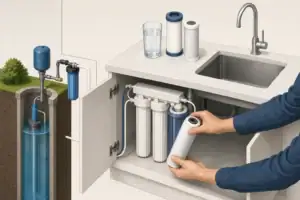
Sometimes bacteria are detected after water enters the home. Unused plumbing branches, old pressure tanks, neglected cartridge housings, or stagnant filter equipment can contribute to bacterial growth in the plumbing environment. If the home already has sediment filters, carbon tanks, softeners, neutralizers, or other devices, their maintenance history matters.
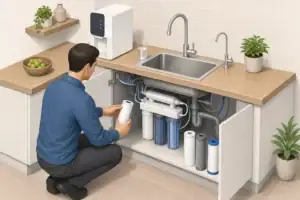
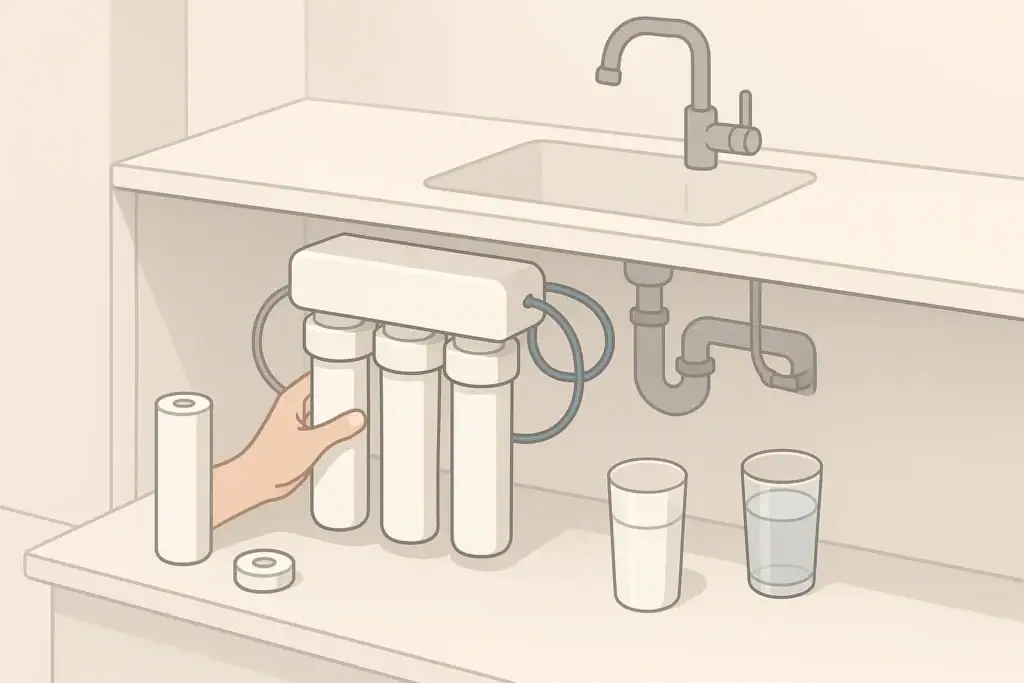
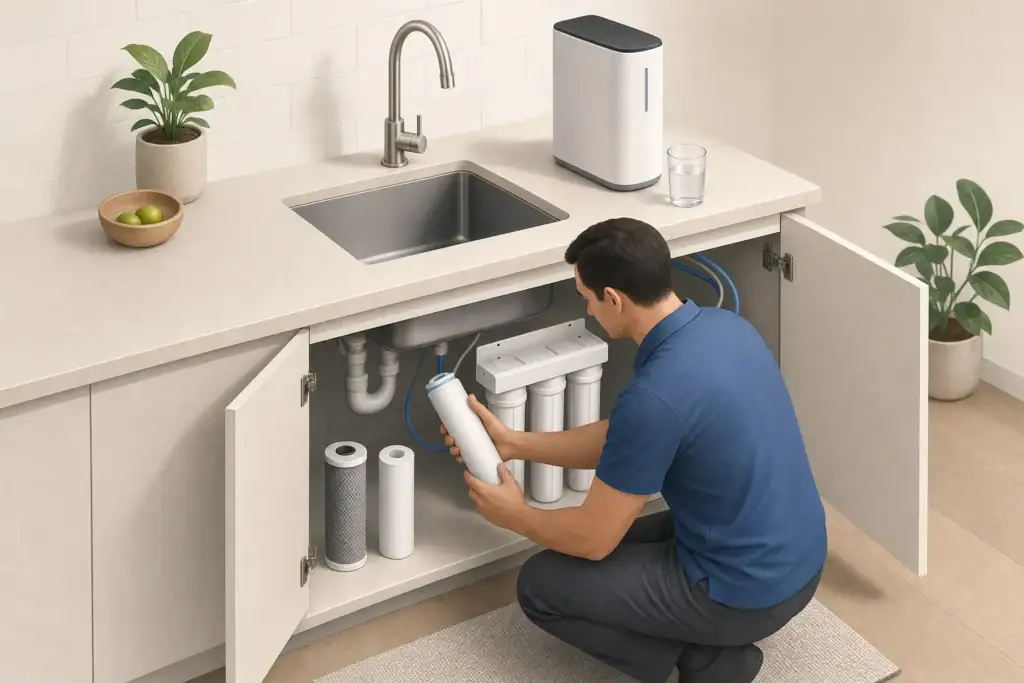
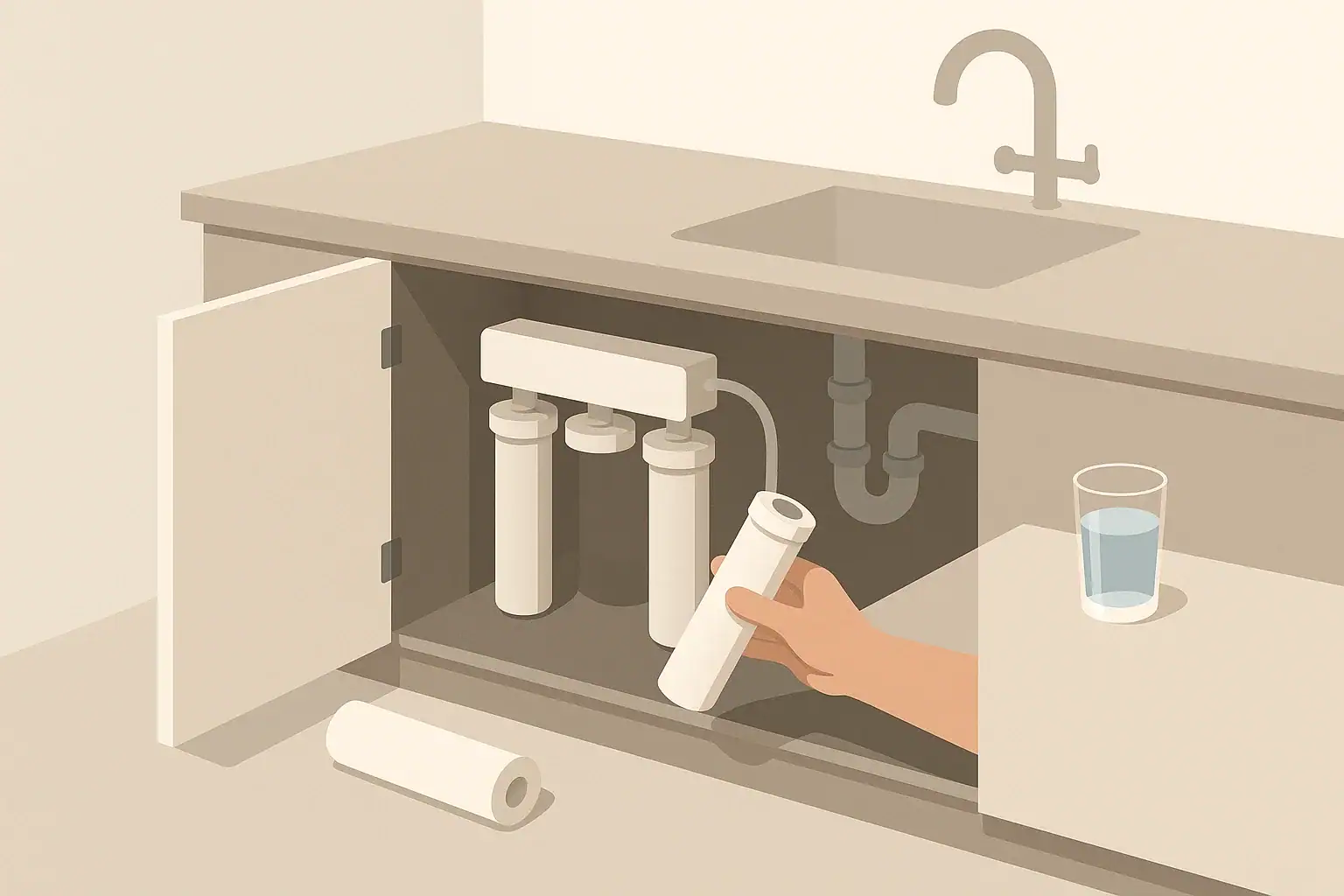
Cartridge housings should be serviced according to the equipment instructions, using sanitary handling and proper depressurization. Old cartridges can collect sediment and organic matter. That does not mean every filter caused the problem, but neglected treatment equipment can complicate diagnosis.
Where Treatment Fits After the Source Is Addressed
Once the well condition and test results are better understood, treatment may be appropriate. For bacteria concerns, the treatment conversation usually focuses on disinfection rather than ordinary taste-and-odor filtration.
UV disinfection
Ultraviolet systems are commonly used for microbial treatment in private well applications. They require the water to be clear enough for the UV light to reach the target organisms. Sediment, color, iron, manganese, hardness scaling, or cloudy water can reduce performance if not addressed first.
A typical UV installation may include prefiltration to reduce sediment before the UV chamber. Some systems also need hardness or iron treatment upstream, depending on the water test. UV units require electricity and ongoing lamp and sleeve maintenance. They are not a set-and-forget solution.
Chemical disinfection
Chlorination and other chemical disinfection approaches may be used in some well systems. These require proper design, contact time, dose control, and sometimes follow-up filtration for taste, odor, or byproducts. This is not an area for improvising. A qualified professional can match the method to the water chemistry, flow rate, and plumbing layout.
Shock disinfection
Shock disinfection is sometimes recommended after well repairs, flooding, or confirmed bacterial contamination. It is a temporary corrective procedure, not a permanent filter. It must be done carefully and followed by flushing and retesting. Local health departments, extension services, and licensed well professionals often provide region-specific guidance.
Carbon, sediment, and reverse osmosis
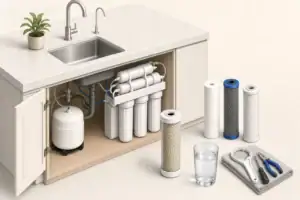
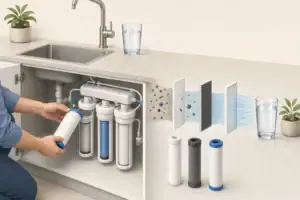
Carbon filters can improve taste and reduce certain chemical contaminants, depending on design and testing. Sediment filters remove particles. Reverse osmosis systems can reduce many dissolved substances at a drinking water tap. However, none of these should be assumed to solve a total coliform problem by themselves.
If bacteria are a concern, treatment should be selected based on the test results, equipment purpose, and maintenance requirements. Point-of-use devices may treat one tap, while point-of-entry systems treat water entering the house. The right location depends on whether the problem is in the well, in the plumbing, or at a single fixture.
Maintenance Questions to Ask Before Installing Equipment
Any bacteria-related treatment plan depends on maintenance. A device that works only when lamps, cartridges, seals, and sleeves are kept in good condition can become unreliable if maintenance is skipped. Before installing treatment, ask practical ownership questions.
- What test results show that this equipment is appropriate?
- Does the system treat the whole house or only one faucet?
- What water quality conditions must be corrected before disinfection?
- How often are cartridges, lamps, sleeves, or media serviced?
- How will the system be sanitized after service?
- What happens during a power outage?
- Where will follow-up samples be collected?
- Who is responsible for keeping maintenance records?
These questions are not meant to make treatment seem difficult. They help prevent a common mistake: installing equipment without a realistic plan for operating it.
Example values for illustration.
| Item | Why it matters | Typical planning question |
|---|---|---|
| Sediment cartridge | Protects downstream equipment from particles | How will pressure drop be monitored? |
| Carbon cartridge or tank | May improve taste or reduce selected chemicals | How will replacement timing be tracked? |
| UV lamp | Supports UV disinfection performance | What is the lamp service schedule? |
| UV sleeve | Must stay clean enough for light transmission | Does the water cause scaling or fouling? |
| Softener or iron treatment | May protect UV and plumbing from buildup | Is pretreatment needed before disinfection? |
| System sanitation | Reduces contamination during service | What steps are required after cartridge changes? |
| Follow-up testing | Confirms whether the plan is working | Where and when should samples be collected? |
Related guides: Best Whole House Sediment Filters • What NSF/ANSI 58 Covers for RO Systems • Bacteria & Viruses: When UV Disinfection Makes Sense • Whole House Filters vs Water Softeners
Practical Next Steps After a Positive Result
Start with the report. Confirm whether the result is total coliform only or whether E. coli is also present. If E. coli is detected, seek local guidance promptly. If total coliform is positive and E. coli is absent, plan a careful retest and review possible causes.
Next, look at the well and the sampling point. A clean sample from the wrong location can mislead you, and a contaminated faucet can make good well water look suspect. If repeated tests remain positive, shift from retesting to investigation. Check well integrity, drainage, recent service history, and existing treatment equipment.
Only after that should filtering or disinfection equipment be selected. The best treatment plan is based on the source of the problem, the water chemistry, the household flow needs, and the maintenance the owner can realistically perform. For many private wells, the most practical path is: confirm, inspect, correct, disinfect if appropriate, retest, and then maintain.
Frequently asked questions
Should I filter my well water immediately after a positive total coliform test?
Not necessarily. It is better to confirm the result, inspect the well and plumbing, and look for the source before choosing equipment.
Does total coliform mean my water is unsafe to drink?
Not always, but it is a warning sign that the well or plumbing may need attention. If E. coli is present, treat that as more urgent.
Can a faucet or sample error cause a positive result?
Yes. A dirty aerator, poor sampling technique, or contamination at one faucet can affect the test, which is why retesting is often important.
What type of treatment is usually used for bacteria in well water?
Disinfection methods such as UV or chlorination are commonly used when bacteria are confirmed. The right option depends on water quality and system layout.
Will a sediment or carbon filter remove coliform bacteria?
Not by itself, unless the product is specifically designed and maintained for bacterial treatment. Standard filters are not the same as disinfection systems.
When should I call a professional?
Call a licensed well contractor or water professional if the well looks damaged, the problem keeps coming back, or E. coli is detected.
Recommended next:
- Lead in Tap Water: Practical Steps Before Buying a Filter
- PFAS Removal Options: RO vs Carbon vs Whole House
- VOCs in Water: How Carbon Filters Work
- Pesticides & Herbicides: What Filters Can Reduce Them?
- Nitrates in Well Water: What Filtration Works Best?
- Arsenic Filtration Basics: What to Look For
- More in Contaminants & Removal →
- NSF/ANSI standards explained (42/53/401/58)
- Clear trade-offs: pitcher vs faucet vs under-sink vs RO
- Maintenance planning: cost per gallon and replacement cadence