Why Chromium-6 Shows Up in Tap Water
Chromium-6, also called hexavalent chromium, is one form of the element chromium. In water discussions, it matters because different forms of chromium can behave differently. Chromium-6 is often present as a dissolved ion, which means it is not something a simple screen or sediment cartridge can reliably catch.
Sources vary by area. Chromium compounds may occur naturally in rock and soil, and they may also be associated with certain industrial activities, metal finishing, pigments, cooling systems, or historical contamination. The important point for a homeowner is not to guess based on taste, smell, or appearance. Chromium-6 normally does not create an obvious taste or visual clue at typical tap water levels.
City water customers may see chromium information in a water quality report, but that report may not always separate total chromium from chromium-6. Private well owners are responsible for their own testing. In both cases, a targeted laboratory test is the practical starting point before buying equipment.
Start With Testing Before Selecting a Filter
For chromium-6 in tap water, testing should guide the filter decision. General water tests, inexpensive dip strips, and TDS meters are not substitutes for a lab method that specifically reports chromium-6 or the form of chromium you are trying to understand.
A TDS meter measures overall dissolved conductive material. It cannot tell whether chromium-6 is present, whether a filter is reducing it, or whether competing minerals are affecting filter performance. Two waters with the same TDS can have very different contaminant profiles.
When evaluating test results, consider these practical details:
- Use a laboratory that provides clear sampling instructions and reports the result in understandable units.
- Ask whether the test distinguishes chromium-6 from total chromium if that distinction matters for your decision.
- Test the water source you actually drink from, especially if your home has multiple treatment devices already installed.
- If you install treatment, consider follow-up testing after the system has been flushed and used according to its instructions.
Testing also helps avoid overbuying. If chromium-6 is not detected or is not a practical concern in your water, your filtration priorities may be chlorine taste, lead from plumbing, PFAS, hardness scale, or other issues instead.
Example values for illustration.
| Filter type | How it fits chromium-6 treatment | Practical notes |
|---|---|---|
| Reverse osmosis | Common point-of-use option for dissolved ions | Look for performance data for hexavalent chromium and plan for cartridge changes |
| Anion exchange | Targets negatively charged ions in water | Capacity depends on water chemistry and competing ions |
| Distillation | Separates water by evaporation and condensation | Usually slow and energy-intensive compared with flow-through filters |
| Specialty adsorptive media | May be designed for specific metals or oxyanions | Performance is media-specific and should be supported by test data |
| Activated carbon | Useful for many taste, odor, chlorine, and organic chemical concerns | Not typically the main choice for chromium-6 unless specifically tested for it |
| Sediment filter | Captures particles such as sand, rust, and silt | Not intended for dissolved chromium-6 |
| UV system | Used for microbial disinfection | Does not reduce dissolved metals or ions |
| Water softener | Primarily reduces hardness minerals | Not a primary chromium-6 treatment method |
Filter Types Commonly Used for Chromium-6
The most commonly discussed treatment approaches for chromium-6 are reverse osmosis, anion exchange, distillation, and certain specialty media. The right choice depends on the water test result, where you need treated water, available space, pressure, wastewater expectations, and maintenance comfort.
Reverse osmosis systems
Reverse osmosis, often shortened to RO, uses pressure to push water through a semi-permeable membrane. The membrane is designed to reduce many dissolved substances, including a range of ions. For drinking water treatment at a kitchen sink, RO is one of the most common practical options considered when chromium-6 is part of the concern list.
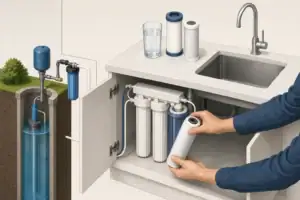
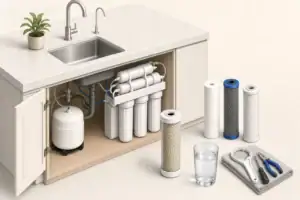
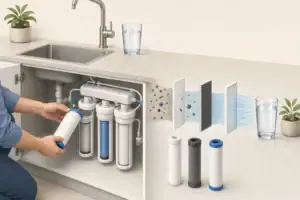
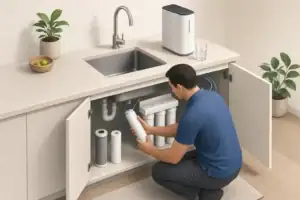
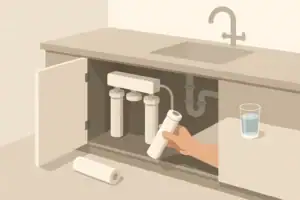
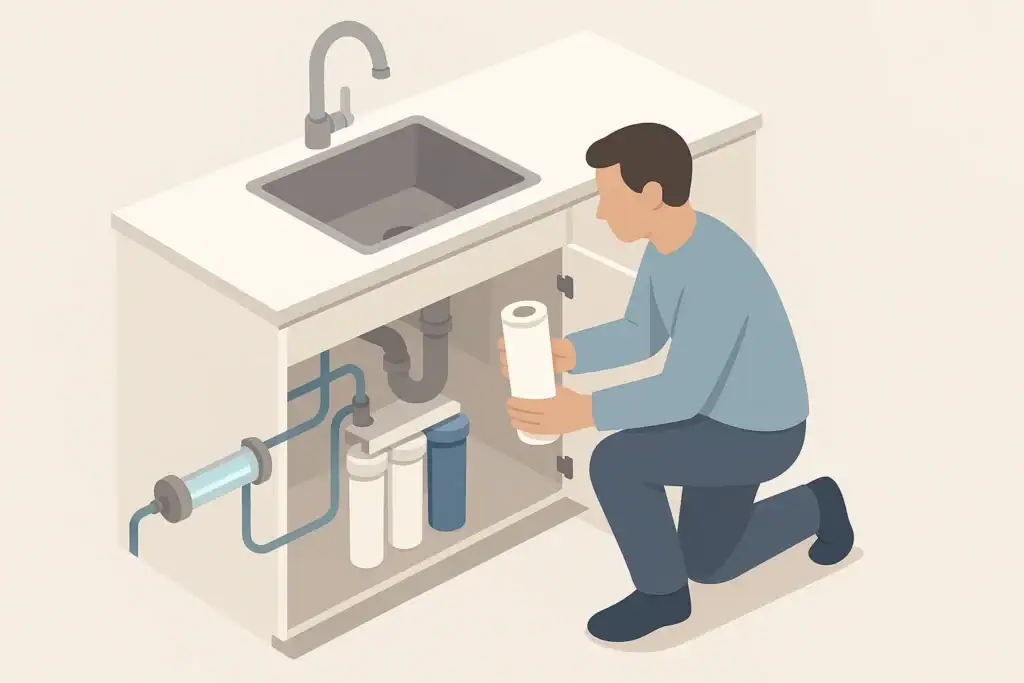
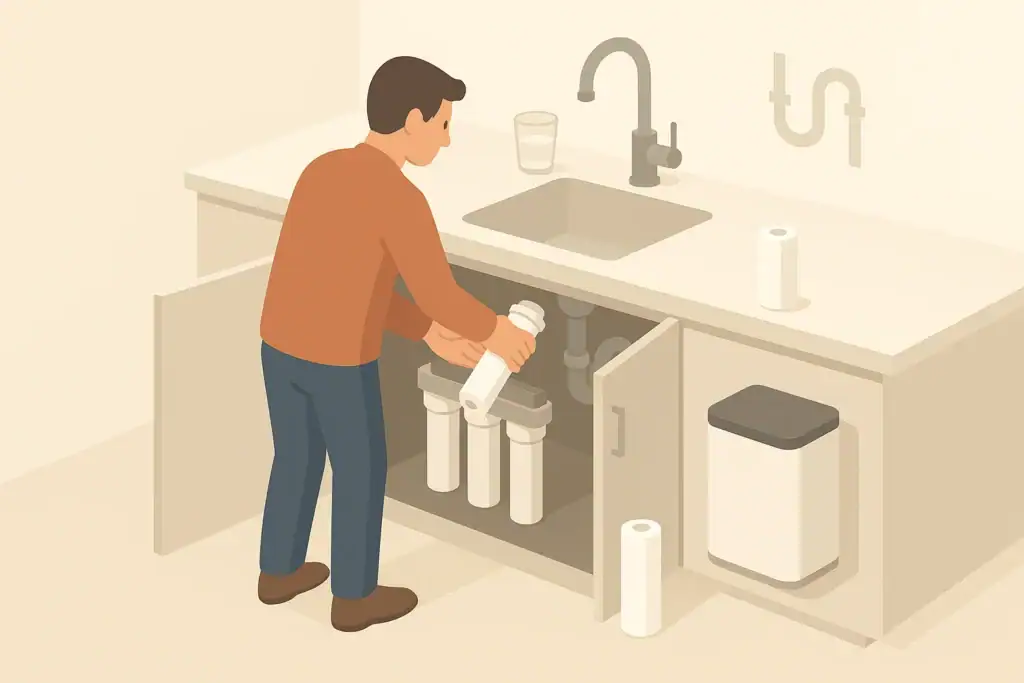
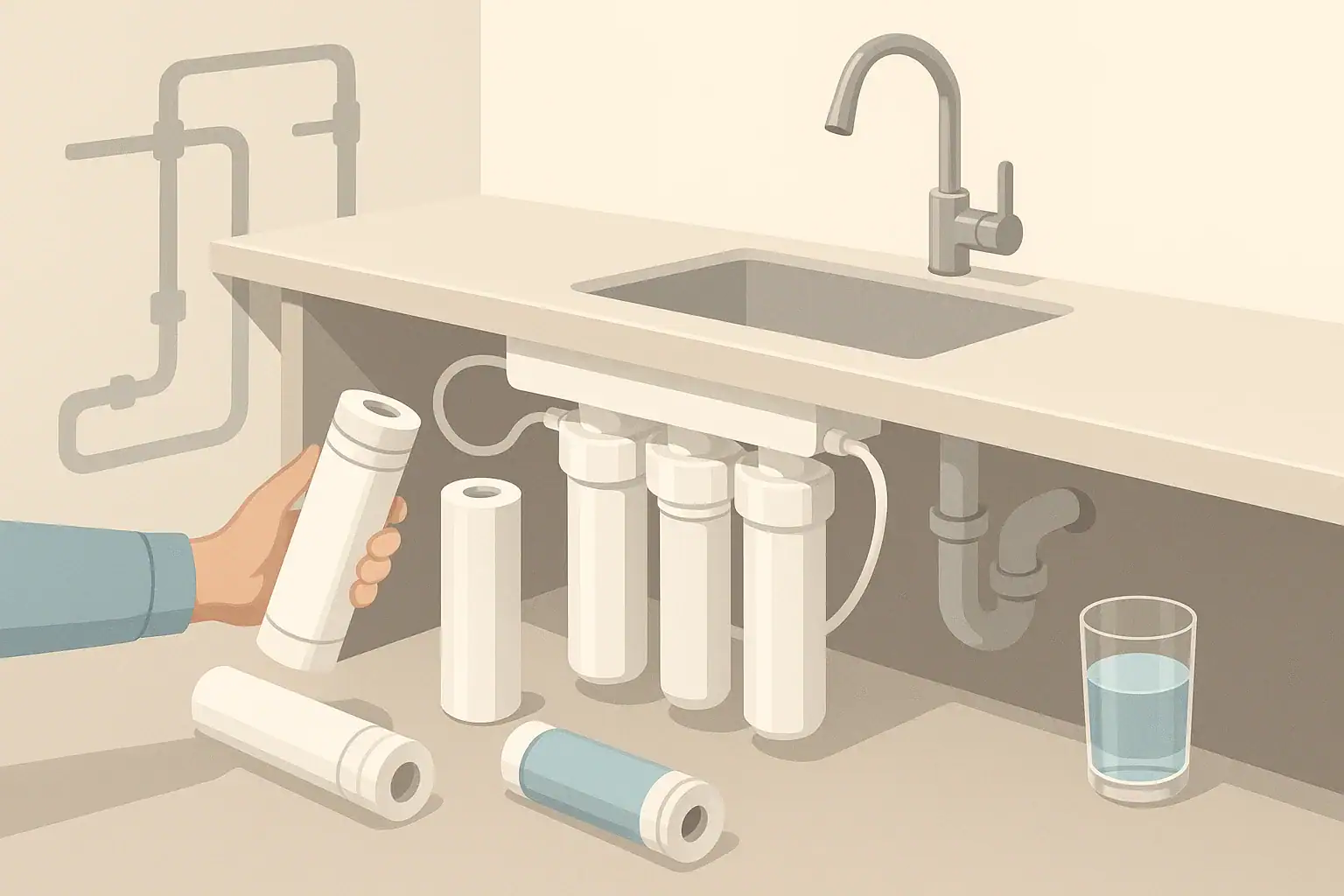
RO systems usually include multiple stages. A sediment prefilter may protect the system from particles. A carbon prefilter may reduce chlorine or chloramine, depending on the design, to help protect the membrane. The RO membrane does the main dissolved-solids separation. A final carbon postfilter may improve taste before the dedicated faucet.
Performance depends on pressure, temperature, membrane condition, incoming water chemistry, and maintenance. A system that was effective when new can perform differently if cartridges are overdue or the membrane has aged. If chromium-6 reduction is the reason for choosing RO, look for independent certification or manufacturer performance data that specifically addresses hexavalent chromium, not just broad wording about impurities.
Anion exchange filters
Anion exchange is another treatment method used for dissolved negatively charged ions. Chromium-6 in water is often present as chromate or dichromate species, which are anions. Anion exchange resin can attract and hold these ions while releasing other ions into the water.
This approach may appear in cartridge-style point-of-use filters or larger tank-based systems. Its effectiveness and capacity can be strongly influenced by competing ions such as sulfate, nitrate, bicarbonate, and others. That is why water chemistry matters. A resin that works well in one water supply may exhaust faster in another.
For home use, anion exchange should be selected with clear performance data and a realistic replacement schedule. Once the resin is exhausted, it may no longer provide the expected reduction. Follow-up testing can be helpful when the contaminant is the main reason for the device.
Distillation
Distillation heats water to make steam and then condenses that steam back into liquid water. Many dissolved minerals and metals do not easily carry over with the steam, so distillation can reduce a wide range of dissolved substances.
For home drinking water, distillers are usually countertop appliances rather than whole-house systems. They can be useful where only small volumes are needed, but they are slower than faucet-style filtration and require electricity. Many owners also need to clean mineral residue from the boiling chamber.
Distillation changes the way water is produced and stored, so cleanliness of the container and routine maintenance matter. It is not a high-flow solution for showers, laundry, or whole-home plumbing.
Specialty adsorptive media
Some filters use specialty media designed to bind selected metals or oxyanions. These may include engineered mineral media, iron-based media, or other proprietary blends. The general idea is adsorption: contaminants attach to the surface or active sites of the media as water passes through.
Because these products vary widely, avoid assuming that one adsorptive cartridge performs like another. The key question is whether the specific media has test data for chromium-6 under conditions similar to household water. Flow rate, contact time, pH, alkalinity, and competing contaminants can all affect performance.
Filter Types That Are Not Usually Enough by Themselves
Some familiar home water filters are valuable for other reasons but are not usually relied on as stand-alone chromium-6 treatment. Understanding their roles helps prevent a false sense of coverage.
Activated carbon
Activated carbon is widely used for chlorine taste, odor, and many organic chemicals. It is also found as a stage in many under-sink and reverse osmosis systems. However, standard carbon filtration is not typically considered the main treatment method for dissolved chromium-6. If a carbon-based product claims chromium-6 reduction, the claim should be supported by specific testing for that contaminant.
Sediment filtration
Sediment filters capture particles. They are useful for sand, rust, dirt, and other suspended material that can clog downstream equipment. Chromium-6 is usually dissolved, so a sediment filter alone is not a suitable treatment strategy for it.
UV treatment
Ultraviolet systems are used for microbial control when properly sized and maintained. UV light does not remove dissolved metals, salts, or chromium ions from water. It may still be part of a well-water treatment train, but it does not replace chemical contaminant treatment.
Hardness softeners
Traditional softeners are designed mainly to exchange hardness minerals such as calcium and magnesium. They can be important for scale control and appliance protection, but they are not generally selected as chromium-6 filters. Do not assume softened water has lower chromium-6 unless testing shows it.
Point-of-Use Versus Whole-Home Treatment
For chromium-6 in tap water, many households focus on point-of-use treatment for drinking and cooking water. This usually means a dedicated kitchen faucet, under-sink system, countertop unit, or appliance that treats a smaller volume of water than the whole home uses.
Point-of-use treatment has several practical advantages:
- Lower treated water volume, which can make replacement parts more manageable.
- More realistic use of RO, distillation, or specialty cartridges.
- Easier post-installation testing at the tap where water is consumed.
- Less impact on showers, toilets, irrigation, and laundry flows.
Whole-home treatment may be considered in some circumstances, especially for specific well-water situations or when multiple taps need treatment. However, whole-home systems for dissolved contaminants require careful design. Flow rate, contact time, pressure drop, backwashing needs, regeneration, wastewater handling, and monitoring all matter.
For city water customers, a certified point-of-use system is often the simpler path when the primary goal is treated drinking water. For private wells, a broader water analysis is especially useful because chromium-6 may not be the only design factor. Iron, manganese, hardness, pH, arsenic, nitrate, sulfate, bacteria, and sediment can affect treatment selection.
Maintenance and Ownership Factors That Affect Results
A filter is not a one-time purchase. Chromium-6 treatment depends on the system continuing to operate within its design range. Maintenance is especially important for technologies that rely on a membrane, resin capacity, or media contact time.
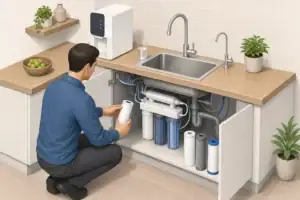
For RO systems, prefilters protect the membrane and help maintain flow. If a prefilter is clogged, pressure to the membrane may drop. If a carbon stage is overdue, the membrane may be exposed to disinfectants it was not designed to tolerate. The membrane itself also has a service life and may need periodic replacement.
For anion exchange and specialty media, exhaustion is the central issue. The media can only hold a certain amount before replacement or regeneration is needed. Higher contaminant levels, higher water use, and competing ions can shorten the useful life. A calendar-based schedule is helpful, but it should be realistic for the water and household.
For distillers, cleaning and storage are the main routine tasks. Mineral residue should be removed according to the appliance instructions. Treated water containers should be kept clean to avoid reintroducing unwanted material after treatment.
Across all systems, watch for practical signs that maintenance may be due:
- Slower flow at the treated faucet
- Changes in taste or odor from postfilters
- Unusual pump cycling or tank behavior on RO systems
- Leaks, drips, or moisture under the sink
- Expired cartridges or missing installation dates
Do not bypass restrictors, automatic shutoff valves, air gaps, leak protection, or other safety-related components to improve flow. If pressure, draining, or installation requirements are not compatible with your plumbing, choose a system designed for your setup or consult a qualified professional.
Example values for illustration.
| System part | Example planning interval | Why it matters |
|---|---|---|
| Sediment prefilter | Every few months to twice per year | Helps protect downstream cartridges and maintain flow |
| Carbon prefilter | Several months to one year | Helps protect RO membranes in many multi-stage systems |
| RO membrane | Every few years | Main separation component for many dissolved substances |
| RO postfilter | About once per year | Polishes taste before the dedicated faucet |
| Anion exchange cartridge | Based on capacity and test results | Exhaustion depends strongly on water chemistry and use |
| Specialty media cartridge | Based on rated capacity | Continued performance depends on media not being exhausted |
| Distiller cleaning | As mineral residue builds up | Supports efficient operation and clean water handling |
Related guides: Reverse Osmosis 101: What RO Removes (and What It Doesn’t) • NSF/ANSI 58 Explained: What It Means for RO Systems • What NSF/ANSI 58 Covers for RO Systems (and What It Doesn’t) • Multi-Stage Under-Sink Filters: Carbon + Ion Exchange Combos
Key Takeaways for Practical Filter Selection
Chromium-6 is a dissolved contaminant concern that should be handled with testing, not guesswork. The filter types most commonly considered are reverse osmosis, anion exchange, distillation, and certain specialty media with contaminant-specific performance data.
Activated carbon, sediment filters, UV systems, and softeners can be useful in a broader treatment plan, but they are not usually stand-alone chromium-6 solutions. If a product claims chromium-6 reduction, look for clear documentation for that specific contaminant and follow the maintenance schedule closely.
For many homes, treating drinking and cooking water at the point of use is the most practical approach. The best system is the one that matches the test result, fits the installation location, provides the needed flow, and can be maintained consistently over time.
Frequently asked questions
Can a standard activated carbon filter remove chromium-6?
Standard activated carbon is usually not the main treatment for dissolved chromium-6. If a carbon product claims reduction, look for test data that specifically names chromium-6.
Is reverse osmosis a common choice for chromium-6?
Yes. Reverse osmosis is one of the most common point-of-use options because it can reduce many dissolved substances, including chromium-6, when properly maintained.
Do sediment filters or UV systems help with chromium-6?
No, not by themselves. Sediment filters remove particles, and UV systems disinfect water, but neither is designed to remove dissolved chromium-6.
Should I test my water before buying a filter?
Yes. A lab test helps confirm whether chromium-6 is present and can guide you toward the right treatment type and capacity.
Is a water softener enough for chromium-6?
No. Softeners are meant for hardness minerals, not dissolved chromium-6.
Recommended next:
- Lead in Tap Water: Practical Steps Before Buying a Filter
- PFAS Removal Options: RO vs Carbon vs Whole House
- VOCs in Water: How Carbon Filters Work
- Pesticides & Herbicides: What Filters Can Reduce Them?
- Nitrates in Well Water: What Filtration Works Best?
- Arsenic Filtration Basics: What to Look For
- More in Contaminants & Removal →
- NSF/ANSI standards explained (42/53/401/58)
- Clear trade-offs: pitcher vs faucet vs under-sink vs RO
- Maintenance planning: cost per gallon and replacement cadence