
Well water may look clear when it first leaves the faucet but develop an orange, reddish-brown, or tea-colored tint after sitting in a glass, sink, toilet tank, or pet bowl. This delayed color change is a common sign of dissolved iron reacting with oxygen.
The timing matters. Iron can remain nearly invisible while it is dissolved underground. Once the water is pumped into the home and exposed to air, the iron changes form and creates suspended particles. Those particles can discolor the water, settle as sediment, and leave stains on plumbing fixtures or laundry.
Although this pattern strongly suggests iron, appearance alone cannot determine the iron concentration, identify every type of iron present, or confirm that the water is otherwise suitable for household use. Testing is the practical starting point for selecting treatment.
Why Clear Well Water Turns Orange After Standing
Groundwater moves through soil and rock that may contain iron-bearing minerals. In the low-oxygen environment of an aquifer, iron can dissolve into the water as ferrous iron, sometimes called clear-water iron. Water containing this dissolved form may look completely clear when drawn from the faucet.
After the water enters a glass or open container, oxygen from the air begins reacting with the dissolved iron. This oxidation converts ferrous iron into ferric iron. Ferric iron is much less soluble, so it forms tiny orange or reddish-brown particles made primarily of iron oxides and hydroxides.
In simplified terms, the sequence is:
- Water dissolves iron while underground.
- The well pump delivers apparently clear water to the home.
- Air contacts the water at the faucet or in a container.
- Dissolved iron oxidizes into an insoluble form.
- Colored particles make the water cloudy or settle on surfaces.
People often call the resulting material rust. The comparison is reasonable because similar oxidation chemistry is involved, but the iron may have come from the groundwater rather than from corroding household pipes.
Why the reaction speed varies
Some iron-bearing water changes color within seconds. Other water may take several minutes or hours. Reaction speed is influenced by pH, temperature, oxygen exposure, iron concentration, and the presence of other substances in the water.
Higher pH generally encourages faster iron oxidation, while acidic conditions may allow dissolved iron to remain clear longer. Pouring, spraying, or aerating water increases oxygen contact and can also speed up the color change.
What the Color and Timing Can Reveal
The way the discoloration develops offers useful clues, but it is not a substitute for laboratory analysis. Clear water that gradually turns orange is most consistent with dissolved ferrous iron. Water that is already orange at the faucet may contain oxidized iron particles, disturbed sediment, pipe corrosion products, or a combination of these materials.
Orange particles that settle
If the colored material settles at the bottom of a container, much of the iron may already be in particulate form. A sediment filter can capture particles, but it does not reliably remove iron that remains dissolved and invisible. That distinction helps explain why a basic cartridge sometimes reduces visible debris without stopping delayed orange color.
Slime, odor, or oily-looking films
Orange or brown slime in a toilet tank, filter housing, or well component can be associated with iron-related bacteria. These organisms are not identified by color alone. They may create sticky deposits, unpleasant odors, or recurring fouling that complicates treatment.
An oily-looking surface film is not necessarily petroleum. Biological films can break into angular plates when disturbed, while petroleum films often flow back together. Because visual checks are uncertain, suspected fuel contamination or a persistent unusual odor warrants professional investigation.
| Observation | Possible explanation | Practical next step |
|---|---|---|
| Clear at first, then orange | Dissolved iron oxidizing after air exposure | Test total and dissolved iron |
| Orange immediately at the tap | Precipitated iron, sediment, or corrosion material | Compare multiple fixtures and test the source |
| Particles settle in a glass | Insoluble iron or mineral sediment | Evaluate particle filtration after testing |
| Orange only at one faucet | Local fixture, pipe, or water-heater issue | Inspect the affected plumbing branch |
| Orange mainly in hot water | Water-heater sediment or corrosion | Have the heater and hot-water plumbing checked |
| Sticky orange slime | Possible iron-related biological growth | Request microbial and well-system guidance |
| Orange appears after well work | Disturbed sediment or changed well conditions | Consult the well professional and retest |
Example values for illustration.
How to Test Orange Well Water
A useful well-water test should look beyond color. A state-recognized or appropriately accredited laboratory can provide quantitative results and sampling instructions. Local health departments or extension services may also help identify common regional groundwater concerns.
For an iron problem, useful measurements commonly include:
- Total iron
- Dissolved iron, when available
- pH
- Hardness
- Manganese
- Turbidity or suspended solids
- Alkalinity
- Hydrogen sulfide when a rotten-egg odor is present
Routine well testing should also address microbial quality and locally relevant contaminants. An orange color does not show whether bacteria, nitrate, arsenic, or other substances are present. Conversely, iron staining alone does not prove that the water presents a health concern.
Collect samples before treatment
When possible, collect a raw-water sample from a point before softeners, filters, or other treatment equipment. This shows the conditions the treatment system must handle. A second sample at the kitchen tap can help evaluate existing equipment or identify changes within household plumbing.
Follow the laboratory’s container, flushing, preservation, and delivery instructions. Do not rinse sterile microbial sample bottles or remove preservatives supplied in a testing container.
Check whether the problem is source-wide
Compare cold water from several fixtures. If every cold-water outlet develops the same orange tint, the iron likely originates in the well water or shared supply plumbing. If only one fixture is affected, inspect its aerator, supply line, and nearby pipework.
If only hot water changes color, the water heater deserves attention. Sediment accumulation, internal corrosion, or reactions involving heater components can produce discoloration that does not appear in cold water.
Treatment Options for Iron Oxidation
The appropriate treatment depends on the iron form, concentration, water chemistry, household flow rate, and presence of sediment or biological fouling. A system should be sized using test results and the home’s peak water demand rather than color intensity alone.
Sediment filtration
Sediment cartridges or backwashing media filters can remove iron particles that are already oxidized. They are often used as a polishing step after oxidation or as pretreatment for downstream equipment.
A sediment filter generally cannot capture dissolved ferrous iron because the dissolved material is smaller than the filter’s pores. If a glass of filtered water still turns orange after standing, dissolved iron is probably passing through the cartridge and oxidizing later.
Oxidation followed by filtration
Many whole-house filters for iron and rust intentionally convert dissolved iron into particles and then filter those particles. Oxidation may involve air, catalytic media, or a carefully controlled oxidant. The filtration stage must be able to retain the precipitated material and release it during backwashing or service.
Water chemistry determines how effectively a particular process works. Low pH, manganese, sulfur odors, high iron loading, and organic matter can affect performance. Systems using chemical feed equipment require suitable storage, dosing controls, maintenance, and professional setup.
Water softeners in limited situations
An ion-exchange softener may reduce modest amounts of dissolved clear-water iron while also treating hardness. However, iron can foul the resin, increase salt use, and shorten service intervals. A softener is not automatically the right choice for heavy iron, oxidized particles, iron-related slime, or challenging pH conditions.
Any proposed softener should be evaluated against measured iron, hardness, manganese, and flow requirements. Pretreatment may be needed when particulate iron is present.
Point-of-use filters and reverse osmosis
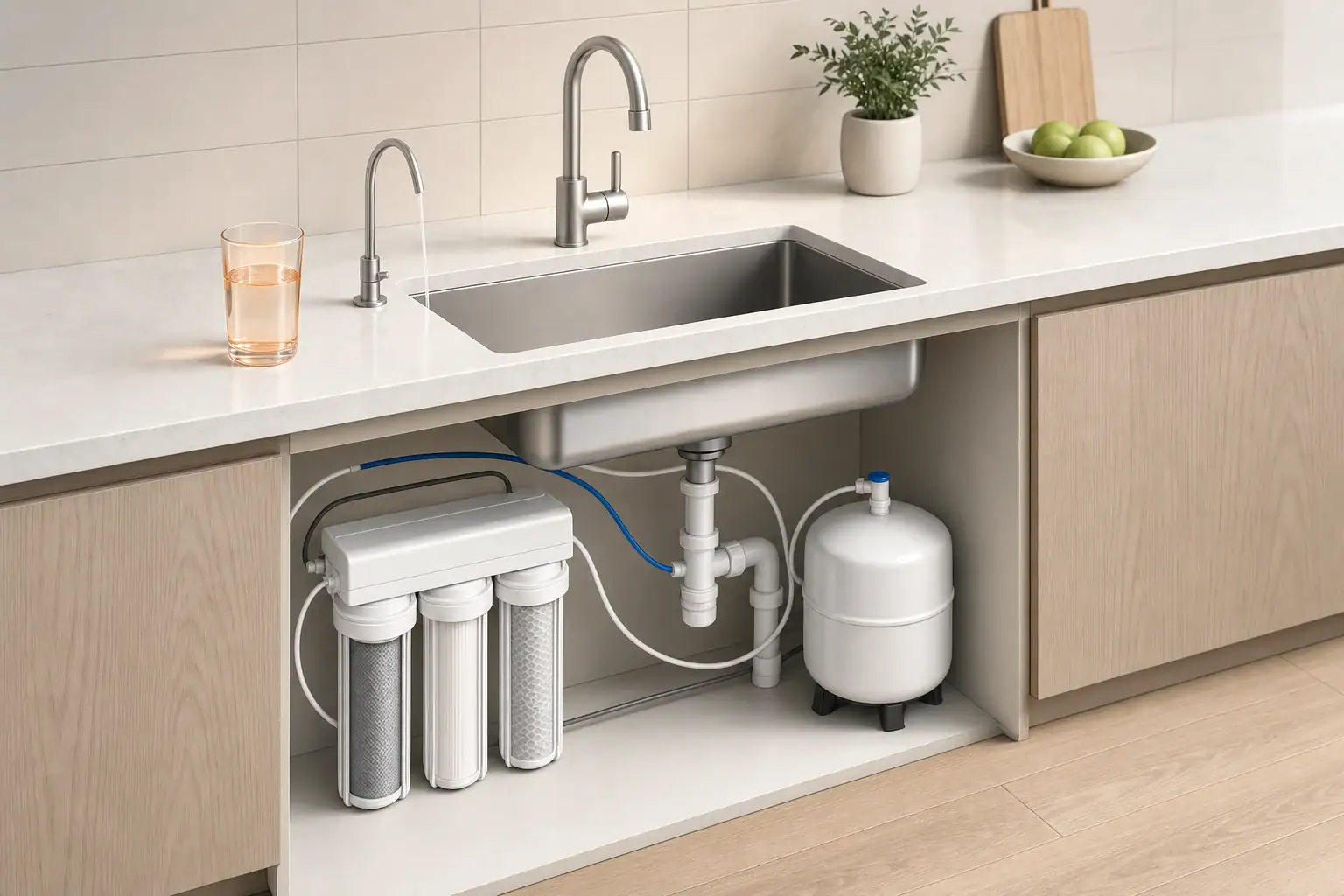
A point-of-use system can treat water at one drinking faucet, but it does not prevent orange staining throughout the house. Reverse osmosis may reduce some dissolved iron under suitable feed-water conditions, yet iron particles can foul its sediment filters and membrane.
Where iron is substantial, whole-house pretreatment is commonly considered before a point-of-use membrane system. Carbon alone is not a dependable primary treatment for dissolved iron, although carbon may be used for separate taste, odor, or oxidant-reduction goals.
Iron-related bacteria
Recurring slime or rapid filter fouling may require evaluation of the well, pressure tank, plumbing, and treatment equipment. Cleaning or disinfection must follow applicable well-service guidance and equipment instructions. Persistent biological fouling is usually better handled with help from a qualified well or water-treatment professional than by repeatedly adding chemicals without diagnosis.
Maintenance and Troubleshooting After Treatment
Iron treatment creates residual material that must go somewhere. Cartridge systems trap it and require replacement. Backwashing systems flush accumulated solids to an approved discharge location. Chemical oxidation systems may also need solution refills, injector cleaning, and periodic verification of dosing.
Track the appearance of treated water, pressure changes, filter condition, and service dates. A sudden return of orange water can indicate an exhausted cartridge, inadequate backwashing, media fouling, changed well chemistry, a failed feed pump, or a plumbing issue downstream of treatment.
Watch pressure and flow
Iron particles can load sediment filters quickly. A noticeable pressure drop during showers or simultaneous water use often indicates a restricted cartridge or undersized filter housing. Installing a finer cartridge is not always better because finer pores may clog faster.
Backwashing equipment needs adequate well-pump flow to lift and clean the media. If the available flow is too low, accumulated iron can remain in the tank and eventually pass into the home. Sizing should account for both household service flow and the equipment’s cleaning requirements.
Retest instead of relying only on appearance
Clear treated water is encouraging, but appearance does not measure treatment performance for every constituent. Retesting can confirm iron reduction and reveal whether source-water chemistry has changed. Wells should also be tested on a private well water testing schedule appropriate for local guidance and after flooding, repairs, or notable changes in color, taste, or odor.
| Symptom | Likely area to check | Reasonable response |
|---|---|---|
| Color returns gradually | Cartridge loading or media capacity | Review service records and inspect the filter |
| Pressure drops throughout the house | Clogged prefilter or fouled media | Measure pressure and service equipment as directed |
| Water turns orange only after standing | Dissolved iron passing treatment | Retest raw and treated water |
| Orange water follows backwashing | Incomplete rinse or control issue | Check the programmed cycle and equipment condition |
| Slime returns quickly | Possible biological fouling | Arrange well and plumbing evaluation |
| Only hot water is discolored | Water heater or hot-water piping | Have the hot-water system inspected |
Example values for illustration.
Related guides:
Iron in Water: Staining, Taste, and Filtration Options •
Whole House Filters for Private Wells: Why Testing Comes Before Buying •
Sediment vs Rust Particles: Diagnosing Brown Water •
Whole House Filters for Iron and Rust: What Works and What Doesn’t
When Orange Water May Not Be Caused by Well Iron
Not every orange-water complaint begins in the aquifer. Corroding steel or galvanized plumbing can release reddish particles, especially after water has been stagnant. Municipal maintenance is not relevant to a private well, but household plumbing repairs, pressure-tank work, or well servicing can disturb accumulated material.
Fine clay and mineral sediment may also create tan, yellow, or orange cloudiness. Manganese more often produces dark brown or black staining, although mixed iron and manganese can create variable colors. Tannins from decaying vegetation can give water a yellow or tea-like tint that may not settle like iron particles.
Changes that occur suddenly deserve attention. Contact a qualified well professional if discoloration begins after flooding, well damage, pump work, or a noticeable change in water level. Stop using water for drinking and cooking when contamination from fuel, chemicals, surface water, or damaged well components is reasonably suspected until the source has been evaluated.
The practical distinction is whether the color begins in the well, develops during oxidation, or originates in household equipment. Observing when the color appears, comparing hot and cold fixtures, and obtaining laboratory results usually provides enough information to choose an appropriate treatment path without guessing from stains alone.
Frequently asked questions
Why does my well water turn orange after it sits?
Clear water that turns orange after standing often contains dissolved ferrous iron. Exposure to oxygen converts it into insoluble orange or reddish-brown particles.
Is orange well water always caused by iron?
No. Orange water can also result from pipe corrosion, disturbed sediment, clay, water-heater issues, or mixed mineral conditions. Testing helps identify the source.
Will a sediment filter remove iron from well water?
A sediment filter can remove iron particles that have already formed, but it usually will not remove dissolved iron that remains clear until it contacts air.
Should I test water that turns orange after standing?
Yes. Test raw water before treatment for total iron, dissolved iron when available, pH, hardness, manganese, and other locally relevant well-water concerns.
Why is only my hot water orange?
Orange discoloration limited to hot water may indicate sediment, corrosion, or another issue in the water heater or hot-water plumbing rather than the well source alone.
- NSF/ANSI standards explained (42/53/401/58)
- Clear trade-offs: pitcher vs faucet vs under-sink vs RO
- Maintenance planning: cost per gallon and replacement cadence