Whole house carbon filtration can address common complaints about municipal water like chlorine taste and odor, and this article explains what those systems do, how carbon media works, what to expect in everyday use, and where carbon alone may fall short. It covers media types, differences between chlorine and chloramine treatment, sizing and flow considerations, maintenance and replacement expectations, and relevant certifications to help you compare products. Read on for practical guidance about installation details (like sediment prefilters and bypass valves), simple checks to monitor performance over time, and planning steps to match a system to your household demand. This overview is aimed at homeowners evaluating whole house carbon solutions specifically for improved taste and reduced chlorine smell throughout the home.
What a Whole House Carbon Filter Actually Does
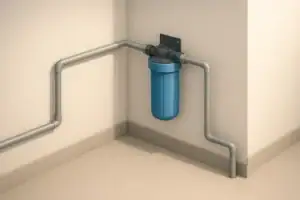
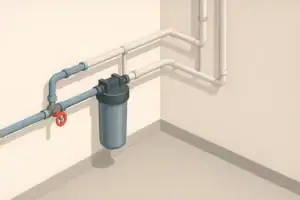
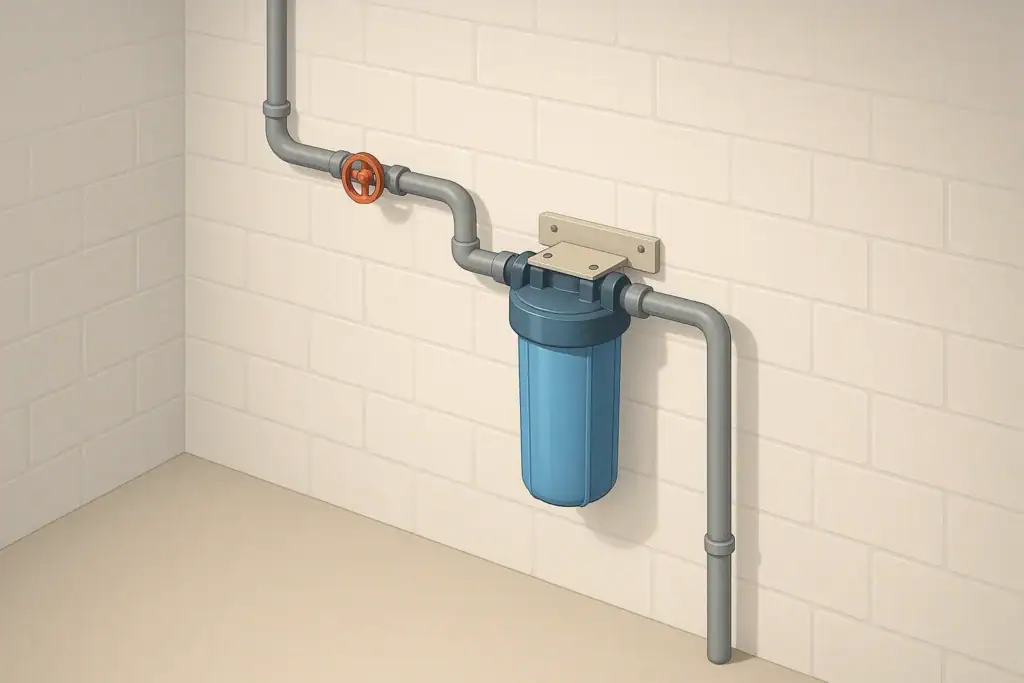
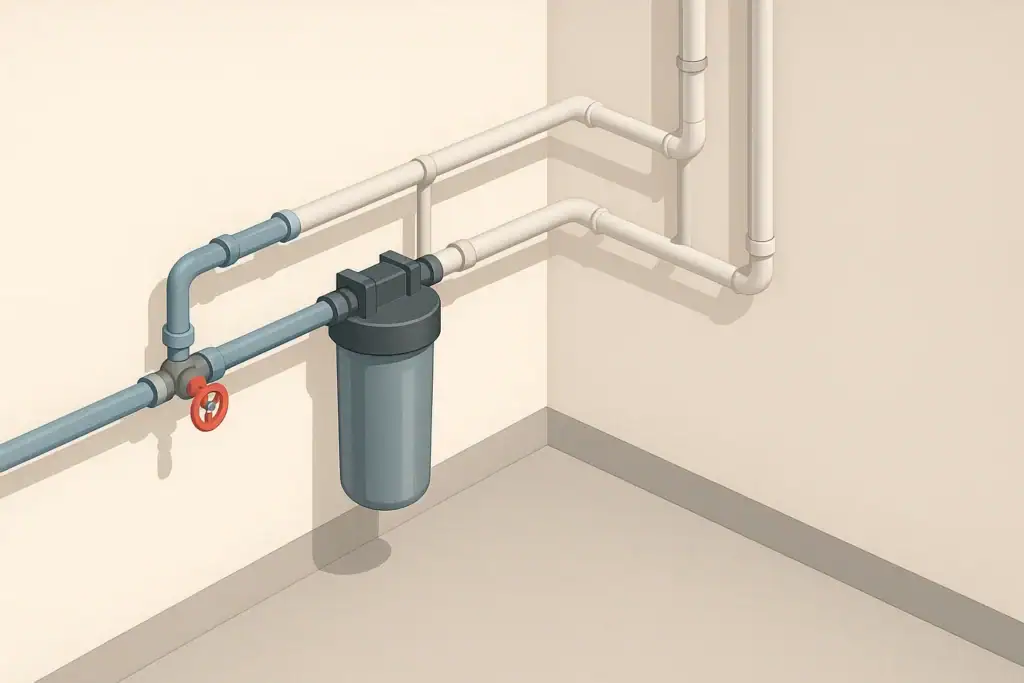
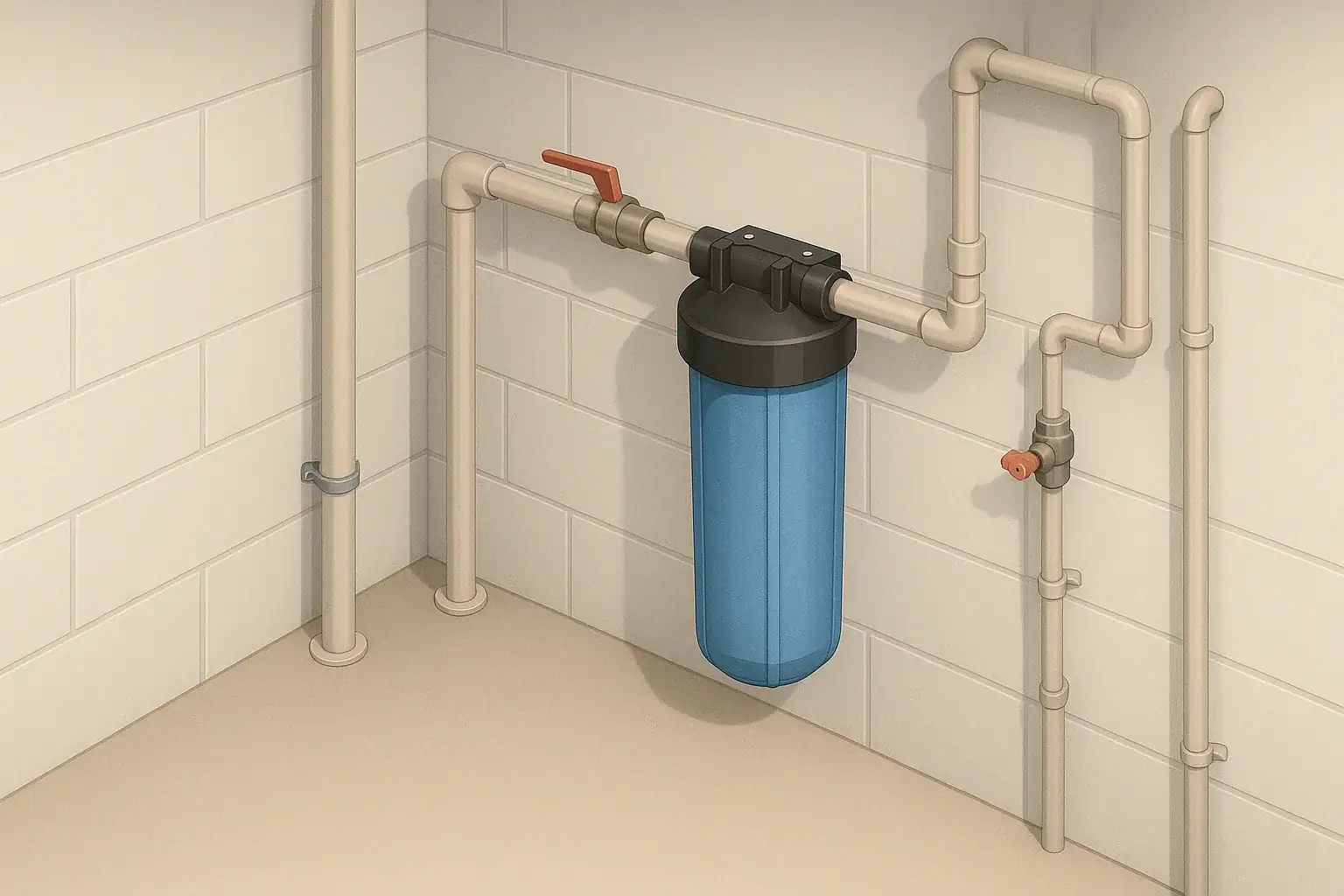
Whole house carbon filters are installed where water first enters the home, so every tap, shower, and appliance receives filtered water. For many households on chlorinated municipal supplies, the main goal is improving taste and reducing chlorine odor throughout the house.
These systems typically use activated carbon, a highly porous material that adsorbs certain dissolved substances from water as it flows through. They are most commonly used to:
- Reduce chlorine used for disinfection
- Improve taste and smell (especially “pool-like” or chemical odors)
- Reduce some organic chemicals and many common household odor-causing compounds
- Protect plumbing fixtures and rubber seals from long-term chlorine exposure
Whole house carbon filters generally do not remove minerals that cause hardness, dissolved salts, or many types of dissolved metals on their own. They are best thought of as a point-of-entry solution for taste, odor, and basic chemical reduction, not a comprehensive purification system.
How Carbon Media Targets Chlorine and Taste
Activated carbon works by adsorption: substances in the water are attracted to and held on the surface of the carbon’s internal pores. The effectiveness depends on the type of carbon, how it is processed, and how long water stays in contact with it.
Common Carbon Media Types
Whole house systems most often use one or a blend of these media:
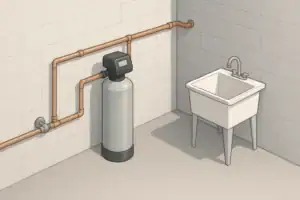
- Granular activated carbon (GAC) – Loose granules in a tank; good for high flow rates with adequate contact time.
- Carbon block – Carbon particles compressed into a solid block; often used in smaller under-sink filters, but sometimes in whole house cartridges.
- Catalytic carbon – Specially processed carbon designed to enhance certain chemical reactions, often used where chloramine is present.
Chlorine vs. Chloramine
Many municipal systems disinfect with chlorine, but some use chloramine (a combination of chlorine and ammonia). Standard activated carbon generally handles free chlorine reduction effectively when properly sized. Chloramine is more persistent and often requires catalytic carbon and carefully designed contact time.
If your water utility uses chloramine, it is important to verify whether a potential whole house filter has been designed and tested for that specific disinfectant, especially if chlorine taste and odor reduction is your primary reason for installing a system.
Example values for illustration.
| Format | Main Coverage | Typical Use | Flow Impact | Taste/Odor Scope |
|---|---|---|---|---|
| Whole house carbon tank | All taps, showers, appliances | House-wide chlorine and odor reduction | Low to moderate (designed for higher flow) | Broad, depends on media and sizing |
| Whole house cartridge housing | All fixtures, limited by cartridge size | Smaller homes or lower usage | Moderate, varies with cartridge and plumbing | Good at single-line treatment |
| Under-sink carbon filter | One faucet | Drinking and cooking water only | Low; affects that faucet only | Focused on taste at one location |
| Pitcher filter | Small volumes | Basic taste improvement at the table | Not plumbed; batch processing | Limited to drinking water |
| Faucet-mount filter | One sink | Convenient drinking water access | Noticeable at that faucet | Focused chlorine and taste reduction |
| Refrigerator/ice filter | Fridge dispenser and ice | Cold water and ice taste | Minimal, internal to appliance | Localized taste and odor control |
| Shower-only filter | Single shower | Shower chlorine odor reduction | Low, at that shower | Local odor and some chlorine reduction |
What to Expect in Practice: Taste, Odor, and Feel
For homes on chlorinated city water, a properly sized and maintained whole house carbon filter can lead to noticeable changes in everyday water use.
Changes at the Tap
Most households notice the following when a carbon system is working as intended:
- Reduced or nearly absent chlorine smell at sinks and showers
- Water that tastes closer to “neutral,” especially for cold water
- Less chemical odor when running hot water, since chlorine is reduced before heating
Individual perception varies, and people accustomed to strong chlorine may notice a larger difference. Some may only notice mild improvement if their incoming chlorine levels are already low.
Shower and Laundry Experience
Because a whole house system treats water before it reaches showers and appliances, changes are often noticeable beyond the kitchen sink:
- Lower chlorine smell in the bathroom while showering or running a hot bath
- Less chemical odor from hot tap water used for cleaning
- Reduced chlorine odor in freshly washed laundry, especially towels
These systems generally do not soften water. If your main concern is hardness scale or soap performance, a separate water softener or other hardness-focused treatment may still be needed.
Limitations: What Carbon Whole House Filters Do Not Do
Despite their benefits, whole house carbon filters are not universal solutions. It helps to understand what they typically are not designed to address by themselves.
- Hardness (scale) – Carbon does not reliably remove calcium and magnesium that cause scale.
- Total dissolved solids (TDS) – Carbon has little effect on overall mineral content or TDS readings.
- Many dissolved metals – Additional media or technologies are usually required to address contaminants like lead or arsenic.
- Microorganisms – Standard carbon tanks and cartridges are not designed as primary disinfection units.
- High sediment loads – Excess sediment can clog carbon beds and cartridges; a separate sediment prefilter is usually recommended.
Some systems combine carbon with other media to broaden performance, but claims should be supported by relevant test data and, where applicable, independent certifications.
System Sizing, Flow Rate, and Pressure Considerations
To work well, a whole house carbon filter must be matched to your household’s water demand and plumbing.
Contact Time and Tank Size
Chlorine reduction and taste improvement depend heavily on contact time—the length of time water is in contact with the carbon media. Higher flow through a small media volume can reduce performance and shorten media life. Larger tanks and media volumes can provide more consistent performance at typical household flow rates.
Household Flow and Pressure
Consider these aspects when evaluating a system:
- Peak demand – Activities like showers, laundry, and dishwashing running together can create high instantaneous flow.
- Plumbing size – Many whole house systems are designed for common main line sizes; restricting pipe diameter can affect pressure.
- Pressure drop – Any filter adds some resistance. Systems designed for whole house use aim to keep this low at typical flows.
If your incoming water pressure is already marginal, it may be useful to consult a professional to ensure the system is sized and installed to maintain acceptable pressure throughout the home.
Filter Life, Replacement Schedules, and Maintenance
Carbon media has a finite capacity. As it adsorbs chlorine and other substances, available adsorption sites become occupied and effectiveness gradually declines. Planning for replacements is essential to maintain taste and odor performance.
How Long Does Carbon Media Last?
Service life depends on several factors:
- Water usage – Higher total volume means faster consumption of media capacity.
- Incoming chlorine level – Higher disinfectant levels use capacity more quickly.
- System design – Media volume, flow control, and other features influence how evenly the media is used.
Some systems use replaceable cartridges; others use larger tanks that are periodically re-bedded (media replaced). Many homeowners start with general manufacturer guidance, then refine schedules based on actual water use, taste changes, and any test results.
Sediment Prefilters and Bypass Valves
Two practical installation details make long-term use easier:
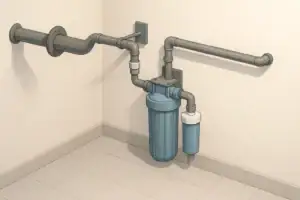
- Sediment prefilter – Installed before the carbon stage to catch sand, rust, and other particles that could clog the carbon media.
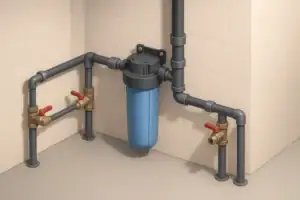
- Bypass valve – Allows the filter to be isolated for service while still providing unfiltered water to the home if necessary.
Regularly checking and replacing sediment prefilter cartridges can help maintain flow and extend the useful life of the carbon media.
Understanding Certifications and Performance Claims
Independent testing standards provide a useful way to compare water filtration claims. For chlorine and taste in whole house applications, NSF/ANSI standards are commonly referenced.
Relevant NSF/ANSI Standards for Carbon Filters
Different standards address different performance areas. For most whole house carbon filters focused on taste and odor, NSF/ANSI 42 is especially relevant. Other standards may come into play if a system is designed to address additional contaminants beyond chlorine.
When reviewing documentation, look for clear statements about which specific standard(s) a system has been evaluated against, what contaminant or performance claim was tested, and under what conditions. Product literature sometimes lists standards alongside features, so it is helpful to confirm which claims are actually certified rather than just referenced.
Example values for illustration.
| Standard | General Focus | What to Check |
|---|---|---|
| NSF/ANSI 42 | Aesthetic effects (chlorine, taste, odor, particulates) | Which specific claims are certified (for example, chlorine taste and odor) and at what flow or conditions |
| NSF/ANSI 53 | Health-related contaminant reduction | Which contaminants (such as certain metals or volatile compounds) are specifically listed and certified |
| NSF/ANSI 58 | Reverse osmosis systems | Applicable mainly if carbon is part of a broader RO system, not stand-alone whole house carbon |
| NSF/ANSI 401 | Emerging contaminants (select pharmaceuticals and chemicals) | Whether any named emerging contaminants are specifically included and certified |
| NSF/ANSI 61 | Material safety for components in contact with drinking water | Whether wetted components meet material safety requirements for potable water contact |
| NSF/ANSI 372 | Lead content in wetted materials | If components are described as low-lead, whether this standard is referenced for material content |
Planning and Monitoring Your Whole House Carbon System
Before installing a whole house carbon filter, gathering a few basic details about your water and household usage can clarify what to expect and how to maintain performance over time.
Information to Collect Up Front
- Source type – Municipal supply vs. private well.
- Disinfectant type – Chlorine or chloramine, usually listed in annual water quality reports for municipal supplies.
- Household size and usage – Number of occupants and typical daily water use.
- Existing issues – Noted tastes, odors, or visual changes in water at different taps.
Having this information available helps align expectations about what a whole house carbon filter can address and whether additional treatment steps may be appropriate.
Simple Ongoing Checks
After installation, a few low-effort habits can help you track system performance:
- Note the installation date and any recommended replacement interval for media or cartridges.
- Pay attention to recurring chlorine smell or taste as a potential indicator that media is nearing the end of its useful life.
- Observe any gradual change in flow or pressure at multiple fixtures, which could signal clogged prefilters or media issues.
- Keep basic records of maintenance actions, including prefilter changes and media replacement dates.
With realistic expectations, proper sizing, and routine upkeep, a whole house carbon filter can be a practical way to manage chlorine-related taste and odor while supporting more consistent water quality throughout the home.
Frequently asked questions
How effective is a whole house carbon filter at removing chlorine from municipal water?
A properly sized whole house activated carbon system can remove most free chlorine from municipal supplies and often eliminates detectable chlorine taste and odor throughout the home. Effectiveness depends on media type, contact time, and maintenance; undersized systems or exhausted media will reduce removal performance.
Can a whole house carbon filter remove chloramine from water?
Standard activated carbon is much less effective against chloramine than free chlorine; removing chloramine typically requires catalytic carbon or a system specifically tested for chloramine reduction. If your utility uses chloramine, choose a system with relevant testing or certification and ensure adequate contact time for effective treatment.
How often should I replace or re-bed the carbon media in a whole house system?
Replacement frequency varies with water usage, incoming chlorine levels, and system design; many homes see anywhere from several months to a few years before noticeable performance decline. Monitor taste and odor, follow the manufacturer’s guidance, and keep up with sediment prefilter changes to extend media life.
Will a whole house carbon filter soften my water or reduce scale?
No—carbon media does not reliably remove the calcium and magnesium that cause hardness, so it will not significantly soften water or prevent scale formation. For hardness issues, a dedicated water softener or other hardness-focused treatment is required.
Will installing a whole house carbon filter reduce my water pressure or flow?
Any whole house filter introduces some resistance, but systems designed for point-of-entry use are built to keep pressure drop low at typical household flows. If you have high peak demand or already low incoming pressure, select an appropriately sized tank or cartridge and consider consulting a plumber to avoid noticeable flow reductions.
Recommended next:
- NSF/ANSI standards explained (42/53/401/58)
- Clear trade-offs: pitcher vs faucet vs under-sink vs RO
- Maintenance planning: cost per gallon and replacement cadence