A sudden drop in filtered water flow is one of the most common complaints with home filtration systems. It can show up as a very slow trickle from a filtered faucet, a pitcher that takes much longer to fill, or a refrigerator dispenser that barely runs. While it is frustrating, it is usually caused by a small number of predictable issues.
This guide walks through a practical diagnostic checklist you can use on most household filtration formats, including:
- Pitcher and dispenser filters
- Faucet-mount filters
- Under-sink carbon systems
- Reverse osmosis (RO) systems
- Refrigerator and ice-maker filters
The goal is to help you identify whether the problem is normal filter clogging, a plumbing or pressure issue, or something that needs repair or replacement. This article focuses on flow, convenience, taste, and practical maintenance rather than health concerns.
Understanding Sudden Drops in Filtered Water Flow
A sudden drop in filtered water flow is one of the most common complaints with home filtration systems. It can show up as a very slow trickle from a filtered faucet, a pitcher that takes much longer to fill, or a refrigerator dispenser that barely runs. While it is frustrating, it is usually caused by a small number of predictable issues.
This guide walks through a practical diagnostic checklist you can use on most household filtration formats, including:
- Pitcher and dispenser filters
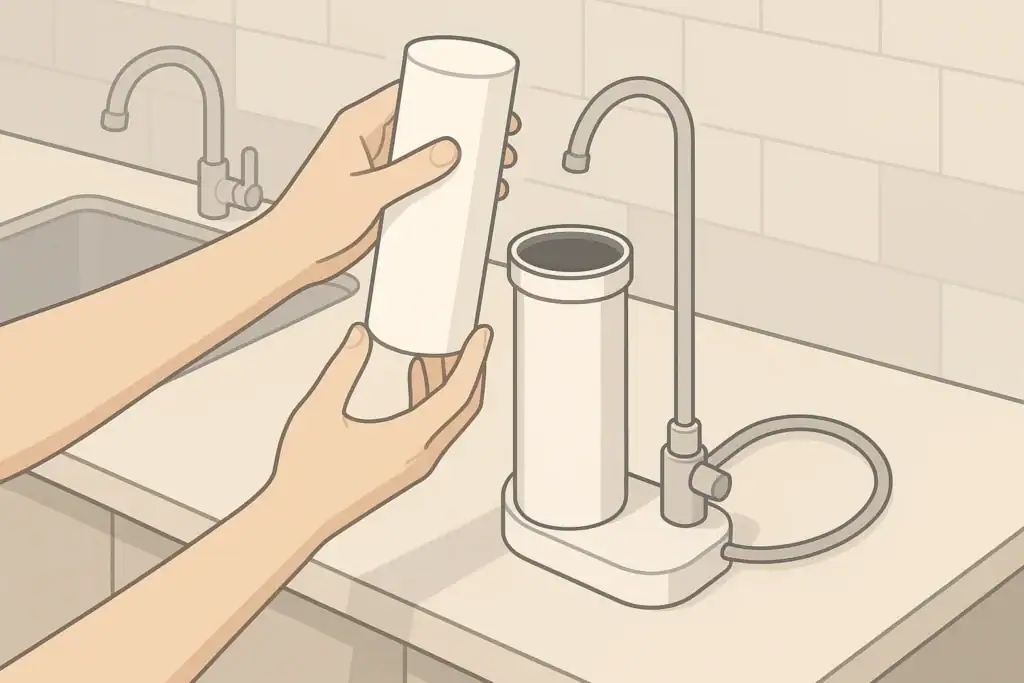
- Faucet-mount filters
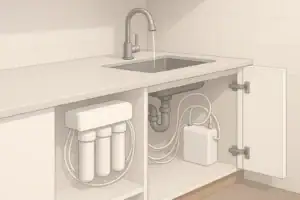
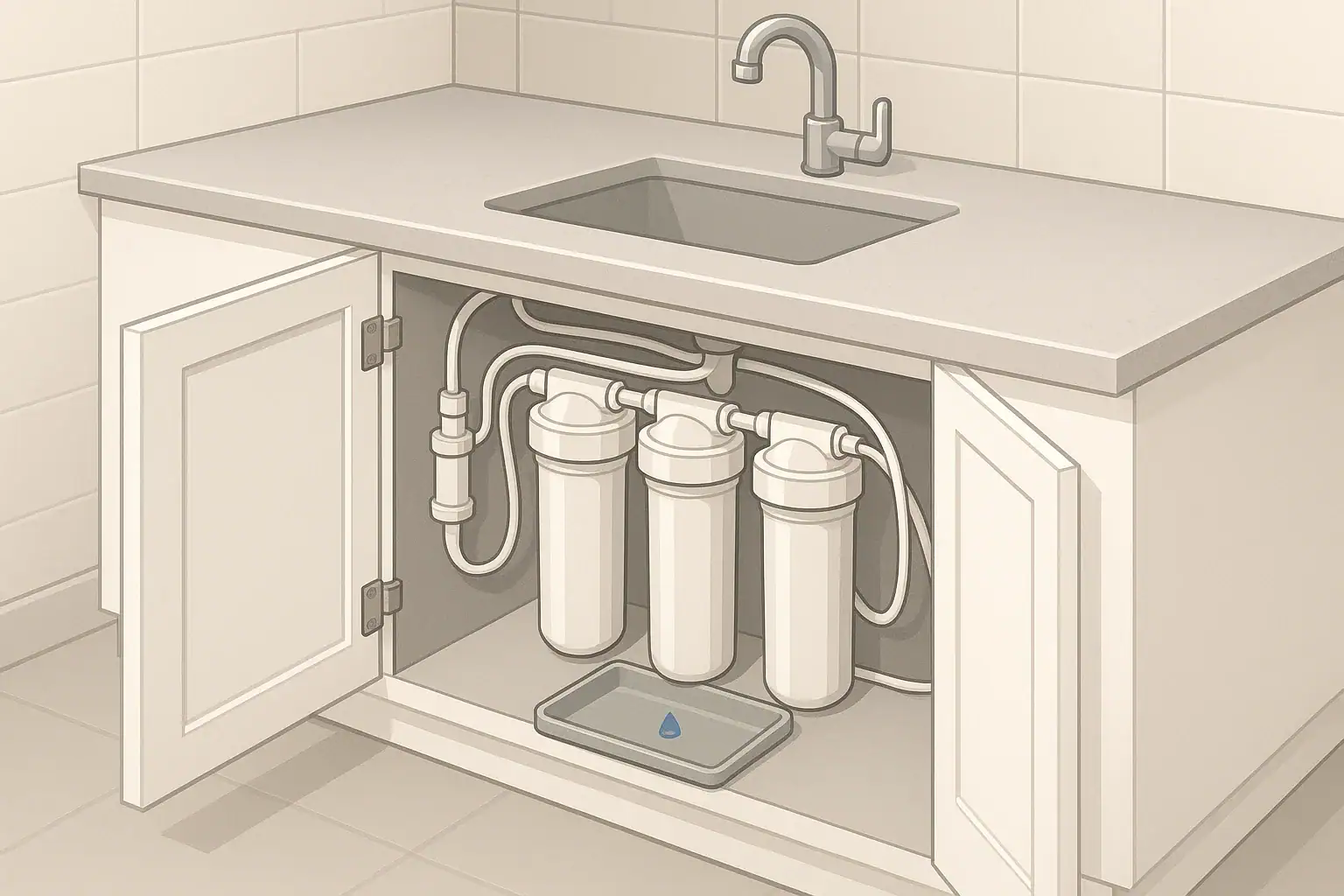
- Under-sink carbon systems
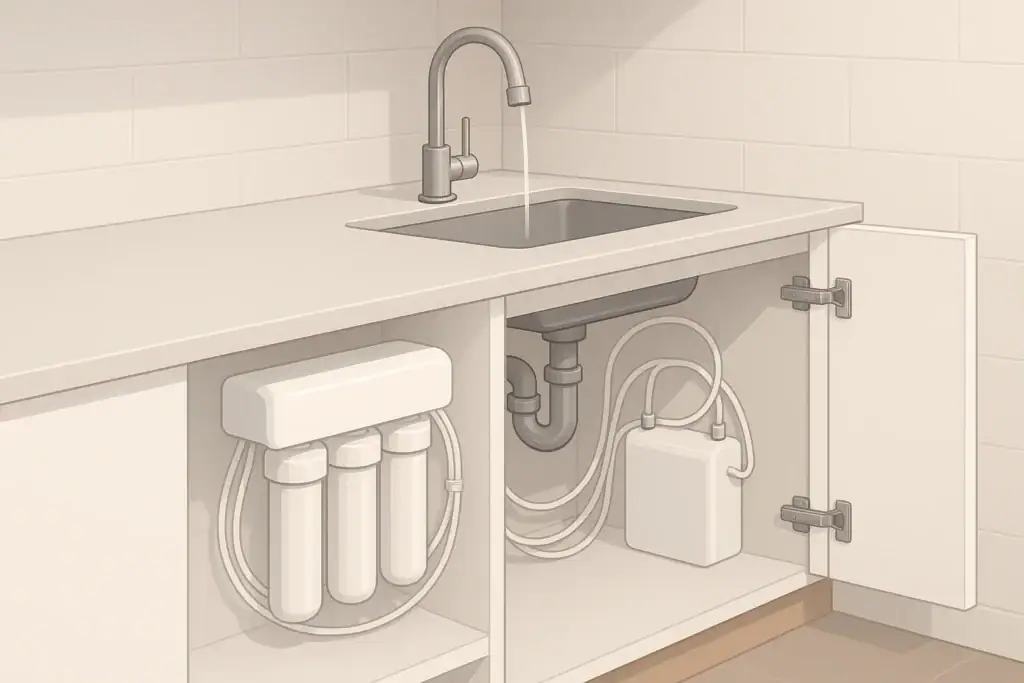
- Reverse osmosis (RO) systems
- Refrigerator and ice-maker filters
The goal is to help you identify whether the problem is normal filter clogging, a plumbing or pressure issue, or something that needs repair or replacement. This article focuses on flow, convenience, taste, and practical maintenance rather than health concerns.
Step 1: Rule Out Basic Plumbing and Fixture Issues
Before assuming the filter is failing, confirm that the problem is not caused by general plumbing or a clogged fixture. A filter can only pass as much water as it receives from the supply side.
Compare Filtered vs. Unfiltered Flow
Start by checking an unfiltered tap at the same sink or in the same room.
- If both filtered and unfiltered taps are slow: The issue may be household water pressure, a partially closed shutoff valve, or a supply problem from the street or well.
- If only the filtered outlet is slow: The issue is likely inside the filter, filter housing, or the connection to it.
Check Aerators and Faucet Screens
For faucet-mounted or under-sink filters that connect to a dedicated faucet, mineral buildup and debris can clog the small screens where water exits.
- Unscrew the faucet aerator or tip (if removable).
- Rinse away sand, rust flakes, or scale.
- Soak in a mild vinegar solution if there is visible mineral buildup.
If the aerator was clogged, cleaning it may restore normal flow even if the filter itself is fine.
Confirm Valves Are Fully Open
Under-sink setups usually have one or more shutoff valves. A partially closed valve restricts flow and can mimic a clogged filter.
- Locate the cold-water shutoff under the sink and verify it is fully open.
- For systems with dedicated feed valves to the filter, ensure those are fully open as well.
- Look for kinked or sharply bent tubing, especially with flexible hoses.
Example values for illustration.
| What you notice first | Most likely area to check | First practical action |
|---|---|---|
| All faucets in home are weak | House water pressure / main valve | Verify main shutoff is open; check with neighbors or well gauge |
| Only filtered faucet is slow | Filter cartridge or housing | Check cartridge age and orientation; inspect housing for debris |
| Pitcher takes much longer to drain through | Pitcher cartridge and reservoir vents | Confirm cartridge seating; check for trapped air and closed vents |
| RO faucet trickles but tank feels heavy | RO faucet and flow restrictor | Verify tank valve is open; inspect tubing for kinks |
| Refrigerator dispenser slows, ice output normal | Dispenser line and outlet | Check for frozen line sections and clogged dispenser outlet |
| Water stops right after plumbing work | Shutoff valves and new connections | Confirm valves are reopened and fittings are not blocked |
Step 2: Consider How Long the Filter Has Been in Use
Most flow issues are simply the result of a filter reaching the end of its capacity. As the media traps sediment and particles, resistance to flow gradually increases. Many people only notice once the drop becomes sudden and significant.
Review the Filter’s Rated Capacity and Your Usage
Filters are typically rated for a certain volume of water or number of months, whichever comes first. For example:
- A pitcher filter might be rated for a few dozen gallons or around two months of typical family use.
- An under-sink carbon block might be rated for several hundred gallons or about six months.
- An RO prefilter stage may be designed for replacement about every 6–12 months, depending on water quality.
If your usage is heavier than the example "average" assumptions (for instance, cooking with filtered water or filling pet bowls and appliances daily), the real-life replacement interval can be shorter.
Check for Capacity Indicators
Some systems include non-electronic indicators:
- Color-change stickers that estimate time since installation.
- Dial reminders you set to a month or date.
- Mechanical counters or simple visual cues built into the housing.
If you do not remember when you last changed the filter, or if you suspect the volume passed is near or beyond the rated capacity, replacing the cartridge is the simplest first step.
High Sediment or Turbidity Can Shorten Life
Water with visible particles or cloudy appearance (high turbidity) can clog filters much faster than clear water even if overall usage is moderate. In such situations:
- Pre-filters that catch coarse sediment may be necessary upstream of fine carbon or RO stages.
- It is normal to replace sediment cartridges more often than taste-and-odor polishing filters.
Step 3: Air Locks, Misalignment, and Installation Errors
Not all sudden flow problems come from clogging. Air trapped inside the cartridge, a misaligned seal, or an incorrect installation can cut flow dramatically even with a new filter.
Pitcher and Dispenser Filters
With gravity-fed systems, common issues include:
- Trapped air: If the cartridge was not fully soaked or pre-flushed according to its instructions, pockets of air can slow water passage.
- Loose seating: A cartridge that is not firmly twisted or pressed into place may allow bypass or partial blockage at the seal.
- Blocked vents: Some designs rely on small air vents in the lid or reservoir. If those are covered or clogged, water cannot drain freely.
If your pitcher suddenly slows right after a filter change, it is reasonable to remove the cartridge, soak or flush it again as instructed, and reinstall it carefully.
Faucet-Mount and Under-Sink Filters
Pressurized systems depend on correct orientation and tight, but not over-tight, fittings.
- Confirm the cartridge is oriented in the correct direction (inlet and outlet sides, if applicable).
- Check O-rings and gaskets for folds, pinches, or debris that could partially block openings.
- After any cartridge change, slowly open the feed valve to allow air to purge; brief spurting is normal.
A sudden change in flow immediately after maintenance is often an installation issue rather than a plumbing or pressure problem.
Reverse Osmosis (RO) Systems
RO systems combine multiple stages and a storage tank, so flow depends on more than just the membrane.
- Pressurized tank valve: If the valve on top of the RO tank is closed or partially closed, the faucet will only trickle.
- Air charge in tank: The air side of the RO tank helps push water out. Incorrect air pressure can affect perceived flow, especially when the tank is half full.
- Flow restrictor and tubing: Kinked tubing or a blocked restrictor can limit how fast the tank refills, making the faucet seem slow for extended periods.
Whenever a RO system is serviced, it is helpful to verify that each valve is returned to its normal position and that tubing is routed without sharp bends.
Step 4: Sediment, Scale, and Source Water Changes
Even if your filter is not past its nominal life, a change in source water conditions can rapidly change how it behaves. Construction work, seasonal changes, or well disturbances can all send extra sediment through your plumbing.
Signs Sediment Is Overloading Your Filter
Clues that extra sediment or rust is reaching your filter include:
- Discolored water at unfiltered taps (brown, orange, or cloudy).
- Fine grit or sand collected in faucet aerators.
- New or recently repaired plumbing before the filter.
In these circumstances, filters that were functioning normally may clog faster than expected. It can be practical to:
- Replace sediment filters sooner than planned.
- Add a dedicated sediment prefilter upstream of more delicate stages.
- Flush lines before reconnecting a filter after plumbing work.
Scale and Hardness Effects
Hard water (high in calcium and magnesium) may leave scale deposits inside narrow passages, small valves, and spray heads. Over time, this can constrict flow paths.
- In faucet-mount and refrigerator systems, scale can accumulate in small internal channels.
- Gently descaling removable parts like aerators or diverter valves can restore capacity.
If you have noticed scale on fixtures, planning more frequent filter maintenance and occasional descaling of accessible parts may help prevent sudden slowdowns.
Step 5: System-Specific Checks by Filter Type
While the principles above apply broadly, each format has its own typical failure points. This section gives a focused checklist based on system type.
Pitcher and Countertop Dispensers
- Verify the upper reservoir is not overfilled beyond its design level.
- Ensure the lid vents are not blocked by objects on top of the pitcher.
- Re-seat the cartridge firmly; check for cross-threading or misalignment.
- If flow dropped immediately after installation, re-soak or re-flush the cartridge as directed.
- If flow gradually slowed over weeks and the cartridge is near end-of-life, replacement is usually the answer.
Faucet-Mount Filters
- Remove and inspect the small screen where the device attaches to the faucet for grit or rust.
- Cycle between filtered and unfiltered positions to confirm the diverter moves freely.
- Check that any internal bypass or selector is not stuck halfway.
- If there is a noticeable click or stop for “filter” mode, make sure it is fully engaged.
- Replace the cartridge if the time or volume limit has likely been reached.
Under-Sink Carbon Block or Cartridge Systems
- Inspect both the dedicated filtered faucet and the cold kitchen faucet to compare flows.
- Confirm under-sink valves feeding the filter are fully open.
- Check visible tubing for kinks or crushing, especially around storage or cleaning supplies.
- Shut off water, depressurize, and open the housing to inspect the cartridge for heavy discoloration or obvious blockage.
- Replace O-rings if they appear twisted or damaged, which can partially block internal passages.
Reverse Osmosis (RO) Systems
- Verify the tank valve is open and the tank is not completely empty.
- If the tank feels light and the faucet is slow, the system may still be refilling; allow time.
- Check prefilters (sediment and carbon) for clogging; these stages protect the RO membrane and strongly influence flow.
- Inspect the drain line and flow restrictor for clogs that may affect tank filling behavior.
- Consider that an aging RO membrane may produce water more slowly even if other parts are clean.
Refrigerator and Ice-Maker Filters
- Confirm the refrigerator’s supply valve behind or under the unit is fully open.
- Check for kinks in the supply line, especially if the refrigerator was recently moved.
- If the dispenser is slow but ice production is still acceptable, the issue may be in the dispenser outlet or small internal tubing.
- Replace the internal filter if it is past its suggested time or volume interval.
- On some models, after filter replacement you may need to run a set number of glasses of water to purge air and carbon fines; low flow during this step can be normal.
Understanding Flow, Pressure, and Filter Design
A filter’s design has a direct impact on how quickly water can move through it at a given household pressure. Recognizing how flow and pressure interact makes troubleshooting easier and helps set realistic expectations.
Flow Rate vs. Pressure
Most point-of-use filtration systems are designed around a typical municipal pressure range. If pressure is much lower than expected, even a clean filter may feel slow.
- Flow from gravity systems like pitchers depends mainly on filter resistance and the height of water above the media.
- Pressurized systems depend on supply pressure; a difference of several tens of psi between homes can meaningfully change perceived flow.
- Multi-stage systems like RO, which include membranes and storage tanks, will usually deliver water more slowly than simple carbon filters even when functioning normally.
Fine Filtration vs. Speed
Filters that target smaller particles or finer contaminants often use denser media. This improves contaminant reduction but tends to reduce flow rate, especially as the filter approaches the end of its capacity.
- A simple taste-and-odor carbon filter may remain fairly fast until very near replacement time.
- A fine-block filter designed for a broad range of contaminants may show a more gradual decline in speed over its life.
When comparing systems, it can be helpful to consider both flow expectations and the level of filtration claimed through independent standards, rather than just how fast the water comes out when new.
Tracking Maintenance to Prevent Sudden Drops
Many “sudden” drops are actually the endpoint of a gradual decline that went unnoticed. A simple maintenance plan can help you stay ahead of slowdowns and schedule replacements at convenient times.
Use Time and Volume Reminders
Manufacturers often give replacement guidance in months and gallons. Because most households do not measure gallons directly, pairing a time estimate with your habits is practical.
- Note installation dates on a small label near the filter or under the sink.
- Estimate daily use (for example, several pitchers per day, or a certain number of full sink fills per week) to guess when you are approaching capacity.
- Consider adjusting replacement earlier if you live in an area with high sediment or frequently discolored water.
Watch for Early Warning Signs
Subtle clues that a filter is nearing its end include:
- Water taking slightly longer to fill containers than a month earlier.
- Minor changes in taste or odor returning between replacements.
- More frequent aerator clogs from particles slipping through as upstream filters load up.
Responding to these early signs with planned maintenance can help you avoid abrupt disruptions during busy times of day.
Example values for illustration.
| What to track | Typical cues to watch for | Simple planning method |
|---|---|---|
| Time in service | Months since last cartridge change | Mark change date on housing and set a calendar reminder |
| Approximate volume | Number of pitchers, bottles, or sink fills per day | Estimate weekly use and compare with example capacity range |
| Flow rate | Seconds to fill a standard glass | Check once a month and note when time noticeably increases |
| Taste and odor | Chlorine smell or off-taste slowly returning | If minor changes appear before scheduled date, replace earlier |
| Sediment buildup | Visible particles in aerators or prefilter housings | Shorten sediment filter interval when buildup becomes frequent |
| System changes | Plumbing work, main line repairs, or seasonal discoloration | Inspect and possibly replace filters after major water disturbances |
When to Consider a Different Filtration Setup
If you find that filters clog very quickly even with consistent maintenance, it may indicate a mismatch between the system and your source water conditions or usage level.
- Homes with high sediment may benefit from a dedicated sediment prefilter ahead of finer stages.
- Large households or heavy cooking use may find a higher-capacity under-sink or multi-stage system more practical than small cartridges.
- Areas with very low pressure may require systems specifically designed for such conditions to achieve acceptable flow.
Matching system type, filter capacity, and maintenance expectations to your actual water quality and usage can significantly reduce inconvenient, sudden drops in filtered water flow.
Frequently asked questions
Why did my filtered water flow drop suddenly after replacing the cartridge?
new cartridge, an improperly seated cartridge, or blocked vents can restrict flow even when the media is new. Remove and reseat or re-flush the cartridge per instructions and slowly reopen the feed valve to purge air; if flow remains low, check orientation and seals.
How can I tell if the issue is low household pressure or a clogged filter?
Compare the flow from an unfiltered tap at the same sink: if both are slow, the problem is likely household pressure or a closed valve; if only the filtered outlet is slow, the filter or its fittings are the probable cause. Also check aerators and visible tubing for kinks or blockages.
Why does a reverse osmosis faucet trickle even though the tank feels full?
A closed or partially closed tank valve, incorrect air charge in the tank, or a clogged prefilter can make the RO faucet deliver slowly despite a heavy-feeling tank. Verify the tank valve is open, check tank air pressure if accessible, and inspect prefilters and tubing for clogs.
How often should I replace sediment prefilters to avoid sudden clogging?
Replacement depends on water quality and usage but sediment prefilters typically need replacement more frequently than polishing cartridges—often every 1–6 months in high-turbidity conditions. Monitor aerator grit, discolored water, and flow rate to decide if intervals should be shortened.
Can I improve filtered flow without replacing the main cartridge?
Yes—cleaning faucet aerators, descaling small passages, confirming valves are fully open, and removing trapped air can restore flow in many cases. If these steps do not help and the cartridge is near its rated life or heavily discolored, replacement is the appropriate next step.
Recommended next:
- NSF/ANSI standards explained (42/53/401/58)
- Clear trade-offs: pitcher vs faucet vs under-sink vs RO
- Maintenance planning: cost per gallon and replacement cadence