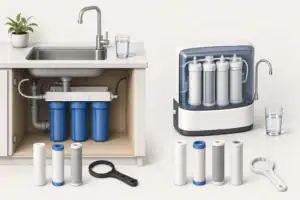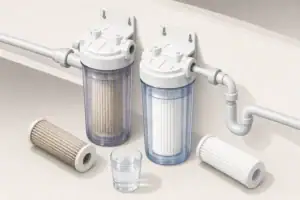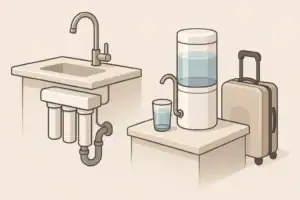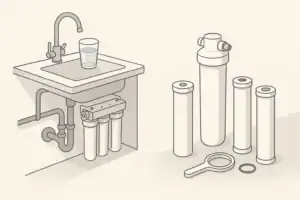
A new carbon filter is not necessarily ready for drinking water the moment it is installed. Most carbon cartridges need to be primed by soaking, flushing, or running water through them according to the product instructions.
This first flush serves several practical purposes. It removes loose carbon particles, pushes out trapped air, wets the filter media, and helps the system reach normal flow. Skipping or shortening the process can leave water looking gray, tasting unusual, or flowing unevenly.
Priming requirements differ among pitcher cartridges, faucet filters, refrigerator filters, and under-sink systems. The filter manufacturer’s instructions should therefore take priority over any general rule.
What Priming a Carbon Filter Does
Activated carbon contains a large network of pores that adsorb certain substances from water. Depending on the cartridge and its claims, carbon may help reduce chlorine-related taste and odor, some volatile organic compounds, or other specifically identified substances.
Before normal use, water needs to move throughout that porous structure. Priming is the process of preparing the media and clearing installation-related residue from the system.
It removes loose carbon fines
Carbon fines are small particles produced during manufacturing, shipping, or handling. They may create gray water, dark specks, or a light residue during the first flush. Their presence does not automatically mean the cartridge is defective, especially if the discoloration clears within the specified flushing procedure.
It wets the filter media
Dry carbon can contain pockets of air. Water may initially channel around those pockets instead of moving evenly through the media. Soaking or flushing helps displace the air and wet more of the carbon surface.
It clears air from the filter housing
Air introduced during installation can cause sputtering, temporary cloudiness, or uneven faucet flow. A controlled flush gives that air a path out of the cartridge and connected tubing.
Why the First Flush Matters
The first flush is primarily a preparation and quality-control step. Water discharged during priming may contain carbon dust, trapped air, or material left from cartridge manufacturing. It should not be used for drinking, cooking, ice, or pet water unless the instructions specifically state otherwise.
Flushing also gives the user a chance to check the installation. A cartridge that is seated incorrectly may leak, deliver very little water, or fail to engage an internal valve. Catching these problems before normal use can prevent spills and avoid uncertainty about filter performance.
Priming is not the same as sanitizing a system. Flushing a new cartridge does not clean a dirty housing, storage tank, faucet, or water line. If the system instructions call for periodic sanitation, that is a separate maintenance procedure.
Example values for illustration.
| Check | Why it matters | Practical action |
|---|---|---|
| Cartridge compatibility | Incorrect cartridges may not seal or direct water properly | Confirm the specified filter type |
| Protective packaging | Caps or wrapping can block water flow | Remove only as directed |
| Housing condition | Debris or damaged seals can cause leaks | Inspect clean surfaces and seals |
| Soaking requirement | Some loose cartridges need pre-wetting | Follow the stated soak procedure |
| Flush direction | Water must follow the intended path | Check arrows or installation instructions |
| Flush duration | Too little flushing may leave fines or air | Use the specified time or volume |
| Leak inspection | Small leaks may appear only under pressure | Observe connections during and after flushing |
How to Prime Common Types of Carbon Filters
There is no single priming method for every carbon filter. Cartridge design, carbon form, housing size, and water path all affect the procedure.
Pitcher and dispenser cartridges
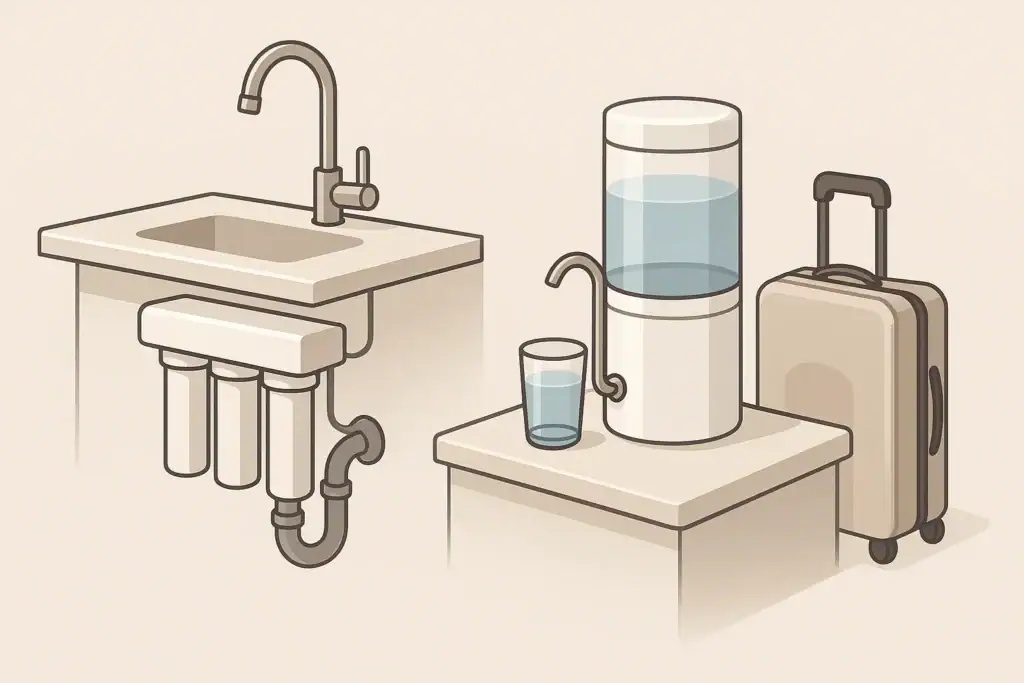
Some gravity-fed cartridges require soaking in cold water before installation. Others should not be soaked and instead need one or more full reservoir cycles. For product-specific steps, see how to pre-soak and flush a new pitcher filter cartridge. Discard the priming water as directed.
A floating cartridge may contain trapped air. If the instructions permit it, gentle submersion or agitation can help release bubbles. Avoid squeezing, striking, or opening a sealed cartridge.
Faucet-mounted and countertop filters
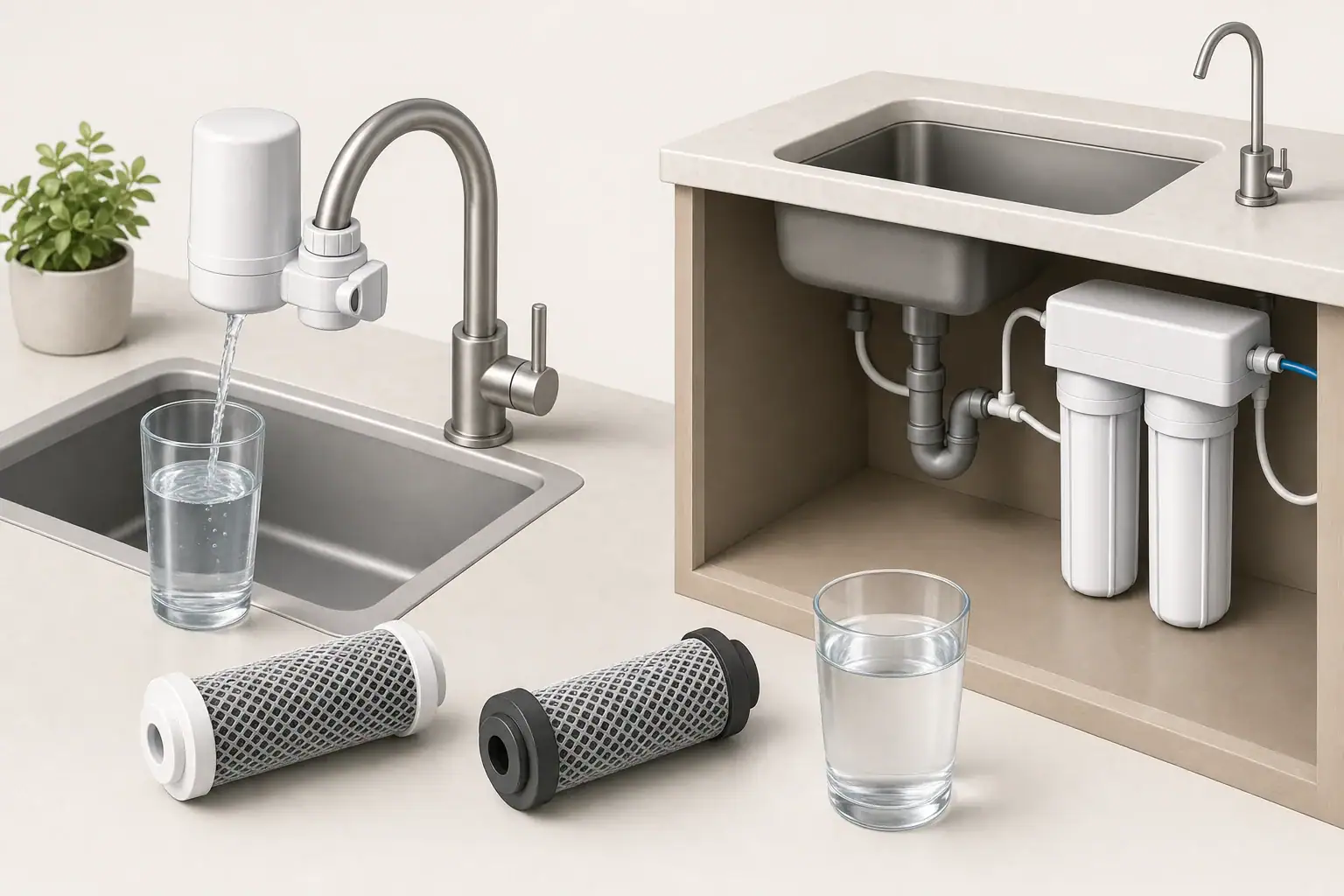
After installation, select the filtered-water setting and run cold water at the recommended rate. A moderate stream is often more appropriate than immediately opening the faucet fully because it allows trapped air to escape without excessive splashing.
Do not run hot water through a filter unless it is specifically designed for that use. High temperatures can affect carbon media, seals, or plastic components.
Under-sink carbon systems
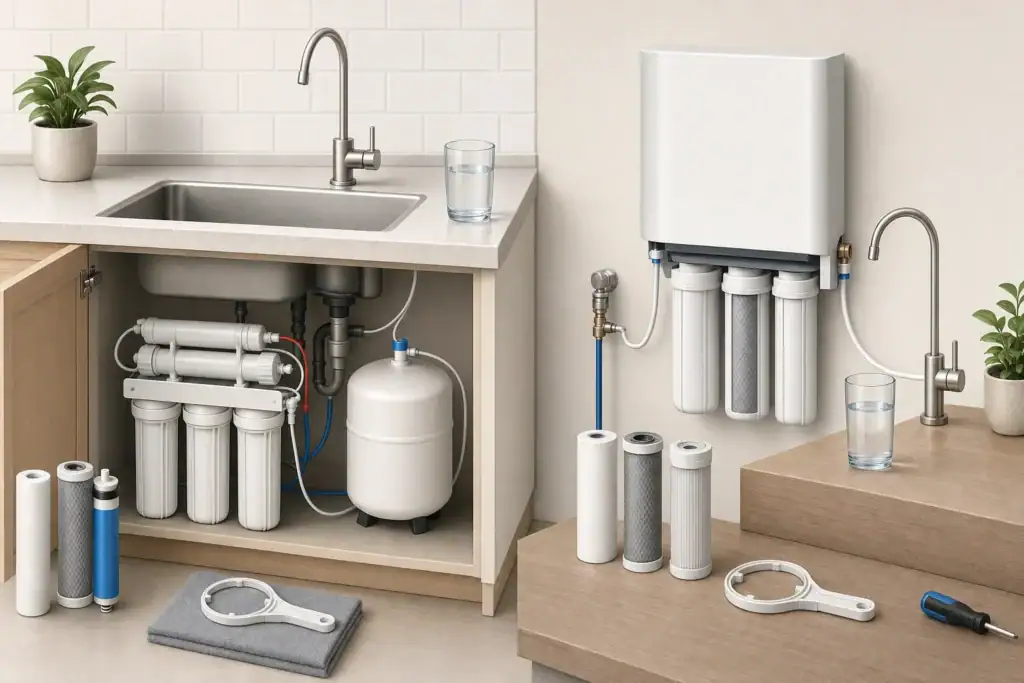
Under-sink filters may require several minutes of continuous flushing or a specified number of gallons. Open the dedicated faucet slowly at first. Sputtering is common while air leaves the housing and tubing.
Inspect the housing, tubing connections, and faucet base during the flush. If a leak appears, shut off the system using its normal supply valve and follow the installation instructions. Do not attempt to stop a leak by bypassing pressure controls or other safety features. For additional setup considerations, review this guide to under-sink filter installation.
Refrigerator filters
Refrigerator cartridges commonly need water dispensed after replacement to remove air and fines. Use the stated volume rather than relying only on water appearance. If the refrigerator has an ice maker, discard the amount of ice specified in its instructions because the first batches may have been made with unflushed water.
Whole-house carbon filters
Larger systems may have specialized startup procedures, including slow filling, media soaking, backwashing, or rinsing to a drain. These steps depend on the control valve and tank design. Follow the system documentation or use a qualified water-treatment professional rather than improvising valve positions. Learn more about backwashing filters before operating a system with that feature.
How Long Should a Carbon Filter Be Flushed?
The correct flushing target may be given as time, water volume, reservoir cycles, or a combination of these. Small gravity cartridges might require a few discarded batches, while plumbed cartridges may require several minutes of flow. Larger media tanks can require substantially more water and a staged startup.
Flow rate affects how much water passes through during a timed flush. For example, a five-minute flush at one-half gallon per minute uses about 2.5 gallons. This is only an illustration; it is not a universal priming target.
Do not stop solely because the water looks clear. Fine particles may clear before the recommended volume has passed through the cartridge. Conversely, extending the flush far beyond the instructions is usually unnecessary unless there is continuing discoloration, unusual taste, or air in the line.
Use cold potable water for routine priming unless the documentation specifies another method. Water from an unknown or unsuitable source should not be made acceptable merely by passing it through a basic carbon cartridge.
How to Tell When the Filter Is Properly Primed
A properly primed filter generally produces clear water with steady flow and no persistent bursts of air. The water should not contain visible black particles after the specified flush is complete.
Temporary cloudiness can be caused by tiny air bubbles. To check, fill a clear glass and let it stand. If the cloudiness rises and disappears from the bottom upward, trapped air is a likely explanation. Sediment or carbon particles are more likely to settle or remain visible.
Taste can also change during startup. New carbon, new tubing, or trapped air may create a temporary flat or unfamiliar taste. The expected result depends on the source water and the filter’s specific reduction claims; priming cannot make a cartridge address substances it was not designed to reduce.
Stop using the filtered outlet and investigate if there is persistent oily residue, a strong chemical odor, damaged components, leaking connections, or discoloration that does not improve after the full specified flush.
Troubleshooting Problems After the First Flush
Most startup issues are related to trapped air, loose carbon fines, cartridge alignment, or insufficient flushing. Start with the least invasive checks: compare the installation with the instructions, confirm that protective caps were removed, and verify that the cartridge is fully seated.
Low flow can occur when dry media has not fully wetted, but it can also result from low supply pressure, a clogged prefilter, a closed valve, or an incorrectly installed cartridge. Do not drill, cut, or modify a cartridge to increase flow.
If taste or odor remains unchanged, consider the limits of carbon filtration. Contact time, carbon quantity, flow rate, cartridge condition, and the type of disinfectant used by a water utility can all affect results. Chloramine, for example, may require a filter specifically designed and tested for that purpose rather than a basic taste-and-odor cartridge.
Example values for illustration.
| Observation | Possible explanation | Next check |
|---|---|---|
| Gray water | Loose carbon fines | Continue the specified cold-water flush |
| Cloudiness that clears quickly | Trapped air | Flush at a steady moderate rate |
| Persistent black specks | Incomplete flushing or cartridge damage | Inspect the cartridge and contact its supplier |
| Sputtering flow | Air in the housing or tubing | Keep the outlet open as directed |
| Very low flow | Alignment, pressure, or blockage issue | Check seating, valves, and prefilters |
| Unchanged chlorine-like taste | Insufficient contact time or unsuitable media | Confirm flow and the filter’s stated reduction scope |
| Leak near the housing | Seal, seating, or connection problem | Shut off the normal supply and inspect safely |
Related guides:
Air in the Line After a Filter Change: How to Purge It •
Cartridge Change Mistakes That Cause Leaks •
Bad Taste After Installing a New Filter: Quick Fixes •
How to Store Spare Filters Without Ruining Them
Priming Replacement Filters During Routine Maintenance
Every replacement carbon cartridge should be treated as new media. Even when the housing and plumbing remain in place, the cartridge may contain air and loose fines. Repeat the required priming procedure rather than assuming the previous startup applies permanently.
Replacement is also an opportunity to inspect seals, clean approved reusable components, check for moisture, and record the service date. Cartridge life should be based on the manufacturer’s interval, rated capacity, water quality, and actual household use—not appearance alone.
If a filter has been stored, confirm that it remained sealed and within the storage conditions stated by its manufacturer. A cartridge that is damaged, previously wetted and stored improperly, or past its recommended storage period may not be suitable for installation. Proper priming prepares an appropriate cartridge for service, but it cannot restore damaged or exhausted media.
Frequently asked questions
Can I drink water during the first flush of a new carbon filter?
Generally, no. Discard priming water unless the filter instructions specifically say it is suitable for use, because it may contain carbon fines or trapped air.
Why is my water gray or black after installing a carbon filter?
Gray water or dark specks are often loose carbon fines. Continue flushing with cold water for the specified time or volume. If particles persist after the full procedure, inspect the cartridge and installation.
Do all carbon filters need to be soaked before use?
No. Some pitcher-style cartridges require soaking, while others should only be flushed after installation. Follow the procedure for the specific cartridge rather than using a universal soaking method.
What should I do if the filter sputters after priming?
Sputtering usually indicates trapped air in the cartridge, housing, or tubing. Run the filtered outlet at a moderate rate as directed and check that the cartridge is fully seated.
Should I prime a replacement carbon cartridge?
Yes. A replacement cartridge contains new media and may have air and loose carbon fines, so it should receive the same priming procedure required by its manufacturer.
- NSF/ANSI standards explained (42/53/401/58)
- Clear trade-offs: pitcher vs faucet vs under-sink vs RO
- Maintenance planning: cost per gallon and replacement cadence