
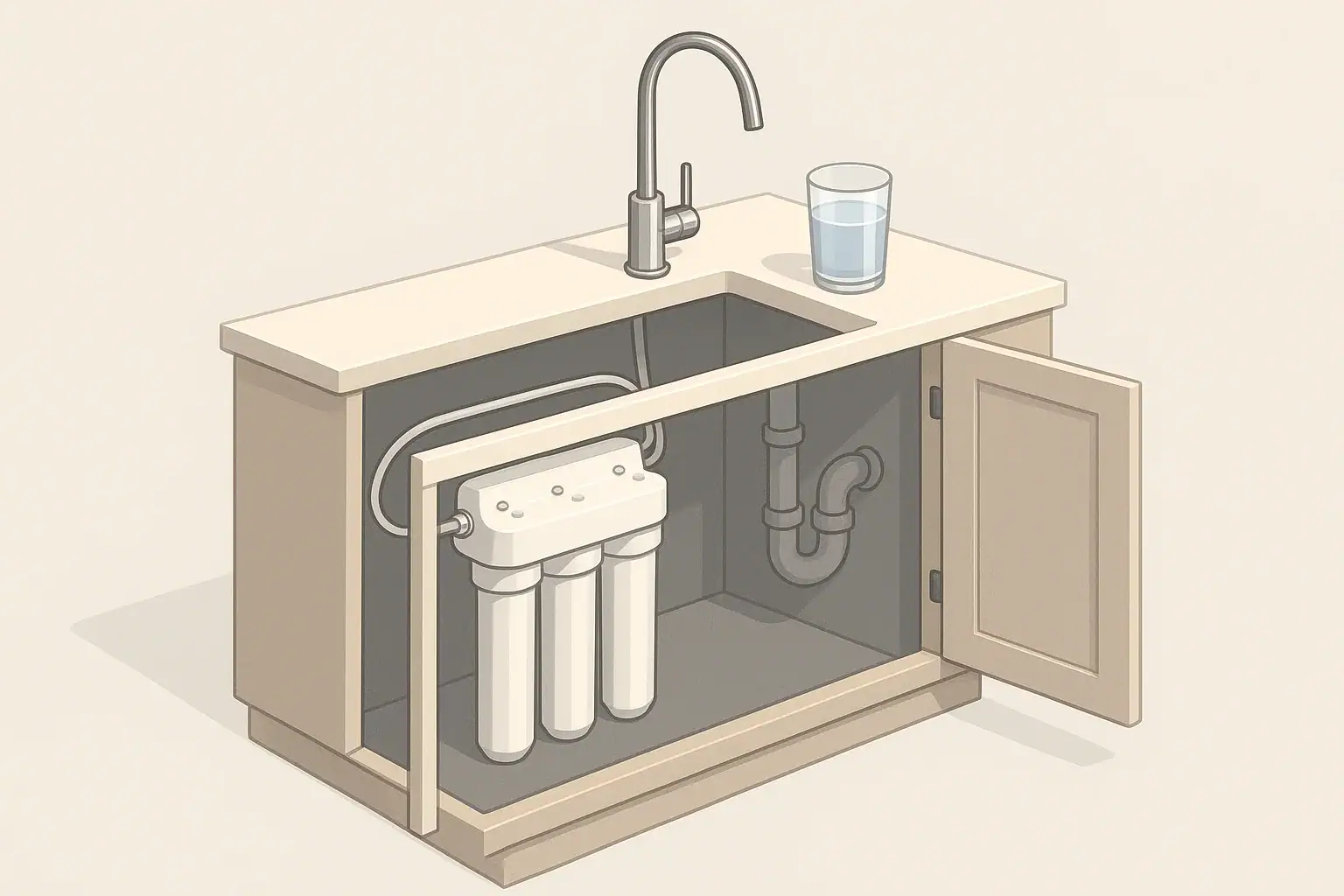
How High Consumption Changes Water Filter Choices
Families that use a lot of water put very different demands on a filter than a single person or couple. A system that works fine for one or two people can feel painfully slow, clog quickly, or need constant cartridge changes in a busy household.
When you are choosing filters for high consumption families, two factors move to the top of the list:
- Flow rate – how much filtered water the system can deliver at once
- Filter life – how many gallons or months before cartridges reasonably need replacement
Other factors still matter—such as what contaminants you want to reduce, installation constraints, and water source—but flow rate and longevity largely determine whether a system feels practical day to day.
Understanding Flow Rate for Busy Households
Flow rate describes how quickly water comes out of your tap while it is being filtered, usually measured in gallons per minute (GPM). High consumption families need enough flow to support typical peak-use moments:
- Multiple people filling bottles and glasses
- Cooking, rinsing produce, and washing dishes at the same time
- Showers and laundry overlapping with kitchen use (for whole-house filters)
For context, a standard kitchen faucet without any special restriction might deliver around 1.5–2.2 GPM. Many filter systems reduce this somewhat due to cartridge resistance, small tubing, or separate filtered faucets.
Point-of-Use vs Whole-House Flow Needs
High consumption families often consider two main categories of filtration:
- Point-of-use (POU) – filters that serve one location, such as a kitchen sink or refrigerator
- Whole-house (point-of-entry) – filters installed near where water enters the home, treating all taps
For POU systems, a flow of about 0.5–1.0 GPM is typically comfortable for drinking and cooking. For whole-house systems, families frequently look for several GPM of treated water available at once, so multiple fixtures can run simultaneously without a large pressure drop.
Factors That Affect Flow Rate
Actual flow depends on more than just the number printed on a box:
- Household water pressure – lower pressure at your home means lower effective flow through most filters.
- Filter media density – very fine filtration (such as some reverse osmosis membranes or sub-micron carbon blocks) restricts flow more than coarse sediment filters.
- Number and size of cartridges – larger cartridges and more parallel pathways can support higher flow.
- Clogging over time – as sediment and particles accumulate, flow typically decreases gradually until filters are replaced.
High consumption families benefit from systems designed to maintain adequate flow over time, not just when cartridges are brand new.
Example values for illustration.
| Filter type | Typical use point | Relative flow rate | Relative cartridge life | Best fit for high consumption families |
|---|---|---|---|---|
| Pitcher filters | Countertop | Low (batch filling only) | Low | Occasional use or backup |
| Faucet-mounted filters | Kitchen faucet | Moderate | Low to moderate | Small households or rentals |
| Under-sink carbon block | Single sink | Moderate to high | Moderate to high | Most city-water families |
| Under-sink reverse osmosis | Single sink | Low to moderate (storage tank helps) | Moderate | Families focused on lower dissolved solids |
| Whole-house sediment + carbon | All fixtures | High (sized correctly) | High | Large homes with many simultaneous uses |
| Whole-house sediment only | All fixtures | Very high | High | Pre-treatment for wells or heavy sediment |
Prioritizing Long Filter Life for Large Families
High consumption directly affects how often filters need to be changed. A cartridge rated for a certain number of gallons will reach that limit much faster when several people are using it heavily.
Manufacturers usually list capacity in terms like “up to X gallons” or “up to Y months.” These values are often based on estimated average use, which may be lower than a busy household’s real habits.
How to Estimate Cartridge Lifespan for Your Family
You can make a rough estimate of how long a filter might last in your home by considering:
- People in the home – more people generally means more drinking, cooking, and washing.
- Home cooking frequency – cooking at home most nights uses significantly more water than frequent restaurant or takeout meals.
- Filtered water uses – some families filter only drinking water; others also filter for ice, coffee, pet bowls, and more.
If a cartridge is rated for an example 1,000 gallons and your household uses an example 10 gallons per day of filtered water at that point, you might expect around 100 days of life, assuming water quality does not clog the filter sooner. Heavier use shortens this interval.
Filter Sizes and Cartridges for Long Life
Larger cartridges generally have more media, which can support:
- Higher flow at the same level of filtration
- Longer service life before restriction or breakthrough
High consumption families often benefit from:
- Full-size under-sink cartridges instead of compact miniature filters
- 20-inch whole-house cartridges instead of shorter ones, where compatible
- Staged filtration, with sediment pre-filters protecting finer carbon or specialized cartridges from premature clogging
When comparing options, it is useful to look not only at capacity numbers but also at the physical size and type of media used.
Best Filter Types for High Consumption Families
The best setup depends on your water source, the contaminants you are most concerned about, and how much of the home you want to treat. Below are common filter approaches that tend to work well for larger households.
1. High-Capacity Under-Sink Carbon Systems
For many city-water families, a high-capacity under-sink carbon system is a practical balance of flow, life, and installation complexity. These systems typically use one or more carbon block cartridges and may include a sediment pre-filter.
Advantages for high consumption families include:
- Steady flow through a dedicated drinking water faucet or the main kitchen faucet
- Reasonable cartridge life with standard or oversized housings
- Good reduction of common taste and odor issues associated with chlorine and many organic compounds
They are usually less complex to maintain than systems with storage tanks or pumps, and replacement is often straightforward.
2. Under-Sink Reverse Osmosis (RO) with Adequate Storage
Reverse osmosis systems produce filtered water more slowly at the membrane stage, but commonly use a storage tank so that water is available at a normal faucet flow for typical kitchen tasks.
In high consumption homes, it is important to consider:
- Storage tank size – larger or multiple tanks can better support back-to-back filling of pots and bottles.
- Daily production rating (GPD) – higher daily output ratings help the tank refill more quickly between uses.
- Pre-filtration – adequate sediment and carbon pre-filters protect the membrane and extend its life.
RO may be preferred when families want substantial reduction of dissolved solids and a wide range of contaminants, but it does introduce complexity: waste water production, pressure sensitivity, and more stages to maintain.
3. Whole-House Sediment and Carbon Systems
For large homes or those concerned about water quality at every tap, whole-house filtration can be attractive. Typical setups might include:
- Sediment pre-filter to catch sand, rust, and particulate matter
- Granular or block carbon stage to improve taste and reduce chlorine at all fixtures
Benefits for high consumption families include:
- High flow capacity when sized correctly to match main plumbing lines
- One central location to service, rather than multiple small filters throughout the home
- Comfort and convenience of filtered showers and baths as well as drinking water
Whole-house systems need to be matched to plumbing size and estimated peak demand to avoid noticeable pressure drops when multiple showers, appliances, and faucets run simultaneously.
4. Dedicated Drinking Stations Plus Simple Pre-Filtration
Some high consumption families combine approaches—for example:
- A whole-house sediment filter to protect plumbing and appliances
- A higher-performance under-sink system in the kitchen for drinking and cooking
This can balance cost, performance, and maintenance by reserving more intensive filtration for the water you actually drink, while still improving overall water quality for showers and laundry.
Balancing Flow Rate and Filter Life in Real Homes
There is usually a tradeoff between very fine filtration and high flow rate. High consumption families often aim for a middle path that keeps water moving fast enough without requiring constant cartridge changes.
Choosing the Right Level of Filtration
Some filters are designed for broad contaminant reduction, while others focus on simpler goals such as improving taste and removing visible particles. When designing a setup, consider:
- Source water – city water and well water often call for different priorities.
- Primary concerns – for example, reducing chlorine taste vs targeting specific metals or organic compounds.
- Where fine filtration is really needed – drinking and cooking water vs showering and cleaning.
Using a coarse sediment pre-filter followed by carbon is a common way to maintain flow while protecting finer media from clogging.
Managing Pressure and Flow Restrictions
If your household pressure is on the lower side or you have long plumbing runs, even a well-sized filter can feel restrictive. Options that may help include:
- Larger housings and cartridges to reduce resistance.
- Parallel filter setups in some whole-house applications, where plumbing codes and design allow, to increase capacity.
- Maintaining existing pressure regulators within recommended ranges so that filters operate as intended.
It is important not to modify or bypass safety devices such as pressure regulators or relief valves. Any plumbing changes should follow local codes and, when needed, be done by a qualified professional.
Maintenance Planning for High-Use Filter Systems
Even the best high-capacity system will perform poorly if cartridges are not changed on time. Larger families benefit from a more deliberate replacement plan so maintenance does not become disruptive or easy to forget.
Setting Realistic Replacement Intervals
Instead of relying only on “up to X months” statements, combine:
- Gallons or month rating from documentation
- Your estimated daily usage based on family size and habits
- Observation – changes in taste, odor, or flow can signal a filter nearing the end of its useful life
It can be helpful to write the installation date on each cartridge and keep a simple log of changes. Some families align filter changes with other recurring tasks, such as seasonal home maintenance.
Designing for Easy Service
For high consumption homes, ease of maintenance can be as important as specifications on paper. Features that simplify ownership include:
- Accessible mounting – clear space around housings for tools and buckets.
- Shutoff valves before and after filter housings, installed and used in accordance with plumbing standards.
- Clear labeling of filter stages so replacements are less confusing.
- Standardized cartridge sizes that are widely available.
Small conveniences make it more likely filters will be serviced on time, which directly affects both water quality and reliable flow.
Example values for illustration.
| Filter stage | Typical location | Example capacity | Example interval for high use | Practical reminder strategy |
|---|---|---|---|---|
| Sediment pre-filter | Whole-house or under-sink | Several thousand gallons | Every 3–6 months | Align with seasonal home checks |
| Carbon block (POU) | Under-sink drinking water | Hundreds to low thousands of gallons | Every 6–12 months | Set calendar reminders twice per year |
| Carbon whole-house | Main line entry | Tens of thousands of gallons | Every 6–18 months | Pair with annual plumbing inspection |
| RO sediment pre-filter | Under-sink RO | Hundreds to thousands of gallons | Every 6–12 months | Replace with RO carbon stage together |
| RO carbon pre-filter | Under-sink RO | Hundreds to thousands of gallons | Every 6–12 months | Check at same time as sediment filter |
| RO membrane | Under-sink RO | Several thousand gallons | Every 2–5 years | Note installation year in a visible place |
| Post-carbon polishing filter | After RO tank or final stage | Hundreds to low thousands of gallons | Every 12–24 months | Replace with every second pre-filter change |
Related guides: Pitcher vs Under-Sink vs RO: Which Fits Your Budget and Water? • Whole House vs Under-Sink: Taste vs Whole-Home Protection • Best Filters for Chlorine Taste: Pitcher vs Faucet vs Under-Sink • Carbon Block vs GAC vs Ion Exchange: Quick Guide to Filter Media
Key Takeaways for High Consumption Families
When several people share a home, a water filter’s real-world performance is shaped by how quickly it can deliver water and how often you must service it. Systems that look similar on the surface can behave very differently once subjected to everyday family use.
For most high consumption households, practical steps include:
- Choosing filter types that match your source water and priorities.
- Sizing for comfortable flow at peak use rather than just minimum needs.
- Selecting cartridges with enough capacity and physical size to avoid constant changes.
- Planning maintenance in advance so filter life and performance remain predictable.
Thoughtful sizing and realistic expectations help ensure that filtered water is available whenever your family needs it, without frequent interruptions or frustration at the tap.
Frequently asked questions
How do I estimate the right flow rate for my family?
Approximate peak demand by listing fixtures likely to run at once (showers, dishwasher, kitchen faucet) and use typical GPM values (for example 1.5–2.5 GPM per faucet/shower). For point-of-use, aim for 0.5–1.0 GPM at the kitchen sink; for whole-house, size the system to supply several GPM so multiple fixtures can run without a big pressure drop.
How can I predict how often filters will need replacement?
Use the cartridge’s gallon rating and divide by your estimated daily filtered use to get an approximate lifespan. Also follow practical guidance (sediment: 3–6 months high use; carbon POU: 6–12 months; RO membrane: 2–5 years) and watch for declining flow or changes in taste as signals to replace earlier.
Should I install whole-house filtration or just under-sink systems?
That depends on whether you want improved water at every tap (whole-house) or focused drinking/cooking quality (under-sink). A common compromise is a whole-house sediment filter to protect plumbing plus a higher-performance under-sink system for drinking water.
What practical steps keep flow high as cartridges age?
Use staged filtration with a coarse sediment pre-filter to protect finer media, choose larger housings or parallel paths where appropriate, replace cartridges on schedule, and monitor household pressure. If in doubt, consult a qualified plumber to ensure the system matches your plumbing and local codes.
Recommended next:
- Pitcher vs Under-Sink vs RO: Which Fits Your Budget and Water?
- Whole House vs Under-Sink: Taste vs Whole-Home Protection
- Carbon Block vs GAC vs Ion Exchange: Quick Guide to Filter Media
- Best Water Filter Setup for Apartments (Renters, Space, No Drill)
- Best Filters for Hard Water Problems (Scale, Feel, Appliances)
- Best Filters for Chlorine Taste: Pitcher vs Faucet vs Under-Sink
- More in Comparisons & Buying Guides →
- NSF/ANSI standards explained (42/53/401/58)
- Clear trade-offs: pitcher vs faucet vs under-sink vs RO
- Maintenance planning: cost per gallon and replacement cadence