
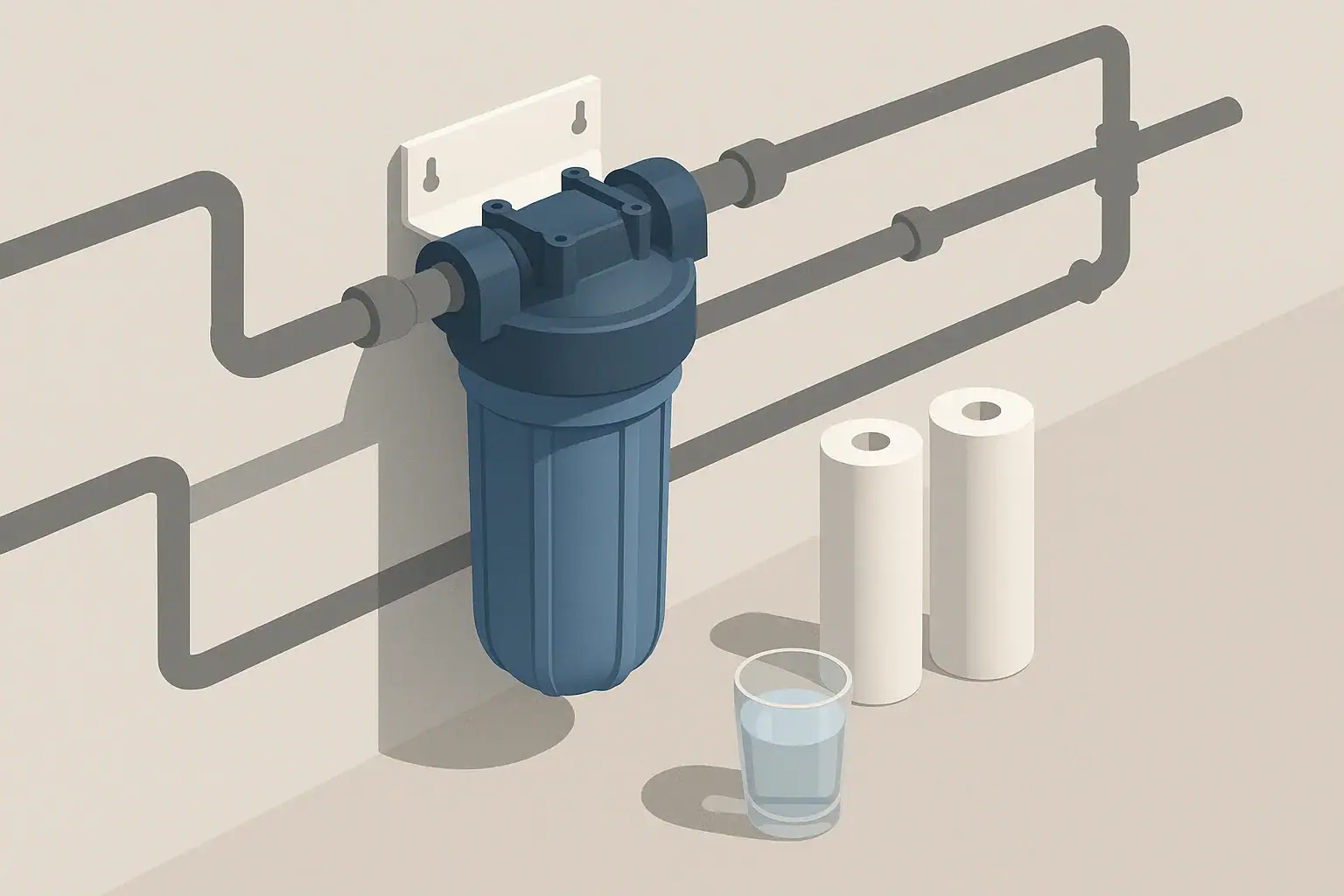
Why Water Can Look Cloudy After a Fridge Filter Change
Cloudy water after replacing a refrigerator filter is common, especially during the first few pitchers or glasses. In many cases, the cloudy look comes from tiny air bubbles trapped in the new filter cartridge, water line, or dispenser path. The water may look milky or hazy at first, then clear after sitting for a short time.
A new filter is usually dry inside before installation. When water first pushes through the filter media, air spaces in the cartridge can break into fine bubbles. Those bubbles scatter light, which makes the water look white or foggy even though the water itself may be clear.
Cloudiness can also appear after the water supply has been shut off, after the refrigerator has been moved, or after a line has been disconnected and reconnected. Any of these situations can introduce air into the system. If the dispenser is also running slowly, low flow from a refrigerator dispenser can be part of the same installation issue.
The key question is whether the cloudiness behaves like air or whether it points to another issue, such as loose carbon fines, sediment, an installation problem, or a change in the water supply.
The Quick Glass Test for Air Bubbles
The easiest first check is the glass test. Fill a clear glass from the refrigerator dispenser and set it on a counter in good light. Do not stir it. Watch what happens over the next few minutes. For another simple check on unexpected fridge-water behavior, see why ice can still taste bad after replacing the fridge filter.
If the cloudiness clears from the bottom upward and the top remains cloudy for the longest time, the cause is usually air bubbles rising out of the water. This is the typical pattern after a new fridge filter has been installed.
If the water stays cloudy, forms visible particles at the bottom, has an unusual odor, or changes color, it is worth doing more checks before assuming it is just trapped air.
What air-related cloudiness usually looks like
- The water looks white, gray-white, or milky rather than brown, yellow, or green.
- The haze clears after sitting for a short time.
- Small bubbles may cling to the side of the glass.
- The effect improves after flushing several containers of water through the dispenser.
- There is no gritty sediment left after the water clears.
Air bubbles are not the same as dissolved minerals, sediment, or microbial contamination. They are a physical effect caused by air coming out of the water or filter assembly. In a recently changed refrigerator filter, this is usually temporary.
Example values for illustration.
| Observation | Most likely meaning | Practical next step |
|---|---|---|
| Clears from bottom to top | Fine air bubbles | Flush more water and recheck |
| Stays cloudy after several minutes | Not typical trapped air | Compare with cold tap water |
| Black or gray specks appear | Loose carbon fines may be present | Continue flushing and inspect if persistent |
| Grit settles at the bottom | Sediment may be entering the line | Check supply water and prefiltration |
| Cloudiness starts only after filter change | Filter priming or seating issue possible | Reseat filter according to the manual |
| Cloudiness appears at every faucet | Whole-home supply issue possible | Check the main supply or well system |
| Odor or taste is suddenly different | Filter flushing or source-water change possible | Flush, then compare with another tap |
Normal Causes That Usually Improve With Flushing
After a new refrigerator filter is installed, flushing is the most important maintenance step. Flushing helps remove trapped air and loose carbon dust from the cartridge. It also fills the filter fully with water so the media can operate as intended.
Always follow the refrigerator or filter instructions for the recommended flushing volume. General examples often involve dispensing several quarts to a few gallons of water, but the correct amount varies by filter design. If you’re unsure whether the cartridge is the right one, refrigerator filter compatibility is worth checking before assuming the water issue is something else.
Trapped air in the cartridge
Trapped air is the most common reason for cloudy water after replacing a fridge filter. A new cartridge contains pockets of air within the housing and filter media. As water flows through, the air breaks apart into small bubbles.
This may continue intermittently for a short period, especially if the dispenser is used in short bursts. Longer, steady dispensing cycles can help move air through the system more effectively than many brief presses of the dispenser paddle.
Loose carbon fines
Many refrigerator filters use activated carbon to reduce chlorine taste, odor, and certain organic compounds, depending on the filter’s design and claims. New carbon filters can release a small amount of fine carbon dust when first used.
Carbon fines may look like gray or black specks rather than a uniform white cloud. A small amount during initial flushing can be normal. If specks continue after the recommended flush volume, the filter may not be seated properly, may be damaged, or may not be the correct type for the refrigerator.
Pressure changes in the water line
Water pressure changes can make dissolved air come out of water, similar to tiny bubbles appearing in a shaken bottle. If the household supply was turned off and back on, or if a refrigerator line was disturbed, air may remain in the tubing for a while.
Pressure-related cloudiness often improves after normal use. If flow is weak, sputtering, or noisy, the line may still contain air or the filter may not be fully locked in place.
When Cloudy Water May Point to a Problem
Most post-replacement cloudiness is not an emergency. Still, some clues deserve closer attention. The goal is to separate a short-term filter-change effect from signs of sediment, incorrect installation, or a broader water quality issue.
The cloudiness does not clear
If water remains cloudy after sitting for several minutes, it may not be caused by air bubbles. Compare the refrigerator water with water from a nearby cold-water faucet. If both are cloudy, the issue may be with the household supply rather than the refrigerator filter.
For homes on municipal water, temporary work on water mains, hydrant flushing, or local pressure changes can stir sediment or introduce air. For homes on private wells, cloudiness can relate to sediment, well pump cycling, pressure tank behavior, or treatment equipment upstream of the refrigerator. A whole house sediment filter may be a better place to address persistent source-water cloudiness.
Particles settle in the glass
Particles that settle are different from bubbles that rise. Settled grit can indicate sediment in the supply line, disturbed plumbing deposits, or material from a cartridge or fitting. Black specks may be carbon fines, while tan or brown particles may be mineral or pipe-related sediment.
If sediment appears at multiple fixtures, a refrigerator filter is not the main source of the issue. A point-of-use fridge filter is not designed to solve every whole-home water problem, especially heavy sediment entering from a well or old plumbing.
Flow is very slow after replacement
A slow dispenser after a filter change may happen if the filter is not fully seated, the cartridge is clogged, the water line is kinked, or the refrigerator’s internal valve is not operating normally. Some filters also require time and flushing before flow becomes steady.
Do not force parts, drill fittings, modify housings, or bypass safety features to increase flow. If the correct installation steps do not restore normal performance, use the refrigerator manual or contact a qualified appliance technician.
Cloudiness comes with unusual taste or odor
A mild new-filter taste can occur during the first flush, but strong or persistent changes should be evaluated. Compare three samples: refrigerator water, cold tap water, and water that has sat in a clean glass for a few minutes. This comparison can help show whether the issue is the fridge filter, the plumbing line, or the source water.
If you use a private well and notice sudden cloudiness, color change, or odor at multiple fixtures, consider checking the well system and any whole-house treatment equipment. Refrigerator filters are not a substitute for maintaining a safe, properly tested private well supply.
What to Do After Replacing a Fridge Filter
A calm, step-by-step approach usually solves the issue or narrows down the cause. The steps below are practical checks, not plumbing modifications.
1. Confirm the filter is installed correctly
Make sure the filter is the correct style for the refrigerator and is fully locked into position. A filter that is slightly misaligned can allow sputtering, reduced flow, or inconsistent water quality.
Remove and reinstall the filter only as directed by the appliance instructions. Check that the filter cap, cover, or locking mechanism is positioned normally. If the filter area leaks, stop using the dispenser until the leak is addressed. If leaks are part of the problem after a cartridge swap, refrigerator filter leaks are usually a better clue than cloudiness alone.
2. Flush the new filter
Dispense water according to the filter instructions. Use steady dispensing cycles when possible, allowing the dispenser to rest if the refrigerator manual recommends it. Discard the flush water or use it for non-drinking purposes such as watering outdoor plants if appropriate.
It is common for the first water to look cloudy, sputter, or contain small carbon particles. The appearance should improve as the filter becomes fully wetted and loose fines are carried away.
3. Check the ice maker separately
If the refrigerator has an ice maker, new ice may also trap air or show cloudiness. Discard the first batch or two of ice after a filter change if the appliance instructions recommend doing so. Ice can remain cloudy even when water is clear because freezing naturally traps air and minerals.
That’s why a dispenser problem and an ice problem do not always match exactly. If you want a broader look at how a fridge filter affects ice quality, why your ice tastes bad explains the connection.
4. Compare with another cold-water tap
If refrigerator water remains cloudy after flushing, fill a glass from a nearby cold-water faucet. If both samples look similar, the refrigerator filter may not be the main cause. If only refrigerator water is cloudy, the issue is more likely in the fridge filter, tubing, or dispenser path.
5. Watch for leaks or repeated sputtering
A brief sputter after installation is common. Ongoing sputtering can suggest air is still entering the line or the filter is not sealed correctly. Also check the floor, filter compartment, and nearby cabinets for moisture.
Leak awareness matters because small leaks can damage flooring or cabinets before they are obvious. If you find water where it should not be, stop dispensing and address the cause before continued use.
Special Considerations for Well Water and Whole-Home Treatment
Refrigerator filters are commonly used for taste, odor, and polishing already treated water. They are not usually the first line of defense for heavy sediment, iron particles, or untreated well water concerns.
If your home uses a private well, cloudy refrigerator water after a filter change may still be simple trapped air. However, it is useful to think about the entire path water takes before it reaches the fridge:
- Well pump and pressure tank
- Sediment filter or whole-house filter, if installed
- Water softener or other treatment equipment, if used
- Cold-water plumbing line to the refrigerator
- Refrigerator filter and dispenser tubing
If cloudiness appears at all fixtures, changes with pump cycling, or comes with visible sediment, the upstream system deserves attention. A clogged whole-house sediment cartridge can reduce flow. A pressure tank issue can create surging or air. Recent plumbing work can also disturb deposits in pipes.
Routine well testing and maintenance should be based on local conditions, well construction, and state or county guidance. When in doubt, use a qualified water professional or appropriate lab testing rather than relying only on appearance.
Frequently Asked Questions
Is cloudy water after a new fridge filter safe to drink?
If the glass test shows the water clears from bottom to top, the cloudiness is usually air bubbles. Many people choose to finish the recommended flushing before drinking the water. If the water has persistent particles, unusual color, or a strong odor, pause and investigate further.
How long should cloudy water last after filter replacement?
It often improves during the initial flush and normal early use. Some systems may show occasional cloudiness for a short time as remaining air leaves the cartridge and tubing. If it continues after proper flushing, compare it with another cold-water tap and inspect the installation.
Why is my water cloudy but my ice looks normal?
The dispenser line and ice maker may not purge air at the same rate. Ice appearance also depends on freezing speed, trapped air, and minerals. Cloudy water and cloudy ice can be related, but they do not always change at the same time.
Can a refrigerator filter remove sediment from well water?
Some refrigerator filters can catch limited particles, but they are not intended to manage heavy sediment from a well. If sediment is common, a properly sized upstream sediment filter or other whole-home treatment may be more appropriate.
Example values for illustration.
| Issue | Likely area to check | Helpful action |
|---|---|---|
| Milky water that clears quickly | Air in filter or tubing | Flush and use the glass test |
| Black specks during first use | Carbon fines | Continue the recommended flush |
| Cloudy water at all fixtures | Household supply | Check main supply or well equipment |
| Low dispenser flow | Filter seating or line restriction | Reseat filter and check for kinks |
| Repeated sputtering | Air entry or incomplete purge | Inspect installation and flush steadily |
| New chlorine taste | Filter performance or source water | Verify cartridge type and flush volume |
| Musty or earthy odor | Source water or stagnant line | Compare with another cold tap |
Related guides: Refrigerator Filter Compatibility: How to Find the Right Replacement • Fixing Low Flow from a Refrigerator Dispenser • Refrigerator Filter Leaks: Common Causes and Quick Fixes • Why Your Ice Tastes Bad (and How a Fridge Filter Helps) • Best Whole House Sediment Filters: Clear Up Cloudy Water
Frequently asked questions
How can I tell if cloudy fridge water is just air bubbles?
Fill a clear glass and let it sit for a few minutes. If the cloudiness starts to clear from the bottom upward, it is usually trapped air. If it stays cloudy or leaves sediment behind, look for another cause.
Should I keep flushing a new fridge filter if the water is still cloudy?
Yes, if the cloudiness is mild and the water is otherwise normal, continue flushing according to the filter instructions. Use steady dispensing cycles when possible. If cloudiness remains after the recommended flush amount, inspect the filter installation and compare it with another tap.
Can a new fridge filter make water look cloudy for a day or two?
It can, especially if the filter or line contains trapped air. The cloudiness should gradually improve. If there is no improvement after normal use and flushing, it is worth checking for sediment, a bad seal, or a supply issue.
Why does my fridge water sputter after replacing the filter?
Sputtering usually means air is still working its way out of the filter or tubing. It can also happen if the filter is not fully locked in place. If the sputtering does not lessen after flushing, reseat the filter according to the manual.
Does cloudy water after a filter change mean the filter is defective?
Not usually. Temporary cloudiness is often normal after installation. A defective or improperly seated filter is more likely if the cloudiness keeps returning, the flow stays weak, or particles continue to appear after flushing.
Key Takeaways
- Cloudy water after replacing a fridge filter is most often caused by trapped air bubbles.
- The glass test is the quickest way to tell: air-related cloudiness usually clears from the bottom upward.
- Initial flushing helps remove air and loose carbon fines from a new cartridge.
- Persistent cloudiness, settled sediment, leaks, slow flow, or unusual odor should be investigated.
- If cloudy water appears throughout the home, look beyond the refrigerator filter and check the household supply or well system.
Recommended next:
- Why Your Ice Tastes Bad (and How a Fridge Filter Helps)
- Refrigerator Filter Compatibility: How to Find the Right Replacement
- Inline Fridge Filters: When to Use an External Inline Filter
- How Often to Replace Refrigerator Water Filters (By Gallons & Usage)
- Fixing Low Flow from a Refrigerator Dispenser
- Do Refrigerator Filters Reduce Lead? How to Check Claims
- More in Refrigerator & Ice Filters →
- NSF/ANSI standards explained (42/53/401/58)
- Clear trade-offs: pitcher vs faucet vs under-sink vs RO
- Maintenance planning: cost per gallon and replacement cadence